
REVIEW · PULA ARENA & ROMAN ISTRIA TOURS
Pula: Arena Entrance Ticket
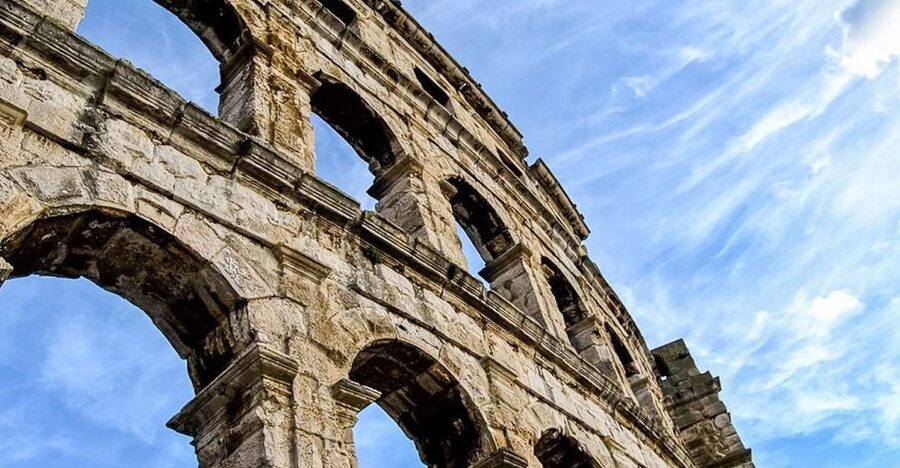
Step back into Roman Pula fast. With a prepaid ticket, Pula Arena is an easy win, letting you enter at the main entrance, then self-guide using QR codes and go underground to a permanent gladiator-area exhibit.
I love two things most: the feeling of a top Roman structure that still looks and sounds like it was meant for crowd energy, and the way the underground displays connect daily life to gladiator-era entertainment, especially the olive oil and wine story.
The main catch is planning around the optional audio. An audio guide is listed as not included, and some visitors note the self-guided audio can be unreliable, so bring headphones and be ready to rely on the text boards too.
In This Review
- Key things to know before you go
- Entering Pula Arena at the Right Moment
- A Roman Amphitheater That Still Feels Like a Stage
- QR Codes, Headphones, and Self-Guided Pace
- The Underground Gladiator Area, and Why It Matters
- Time Planning for a 1-Day Ticket
- Accessibility and Getting Around the Site
- What’s Included, and What You Might Pay Extra For
- Price and Value: Is $11 a Smart Buy?
- Who Should Book This Ticket, and Who Might Skip It
- Final Check: Should You Book?
- FAQ
- Where do I redeem the ticket for Pula Arena?
- How long should I plan for this visit?
- Is an audio guide included?
- What should I bring with me?
- Is the site wheelchair accessible?
- Are photos with actors in costume included?
Key things to know before you go
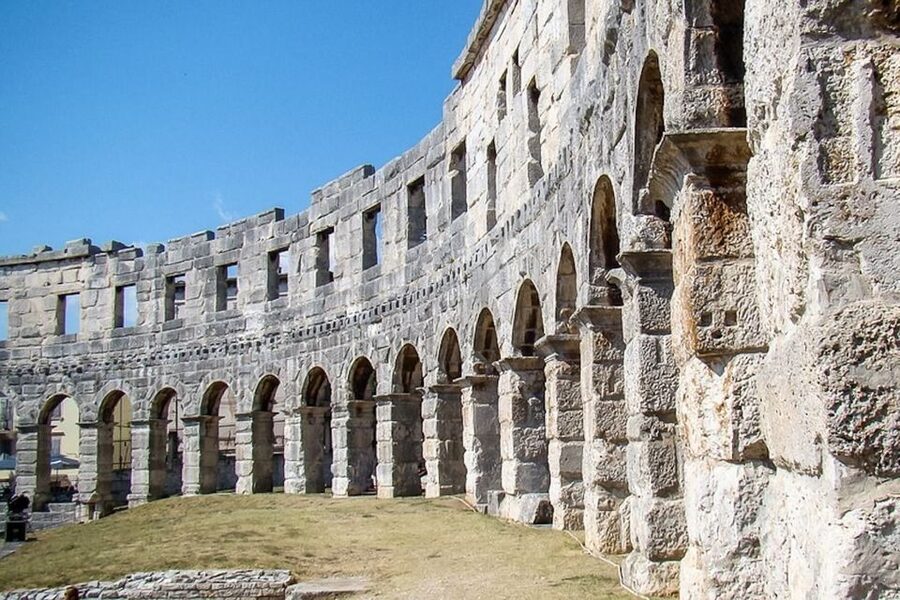
- Main Pula Arena entrance access, redeemed at the ticketing spot right by the arena
- QR-code self-guiding around the amphitheater, so you can go at your own pace
- Underground gladiator exhibition, focused on Istrian olive and viticulture in antiquity
- Tools, presses, tanks, and amphorae that explain how oil and wine moved through the region
- Underground time adds up, with the basement portion often taking 90 to 120 minutes
- Wheelchair access is mostly easy, except the lower gallery in the basement
Entering Pula Arena at the Right Moment
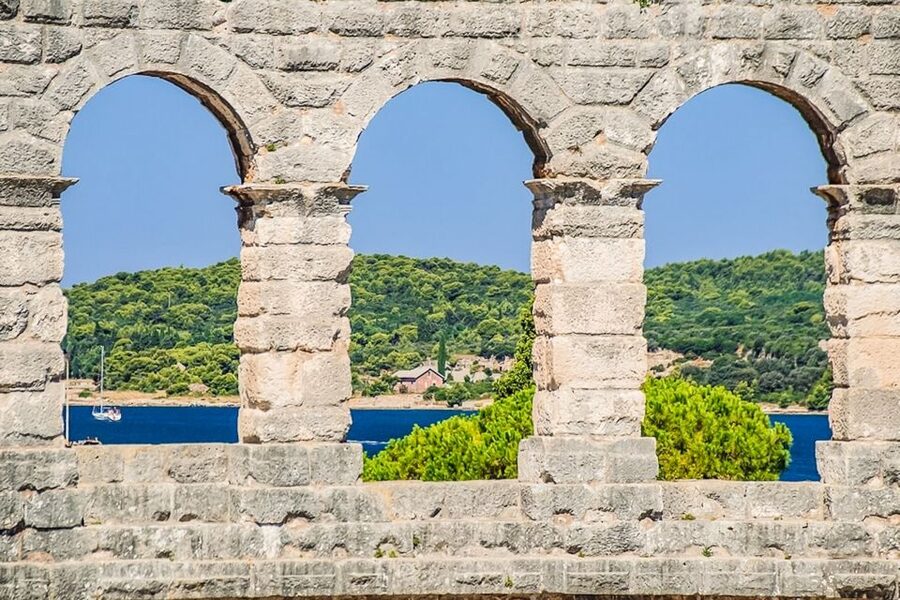
Pula Arena is the city’s Roman showpiece, and the ticket makes it simple to get inside without making your whole morning depend on long lines. You redeem at the main entrance to the arena, then you’re free to explore the grounds and seating area on your schedule.
What I like about this setup is that it doesn’t force you into a tight group rhythm. You can arrive, scan your way through the information points, and linger where something catches your eye, then head downstairs when you’re ready for the more enclosed feeling of the underground space.
One small practical note: even with tickets, you may still funnel through a short ticket-scanning step where staff verify and provide a receipt. It’s quick, but it’s still part of the “get in” process, so don’t plan on sprinting straight past everything.
A Roman Amphitheater That Still Feels Like a Stage
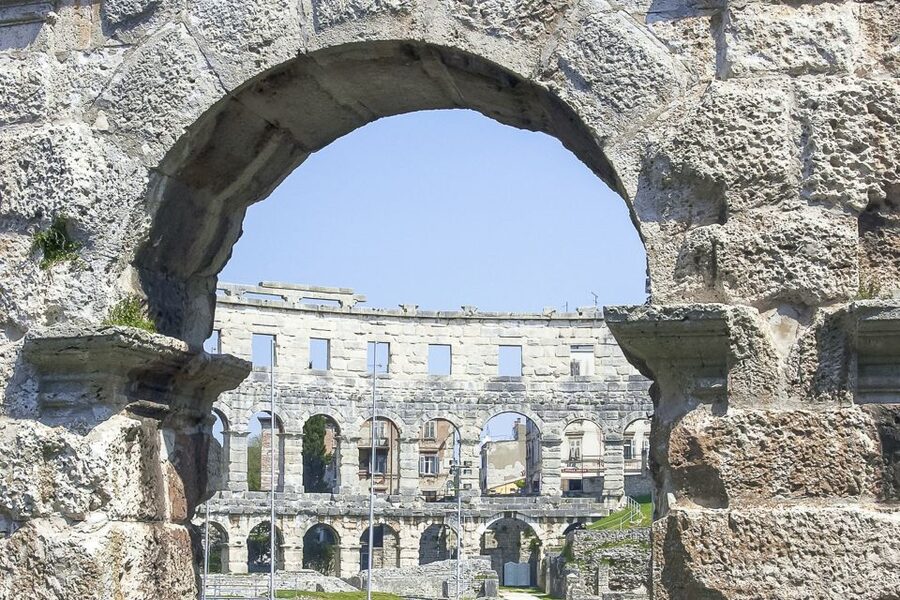
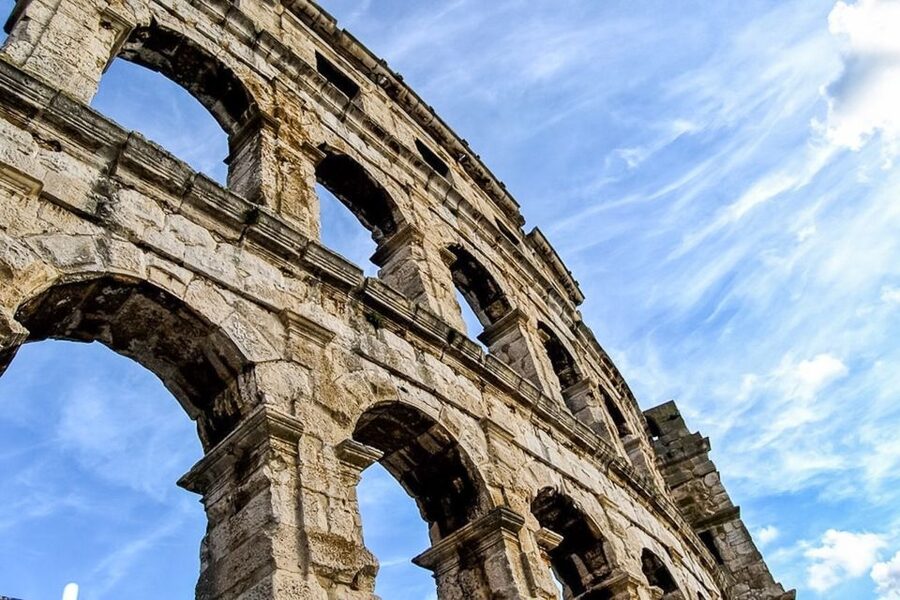
This is not a museum where you look at a photo and move on. You’re standing inside the kind of stone shell that was designed to hold noise, bodies, and spectacle. The amphitheater’s shape and preserved details make it easy to picture crowd movement and the big moments that happened here.
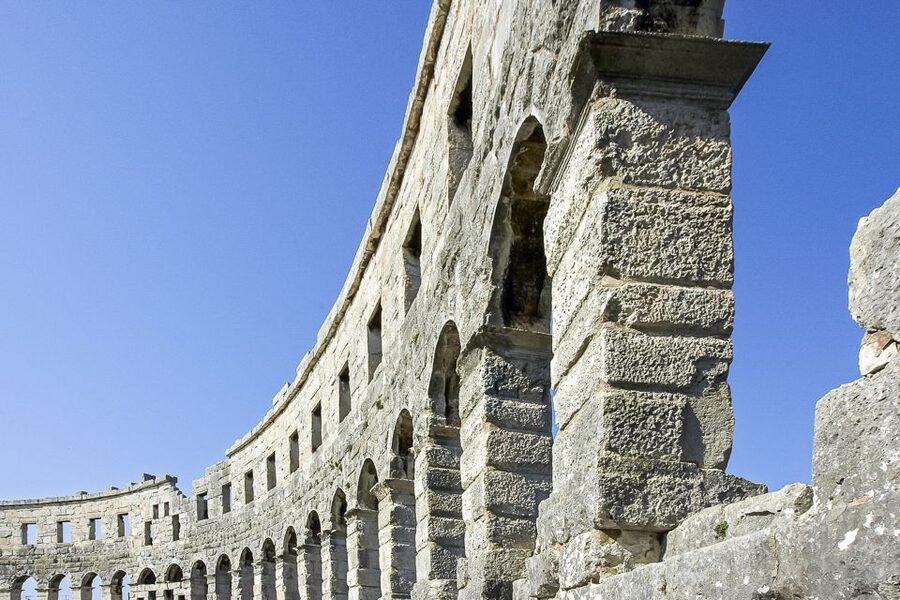
If you enjoy architecture, you’ll likely appreciate how intact the site feels compared with many ruins. The structure is one of Pula’s most famous and recognizable landmarks, so it helps that you’re not traveling across town to see something obscure. It’s right here, and it reads clearly even if your Roman history is rusty.
Then there’s the atmosphere. Reviews commonly highlight the sense of being inside a site that is still functioning as a space for events and concerts during certain seasons. Even if you’re just there for the history, it changes how you look at the seating and open area.
QR Codes, Headphones, and Self-Guided Pace
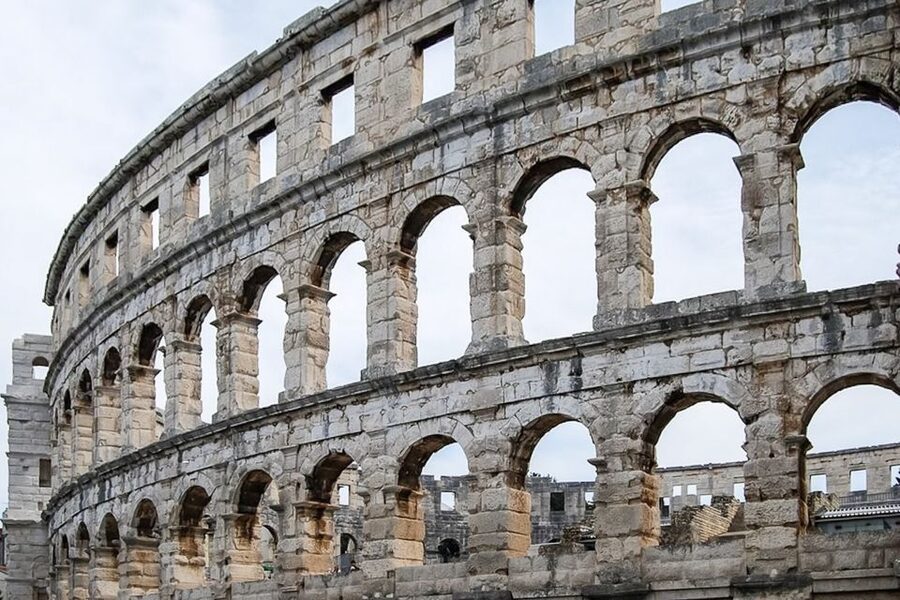
Your visit is designed around self-guided stops, centered on QR codes around the arena. Instead of hunting for a guide or getting lost in a handbook, you scan your way through points of interest and get context as you walk.
I like this method because you control the order. If you want to start high up and work your way down, you can. If you’re focused on the basement later, you can pace that too.
Audio is where you should set expectations carefully. An audio guide is not listed as included, and some visitors report the audio side can be inconsistent. Still, the site is built for headphone use, and the information you get through QR points can be more satisfying if you can listen rather than only reading.
My practical suggestion: bring headphones, keep your phone charged, and treat the audio as a bonus. If it works well, great. If it doesn’t, you’ll still get a solid visit from the signage and QR descriptions.
The Underground Gladiator Area, and Why It Matters
The biggest reason to book this ticket is the basement experience. You get access to the permanent exhibition in the underground gladiator area, tied to the theme Istrian Olive and Viticulture in Antiquity.
This exhibit shifts the story away from just fights and spectacle and into the real regional economy that supported Roman life. It’s a smart angle for a visitor, because it explains how oil and wine production mattered to daily living and trade, then connects that to how the gladiator world operated underground.
What you’ll see is very hands-on in concept, with reproductions and display items that represent production and packaging. Expect tools and equipment connected to oil and wine making, including mills, presses, and sedimentation tanks. You can also look for amphorae, the containers used for transporting oil and wine.
I find this part of the visit particularly valuable because it gives you something concrete to picture. When you can see the equipment forms and packaging vessels, the story stops being abstract. You can walk through the underground space and think about the logistics of a whole entertainment system, not just the entertainment itself.
Plan for time here. The underground portion is often described as lasting about 90 to 120 minutes, so don’t schedule your whole day around a quick look unless you’re the type who skims.
Time Planning for a 1-Day Ticket
This ticket is valid for 1 day, but your best experience comes from not rushing. A common pattern is about an hour to two hours total, with a longer visit if you read carefully and spend real time underground.
If you want the smoothest experience, I’d aim to start early. Multiple reviews point out that mornings can be quiet, with less foot traffic and an easier walk through the arena. In summer, the open stone can feel intense under strong sun, so early timing is not just for crowd control, it’s for comfort too.
If you’re visiting in heat or bright sun, give yourself permission to slow down. Take breaks in shaded pockets, drink water, and avoid treating this like a 15-minute checklist.
And if it rains? One review notes a rainy day, and still recommends the experience since the site is structured for walking and exploring even when the weather is less friendly. You won’t be stuck indoors all day, but it’s not a total washout.
Accessibility and Getting Around the Site

The arena is wheelchair accessible for most areas. The key exception is the lower gallery in the basement, which may limit access there.
If accessibility is important for you, it’s worth planning your route around that basement restriction. You can still enjoy the main portion of the arena, and you should treat the underground part as the place where mobility planning matters most.
Also, keep your expectations realistic about stone venues: even when paths are wheelchair-friendly, you’ll still be dealing with outdoor surfaces, ramps, and the general physical feel of a historic site.
What’s Included, and What You Might Pay Extra For

This ticket covers entry to the amphitheater grounds and access to the underground exhibition area. You’re not paying extra for each room or stop once inside.
Two things are explicitly not included: the audio guide and photos with actors in costume. So if you come across costumed moments or photo prompts, plan for the cost to be separate. If you want maximum value, focus on the exhibition and the QR self-guiding, which are the core of the ticket.
Value matters here, especially because some people find the price a bit high for what feels like an entry ticket. On the other hand, others point out that the value is strong when you come early, spend real time exploring, and use the QR information effectively.
Price and Value: Is $11 a Smart Buy?
At around $11 per person, this is a very workable price for a preserved Roman amphitheater plus an underground permanent exhibition. The key to getting your money’s worth is how long you actually spend.
If you walk in, snap a few photos, and head out in 20 minutes, the ticket can feel steep. But if you take time to do the arena walk, scan the QR points, and commit to the underground exhibit, it becomes a much better trade.
Support for maintenance is a big part of the value logic too. Several comments mention that paying helps keep the site cared for, which is the type of thing that turns a ticket into more than just sightseeing.
My rule of thumb: if you like Roman history, architecture, or food and production history, this ticket makes sense. If you only want a quick look at the exterior, you might not get enough from the inside to justify the cost.
Who Should Book This Ticket, and Who Might Skip It
This ticket is ideal if:
- You want one must-see stop in Pula that’s clearly Roman and preserved
- You like self-guided learning without waiting on a group
- You’re curious about daily life themes like oil and wine, not only gladiator spectacle
- You can handle walking on outdoor historic surfaces and spending about 1 to 2 hours on the site, longer if you go underground thoroughly
You might consider skipping or pairing it differently if:
- You only care about exterior views and prefer free viewpoints
- You expect an included full audio tour as part of the price
- You are visiting with limited mobility and need the basement lower gallery specifically
Final Check: Should You Book?
Yes, I’d book this if you’re in Pula and want a top Roman stop that’s more than a photo moment. The combination of the amphitheater and the underground Istrian olive and viticulture exhibit is what makes the ticket feel complete.
If you do book, go early, bring headphones, and plan for real time underground. That’s how you turn a simple entry ticket into a history stop you’ll remember.
FAQ
Where do I redeem the ticket for Pula Arena?
Redeem your ticket at the main Pula Arena entrance.
How long should I plan for this visit?
A typical visit includes time in the arena and the underground exhibition. The underground part is often described as taking about 90 to 120 minutes, with many people spending around one to two hours total.
Is an audio guide included?
No. The audio guide is listed as not included. The site uses QR-code information, and headphones are recommended.
What should I bring with me?
Bring headphones.
Is the site wheelchair accessible?
The site is wheelchair accessible except for the lower gallery in the basement. Everything else is wheelchair accessible.
Are photos with actors in costume included?
No. Photos with actors in costumes are not included.
Pula Arena & Roman Istria Tours, top to bottom.
 ★ 5.0Medulin -Kamenjak 5h boat trip with lunch & drinks on Sandra BoatFrom $541,621 reviews
 ★ 5.0Full-Day Boat Tour of the Medulin Archipelago from MedulinFrom $541,389 reviews
 ★ 5.03hours all inclusive Sunset&Dolphin Tour from Medulin on SandraFrom $541,130 reviews
 ★ 4.8Pula: Kayaking,Snorkeling, Cliff jumping Tour with WetsuitFrom $57861 reviews
 ★ 4.5Pula: National Park Brijuni Island Visit & Dolphin CruiseFrom $76788 reviews
 ★ 4.5Pula: Brijuni Sunset Dolphin Cruise with Dinner & DrinksFrom $62764 reviews
 ★ 4.9Pula: Night-Time Sea Kayaking Tour in Transparent KayakFrom $69628 reviews
 ★ 5.0Fantastic DOLPHIN & SUNSET TOUR with dinner ( Pula-NP BRIJUNI )From $66618 reviews
Browse the lists this tour appears in