
REVIEW · TROGIR, CIOVO & THE KASTELA COAST
Best of Split & Trogir: Private VIP Tour with Local Guide
Ancient streets, twice in one day. I love the way this tour keeps you oriented inside Diocletian’s Palace, and I love ending in UNESCO Trogir where the streets feel like they belong to another century. One catch to plan for: a few key sights have entry costs that are not included, so you will want to budget for those.
This is built for smooth sightseeing. It’s a private tour in English with pickup offered, and the guide time feels efficient because you are not stuck waiting on anyone else. In the best moments, guides like Kristina and Andrea add personal stories, plus they help you understand what you are looking at without turning it into a lecture.
You also get a practical setup for the day. You have a mobile ticket, and the tour is near public transportation if you want to meet up rather than rely on pickup. Just know the pace is fairly tight at each stop, with many sights handled in about 15 minutes.
In This Review
- Key highlights you should care about
- Split begins with Diocletian’s Palace Peristyle
- Saint Domnius Cathedral: an early medieval anchor in the middle of it all
- Gregory of Nin’s statue: the famous toe and the human vibe
- The Temple of Jupiter: Roman layers inside the palace walls
- Diocletian’s Palace substructures: the basement halls you should plan for
- Trogir’s Central Square: UNESCO streets and Venetian-era rhythm
- Saint Lawrence’s Cathedral: Romanesque-Gothic in layers
- Kula Karmelengo fortress: Venetian defense and sea views
- Town Loggia and Palace Čipiko: civic life and noble power
- Price and logistics: when $228.78 makes sense
- Who this tour fits best
- Should you book this Split and Trogir VIP Tour?
- FAQ
- How long is the Best of Split & Trogir tour?
- Where does the tour take place?
- Is pickup available?
- Is this a private tour?
- What language is the tour in?
- Do I get a mobile ticket?
- Are entrance tickets included for every stop?
- Is free cancellation available?
- Are service animals allowed?
Key highlights you should care about
- Crowd-smart guidance in Split, so you can move through Diocletian’s Palace with less stress and more context
- Hands-on fun facts, like why you will see tourists touching the toe of the Gregory of Nin statue
- Clear split between free sights and paid entrances, so there are no surprises when you reach the substructures or Trogir cathedrals
- UNESCO Trogir highlights in one pass, including the central square and waterfront fortress views
- Story-driven local flavor, with guides sharing details that make the monuments feel lived-in, not just preserved
More of the coast running west from Split
- Split/Trogir: Blue Cave, Mamma Mia, Hvar and 5 Island Tour★ 4.6 · 6,320 reviews
- Krka Waterfalls Day Tour with Boat Ride from Split and Trogir★ 5.0 · 2,134 reviews
- Krka National Park Tour with tour Guide & Wine tasting from Split & Trogir★ 5.0 · 1,625 reviews
- Hvar, Brač & Pakleni islands cruise with lunch & drinks from Split & Trogir★ 4.5 · 1,452 reviews
Split begins with Diocletian’s Palace Peristyle
Most people think of Split as beaches and promenades. This tour starts by flipping that idea fast. The first stop is the Peristyle, a rectangular open court that sits at the crossroads of the palace’s two main roads. This is not just a pretty courtyard. It was designed to be the “heart” of the imperial complex, meaning everything around it was meant to function like a civic center.
Look up at the colonnade and notice the rhythm of the columns. Even in short time, you can start seeing why this space works visually. It creates a sense of order, even after centuries of change. And because it is open and central, it is one of the easiest places to get bearings fast before the city expands around you.
Time is about 15 minutes here, and that’s actually a good thing. If you go long, you can end up staring at stone. In a palace like this, you want momentum so the next stops click. Also, the stop is listed as admission ticket free, which makes the Peristyle a low-friction start to the day.
Saint Domnius Cathedral: an early medieval anchor in the middle of it all
From the Peristyle, you head to the Cathedral of Saint Domnius. The key detail here is the cathedral’s age and continuity. It was consecrated around the turn of the 7th century AD, and it is considered the oldest Catholic cathedral in the world that remains in use in its original structure, without near-complete renovation at a later date. The bell tower is from the 12th century, so you get a visible “layer” of time without having to hunt for it.
If you like places that stayed in use, this is exactly that kind of stop. You are not just looking at an artifact. You are seeing a building with a long working life. That can change your mood on the inside, even if you only have a brief guided window.
The stop is also about 15 minutes and listed as free. So you can treat it as a calm reset between the more “photo-heavy” bits, and still keep the day moving. The best approach is to listen for what your guide points out, then take a moment to look around on your own. That small pause is often where the cathedral starts to feel real.
Gregory of Nin’s statue: the famous toe and the human vibe
Next comes Grgur Ninski, the Gregory of Nin statue by Ivan Meštrović. This is one of those Split landmarks you spot instantly once you know what to look for: the statue is about 8.5 meters tall. It is also a working “ritual” point in the city because the toe is famous for rubbing. The tradition is said to bring good luck, and over time the toe has worn smooth and shiny from all that touch.
This stop is only about 15 minutes and free, but it is worth it for two reasons. First, it gives you a break from the Roman-imperial framing of the palace and shifts toward living local tradition. Second, it is a great place to practice observation. You will notice how people move around the statue, where they pose, and how the space shapes their behavior.
If you are the type who likes small stories that make monuments feel connected to people, you will appreciate guides who add personal context here. Both Kristina and Andrea were praised for being friendly and for adding stories that make the day feel less scripted.
Practical tip: take one quick photo of the whole statue, then another closer shot after you have listened to the meaning behind the toe tradition. That way your pictures match what you learned.
The Temple of Jupiter: Roman layers inside the palace walls
The Temple of Jupiter sits in the western part of Diocletian’s Palace, near the Peristyle. It is dedicated to the Ancient Roman god Jupiter, and it dates to the palace construction years, built between 295 and 305. That timeframe matters because it anchors the temple as part of the original imperial complex rather than a later addition.
This is a short stop, about 15 minutes and free. The temple can feel easy to rush past if you only look for big dramatic ruins. But with a guide, you start reading the site like a clue: where it sits, what it suggests about the palace’s original sacred and political design, and how it connects to the broader palace layout.
Think of this as a “why it was here” moment. In a half-day tour, those quick explanations add up. Instead of just collecting sights, you start collecting relationships between them.
- Split: Krka Waterfalls Trip with Boat Cruise and Swimming
★ 4.8 · 10,519 reviews - From Split: Krka Waterfalls, Food & Wine Tasting Tour
★ 5.0 · 9,326 reviews - Blue cave, Mamma Mia and Hvar, 5 islands speedboat tour
★ 5.0 · 7,150 reviews - From Split: Krka Waterfalls, Food & Wine Tasting Tour
★ 4.9 · 6,598 reviews - Split/Trogir: Blue Cave, Mamma Mia, Hvar and 5 Island Tour
★ 4.6 · 6,320 reviews
Diocletian’s Palace substructures: the basement halls you should plan for
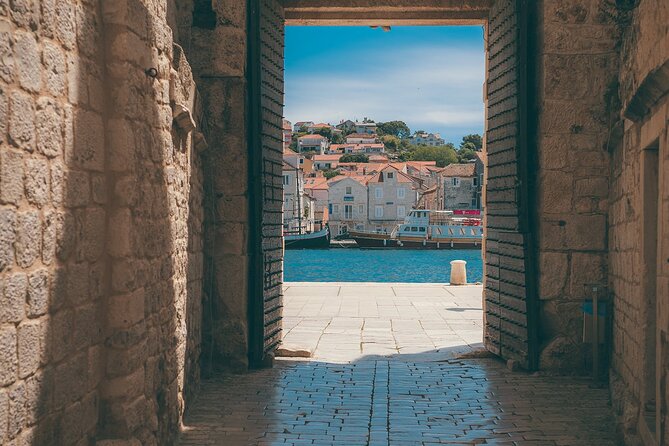
Then you reach Diocletian Palace substructures, sometimes called the cellars or basement halls. This is one of the most genuinely interesting parts of the palace complex because it represents what was behind the public face. These substructures are located at the southern end of Diocletian’s Palace and once helped support Diocletian’s private apartments. They are also described as one of the best preserved ancient complexes of their kind.
Here is the value trade-off. The stop is about 15 minutes, but admission ticket is listed as not included. So you should expect an extra entry cost on the day. If you dislike surprise fees, this is the one place you want to think ahead.
Also, because you have a limited time window, it helps to know what you want to look for. Focus on how the spaces support the palace above, and how the layout communicates power and control. Even if you only see parts quickly, your brain will start mapping how an imperial residence functioned.
If you love architecture and the mechanics of old buildings, this is the stop that can make the rest of Split click.
Trogir’s Central Square: UNESCO streets and Venetian-era rhythm
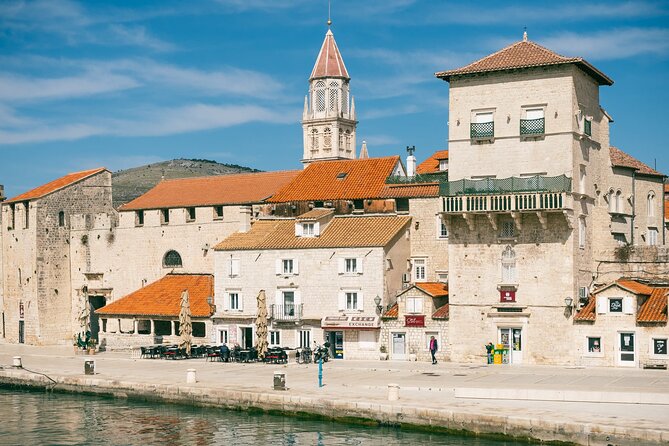
After Split, the tour shifts to Trogir, a charming port city in central Dalmatia. The old town is included in UNESCO, and the Central Square is your first major “Trogir feeling” stop. It’s also known as John Paul II Square.
The square matters because it acts like a hub for the town’s landmarks. It is surrounded by prominent buildings like the Loggia and Clock Tower. The Loggia used to function as a public courtroom, and it is notable for six pillars decorated with capitals and two reliefs carved into the wall. During summer, you might find that a coffee bar nearby makes the pillars harder to see clearly, but you can still focus on the relief called The Relief of Justice by Nicholas Florentino.
This is listed as 15 minutes and free, which is a nice way to transition from Roman palatial spaces into medieval and Venetian-era civic life. If your time is limited that day, this is also one of the best returns for your time. You get a clear sense of how Trogir organized daily life in the square.
Saint Lawrence’s Cathedral: Romanesque-Gothic in layers
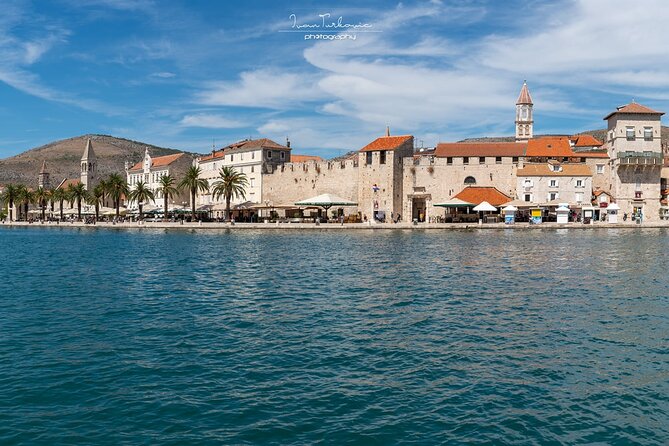
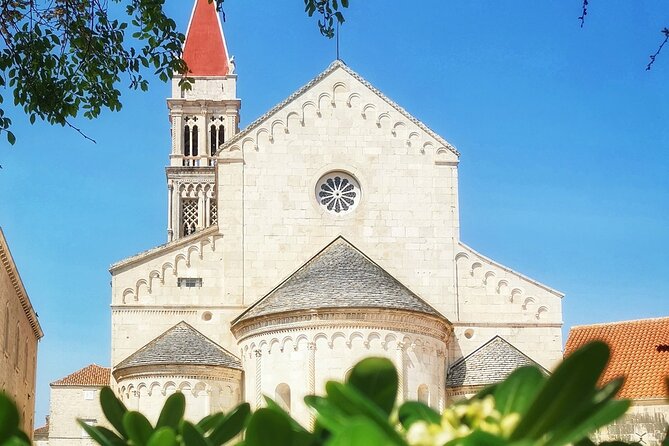
From the square, you move to Saint Lawrence’s Cathedral, known as Katedrala Sv. Lovre. This is a Roman Catholic triple-naved basilica built in Romanesque-Gothic style. One reason it’s memorable is that the construction lasted several centuries, so it reflects multiple styles that succeeded one another in Dalmatia.
The practical thing to know: admission ticket is listed as not included here, and it is also about 15 minutes. That means you will likely see highlights with a guided explanation rather than doing a slow, unhurried wander.
If you care about how styles blend across time, this stop is your payoff. Your guide can help you spot where the building changes feel gradual rather than random. And because the stop is part of a tight itinerary, it is a good choice if you want a curated “taste” of Trogir’s major monuments instead of trying to plan alone.
Kula Karmelengo fortress: Venetian defense and sea views
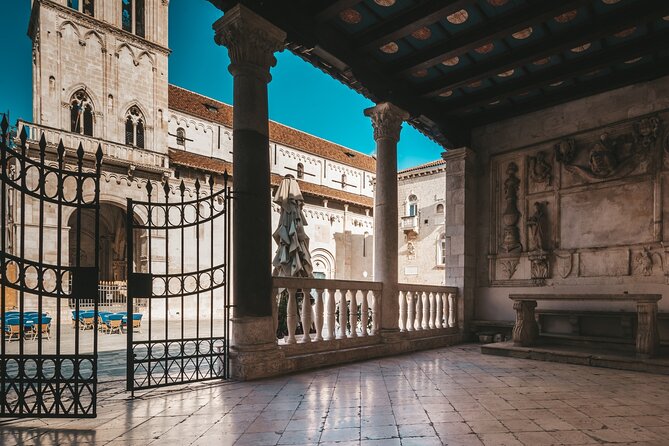
Next is Kula Karmelengo, also called the Kamerlengo Fortress. It is a 15th-century coastal fortress built during Venetian rule to protect Trogir from naval attacks. Even if you are not a military-history person, the location alone explains its purpose. It is made for watching the coast, reading the horizon, and responding quickly when ships appear.
Today, it offers beautiful views over the old town, the marina, and nearby islands, and it functions as a symbol of Trogir’s strategic and maritime importance. This stop is about 15 minutes, and admission is not included.
This is one of the stops where you should slow down for your own eyes, not just your camera. Look back at the town layout from the vantage point, then look toward the water. That combination helps you understand why the fortress mattered.
If you get motion-sick easily, consider that you may be standing outdoors for views. You will likely be fine, but it is a heads-up for comfort.
Town Loggia and Palace Čipiko: civic life and noble power
Trogir ends with two more stops that round out the story nicely.
First is the Town Loggia, listed as free. This was the public meeting place for medieval Trogir where important decisions were announced and legal matters discussed. It is a small detail, but it matters. A town square is not only for scenery. It is where rules were made and communicated.
Then comes Palace Čipiko, or Čipiko Palace. This is the largest residential palace in Trogir, a strong example of Gothic-Renaissance architecture. It belonged to the influential Čipiko family, showing the wealth and power of Trogir’s noble past. Admission ticket is not included here, and the stop is about 15 minutes.
Together, these two stops help you connect the civic side of town with the money side of town. The Loggia is where public decisions happened. The palace is where wealth built status. When you see them as a pair, your understanding of Trogir feels more complete than just ticking off buildings.
Price and logistics: when $228.78 makes sense
At $228.78 per person for about 6 hours, this is not a budget tour. But private VIP tours in Split can be good value when you use them for two things: guided interpretation and time efficiency.
You are paying for:
- a private experience where you are not shared across other groups
- an English-speaking local guide who helps you interpret major sites quickly
- pickup offered, which can save time and walking hassle in a city built around old stone streets
- a route that links Split and Trogir in one day, so you do not burn half a day figuring out transit and priorities yourself
The other key piece is the mix of free and paid entries. Some stops list admission ticket free, like the Peristyle, Saint Domnius Cathedral, Gregory of Nin, Temple of Jupiter, Central Square, and Town Loggia. Other stops list admission ticket not included, including the Diocletian Palace substructures, Saint Lawrence’s Cathedral, Kula Karmelengo, and Palace Čipiko. That means your real day cost depends on what you choose to enter, and how your guide handles timed entry.
Because each stop is short, the tour favors visitors who want structure and explanation more than visitors who want to linger for long interior visits. If you are the type who likes to sit and read every plaque for 45 minutes, plan to add extra time on your own.
Who this tour fits best
I think this is a strong fit if you:
- want a private day that connects Roman-era Split with UNESCO Trogir
- like getting context fast instead of piecing history together alone
- hate crowd chaos and want a guide to help you move in the right order
- want a local storytelling style, like the personal anecdotes shared by guides such as Kristina and Andrea
You might rethink it if you:
- want fully included entry tickets at every stop
- dislike a tighter pace where many sites are covered in about 15 minutes
- prefer to explore slowly with no guidance
Should you book this Split and Trogir VIP Tour?
If you want one day that gives you a real sense of place, yes, I’d book it. The standout value is the pairing: Diocletian’s Palace sites in Split, then Trogir’s UNESCO center and fortress views. It is a smart way to see two atmospheres without spending your vacation time on planning.
Before you go, I suggest you budget for the paid entrances listed as not included, and decide ahead of time whether those interiors are a must for you. If you want guided clarity and you are okay with a moderately paced plan, this private tour can turn a long day into a smooth, memorable one.
FAQ
How long is the Best of Split & Trogir tour?
The tour lasts about 6 hours.
Where does the tour take place?
It is in Split, Croatia, and includes stops in Split and Trogir.
Is pickup available?
Yes, pickup is offered.
Is this a private tour?
Yes. Only your group will participate.
What language is the tour in?
The tour is offered in English.
Do I get a mobile ticket?
Yes. A mobile ticket is included.
Are entrance tickets included for every stop?
Not all of them. Some stops are listed as admission ticket free, while others are listed as not included, including Diocletian Palace substructures, Saint Lawrence’s Cathedral, Kula Karmelengo, and Palace Čipiko.
Is free cancellation available?
Yes. You can cancel up to 24 hours in advance for a full refund.
Are service animals allowed?
Yes, service animals are allowed.
West Along the Kastela Coast
Freshly written up around Split

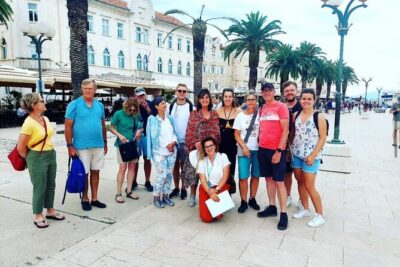
Trogir, Ciovo & the Kastela Coast, top to bottom.
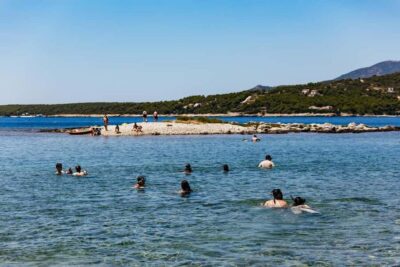 ★ 4.6Split/Trogir: Blue Cave, Mamma Mia, Hvar and 5 Island TourFrom $1096,320 reviews
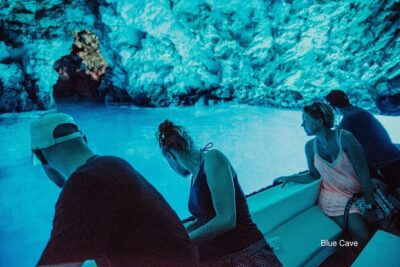 ★ 5.0Blue cave, Mama Mia and Hvar, 5 island speedboat tour from TrogirFrom $1112,861 reviews
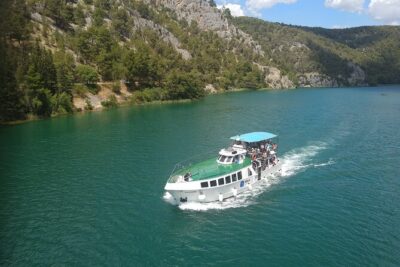 ★ 5.0Krka Waterfalls Day Tour with Boat Ride from Split and TrogirFrom $322,134 reviews
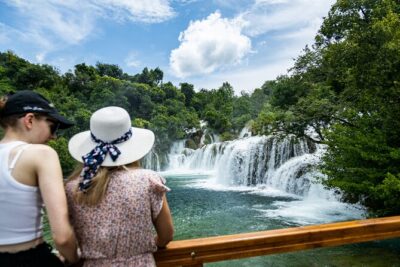 ★ 5.0Krka Waterfalls tour with Trogir Walking tour and Krka panoramic boat cruiseFrom $481,659 reviews
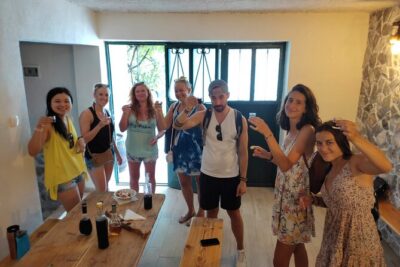 ★ 5.0Krka National Park Tour with tour Guide & Wine tasting from Split & TrogirFrom $501,625 reviews
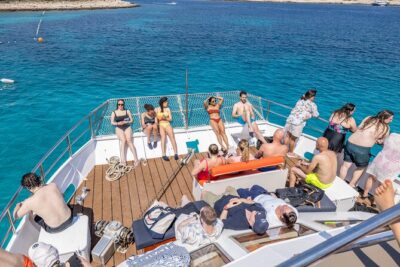 ★ 4.5Hvar, Brač & Pakleni islands cruise with lunch & drinks from Split & TrogirFrom $951,452 reviews
 ★ 4.7Split/Trogir: Krka National Park Day Trip with Wine TastingFrom $49925 reviews
 ★ 4.8From Trogir: Three Islands Half-Day Speedboat TourFrom $67804 reviews
Browse the lists this tour appears in