
REVIEW · GUIDED
Controversies behind Split and Croatia-Anthropologist guide
Split has stories under every stone. This 2-hour city-center walk is built like a culture lesson, with stop-by-stop context on power, memory, and identity, not just photos. You will also hear the controversy that surrounds Diocletian’s Palace, and how older conflicts still shape today’s politics and local identity.
I especially liked two things: Marin’s enthusiasm and the way he answers questions openly, and the fact that the tour uses maps and visuals on his iPad to make connections you would miss on your own. One possible drawback: it’s a standing-and-walking format through busy squares, so if you want lots of sitting breaks, plan for that.
In This Review
- Key takeaways before you go
- Why this Split tour feels different than a standard walking loop
- Price and value: what you get for $35
- Meeting your guide Marin and what to expect from the pace
- Route and timing: where you start, where you finish, and how it flows
- Palazzo di Diocleziano: the controversy behind Diocletian’s Palace
- Riva, Venetian-era squares, and the Ottoman frontier story
- Narodni trg: human remains underfoot and why that changes the tone
- Šperun ulica and the neighborhood story you probably miss
- Trg Franje Tuđmana and the end-of-20th-century identity thread
- Matejuška: the modern viewpoint finish
- Who this tour suits best (and who might want a different style)
- Should you book this Split anthropological city walk?
- FAQ
- How long is the tour?
- How much does it cost?
- What language is the tour in?
- Is the group small?
- Where does the tour start and end?
- Is there a mobile ticket?
- Are admission tickets included?
- What sites are covered during the walk?
- Does the tour run in different time slots?
- What happens if the weather is poor?
Key takeaways before you go
- Anthropology over monuments: you learn how people and ideas collide, from ancient times to the 20th century.
- The Diocletian Palace controversy gets real context: not just who built it, but why locals kept arguing about it.
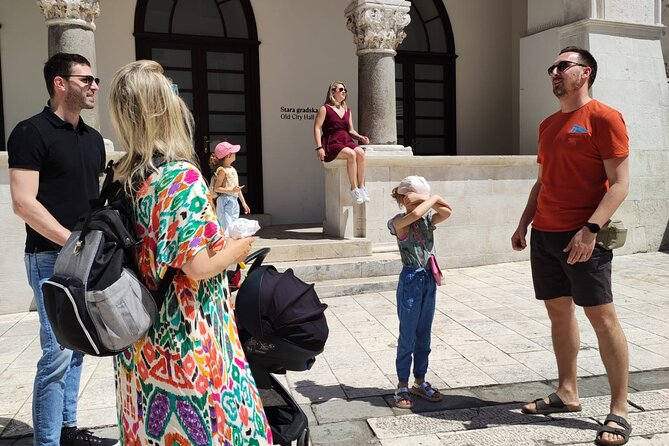
- Small-group attention: capped at 12 travelers for a more conversational pace.
- A route that mixes big squares with smaller neighborhoods: including stories tied to everyday street life.
- Tickets included at key stops: Palazzo di Diocleziano and Matejuška.
- Weather matters: the tour requires good weather, with a reschedule or full refund if it gets canceled for that reason.
Still weighing it up? These Split trips also came through our review desk.
- Split: Krka Waterfalls Trip with Boat Cruise and Swimming★ 4.8 · 10,519 reviews
- From Split: Krka Waterfalls, Food & Wine Tasting Tour★ 5.0 · 9,326 reviews
- Blue cave, Mamma Mia and Hvar, 5 islands speedboat tour★ 5.0 · 7,150 reviews
- From Split: Krka Waterfalls, Food & Wine Tasting Tour★ 4.9 · 6,598 reviews
Why this Split tour feels different than a standard walking loop
This is not a quick-hit itinerary where you tick off landmarks and move on. The whole tone is about how a city makes meaning. You are walking through spaces where different eras tried to control the narrative, then watching those narratives evolve.
The tour’s big theme is the tension between past and present. At each stop, you connect architecture and geography to human behavior: who feels ownership, who gets left out, and why political identity keeps returning to older historical moments. It is a practical way to understand Split without needing a museum ticket and a full day.
I also like that it treats Split as something lived in. Even when the sites are centuries old, the guide keeps the focus on how these stories still land today.
Price and value: what you get for $35
At $35 per person for about 2 hours, you are paying for more than route planning. You are buying interpretation, and this tour is built around specific themes that most self-guided walks skip.
Here’s what supports the value. You get a small group capped at 12, a live guide with a teaching style, and admission tickets included for two parts of the route (Palazzo di Diocleziano and Matejuška). Other stops are free to visit, which helps keep the cost from ballooning once you are already in town.
You also get flexibility. The tour offers multiple tour times so you can fit it around ferry arrivals, lunch, or your evening plans, instead of forcing everything into one slot.
Meeting your guide Marin and what to expect from the pace
One of the most praised parts of the experience is the guide himself, Marin. The standout detail is how prepared and warm he is, and how clearly he brings the subject alive. You do not just get facts. You get explanations that make it easier to ask follow-up questions.
You should also expect a guide who uses visuals. In a small-group setting, having maps and visuals on his iPad helps you track where you are and why the story matters. That means less time lost in guesswork and more time actually learning.
One more practical note: some people in the group found parts tiring because they were standing for stretches. The guide will look for shade when possible, but you should still wear comfortable shoes and be ready for a city-center walk.
Route and timing: where you start, where you finish, and how it flows
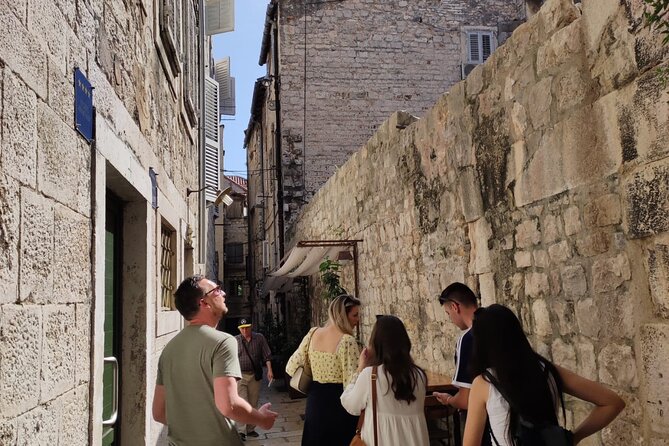
The tour meets at Ul. kralja Tomislava 12 and ends at Trumbićeva obala 2. That end point is a nice reality check, because you are finishing on the waterfront side of the center after going through the older streets and squares.
Time-wise, the tour runs about 2 hours. The pacing is structured by short segments at each stop, so you are not stuck staring at one wall for too long. The itinerary moves roughly like this: major site first, then promenade and squares, then neighborhood streets, then a final viewpoint finish.
If you are planning your day, I suggest building in a little buffer for wandering after the tour. Once the guide gives you the framework, you tend to notice more on your own, and a little extra free time helps you soak it in.
And since the tour is near public transportation, you can connect it with the rest of your Split logistics without a long detour.
- Split: Krka Waterfalls Trip with Boat Cruise and Swimming
★ 4.8 · 10,519 reviews - From Split: Krka Waterfalls, Food & Wine Tasting Tour
★ 5.0 · 9,326 reviews - Blue cave, Mamma Mia and Hvar, 5 islands speedboat tour
★ 5.0 · 7,150 reviews - From Split: Krka Waterfalls, Food & Wine Tasting Tour
★ 4.9 · 6,598 reviews - Split/Trogir: Blue Cave, Mamma Mia, Hvar and 5 Island Tour
★ 4.6 · 6,320 reviews
Palazzo di Diocleziano: the controversy behind Diocletian’s Palace
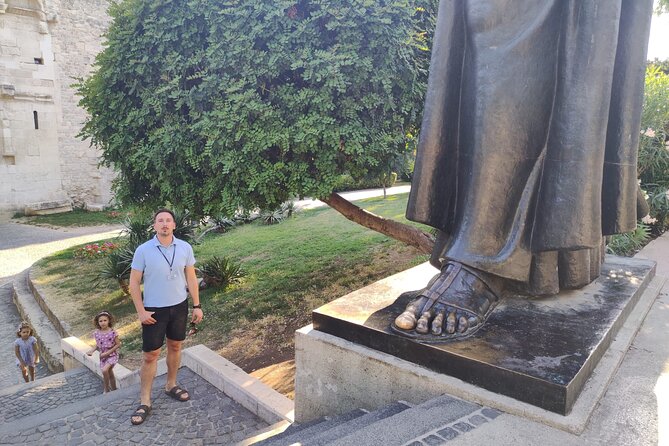
The tour starts at Palazzo di Diocleziano, the center of gravity for Split’s story. This is the one stop that is both the most famous and the most complicated. You are told from an anthropological angle, meaning the focus is not only on what Diocletian built, but on why it became contested ground for locals across multiple historical periods.
The key value here is learning how one site can mean different things at different times. A palace is not just a building. It becomes an argument, a symbol, and a resource depending on who holds power. You will connect that to the broader theme of the tour, how older conflicts shape the way people talk and think today.
Also, this is one of the places where the tour includes admission. So you are not scrambling for tickets right at the start.
If you usually like “story first” tours, this stop is where the whole experience clicks. If you only want an architectural overview with minimal politics, you may find the controversy-heavy framing more intense than you expected, but it is central to the tour’s identity.
Riva, Venetian-era squares, and the Ottoman frontier story
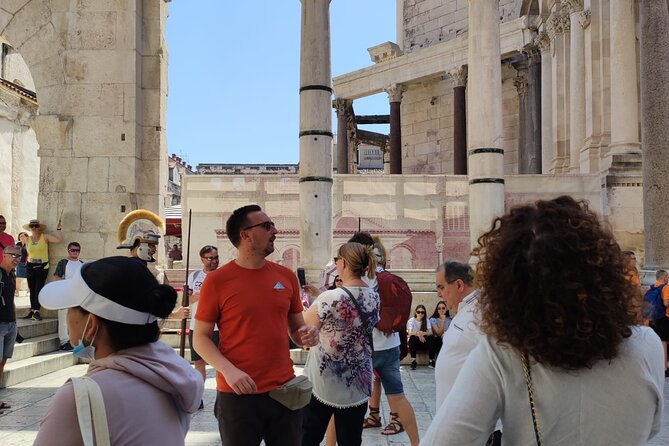
After the palace, you move into public space, first with Obala Hrvatskog narodnog preporoda, a waterfront promenade where daily life happens and where important events took place. It is a smart contrast. You go from a heavily historic power structure to the streets people actually use, and it helps you understand how politics and daily life overlap.
Next is Trg Braće Radić, described as an old Venetian square. Here the stories shift toward Split as a frontier zone, including the period when Split was the last frontier fighting the Ottomans. What I liked is that this is not treated as dead history. The guide also ties it to how that period is perceived now, and why it still shapes identity and politics.
These two segments are where you start to feel the tour’s core method: it links geography to collective memory. The square is not just a place to stand and point. It becomes a stage for centuries of identity-making.
Narodni trg: human remains underfoot and why that changes the tone
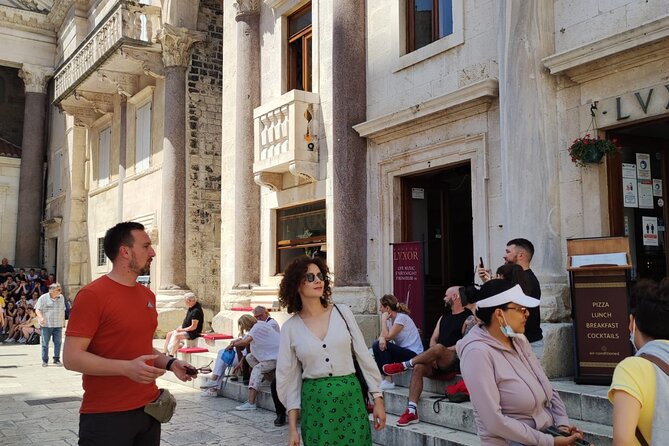
At Narodni trg, the tour makes one of the most thought-provoking turns. You learn about the fact that there are human remains under your feet because the location was once an ancient graveyard. That single detail changes how you read everything around you.
Then the story expands into the later “some amazing events, but also some infamous events” framing. The tour uses this to show how sites collect layers. Over time, the same ground can hold different meanings, and people can interpret the past in ways that serve present-day ideas.
This stop is not designed to be scary. It is designed to be clarifying. You come away with a sense that Split’s center is layered in more than just architecture.
If you are sensitive to topics involving remains or violent history, you might want to mentally brace for that moment. The way it is presented is clearly guided, but it is still a heavy fact.
Šperun ulica and the neighborhood story you probably miss
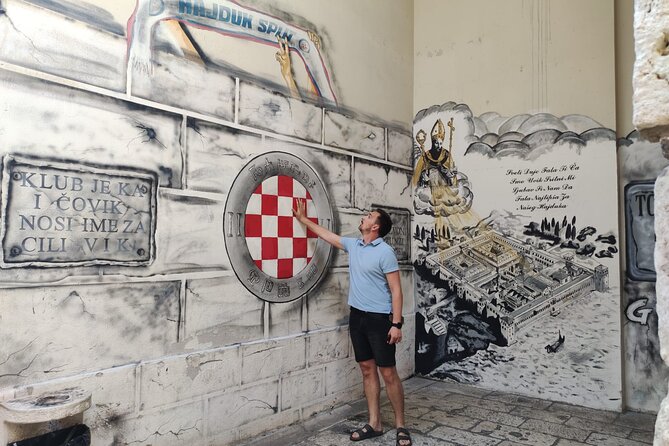
Then you move into Šperun ulica, one of Split’s well-known neighborhoods where many tourists stay. I like that the tour does not treat it like a backdrop. Instead, it gives you the story behind the neighborhood, which is exactly what most people skip when they just look for photos and restaurants.
The practical payoff is that you stop seeing the streets as a generic hotel area and start understanding them as part of a larger social map. It helps you later when you explore on your own and wonder why a certain area feels different from the next.
If you like walking tours where the route is meaningful, this stop is a good mid-tour reset.
Trg Franje Tuđmana and the end-of-20th-century identity thread
Next is Trg Franje Tuđmana, the square named after Croatia’s first president. Here the story shifts into turbulent times at the end of the 20th century, and how that era is treated like a hard lesson with issues that still divide society.
This part matters because it explains why certain public spaces carry weight even when you do not know local history. A name on a square is not neutral. It can signal belonging, values, and political memory, and that shapes how locals move through their own city.
This stop also ties back to the Diocletian Palace theme. Different centuries, same human pattern: whoever tells the story tries to influence who belongs, what should be remembered, and what should be argued.
Matejuška: the modern viewpoint finish
The tour ends at Matejuška, where you get the most famous view of Split. The finish is not just scenic. The guide uses it as a final framing point, giving insight into modern Split and closing the loop between old and new.
Because the viewpoint is the last step, it often works like a summary without repeating itself. You look out, and suddenly the city feels like one connected story instead of disconnected attractions.
Admission is included at this stop too, so you are not left with last-minute add-ons.
Who this tour suits best (and who might want a different style)
This is perfect if you like history explained through people, politics, and identity. If you enjoy asking why something matters, this tour gives you room for questions, and Marin’s teaching background shows in how he handles them.
It also suits you if you already know Split has layers, but you want a guide to show how those layers connect. The pacing, short segments, and focus on controversies make it a good “get your bearings fast” experience.
You might consider something else if you want a mainly architectural walk with minimal political context, or if you want lots of long sitting breaks. The format is designed for walking and standing for short explanations.
Should you book this Split anthropological city walk?
If you are choosing between another standard landmark tour and something more thoughtful, I think this one is the better match. For $35, you get a small-group experience, a guide who uses visuals, and included admission at the two key ticketed parts. More importantly, you get a framework for understanding why Split argues with its own past, and why that argument still affects today.
Book it if you want more than postcards and you like your travel with a bit of challenge. Skip it if your ideal tour is mostly light commentary and photo stops.
Either way, pack comfortable shoes and go in ready to think. Split rewards that.
FAQ
How long is the tour?
The tour lasts about 2 hours.
How much does it cost?
The price is $35.00 per person.
What language is the tour in?
The tour is offered in English.
Is the group small?
Yes. The maximum group size is 12 travelers.
Where does the tour start and end?
It starts at Ul. kralja Tomislava 12, 21000, Split, Croatia and ends at Trumbićeva obala 2, 21000, Split, Croatia.
Is there a mobile ticket?
Yes, you receive a mobile ticket.
Are admission tickets included?
Admission ticket inclusion is listed for Palazzo di Diocleziano and Matejuška. Other listed stops are free.
What sites are covered during the walk?
The route includes Palazzo di Diocleziano, Obala Hrvatskog narodnog preporoda, Trg Braće Radić, Narodni trg, Šperun ulica, Trg Franje Tuđmana, and Matejuška.
Does the tour run in different time slots?
Yes, you can choose from multiple tour times to fit your schedule.
What happens if the weather is poor?
The tour requires good weather. If it is canceled due to poor weather, you will be offered a different date or a full refund.
Freshly written up around Split

Guided, top to bottom.
 ★ 4.9Zadar: Plitvice Lakes Guided Day Tour with TicketsFrom $883,148 reviews
 ★ 5.0From Split: Plitvice Lakes National Park Guided TourFrom $783,002 reviews
 ★ 4.9From Zagreb: Plitvice & Rastoke Guided Day Trip with TicketFrom $612,955 reviews
 ★ 4.9From Split: Plitvice Lakes Guided Tour with Entry TicketsFrom $1162,468 reviews
★ 5.0From Split: Plitvice Lakes National Park Guided TourFrom $782,355 reviews
★ 4.9From Split: Plitvice Lakes Guided Tour with Entry TicketsFrom $1162,468 reviews
★ 5.0From Split: Plitvice Lakes National Park Guided TourFrom $782,355 reviews
 ★ 5.0Plitvice Lakes National Park Guided Day Tour from SplitFrom $781,948 reviews
 ★ 4.9Zagreb: Rastoke & Plitvice Lakes Guided Tour with TicketFrom $571,897 reviews
 ★ 4.8Zrmanja River: Half-Day Guided Kayaking Tour Near ZadarFrom $641,817 reviews