
REVIEW · WALKING TOURS
Dubrovnik By Night Walking Tour
Dubrovnik changes the moment the sun drops. This after-dark walk is a fast way to get your bearings and still hear stories that make the Old City feel real, not like a postcard. I especially like how you hit major landmarks in one stretch, and how guides such as Petra, Mihaela, Mikhaila, Danielle, and Goran bring history to life with details about daily life and the 1990s war. One drawback to consider: if the group gets larger than expected, hearing can suffer when radios or guides are juggling.
The tour runs about 1 hour 30 minutes, in English, and it keeps the pace friendly enough for most people. You also avoid the day heat and the worst crowds, which makes it easier to enjoy the illuminated streets and stonework without rushing.
You’ll start outside the walls near Pile Square (your guide is easy to spot), then walk through Stradun, Luza Square, and the cathedral area, before winding into smaller side streets. Expect a guided stroll with plenty of photo moments, but not a museum-style stop-in and out of buildings.
In This Review
- Key things I’d watch for
- Why an evening walk works so well in Dubrovnik’s Old Town
- Meeting outside the walls at Pile Square: Amerling Fontana to Pile Gate
- Stradun to Luza Square: the postcard heart, plus the stories that connect it
- Rector’s Palace, the Cathedral, and the power center you see in passing
- Ivan Gundulic, Jesuit Stairs, and Prijeko Street’s maze
- Guides make or break it: the stories that stand out
- Price and value: about $24 for 90 minutes of guided orientation
- Pace, shoes, and who this tour fits best
- Practical tips to make your night go smoothly
- Should you book Dubrovnik by Night?
- FAQ
- How long is the Dubrovnik By Night Walking Tour?
- How much does the tour cost?
- Where does the tour meet, and where does it end?
- What language is the tour offered in?
- Is this tour only a walk, or are there building admissions?
- What is included in the price?
- What is not included?
- What is the maximum group size?
- Does the tour depend on weather?
Key things I’d watch for
- A smart first-night orientation of the Old Town, timed for cooler air and softer light
- Blue-umbrella meeting point outside the walls, near Pile Square (easy to find)
- Major highlights in one loop, from Pile Gate to Rector’s Palace to the cathedral zone
- War-era honesty in the talk, often mentioned as one of the most memorable parts
- Max 20 people, which usually helps the guide keep control and keep you together
More Dubrovnik covered at walking pace
- Dubrovnik: Old Town Walking Tour★ 4.8 · 5,174 reviews
- Dubrovnik Discovery Old Town Walking Tour★ 5.0 · 4,458 reviews
- Dubrovnik: Game of Thrones Walking Tour★ 5.0 · 1,732 reviews
- Dubrovnik Old Town History Walking Tour★ 5.0 · 1,684 reviews
Why an evening walk works so well in Dubrovnik’s Old Town
Dubrovnik is one of those cities where the walls and street shapes can feel confusing at first. In daylight, you can end up sweating, squinting, and moving with the crowd. At night, the same lanes feel calmer. You get the structure of the Old Town without the midday squeeze, and the lighting makes it easier to notice details you might miss on your own.
I love that this tour is built as an overview. You’re not doing a deep dive into one museum. Instead, you’re getting a guided map in your head, stop by stop. By the end, you know where Stradun runs, how Luza Square sits at the center, and where the big civic buildings are relative to the side streets. That matters because Dubrovnik is all about orientation. Once you understand the layout, you can wander with confidence the next day.
The other big plus is the guide element. Multiple names came up in reviews, and the pattern is consistent: guides speak clearly in English, move the group at a human pace, and include context that ties the city’s layout to real events. People also specifically praised frank discussion of the early 1990s conflict and how it shaped the city, which is not always handled with care elsewhere. You’ll get the feeling that the guide wants you to understand the place, not just hear dates.
The main consideration is practical. You are walking. Even with the tour running about 90 minutes, you’ll cover enough cobblestones that good shoes matter. Also, on rare nights where groups combine, some reviews flagged that it can be harder to hear. If you care a lot about crystal-clear audio, arrive a little early and stand close.
Meeting outside the walls at Pile Square: Amerling Fontana to Pile Gate
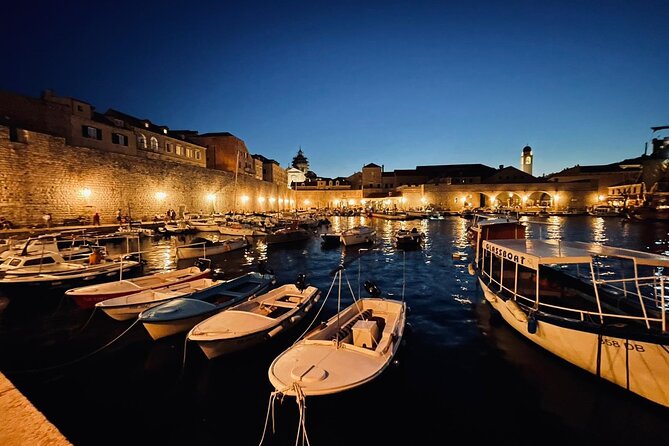
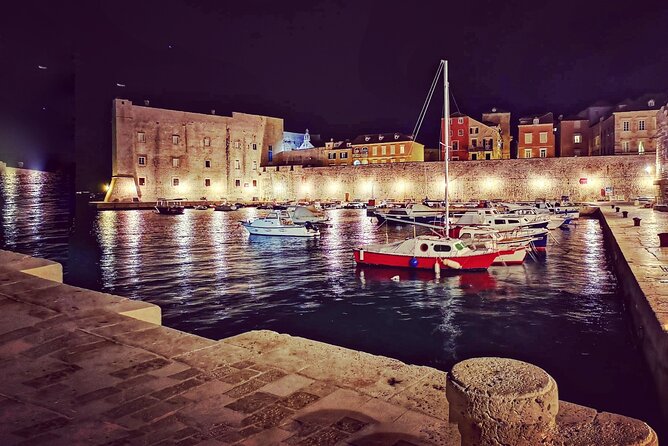
The start point is a big help if you hate hunting for meeting spots in a historic maze. You meet at Brsalje ul. 2 and your guide waits at Amerling Fontana, right by the Dubravka gift shop outside the walls at Pile Square. Your guide holds a blue umbrella, which is a small detail, but it makes the whole thing painless.
From there, the first stop is Amerling Fontana itself. This is where the tour sets tone. You’re gathering as a group, the guide checks where everyone is, and you begin to understand how the Old City sits inside its walls. Even though the time is short, it gives you a starting reference point. That matters because Dubrovnik’s Old Town can feel like one long loop until you catch its “spine.”
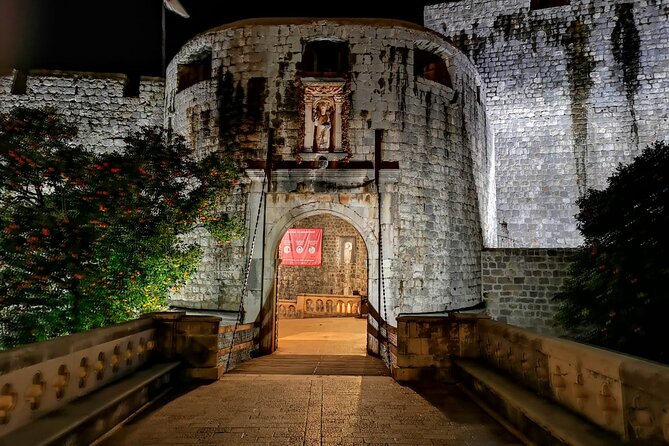
Then you move to Pile Gate. Here, the guide uses the city map to explain the layout. You’ll hear a short intro to how the city is structured, and you get the sense that the walls are not just scenery, they are the framework of daily life. People who booked this tour early in their trip often said it helped them get around fast. That’s exactly what the Pile Gate talk supports: it turns the streets into something navigable.
One small drawback is that this section can feel like an info burst. If you are tired from travel, you might want to mentally pace yourself. Think of it as the warm-up, not the final story. Once you hit Stradun, the tour usually becomes more visual and easier to follow.
Stradun to Luza Square: the postcard heart, plus the stories that connect it
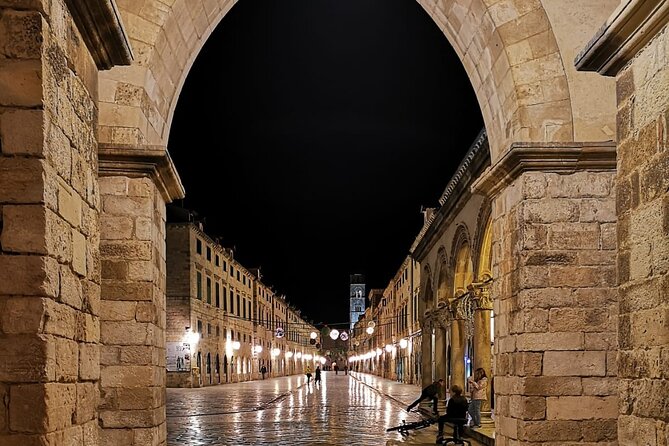
After the gate area, the tour heads into Stradun. Stradun is Dubrovnik’s main street, the one you see in almost every photo. At night, it still looks dramatic, but it feels more livable. Shops and house facades line the street, and the stone seems to “read” better when the light softens. You also get a sense of where crowds flow in peak hours, so you can avoid those rhythms later.
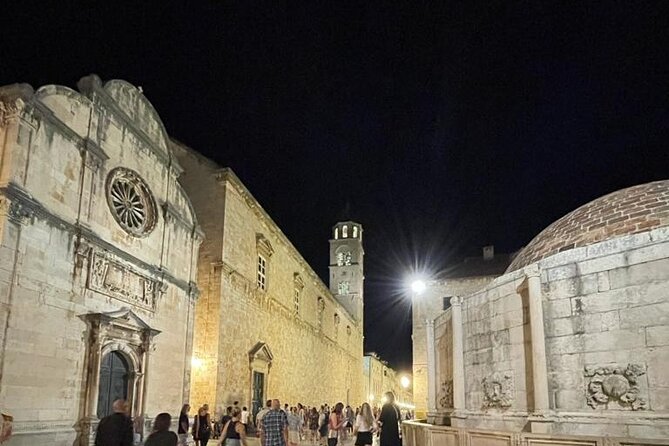
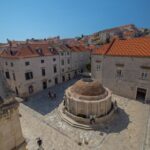
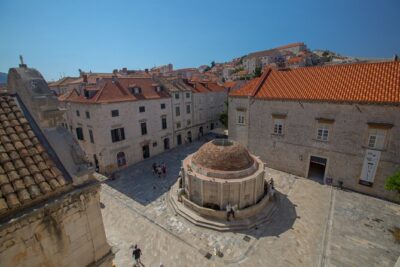
One highlight here is how the guide links Stradun to water and old systems. You’ll hear about the early pharmacy and the first water supply connected to Onofrio Fountain. Even if you’ve seen the fountain in pictures, it hits differently when someone explains why the city needed that kind of planning. Dubrovnik was built to last, and the city’s stone choices reflect that.
Next comes Luza Square, the old town’s main square. This is the central node where several major sights cluster. The guide points out the patron church in the middle, along with the bell tower and Sponza Palace. At night, Sponza and the surrounding stonework can look almost theatrical, but you’re not just admiring the scene. You’re also learning how civic power, religion, and daily commerce were tied together in this space.
Luza Square is also where many people naturally stop walking and take photos. Keep your feet moving with the group, but don’t be afraid to pause for a few shots. The guide timing is built around visibility and flow, and staying with the group helps you arrive at the next landmark without getting lost in side alleys.
If there’s a potential downside, it’s that Stradun can still have some foot traffic at night. The key difference is you’re guided through it as a corridor rather than stuck in it.
Rector’s Palace, the Cathedral, and the power center you see in passing
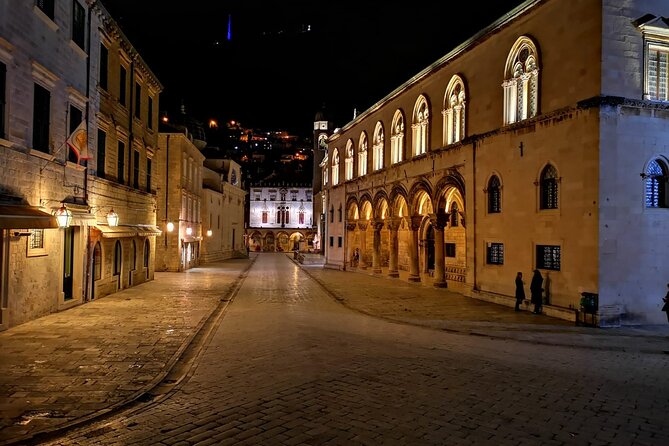
From Luza Square, you’ll reach Rector’s Palace, one of the standout buildings in the Old City. Reviews often call it the most beautiful building in Dubrovnik, and I see why. It looks like authority made of stone, with details that hint at the city’s governance and legal life.
The guide explains the building’s structure, its history, and how it’s used today. This is where the tour earns its “one walk, many highlights” promise. You get an idea of what was happening inside these walls, then you understand why the layout of Old Town makes sense. It also helps you recognize the palace area if you later walk past on your own.
Then you move to the Cathedral of the Assumption of the Virgin Mary. This is Dubrovnik’s biggest church, and the guide will mention its treasury. Even without going into major interiors, you’ll come away understanding its role in the city’s religious and cultural life.
What makes these stops valuable is the way the guide connects them. You’re not collecting random monuments. You’re building a mental map of “who mattered here,” and why these buildings were placed where they are. When this works, the walk feels less like sightseeing and more like getting the city’s logic.
One consideration: if you’re hoping for a tour that includes lots of inside visits, this is not that style. The walk focuses on outdoors, street-level interpretation, and passing key structures. You’ll likely appreciate that if your main goal is orientation and context, not ticketed entries.
- Blue Cave Small-Group Boat Tour from Dubrovnik
★ 5.0 · 9,360 reviews - Full-Day Dubrovnik Elaphite Islands Cruise with Lunch and Drinks
★ 5.0 · 8,823 reviews - Dubrovnik: Epic Game of Thrones Tour + Lokrum & Saver Option
★ 4.9 · 5,995 reviews - Dubrovnik: Elaphiti Islands Full-Day Cruise with Lunch
★ 5.0 · 5,938 reviews - Dubrovnik: Old Town Walking Tour
★ 4.8 · 5,174 reviews
Ivan Gundulic, Jesuit Stairs, and Prijeko Street’s maze
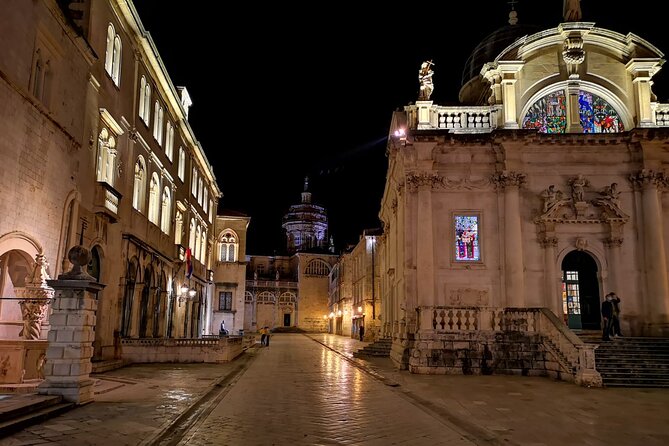
After the big civic and religious area, the tour shifts into details that make Dubrovnik feel lived-in. You’ll see the Monument of Poet Ivan Gundulic, and you’ll also be pointed toward the Jesuit Stairs. These smaller stops are great because they give your eyes something to “grab onto” beyond the main squares.
The final stretch is Prijeko Street, where the tour turns into a stroll through narrower lanes. This is the part that many people seem to enjoy most because it feels closer to how locals experience the city. You’ll feel the Old Town’s maze-like side streets, and the guide talks about the city through a more everyday lens rather than a ceremonial one.
Prijeko also helps you understand pacing. On your own later, you might rush straight between the main highlights. But after the tour, you’ll be more likely to slow down and take the side lanes that lead to little viewpoints and quieter corners. That is where Dubrovnik turns from a “place to see” into a “place to wander.”
If you’re traveling with teens or you just want something that keeps moving, the Prijeko section offers variety without adding a ton of extra walking time. Still, it’s cobblestone and narrow, so watch your footing and keep your phone flashlight off the guide if there’s a group close behind.
Guides make or break it: the stories that stand out
What I took from the reviews is that the biggest success factor is the guide’s storytelling and delivery. Names that came up again and again include Petra, Mihaela, Mikhaila, Daniela, Goran, Davor, Danielle, and Makayla. The consistent praise is not just about facts. It’s about clarity and engagement, plus a willingness to answer questions.
Many reviews highlighted two kinds of content. First is the city-state and civic story: why the buildings are where they are, how governance and religion shaped space, and what daily life looked like in earlier centuries. Second is the 1990s war context. People specifically said the guide handled the conflict honestly and with respect, and that it made the city’s survival feel personal rather than abstract.
That matters to you because Dubrovnik has layers. If you only hear the medieval or Renaissance glow, you miss why the city rebuilds and remembers. When the guide includes the more difficult recent history, the Old City stops feeling like a theme park. It starts feeling like a real home that went through real stress.
Also, the timing helps the storytelling. Night air makes it easier to listen without sweating through your concentration. Several reviews also praised the tour as a good way to beat the heat, and starting around late evening or near sunset was mentioned as a smart choice.
If you hit a night where groups combine, a few reviews said hearing can be an issue. This is usually rare, but you can protect yourself by staying attentive at the front of the group when possible. If you cannot hear a section, step closer rather than tuning out.
Price and value: about $24 for 90 minutes of guided orientation
At around $24.19 per person, this isn’t expensive for a city like Dubrovnik, especially because you get more than “walk and look.” The tour includes a licensed local guide, local taxes, and a walking tour experience. You’re also getting a mobile ticket and group discounts, which can help if you’re traveling with friends or family.
The real value is what you get for the time. Ninety minutes is long enough to connect the dots across several landmarks, but short enough that you do not burn an entire evening. You come away with a structure you can use the next day when you visit sights on your own. That can save money and time, because you won’t need as much guesswork or re-tracing.
If you are comparing options, think about what you want from your first night:
- If you want a quick orientation and a clear sense of where to go next, this is a strong deal.
- If you want lots of inside visits, skip this as your only tour and add something ticket-based separately.
Also, the small group ceiling, up to 20 people, matters. Larger crowds usually mean shorter explanations and more walking pressure. A cap like this is a practical quality signal, even if your guide still has to keep everyone moving.
Pace, shoes, and who this tour fits best
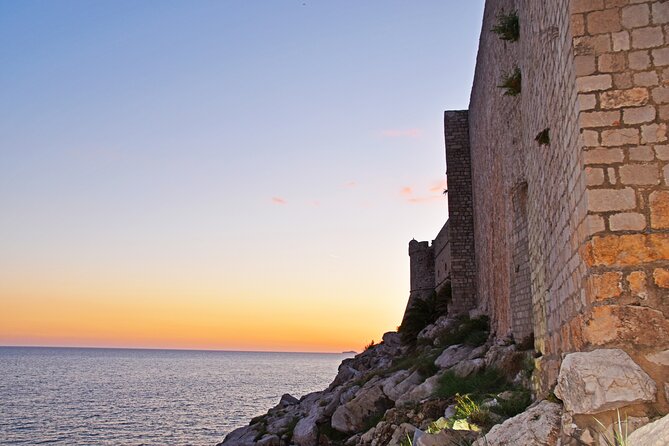
This is a walking tour through the Old City’s key streets and squares. That means you should dress for stone underfoot and bring shoes you trust on uneven cobblestones. Even in cool weather, Dubrovnik’s Old Town has little rise and fall, and your legs will notice if you’re wearing flimsy sandals.
The good news is the 90 minute format keeps it doable. Reviews mention people going at a slow pace and still enjoying the tour. It’s also described as suitable for most travelers, and service animals are allowed. You’ll be near public transportation, but you should not plan to rely on quick mid-walk exits. Think of it as one guided circuit.
This tour is especially well suited for:
- First-time Dubrovnik visitors who want orientation fast
- People who want to learn the historical context without committing to a long day
- Anyone who prefers after-dark sightseeing to avoid heat and heavy daytime crowds
- Families with teens who can handle a steady walk and appreciate stories
It may be less ideal if you hate walking, need frequent breaks, or want a schedule packed with interior visits and ticketed stops. But if your goal is to understand the city’s shape and meaning, this tour hits that target.
Practical tips to make your night go smoothly
Here are the moves that tend to pay off with this kind of evening walking tour.
First, plan your night around cooler hours. Multiple reviews praised the timing as a way to avoid day heat, and late evening also means the city looks stunning at night. If you can, eat earlier so you are not hungry halfway through the walk.
Second, be ready for standing and moving. Some stops are short, about 5 to 15 minutes. That’s normal for a tour that wants to cover multiple landmarks without running long.
Third, take the audio seriously. One review flagged an issue when two groups were combined and communication failed, so it was hard to hear after a point. If you notice the sound is off, move closer to the guide and raise a hand at a natural stopping moment.
Finally, use the tour as a map for your next hours. When you leave, look back at the route you walked: Pile area outside the walls, Stradun main street, Luza Square, then the rector and cathedral zone, and finally the side lanes of Prijeko. That mental route helps you explore without stress.
Should you book Dubrovnik by Night?
I think you should book this tour if you want a low-effort, high-clarity way to start enjoying Dubrovnik. It’s priced reasonably, runs about an hour and a half, and focuses on key highlights with a local guide who connects the streets to real history. The after-dark timing is a big part of the value, especially if you’re trying to dodge daytime heat and crowds.
I would hesitate if you strongly prefer guided entry into buildings, or if you know you struggle with hearing in larger group settings. Also, if you are the type who needs absolute reliability and hates last-minute changes, you should be aware that one review reported a guide no-show. That seems rare, but it’s still a reminder that group tours are not private guarantees.
If you book, do it as an orientation anchor. Take it early in your stay, wear decent shoes, and treat it as your nighttime walking class on how Dubrovnik works. Then spend the rest of your trip wandering with better instincts.
FAQ
How long is the Dubrovnik By Night Walking Tour?
The tour lasts about 1 hour 30 minutes.
How much does the tour cost?
The price is $24.19 per person.
Where does the tour meet, and where does it end?
It starts at Brsalje ul. 2, 20000 Dubrovnik, Croatia, and ends at Luza Square (Luža ul., 20000, Dubrovnik, Croatia).
What language is the tour offered in?
The tour is offered in English.
Is this tour only a walk, or are there building admissions?
It is a walking tour focused on seeing sights and learning from a guide. The tour notes admissions as free at the listed stops, and it does not describe ticketed entry experiences.
What is included in the price?
Included are a local experienced licenced tour guide, local taxes, and the walking tour.
What is not included?
Hotel pickup and hotel drop-off, plus transportation to/from attractions, are not included.
What is the maximum group size?
The tour has a maximum of 20 travelers.
Does the tour depend on weather?
Yes. It requires good weather, and if it is canceled due to poor weather you will be offered a different date or a full refund.
Walk It: More of Dubrovnik at Ground Level


Freshly written up around Dubrovnik




Walking Tours, top to bottom.
 ★ 4.8Dubrovnik: Old Town Walking TourFrom $235,174 reviews
 ★ 4.9Split: Old Town and Diocletian Palace Walking TourFrom $174,727 reviews
 ★ 5.0Dubrovnik Discovery Old Town Walking TourFrom $244,458 reviews
 ★ 5.0Walking Tour of Split and Diocletian’s PalaceFrom $482,588 reviews
 ★ 5.0Dubrovnik: Game of Thrones Walking TourFrom $301,732 reviews
 ★ 5.0Dubrovnik Old Town History Walking TourFrom $241,684 reviews
 ★ 5.0Krka Waterfalls tour with Trogir Walking tour and Krka panoramic boat cruiseFrom $481,659 reviews
 ★ 4.8Dubrovnik: City Walls Early Morning or Sunset Walking TourFrom $291,523 reviews
Browse the lists this tour appears in