
REVIEW · DUBROVNIK CITY WALLS & OLD TOWN WALKS
Dubrovnik Old Town History Walking Tour
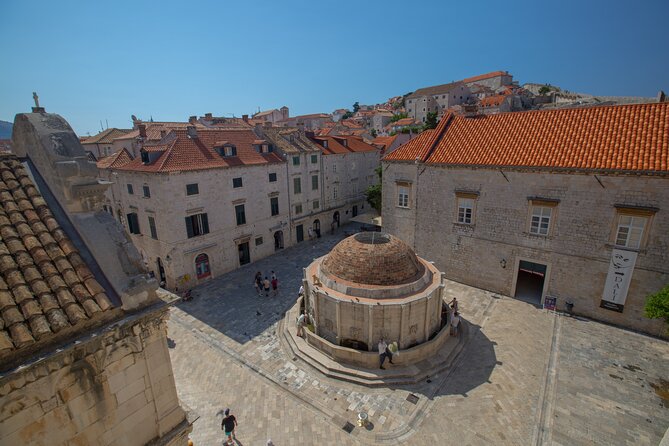
Dubrovnik teaches fast when someone local leads. This 1.5-hour Old Town history walk hits the big sights in a smart route, and your guide ties them together with stories about Ragusa and life in the walled city. I like how the tour starts right at Onofrio’s Large Fountain, so you immediately get oriented before you climb, weave, and connect the dots.
I also like the mix of stops, you cover iconic landmarks and then get the details that make them make sense, from the Franciscan Monastery library and pharmacy to the port stories tied to quarantine and fortresses. A possible drawback is the Old Town is active and step-heavy, so if you have mobility limits, you may find the walking and stairs challenging even with a good pacing from the guide.
In This Review
- Key highlights to look for
- Finding your bearings at Onofrio’s Fountain
- Stop by stop: what each place adds to your Dubrovnik story
- Onophrian Fountain, Aqueduct-era Dubrovnik (Ragusa)
- The Holy Savior area, religion as city design
- Franciscan Church and Monastery, plus the rare pharmacy
- Stradun, the main promenade that runs the city
- Church of the Holy Annunciation and the neighborhood mix
- Gundulic Square area, Ivan Gundulic and the Green Market
- Rector’s Palace, power behind the stone
- The Cathedral of the Assumption, with a famous shipwreck story
- The City Harbor, famous ships and quarantine
- Orlando Column and Luza Square, the wall of legends
- Timing, pace, and how to get more from the 90 minutes
- Who this tour suits best, and who should think twice
- Value check: is it worth $24.19 for Dubrovnik Old Town?
- Practical details that can save you stress
- Should you book this Dubrovnik Old Town history walk?
- FAQ
- What’s the meeting point for the Dubrovnik Old Town History Walking Tour?
- How long is the tour?
- What is included in the price?
- Do I need admission tickets for the stops?
- Is the tour offered in English?
- What’s the cancellation policy?
Key highlights to look for
- Onofrio’s Fountain meeting point makes the start easy to find, right in the middle of the action near town icons
- 90 minutes, many stops so you get a practical hit list for your remaining days in Dubrovnik
- Religious history in context including how different communities shaped the city’s look and identity
- Ragusa to Yugoslavia to the 1990s timeline talk, so modern Dubrovnik doesn’t feel random
- Harbor and quarantine stories that explain why this seafaring city mattered across the Mediterranean
- Local guide energy, with personal anecdotes that add weight to famous buildings
Different routes over the walls and through the old streets
- Dubrovnik: Old Town Walking Tour★ 4.8 · 5,174 reviews
- Dubrovnik Discovery Old Town Walking Tour★ 5.0 · 4,458 reviews
- Dubrovnik Old Town History Walking Tour★ 5.0 · 1,684 reviews
- Dubrovnik: City Walls Early Morning or Sunset Walking Tour★ 4.8 · 1,523 reviews
Finding your bearings at Onofrio’s Fountain
The tour’s meeting point is Onofrio’s Large Fountain next to the Hard Rock Cafe, at Poljana Paska Milicevica 2000. That matters more than you might think. Dubrovnik’s Old Town is compact, but the streets feel like a maze when you’re arriving for the first time. Starting here puts you on the main spine of the city and helps you “read” everything that comes next.
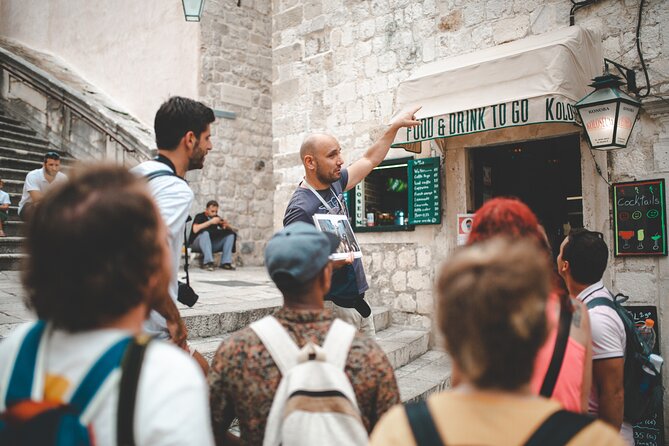
You’ll get a quick intro from your guide, then the group heads off on the Discover Dubrovnik walk for about 1 hour 30 minutes. You move at a pace that works for a group, and you’ll stop often enough to take photos, but not so much that the tour feels like a slow crawl. One reason this tour earns such high marks is that guides tend to bring the place to life, not just list facts. Some have shared family connections and personal ties to the Old Town, like Ermina, who described how her grandmother still lives in the Old Town and walks the steps day to day. Even if your guide is different, you can usually expect that local feel.
Stop by stop: what each place adds to your Dubrovnik story
Onophrian Fountain, Aqueduct-era Dubrovnik (Ragusa)
The first real history payoff comes almost immediately at the Large Onofrio’s Fountain. Your guide uses it as a launch pad for the story of Ragusa, when this was a small maritime trading city-state. The fountain is connected to the city’s water engineering, including the aqueduct system it’s part of. If you only ever see the fountain as a photo spot, you miss why it matters. Here, it becomes a clue about how Ragusa worked, planned, and built.
This is also a good moment to settle your expectations. Dubrovnik is famous for being beautiful, but it’s also about systems, defense, commerce, and survival. That theme shows up again and again.
The Holy Savior area, religion as city design
Just off the starting route, you’ll pass by a small votive church dedicated to the Holy Savior. It’s brief, but it’s useful. The guide talks about how religion shaped daily life and influenced the city’s layout and public spaces. This matters because Dubrovnik is full of sacred sites, and once you understand that religion wasn’t only spiritual, you start noticing patterns in where buildings sit and how the city presents itself.
More Dubrovnik covered at walking pace
- Dubrovnik: Game of Thrones Walking Tour
★ 5.0 · 1,732 reviews - Dubrovnik: Ancient City Walls & Wars Walking Tour
★ 5.0 · 1,270 reviews - Dubrovnik: Game of Thrones Walking Tour
★ 4.9 · 981 reviews - ‘Game of Thrones’ Walking Tour in Dubrovnik
★ 4.5 · 945 reviews - Dubrovnik: Old Town Walking Tour
★ 4.9 · 792 reviews
Franciscan Church and Monastery, plus the rare pharmacy
Next you reach the Franciscan Church and Monastery, a big complex tied to the Order of Friars Minor. You’re given context for what’s where: a monastery, a church, a library, and a pharmacy. The stop is especially strong if you like details that feel oddly specific, because this place is full of them.
A few standout points your guide will cover:
- The earliest monastery built in the 13th century outside the walls
- A 17th-century library with over 20,000 books, including about 1,200 old manuscripts
- The pharmacy dates from 1317, and it’s described as the third oldest, still functioning pharmacy in the world
Even if you don’t go into every room, you’ll walk away with a sense that this wasn’t just a church stop. It was knowledge, care, and tradition in one cluster. It also helps you understand why Dubrovnik felt “put together” over centuries, not just rebuilt once after modern trouble.
Stradun, the main promenade that runs the city
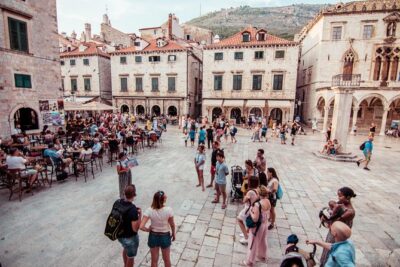
Then you step onto Stradun, also called Placa. This is the most favored promenade and gathering place, used for public feasts and processions, and also the main business street. Your guide points out that the street’s width and layout effectively divides the city into northern and southern halves.
This stop is practical. When you’re later wandering on your own, you’ll know where you are because this street is the spine of the whole Old Town experience. It also becomes a place to absorb the larger timeline. You’ll hear about Ragusa’s decline, then the later periods that shaped Dubrovnik, including the Yugoslavia era and the Homeland War in the 1990s. Guides often handle this with care, and some bring local perspective. The point is not to scare you, it’s to explain why certain buildings, neighborhoods, and emotions still matter.
Church of the Holy Annunciation and the neighborhood mix
From Stradun you move into narrower streets toward the port area. Here you’ll stop near the Orthodox Christian Church and your guide explains how other religious communities influenced Dubrovnik’s history, including Orthodox, Jewish, and Muslim communities.
This is one of the tour’s best “big picture” moves. Dubrovnik can look like a uniform museum city from a distance. Up close, you see it was always a crossroads, shaped by the Mediterranean and trade routes. The guide helps you notice that without turning it into a lecture.
Gundulic Square area, Ivan Gundulic and the Green Market
Next you reach the Monument of Poet Ivan Gundulic in Gundulic square, and you’ll have time to observe the local produce market nearby. The tour doesn’t treat the market as scenery only. It uses the moment to talk about local traditions and everyday life that continues alongside the historical landmarks.
If you’re planning meals, this stop can help you choose where to snack later. Even if you do not buy anything, you see how people actually move through the city and what’s fresh during your visit window.
Rector’s Palace, power behind the stone
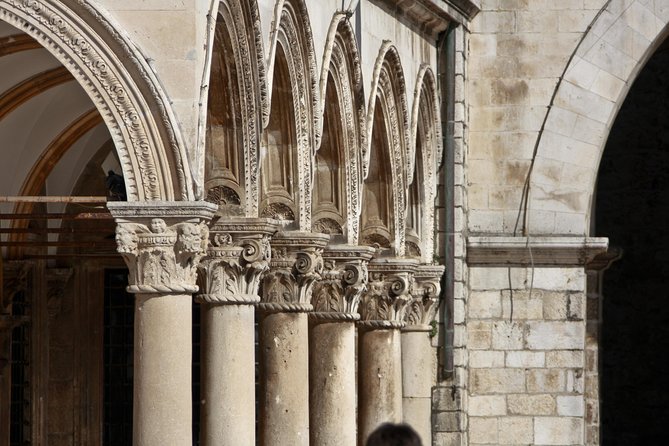
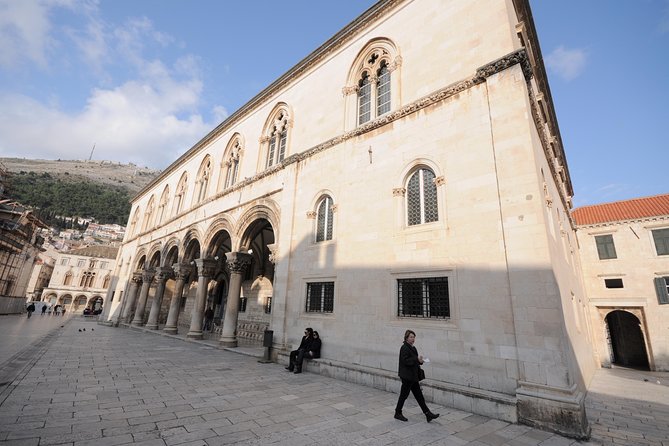
Then you reach one of Dubrovnik’s most important civic buildings, the Rector’s Palace. The guide explains its role as the seat of the Rector of the Republic of Ragusa from the 14th century until 1808. It also served as the seat of the Minor Council and state administration, with additional functions like an armoury, powder magazine, watch house, and prison.
This stop is a reminder that Dubrovnik’s elegance came from governance and control. You’re not just looking at a pretty palace façade, you’re seeing a power center. If you like understanding how republics actually functioned, this is a big one.
The Cathedral of the Assumption, with a famous shipwreck story
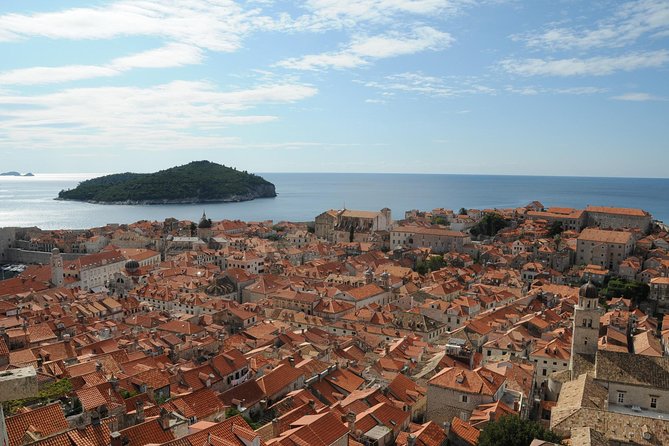
Next is the Cathedral of the Assumption of the Virgin Mary. You’ll hear the legend that Richard the Lionheart was returning from the Crusades in 1192, got shipwrecked in a storm, and cast aground on Lokrum Island in front of Dubrovnik.
Legends are tricky because they’re not history in the strict sense, but they are useful cultural signals. This one shows how Dubrovnik connected to European stories long before it became a tourist slogan. Plus, it’s a good pause point before the port segment, because the cathedral zone helps you mentally reset from streets to larger structures.
The City Harbor, famous ships and quarantine
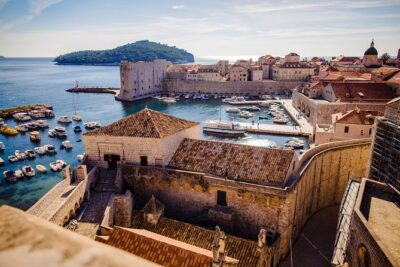
At City Harbor, you shift from stone and churches to maritime survival. Ships from Dubrovnik were renowned throughout the Mediterranean, and the Republic’s galleons could be found across Europe and beyond. Your guide connects this to the legendary Arsenal, which is another stop on the tour.
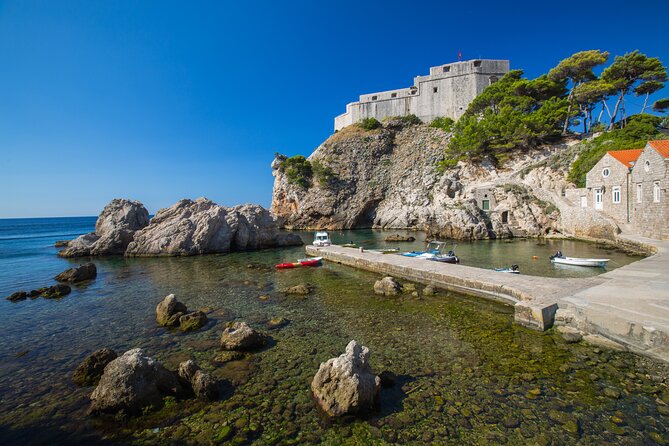
Then you focus on the practical port system: stories of the quarantine, plus the nearby fortresses of St. Luke and St. John. This is where the city’s location becomes more than a postcard. Quarantine is about health, trade, fear, and policy, all at once. It helps you understand why a trading city would build defenses and procedures as seriously as it built ships.
Orlando Column and Luza Square, the wall of legends
Finally, you reach Luza square, near the City Bell Tower area, where several stories and monuments cluster. This stop includes:
- the church dedicated to patron St. Blaise
- the legend of the knight Orlando and his column
- Sponza Palace
- the Small Onofrio’s Fountain
- the high Bell tower
This “legend layer” matters because Dubrovnik isn’t only about timelines. It’s also about meaning, symbols, and local folklore. When you leave this stop, you’ll probably recognize these names again while you’re wandering the Old Town on your own.
Timing, pace, and how to get more from the 90 minutes
A 1 hour 30 minutes walking tour is exactly the kind of thing I love on day one. It’s long enough to connect the dots, and short enough that you still have energy to roam the walls after. One reviewer noted that even on an overcast day after rain, the guide still ran the tour and the weather actually made later exploring feel calmer. Another strong theme from the feedback is orientation. Guides like Ivana and Joseph are repeatedly praised for making first-day navigation easier by pointing you toward what to see next.
Here’s how to make this tour work for you:
- Go early or late, so Stradun and side streets feel less crowded
- Bring water and plan on steps, since Old Town streets and viewpoints are naturally stair-heavy
- Use the tour as your mapping tool, then follow your guide’s priorities when you explore afterward
If you’re short on time in Dubrovnik, this is also a good way to avoid the classic mistake of seeing famous spots but missing the “why” behind them.
Who this tour suits best, and who should think twice
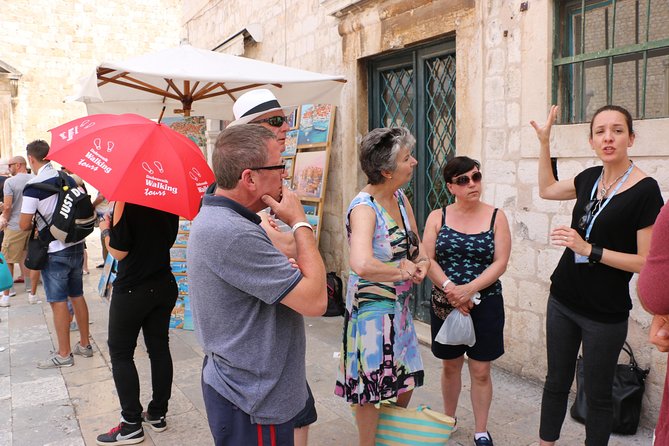
This tour is ideal for:
- First-time visitors who want a clear foundation fast
- People who like history but also want it tied to real neighborhoods and daily life
- Anyone who enjoys hearing how Dubrovnik moved from Ragusa trade power to later periods that shaped the city’s modern identity
It might be less ideal if:
- You want only art galleries or only one kind of topic, because the route intentionally covers civic power, religion, and maritime life
- You have mobility limits and expect flat ground, since the Old Town includes steps and busy areas
That said, one review specifically pointed out the tour as a useful step-free introduction. Your experience will depend on your exact route on the day and how the guide adapts the pacing, but it’s at least a signal that the operator considers different comfort levels.
Value check: is it worth $24.19 for Dubrovnik Old Town?

For $24.19 per person, you’re buying two things: time and context. Dubrovnik’s Old Town is expensive, and even basic planning can eat your budget. This tour gives you a local guide for about 90 minutes, plus a route that covers a lot of named landmarks and themes.
Also, you’re not paying for separate admissions on the tour stops. The tour description lists admission tickets as free for each segment, which helps keep this within reach even when food and attractions elsewhere in Dubrovnik start adding up. And because the tour ends back at the meeting point, you don’t need extra planning to get yourself onward.
One more value point: the tour is capped at 30 travelers. That tends to keep it from feeling chaotic, which matters when you’re walking narrow streets.
Practical details that can save you stress
- Language: offered in English
- Ticket: you get a mobile ticket
- Duration: about 1 hour 30 minutes
- Group size: maximum 30
- Meeting point: Onofrio’s Large Fountain near Hard Rock Cafe
- Hotel pickup: not included
If you want an easy day, show up a few minutes early. Meeting at a major landmark like Onofrio’s Fountain is simple, but you’ll still want time to find your group and start without rushing.
Should you book this Dubrovnik Old Town history walk?
I’d book it if you want a smart first pass at Dubrovnik that helps you understand what you’re seeing while you’re still fresh. The stop selection hits the main city spine at Stradun, adds big monuments like Rector’s Palace and the Cathedral, and then balances it with the harbor and maritime logic that many self-guided walks skip. Add the consistently praised local storytelling, and it becomes more than a checklist.
I would skip or rethink it only if you hate guided walking, dislike history context, or need a truly low-step route. Otherwise, for the price and time, it’s one of the most sensible ways to start Dubrovnik and feel confident exploring the rest of the Old Town afterward.
FAQ
What’s the meeting point for the Dubrovnik Old Town History Walking Tour?
You meet at Onofrio’s Large Fountain at Poljana Paska Milicevica 2000, 20000 Dubrovnik. The tour ends back at the same meeting point.
How long is the tour?
It runs for about 1 hour 30 minutes.
What is included in the price?
The tour includes a local guide and all taxes, fees and handling charges.
Do I need admission tickets for the stops?
The tour details list admission tickets as free for the stops included on the itinerary.
Is the tour offered in English?
Yes, the tour is offered in English.
What’s the cancellation policy?
You can cancel for a full refund up to 24 hours in advance of the experience’s start time. If you cancel less than 24 hours before, the amount paid is not refunded. If canceled due to poor weather, you’re offered a different date or a full refund.
Dubrovnik, the Longer Story



Walk It: More of Dubrovnik at Ground Level

Still on the Walls? Keep Reading
Freshly written up around Dubrovnik




Dubrovnik City Walls & Old Town Walks, top to bottom.
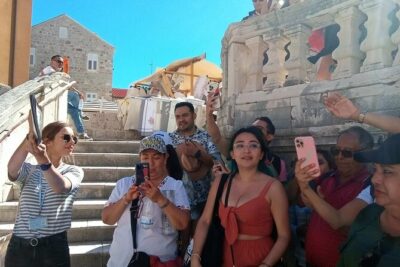 ★ 4.8Dubrovnik: Old Town Walking TourFrom $235,174 reviews
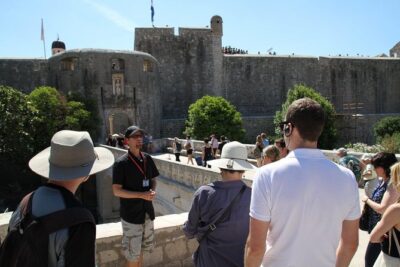 ★ 5.0Dubrovnik Discovery Old Town Walking TourFrom $244,458 reviews
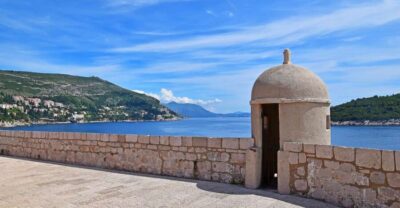 ★ 4.8Dubrovnik: City Walls Early Morning or Sunset Walking TourFrom $291,523 reviews
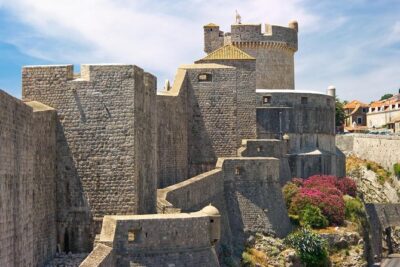 ★ 5.0Dubrovnik: Ancient City Walls & Wars Walking TourFrom $301,270 reviews
 ★ 5.0Dubrovnik Combo: Old Town & Ancient City WallsFrom $521,019 reviews
★ 4.9Dubrovnik: Old Town Walking TourFrom $23792 reviews
★ 5.0Dubrovnik Combo: Old Town & Ancient City WallsFrom $521,019 reviews
★ 4.9Dubrovnik: Old Town Walking TourFrom $23792 reviews
 ★ 4.8Dubrovnik: Old Town & City Walls Guided Tours ComboFrom $50697 reviews
 ★ 4.5Dubrovnik Cable Car Ride, Old Town Walking Tour plus City WallsFrom $166685 reviews
Browse the lists this tour appears in