
REVIEW · CITY TOURS
Dubrovnik Old City Private Tour
Dubrovnik’s walls tell one nonstop story. I love the private setup because you get a guide who can match your group’s questions and pace, and I also like the way the walk centers on Stradun while the guide connects Dubrovnik’s famous landmarks to what happened to the city over centuries. You’ll hear history that runs from ancient times straight through the 1990s conflict.
The main thing to plan for is the walking. Expect steps, tight medieval streets, and lots of uphill moments, so comfy shoes matter, and it helps to tell your guide early if you want a slower rhythm.
In This Review
- Key highlights you will feel on this Dubrovnik Old City private walk
- Why Dubrovnik’s Old Town history makes more sense with a private guide
- Starting at Nautika, then easing into Dubrovnik’s Old City shape
- Pile Gate to the Tower of Minčeta, the dramatic entrance you’ll remember
- Franciscan Church and Monastery museum, plus the old pharmacy detail
- Stradun, Onofrio’s Fountain, and the main street that runs the day
- Hidden lanes and St. Ignatius of Loyola, where the city gets personal
- Cathedral of the Assumption and the Treasury stop you might swap
- Rector’s Palace, where the Republic made decisions
- City Harbor forts and gates, plus the quarantine walls that changed lives
- Luza Square ending, with Sponza Palace and Church of St. Blaise
- Price and timing, is $133.03 per person good value?
- What type of traveler this suits best (and when to choose another style)
- Should you book this Dubrovnik Old City private tour?
- FAQ
- How long is the Dubrovnik Old City private tour?
- Is this tour private?
- Where do I meet the guide?
- Where does the tour end?
- What is included in the price?
- Are the cathedral treasury and monastery museum always included?
- What if a museum is closed?
- What language is the tour offered in?
- Does the tour include food or drinks?
- What is the cancellation policy?
Key highlights you will feel on this Dubrovnik Old City private walk
- A guide for only your group, so you get real conversation, not headset-y recitation
- Stradun, Pile Gate, and Rector’s Palace, the power and drama of Old Town in one loop
- Franciscan Church and Monastery museum, including the old pharmacy stop where the city’s past gets tangible
- City Harbor forts and gates, where Dubrovnik’s defense story makes more sense than it does from photos
- A storytelling arc from ancient days to the 1990s, not just medieval sightseeing
- English-speaking guidance with museum entries handled, so you do less planning on the ground
More city-scale tours around Dubrovnik
- Dubrovnik: City Walls Early Morning or Sunset Walking Tour★ 4.8 · 1,523 reviews
- Dubrovnik: Ancient City Walls & Wars Walking Tour★ 5.0 · 1,270 reviews
- Dubrovnik Combo: Old Town & Ancient City Walls★ 5.0 · 1,019 reviews
- Dubrovnik: Old Town & City Walls Guided Tours Combo★ 4.8 · 697 reviews
Why Dubrovnik’s Old Town history makes more sense with a private guide
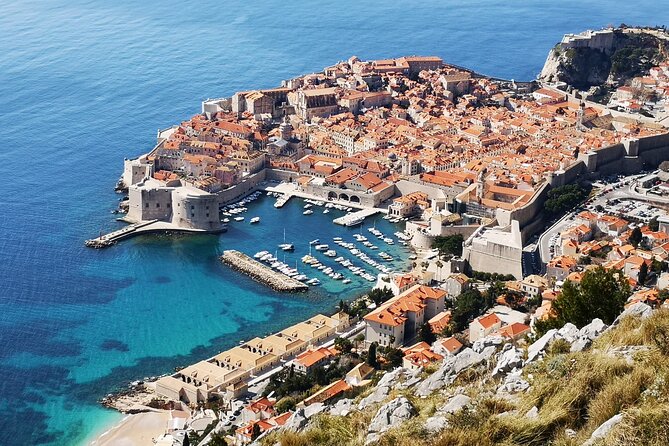
Dubrovnik looks like one postcard, but it is really a stack of eras. With a private guide, you can actually follow that stack as you walk, instead of just pointing at buildings and hoping it adds up.
I like that this tour is built around the Old City’s most important “anchors,” like Pile Gate and Rector’s Palace, then connects them to how the city governed itself and defended itself. You also get a clear thread through time, including the 1990s conflict, which is the part that often feels disconnected when you only skim plaques on your own.
There is also a practical upside: your route can flex a bit based on weather, crowds, and events. That matters because Old Town gets crowded fast, and the difference between tolerable and miserable is often shade, timing, and pacing.
Starting at Nautika, then easing into Dubrovnik’s Old City shape
You meet at Nautika, Brsalje ul. 3. This is a good first move because you start right in the area that lets you orient quickly, rather than beginning somewhere random and trying to “find” the walls later.
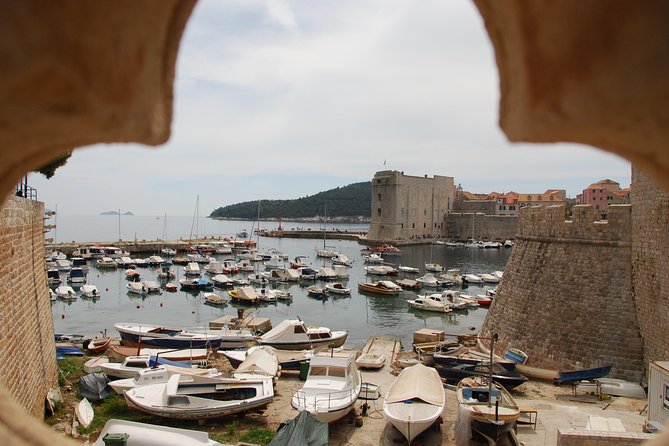
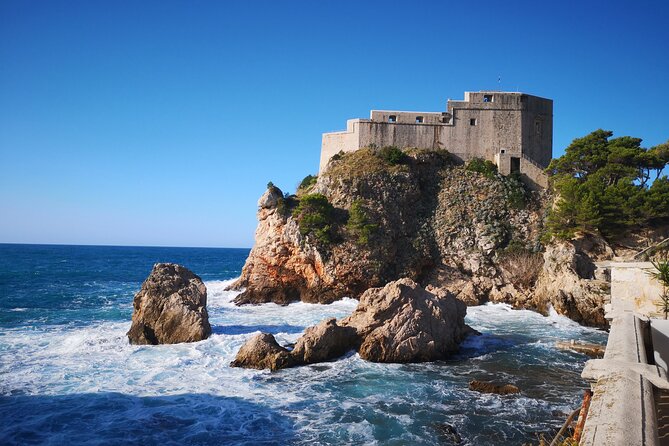
From there, the tour heads toward Kolorina Bay and viewpoints connected to St. Lawrence Fortress. These early stops are short, but they help you understand where Dubrovnik sits and why the walls were built where they were. You see how the city faces the water, and that makes the later harbor fortifications click.
Even at the start, the tour design feels calm and focused. It is not a sprint. It is a guided walk where you get the sense of the city’s geography before you commit to the denser inside streets.
Pile Gate to the Tower of Minčeta, the dramatic entrance you’ll remember
The highlight on many first-time Dubrovnik visits is the moment you pass through Pile Gate and look up the stairway view of the Old Town. Here, you do more than look. You learn what you are seeing and why it matters.
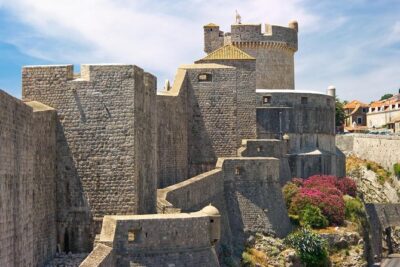
This stop includes the old city walls and the Tower of Minčeta. When you understand that towers and gates were not decorative, but communication and defense tools, the architecture turns from pretty to useful. Even if you have seen pictures, being told how the fortifications worked changes how you read the stone.
It is also the start of your “visual loop,” the part that keeps paying off all the way to Luza Square. You’ll keep passing sightlines that your guide has already framed, so your brain stays ahead of the walking.
Franciscan Church and Monastery museum, plus the old pharmacy detail
Next up is the Franciscan Church and Monastery. This is one of the more interesting cultural stops because it connects faith, community life, and the kind of practical knowledge that helped a coastal city function.
You visit the museum and get the standout reference point of the old pharmacy. A pharmacy in a monastery setting is the kind of detail that sounds niche until you learn how medicine, trade, and learning circulated through historic Dubrovnik. The guide’s storytelling helps you connect the everyday to the dramatic.
One heads-up: museum entries are handled as part of the tour, and the specific museum and treasury inclusions can be substituted based on timing and season. In general, the tour covers two museum entrance fees, and that may include the Franciscan or Dominican monastery museum and/or the cathedral treasury.
So if you care about museums, this tour is set up for you. If you just want quick photo stops, you might find this portion takes a little more concentration than the outside-wall walking segments.
- Blue Cave Small-Group Boat Tour from Dubrovnik
★ 5.0 · 9,360 reviews - Full-Day Dubrovnik Elaphite Islands Cruise with Lunch and Drinks
★ 5.0 · 8,823 reviews - Dubrovnik: Epic Game of Thrones Tour + Lokrum & Saver Option
★ 4.9 · 5,995 reviews - Dubrovnik: Elaphiti Islands Full-Day Cruise with Lunch
★ 5.0 · 5,938 reviews - Dubrovnik: Old Town Walking Tour
★ 4.8 · 5,174 reviews
Stradun, Onofrio’s Fountain, and the main street that runs the day
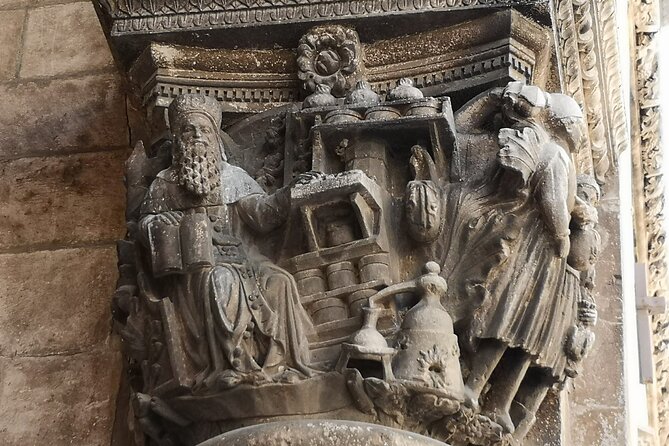
Then you land on Stradun, Dubrovnik’s main thoroughfare through the heart of Old Town. Stradun is where the city feels most “alive,” even when you are standing still.
This portion typically includes Onofrio’s Fountain and the Church of the Holy Saviour. What I like here is that Stradun can look like a single long street to many visitors, but with context it becomes a timeline. You start noticing how the street functions, how it channels movement, and why it became the central stage for city life.
This stop is ideal for recharging too. You will have just come from gates and walls, then shift to a flatter, more open-feeling area where you can regroup before the next clusters of churches, stairs, and smaller lanes.
Hidden lanes and St. Ignatius of Loyola, where the city gets personal
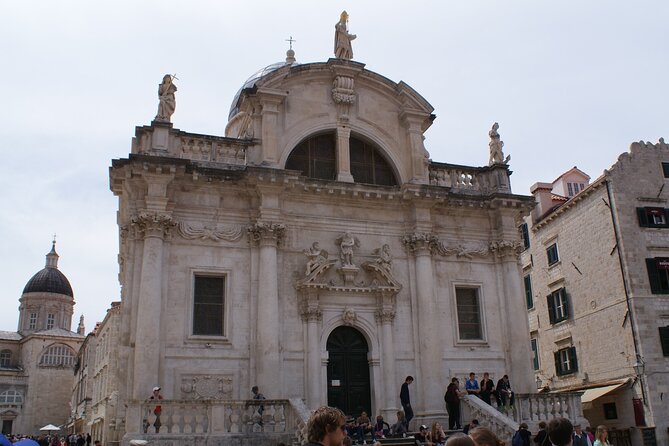
After Stradun, the tour detours into narrower streets toward the Church of St. Ignatius of Loyola. This is where Dubrovnik stops feeling like a “set” and starts feeling like a place where people lived, negotiated space, and built up over time.
You also pass by the Great Granary, plus Jesuit sites and the stairway connection associated with the complex. This kind of stop is great if you like details, because it is easy to miss these features when you are doing the self-guided version.
You end this segment around the Square of Ivan Gundulić. The guide’s job here is to turn a random-looking square and stair system into a coherent story about how religious and civic power shaped street patterns.
If your legs are tired, this is where you should speak up early. Many guides can slow down, and one practical move is to stick closer to the shaded edges when possible.
Cathedral of the Assumption and the Treasury stop you might swap
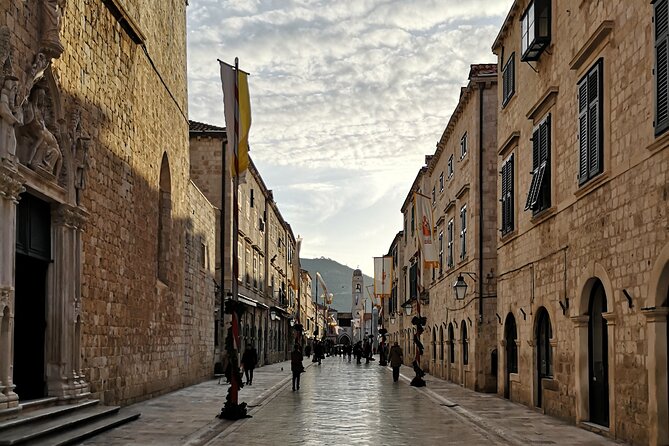
Next is the Cathedral of the Assumption of the Virgin Mary and, depending on the date, the Treasury of the Republic portion. This is an important stop because cathedral treasuries help you understand power in a way that paintings and walls sometimes do not.
In practical terms, you will either see the cathedral treasury experience as part of the museum entries, or it may be substituted with the tour’s alternative monastery museum option based on schedule and opening times. The tour notes that when museums are closed, funds will be refunded, so you are not left paying for a closed door.
This stop is also a good reminder that Dubrovnik’s story is not just defense and city walls. It is governance, culture, wealth, and belief all tangled together, and the cathedral connection shows one side of that.
If you have only one museum interest besides the walls, this is likely the one to prioritize, because it ties directly into the city’s republic-era identity.
Rector’s Palace, where the Republic made decisions
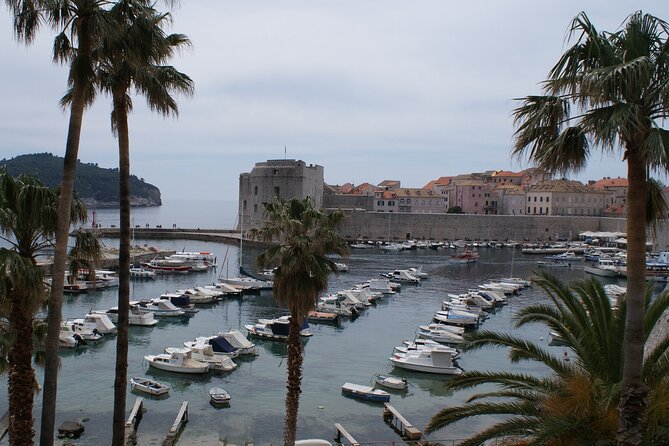
Then comes one of the most satisfying stops: Rector’s Palace. This building is the seat of government for the Republic of Dubrovnik, and the guide typically makes it feel less like a title card and more like a real system of leadership.
This is where your history thread really locks in. You’ve already heard about defenses, gates, and key institutions. Now you see the civic side, the part that explains why Dubrovnik could stay prosperous and organized over so many centuries.
The tour segment here is short, but it is focused. You get the core context, you see the major features, and you move on while it is still fresh.
If you’re the kind of traveler who likes to understand what people actually did, not just what they built, Rector’s Palace is one of the best reasons to choose a guided version.
City Harbor forts and gates, plus the quarantine walls that changed lives
By the time you reach the City Harbor area, the tour switches from “pretty landmarks” to “why this place survived.” This segment includes stops tied to Fortress of St. John, Lazareti Quarantine, and the fortifications of St. Luke.
You also pass by or reference other key pieces like Revelin Fortress, the East Gate Ploče, and the Dominican Monastery. Even without going deep into each single structure, you start to get the logic: Dubrovnik controlled access, protected the harbor, and used quarantine to manage disease risk.
That quarantine stop is the one I pay attention to. It’s easy to forget that medieval and early modern cities were constantly dealing with public health pressure. When the guide explains how the quarantine functioned, the Lazareti area stops being just another set of stone buildings.
It also pairs well with the rest of the tour because the defense story becomes full circle, from walls and towers to controlled entry and protective planning.
Luza Square ending, with Sponza Palace and Church of St. Blaise
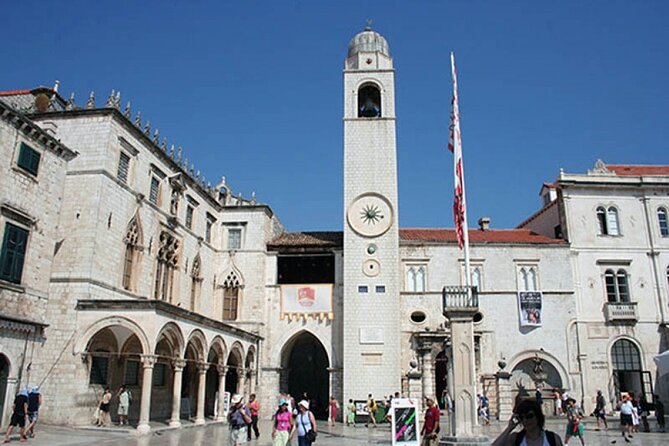
The tour wraps around Luza Square, often the easiest place to pause and take in a final “wide view” of Old Town. This stop includes major landmarks such as Sponza Palace, the Clock Tower, and Small Onofrio’s Fountain.
You also pass by City Hall and the Church of St. Blaise. These are the kinds of sites where, once the guide has given you the framework, your photos look more meaningful. You know what you are photographing and why it matters to the city’s civic identity.
The tour ends here in Luza Square, near the church of St. Blaise at the east end of Placa or Stradun. It is a very practical exit point if you want to keep exploring on your own afterward.
Price and timing, is $133.03 per person good value?
At $133.03 per person for about 2 hours 30 minutes, this sits in the “private tour” bracket, not the budget walking tour bracket. The value depends on how you travel.
If you are a couple, family, or small group, private usually becomes the better deal when you factor in guide attention and a smoother, more story-driven route. You are also getting two museum entrance fees included, which can matter in a city where museums and treasury-type entries add up.
Timing also helps. This experience tends to be booked far ahead, often around 85 days in advance, so if you want a specific date during peak season, plan early. The tour is offered in English, which makes it easier to get the full payoff from the historical storytelling.
Also worth noting: the tour requires good weather. If conditions are poor, you should expect a different date or a full refund instead of trudging through rain with limited value.
What type of traveler this suits best (and when to choose another style)
This private format is especially good if you want your Dubrovnik visit to feel guided but not scripted. You can ask follow-up questions, and you are not stuck listening at the mercy of other people’s interests.
It can work for families too. One family-friendly theme in the feedback you see is that the pacing can be comfortable for a mix of ages, including teens, as long as your guide keeps the group together and adapts when needed.
It is also a fit for older travelers if you communicate your comfort level. The tour involves lots of steps and hill moments, but some guides manage pace and shade so it stays enjoyable.
If you prefer a strictly self-paced plan with zero museum time, you might find it a bit structured. In that case, you might pair a shorter museum visit with a self-guided wall walk later. But if you want the “why” behind Dubrovnik, the guided approach is the fastest way to get it.
Should you book this Dubrovnik Old City private tour?
Yes, you should book it if you want a guided Old Town loop that gives context, not just sights. The strongest reason is the way the tour connects major landmarks, like Pile Gate, Rector’s Palace, and Luza Square, to a historical narrative that runs from ancient foundations to the 1990s conflict.
I would not overthink the shopping side or assume it is a restaurant tour. The real draw is the interpretation and pacing. If you care about museums, you’re also set because two museum entrance fees are covered in the typical arrangement.
Just come prepared for stairs. Bring comfortable shoes, plan for sun and shade, and tell your guide early if you need a slower walk. Do that, and this tour becomes one of the best value ways to understand why Dubrovnik’s Old Town still feels so powerful.
FAQ
How long is the Dubrovnik Old City private tour?
The tour runs about 2 hours 30 minutes, approximately.
Is this tour private?
Yes. It is a private experience, with only your group participating.
Where do I meet the guide?
You meet at Nautika, Brsalje ul. 3, 20000 Dubrovnik, Croatia.
Where does the tour end?
The tour ends in Luza Square, Luža ul., 20000 Dubrovnik, Croatia, near the church of St. Blaise (east end of the main street Placa or Stradun).
What is included in the price?
The price includes professional tour guidance and two museum entrance fees.
Are the cathedral treasury and monastery museum always included?
In general, the Franciscan or Dominican Monastery Museum and the Cathedral Treasury will be included, but they can be substituted depending on tour time, date, or the period of year.
What if a museum is closed?
If museums are closed for any reason, funds will be refunded.
What language is the tour offered in?
The tour is offered in English.
Does the tour include food or drinks?
No. Food and beverages are not included.
What is the cancellation policy?
You can cancel for free up to 24 hours in advance for a full refund. If it is canceled due to poor weather, you will be offered another date or a full refund.
City-Scale Tours in Dubrovnik

Freshly written up around Dubrovnik


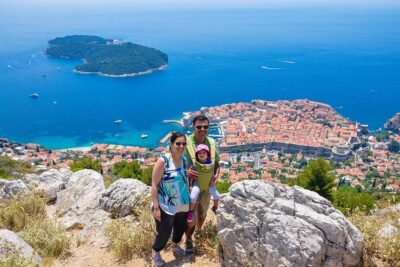


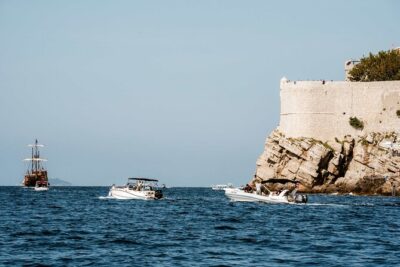
City Tours, top to bottom.
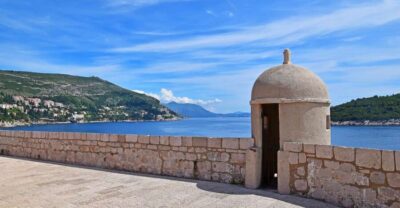 ★ 4.8Dubrovnik: City Walls Early Morning or Sunset Walking TourFrom $291,523 reviews
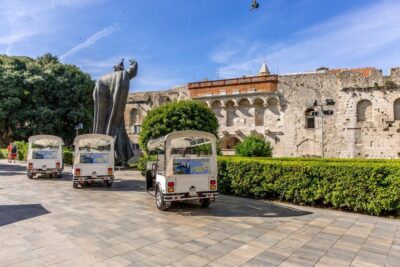 ★ 4.9Split: City Highlights Electric Tuk-Tuk TourFrom $501,317 reviews
 ★ 5.0Dubrovnik: Ancient City Walls & Wars Walking TourFrom $301,270 reviews
 ★ 5.0Dubrovnik Combo: Old Town & Ancient City WallsFrom $521,019 reviews
 ★ 4.9Zagreb: Small Group Walking Tour City Center and WW2 TunnelsFrom $23895 reviews
 ★ 4.9Zagreb: City and WWII Tunnels Walking TourFrom $23845 reviews
 ★ 3.7Hop On Hop Off Panoramic bus – Zagreb City TourFrom $25769 reviews
 ★ 4.8Dubrovnik: Old Town & City Walls Guided Tours ComboFrom $50697 reviews
Browse the lists this tour appears in