
REVIEW · DUBROVNIK CITY WALLS & OLD TOWN WALKS
Dubrovnik Old Town: Small-Group Walking Tour With A Local
Dubrovnik’s Old Town hits you fast. This small-group walk (max 8 people) moves at a human pace, with a locally raised guide pointing out what to notice in a UNESCO World Heritage Site without feeling like you are in a herd.
I especially like the tiny group size, because questions actually get answered, and you can hear the details even when the streets get busy. I also love the way guides bring the town to life with interactive trivia and story hooks, something people often highlight with guides like Marko, Marco, Markus, and Lucy.
One consideration: it is a walking tour with mostly short stops and quick exterior views, and the tour does not include entrance fees for places that require tickets. If you want long time inside churches or museums, you may need a separate plan.
In This Review
- Key highlights worth your time
- 8-person Old Town walk: the real advantage of a small group
- From Harbour Viewpoint to Ploce Gate: start smart, walk smarter
- Dominican Monastery, Cathedral legends, and the Jesuit connection
- Rector’s Palace and Sponza: the civic side of Dubrovnik
- Orlando Column, Marin Drzic, and the little details that steal the show
- Franciscan Church and Monastery: pharmacy history you can actually picture
- Ending near Pile Gate and Onofrio’s Large Fountain: finish with context
- Price and timing: $34.59 for what you really get
- Who should book this small-group Old Town walk
- Should you book this tour or not?
- FAQ
- How long is the Dubrovnik Old Town small-group walking tour?
- What is the group size limit?
- Where do I meet, and where does the tour end?
- Is the tour in English?
- Are entrance fees included for churches or museums?
- What if the weather is poor?
Key highlights worth your time
- Max 8 people means a real conversation, not standing shoulder to shoulder
- Start at Ploče Gate and get the town’s layout explained early
- UNESCO World Heritage Site focus with hands-on details you can spot yourself
- Domincan Monastery, Cathedral, and St. Ignatius covered with legends and local context
- Game-style engagement that keeps you alert on the long stone streets
- End near Onofrio’s Large Fountain by Pile Gate, easy to roll into more exploring
Different routes over the walls and through the old streets
- Dubrovnik: Old Town Walking Tour★ 4.8 · 5,174 reviews
- Dubrovnik Discovery Old Town Walking Tour★ 5.0 · 4,458 reviews
- Dubrovnik Old Town History Walking Tour★ 5.0 · 1,684 reviews
- Dubrovnik: City Walls Early Morning or Sunset Walking Tour★ 4.8 · 1,523 reviews
8-person Old Town walk: the real advantage of a small group
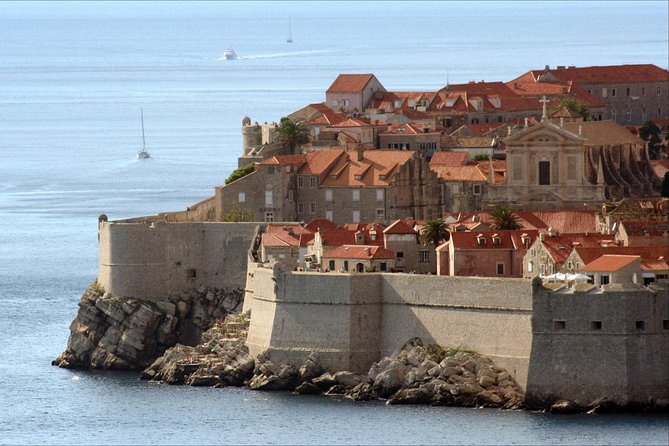
Dubrovnik Old Town can feel like a photo shoot with feet. The streets are narrow, the stone is bright, and it is easy to glance and move on. This tour is structured for the opposite: slow enough to read the details, small enough to keep up with what your guide is saying.
The cap of eight people is not just a comfort perk. It changes the whole experience. You get better explanations because your guide is not juggling a crowd, and you can ask follow-up questions when something catches your eye, like a crest on a palace wall or a statue detail that looks symbolic once someone points it out.
It also helps you enjoy the tour without rushing. Even when the route covers a lot of ground, the pacing is built for walking and stopping, not speed-walking through top sights.
From Harbour Viewpoint to Ploce Gate: start smart, walk smarter
Most days begin with the same problem in Dubrovnik: where do you even start? This tour starts at Harbour Viewpoint, Ul. Svetog Dominika bb, and then you work toward Ploče Gate, the eastern entrance to the Old Town.
At Ploče Gate, you get a short intro that matters more than it sounds. Dubrovnik is not only pretty, it is political. Knowing where the Old Town begins, and why that matters historically, helps you connect later stops like the harbor and civic buildings. You start to see the town as a system, not random landmarks.
From there, the tour heads into the Old Town core. You walk the main streets while your guide sets context for what you are seeing. This first stretch is where you learn the visual language of Dubrovnik, so later you notice patterns faster, like how certain buildings communicate power, faith, or trade.
If you are trying to fit Old Town into limited time, this approach works. You are not waiting until the end to understand what you are looking at.
Dominican Monastery, Cathedral legends, and the Jesuit connection
Old Town Dubrovnik is full of churches, and most visitors only see them as backdrops. On this walk, the religious stops come with specific stories, so you actually look up.
First is the Dominican Monastery, described as the oldest still active monastery in Dubrovnik. Even if you do not linger long, the guide’s framing gives you a sense of continuity, how this part of town kept functioning as a religious center while the city’s fortunes changed.
Next comes the Cathedral of the Assumption of the Virgin Mary. The tour plays with the idea of one cathedral or three, and then guides you through baroque architecture and local legends. That timing is smart. When you reach the cathedral, you are already warmed up to spotting details, so the building’s features make more sense instead of blending into the skyline.
Then you move to the Church of St. Ignatius of Loyola, where the big hook is the Jesuit story. The guide connects the Jesuits to why they arrived and mentions a fascinating detail that a crater on the Moon was named for a famous Jesuit from Dubrovnik. It is the kind of fact that sticks, and it gives you a reason to remember the church beyond its exterior.
Finally in this faith section, you reach Church of Saint Blaise, Dubrovnik’s patron saint. You do not just hear the name. You hear the legend, and then the guide points you toward what is considered the true story behind the patronage. If you like religious tradition, this is one of the stops that feels most local.
Why this section is valuable: you get stories that explain the city’s identity. Dubrovnik’s walls might look like a defensive backdrop, but these religious anchors show how community life worked inside the city.
Rector’s Palace and Sponza: the civic side of Dubrovnik

Dubrovnik is famous for its walls and views, but the town’s real engine was civic power and trade. This tour does not let you miss that.
Early on, you pause at the city harbor, once the center of trade of the old Dubrovnik Republic, with wooden galleons built here. You get maritime context, which is important because many Old Town details only make full sense when you know trade fueled wealth, and wealth fueled building.
Then the tour heads to Rector’s Palace, once the supreme political institution of the Dubrovnik Republic. The guide’s job here is to translate old power structures into something you can visualize. You hear about aristocracy and political wisdom, plus some “how did that work” curiosities that help the palace feel human instead of just stone.
After that comes Sponza Palace, which the guide frames as the old customs house of the Dubrovnik Republic. Today it houses the historical archives. That combination of trade and records is a neat contrast, and it makes you think about how empires remember themselves. You also get Latin proverbs shared by the guide, which is a fun change from standard sightseeing facts.
You also stop at the Bell Tower, where the guide explains what makes it special. You might not know what to look for until someone points it out, which is exactly why tours like this are worth your time.
Potential drawback here: these are quick pauses. If you are hoping for a museum-style experience, you will not get it. But if you want orientation plus meaningful context, these civic stops do the job.
More Dubrovnik covered at walking pace
- Dubrovnik: Game of Thrones Walking Tour
★ 5.0 · 1,732 reviews - Dubrovnik: Ancient City Walls & Wars Walking Tour
★ 5.0 · 1,270 reviews - Dubrovnik: Game of Thrones Walking Tour
★ 4.9 · 981 reviews - ‘Game of Thrones’ Walking Tour in Dubrovnik
★ 4.5 · 945 reviews - Dubrovnik: Old Town Walking Tour
★ 4.9 · 792 reviews
Orlando Column, Marin Drzic, and the little details that steal the show
This is where Dubrovnik turns from impressive to memorable.
At the Monument of Poet Ivan Gundulić, you get a walk through the market square. The guide links the poet to the identity of the old republic, which makes the setting feel purposeful instead of just “a place to buy souvenirs.”
Then you hit the Statue of Marin Držić, the playwright famous for the story of the golden nose, and the popular habit of touching it. This stop is short, but it is one of those moments where you understand how people interact with history here. The guide’s explanation makes the statue feel like part of living tradition, not just a photo stop.
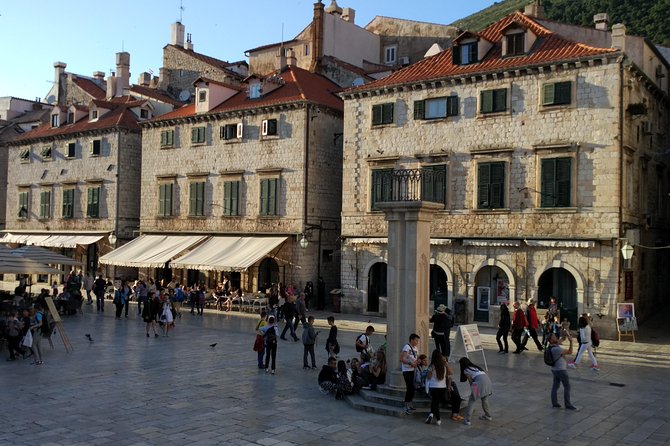
Next is the Orlando Column, tied to a brave knight Orlando and how he became the symbol of the old Dubrovnik Republic. If you have a habit of noticing symbols, this is a satisfying stop because the guide connects the statue’s meaning to the city’s larger narrative.
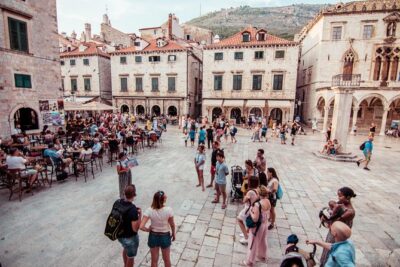
Then comes Stradun, Dubrovnik’s shiny main street. It is the obvious place to walk, but with the guide’s previous context, it feels like the main artery instead of just a postcard corridor. You can walk it without getting lost, and you know what you are looking at along the way.
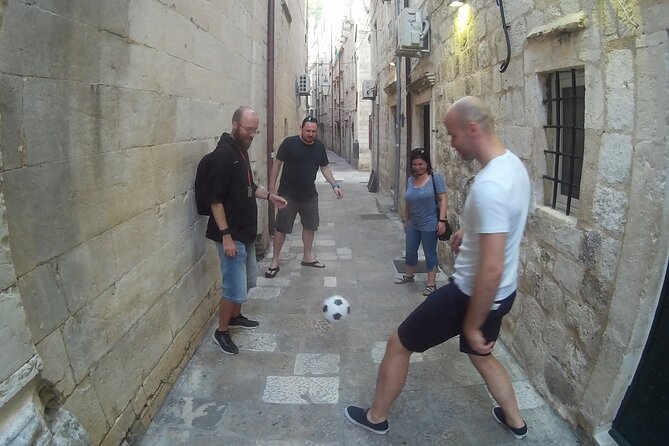
A nice bonus stop: Church of St. Roch. The guide points out old graffiti and mentions that kids in the 16th century used to play football in front of the church. That tiny detail is why guided walking works. It reminds you that everyday life happened here, not just grand events.
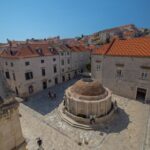
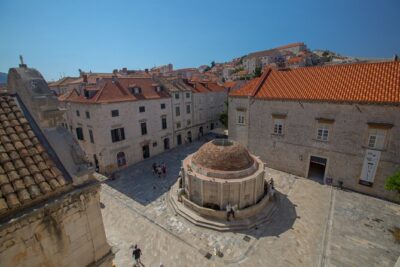
And do not skip Onophrian Fountain. The tour calls out that it was built in the 15th century and was the terminus of the old aqueduct. A fountain sounds simple until you connect it to water infrastructure, the kind of practical system that let a walled city function.
Franciscan Church and Monastery: pharmacy history you can actually picture
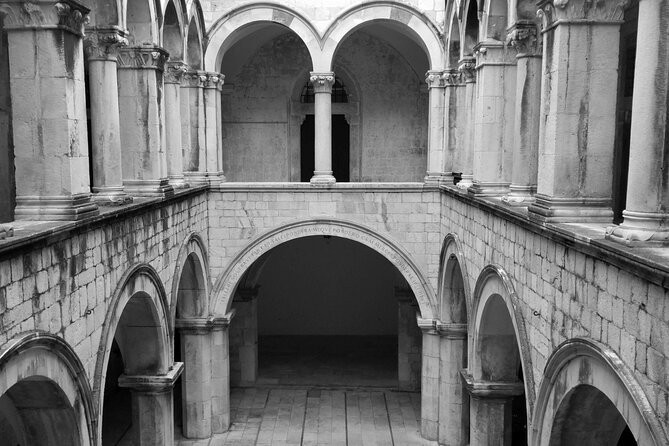
Toward the later part of the walk, you reach the Franciscan Church and Monastery. This is not just another church stop.
The guide shares the story of its pharmacy, described as the third oldest pharmacy by the continuity of its work in Europe. That phrasing matters because it is about continuity, not a one-time exhibit. You also hear how the Franciscans contributed to Dubrovnik society, which helps you understand why monasteries and religious orders shaped everyday services like health and care.
If you like practical history, this stop is rewarding. It turns your attention from artistic flourishes to systems that kept people going.
Ending near Pile Gate and Onofrio’s Large Fountain: finish with context
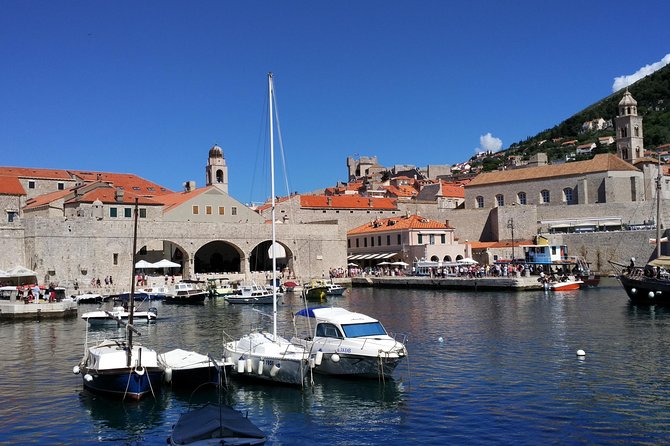
The tour ends near Pile Gate, the western entrance to the Old Town, and the guide shares the story of how the Dubrovnik Republic ended. That wrap-up matters because many visitors leave Old Town with scattered facts. You finish with the bigger arc, so the city’s architecture feels connected instead of random.
The endpoint is close to Onofrio’s Large Fountain at Poljana Paska Miličevića 2000, which is convenient if you want to keep wandering on your own right away.
You will also have walked the main north-south movement through the Old Town, so you get a mental map. Even if you go off-script next, you will feel less like you are guessing where you are.
Price and timing: $34.59 for what you really get
At $34.59 per person, this tour sits in the “reasonable if it saves you time” category. The key is that you are paying for orientation plus storytelling, not ticketed access to paid interiors.
You get a professional licensed guide and an efficient route through major sights. The walking time runs about 1 hour 30 minutes to 2 hours, which is a practical length for fitting into a packed day.
Two more value points:
First, the small group cap is a real part of the price. You are not paying just for walking and talking, you are paying for a guide who can react to questions and keep everyone engaged.
Second, the guide approach is active. The trivia-like game and call-and-response style help you remember details. That matters in Dubrovnik because the Old Town offers a constant stream of visuals. If you leave without a framework, everything blurs together.
When to book: it is often reserved about 50 days in advance, so I would plan ahead, especially if you are traveling in high season or want a specific time slot.
Who should book this small-group Old Town walk
This tour is a strong match if you want:
- A guided overview that covers a lot without feeling rushed
- Context and symbolism, not just names and dates
- A break from crowded groups, with a cap of eight
- A guide who uses interactive storytelling to keep you paying attention
It is not the best fit if you want to:
- Spend long hours inside churches, museums, or paid attractions
- Treat a two-hour walk as your only deep dive into Old Town
That said, even for independent explorers, this can be the best first step. You finish with a clearer sense of what matters, so your self-guided time gets smarter.
Should you book this tour or not?
If you like Old Town best when it feels understandable, not just scenic, I think you should book it. The combination of small-group size, a local guide’s stories, and a route that hits the city’s civic, religious, and everyday-life details makes the time feel well spent.
Skip it only if you know you will be more satisfied by paid-entry time inside buildings. Otherwise, this tour gives you the context that makes the rest of Dubrovnik click.
FAQ
How long is the Dubrovnik Old Town small-group walking tour?
It runs about 1 hour 30 minutes to 2 hours.
What is the group size limit?
This tour has a maximum of 8 travelers.
Where do I meet, and where does the tour end?
You start at Harbour Viewpoint, Ul. Svetog Dominika bb, 20000, Dubrovnik and end near Onofrio’s Large Fountain, Poljana Paska Miličevića 2000, Dubrovnik, by Pile Gate.
Is the tour in English?
Yes. It is offered in English, and you receive a mobile ticket.
Are entrance fees included for churches or museums?
Entrance fees are not included. The tour does not visit churches or museums that require entrance fees, and some stops are marked as not included.
What if the weather is poor?
This experience requires good weather. If it is canceled due to poor weather, you will be offered a different date or a full refund.
Walk It: More of Dubrovnik at Ground Level

Still on the Walls? Keep Reading
Freshly written up around Dubrovnik


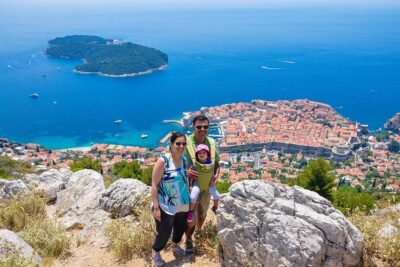


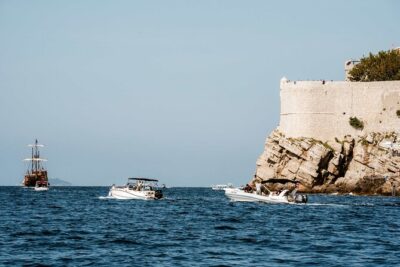
Dubrovnik City Walls & Old Town Walks, top to bottom.
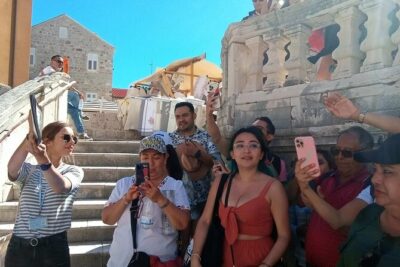 ★ 4.8Dubrovnik: Old Town Walking TourFrom $235,174 reviews
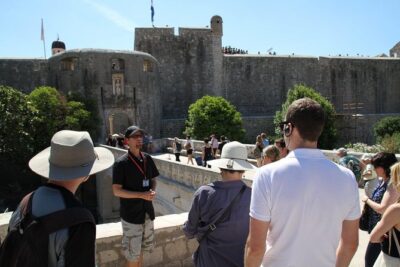 ★ 5.0Dubrovnik Discovery Old Town Walking TourFrom $244,458 reviews
 ★ 5.0Dubrovnik Old Town History Walking TourFrom $241,684 reviews
 ★ 4.8Dubrovnik: City Walls Early Morning or Sunset Walking TourFrom $291,523 reviews
 ★ 5.0Dubrovnik: Ancient City Walls & Wars Walking TourFrom $301,270 reviews
 ★ 5.0Dubrovnik Combo: Old Town & Ancient City WallsFrom $521,019 reviews
★ 4.9Dubrovnik: Old Town Walking TourFrom $23792 reviews
★ 5.0Dubrovnik Combo: Old Town & Ancient City WallsFrom $521,019 reviews
★ 4.9Dubrovnik: Old Town Walking TourFrom $23792 reviews
 ★ 4.8Dubrovnik: Old Town & City Walls Guided Tours ComboFrom $50697 reviews
Browse the lists this tour appears in