
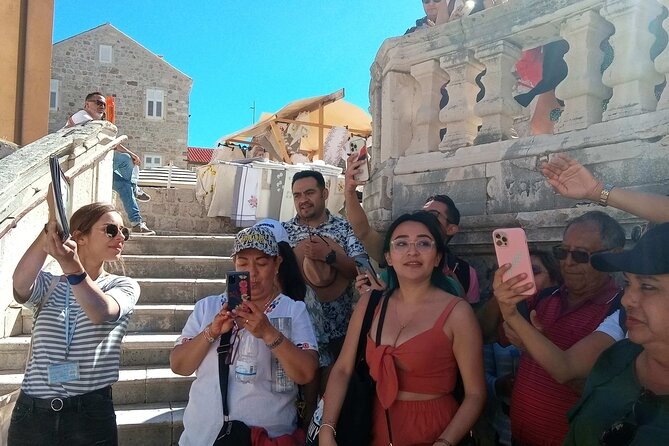
REVIEW · DUBROVNIK CITY WALLS & OLD TOWN WALKS
Dubrovnik Old Town Walking Tour
Dubrovnik Old Town hits different when someone narrates it. This 90-minute walk pairs key sights with the stories behind them, from water to power, right inside the medieval streets. You’ll get a smooth, morning-friendly overview of how Dubrovnik worked and why its most famous buildings still matter.
What I like most is the mix of stops: you go beyond postcard viewpoints to places tied to daily life, including Onofrio’s Fountain and the Franciscan Monastery. Second, the value feels strong for the time and format, especially with a small group size (max 16) and a local guide who can answer questions in plain language.
One consideration: this is a walking tour through stone streets in a dense area, so comfortable shoes matter, and if you’re sensitive to heat or noise, you’ll want to plan for shade breaks.
In This Review
- Key highlights to look forward to
- Why Pile Gate and a morning start make this tour work
- Onofrio’s Fountain: the first “wow” is really about water
- Franciscan Monastery and the old pharmacy stop that changes the pace
- Stradun, Sponza Palace and the architectural “timeline” feel
- Orlando Column: the small detail that makes you stop mid-stride
- Rector’s Palace and Church of St. Blaise: where civic and sacred meet
- Bell Tower and the big finish at the Cathedral of the Assumption
- Guides and pacing: why this works even if you hate tours
- Price and value: what $31.46 buys you in real terms
- What to wear and bring so the walk stays fun
- Who should book this Dubrovnik Old Town walk
- Should you book Dubrovnik Old Town Walking Tour?
- FAQ
- How long is the Dubrovnik Old Town Walking Tour?
- Where does the tour start?
- What time does it start?
- Is the tour in English?
- What’s included in the price?
- What is not included?
- How big is the group?
- What happens if weather is bad?
- Can I cancel for a full refund?
Key highlights to look forward to
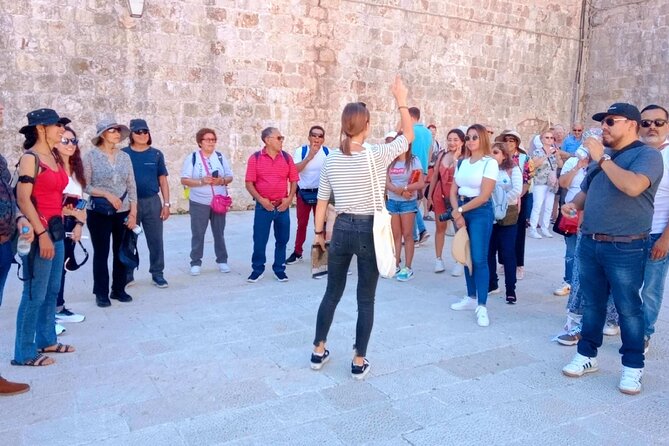
- Pile Gate to Stradun orientation: you get an easy route through the Old Town so the rest of your day makes more sense
- Onofrio’s Fountain and the aqueduct story: multi-faucet fountain tied to water brought from far outside the walls
- Franciscan Monastery cloister and old pharmacy: a calm courtyard with historic art and a long-running tradition
- Orlando Column details you’ll miss on your own: it shows time in Arabic and Latin numerals and updates every five minutes
- Cathedral of the Assumption in context: Baroque rebuilding after an earthquake helps you connect history to architecture
Different routes over the walls and through the old streets
- Dubrovnik: Old Town Walking Tour★ 4.8 · 5,174 reviews
- Dubrovnik Discovery Old Town Walking Tour★ 5.0 · 4,458 reviews
- Dubrovnik Old Town History Walking Tour★ 5.0 · 1,684 reviews
- Dubrovnik: City Walls Early Morning or Sunset Walking Tour★ 4.8 · 1,523 reviews
Why Pile Gate and a morning start make this tour work
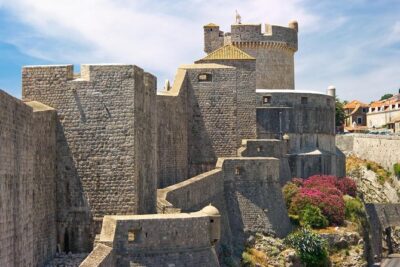
Dubrovnik’s Old Town is beautiful, but it can also feel like you’re constantly negotiating crowds, corners, and steep stone. Starting at Pile Gate gives you the “front door” view, and you immediately understand where the town begins and how people move inside the walls.
The tour also starts at 10:30am, which is a smart time if you want your bearings without spending the whole day trudging uphill. You’ll still walk, but you’re doing it when the light and crowds are often more manageable, so you can actually hear the guide and look up at details instead of rushing.
If your goal is to choose what to see later, this format helps a lot. Instead of spending your first day bouncing between isolated landmarks, you walk a path that connects them. That makes it easier to come back on your own and say, I want more time here.
Onofrio’s Fountain: the first “wow” is really about water
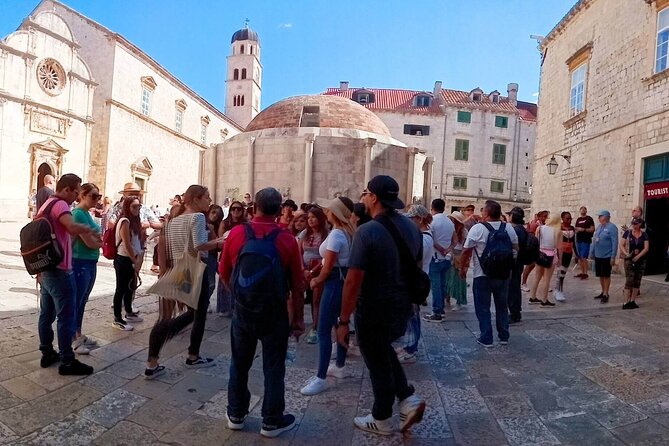
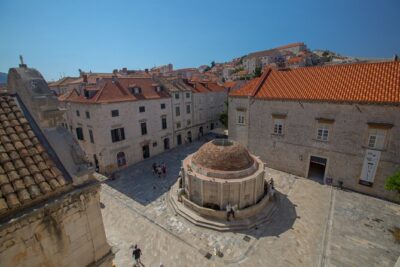
Your walk begins with a stop that sounds simple until you learn the backstory. Onofrio’s Fountain is a multi-faucet drinking fountain tied to an aqueduct that brought water into the city for centuries. In other words, this isn’t just decoration at the entrance. It’s infrastructure that shaped daily life.
This is one of the most powerful parts of the experience because it reframes the Old Town. Dubrovnik wasn’t only about walls and officials. It was about basic needs, and water is one of the biggest. When you see the fountain as a system that carried drinking water from about 7.5 miles (12 km) away, the whole city feels more real.
It’s also an easy early stop. You’re not forced to “perform” your sightseeing yet. You can gather your thoughts, take a few photos, and let the guide set the tone.
Franciscan Monastery and the old pharmacy stop that changes the pace
After the gate and the fountain, the tour shifts to a quieter mood at the Franciscan Monastery and Church. You’ll wander around a Gothic cloister dating back to the 14th century and see art tied to the monastery’s role in the city.
One standout here is the mention of one of the oldest still-functioning pharmacies in Europe. Even if you never buy anything, it’s a fascinating reminder that monasteries were not only spiritual spaces. They also supported healthcare and practical learning.
If you’ve been walking in Dubrovnik’s sun, this is also the kind of stop where you can slow down. The cloister gives you a moment to look carefully at stonework and artwork without feeling like you’re fighting the flow of traffic along the Stradun.
Stradun, Sponza Palace and the architectural “timeline” feel

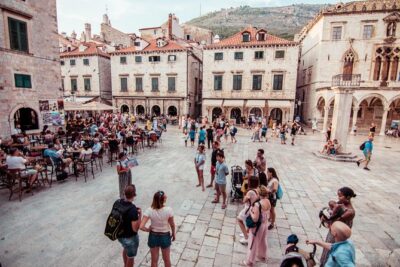
Soon you’re back on the limestone-covered main pedestrian street, the Stradun, where Dubrovnik looks most like the postcards. But the value of having a guide here is that you start reading buildings like they’re chapters.
Along the way, you reach the Renaissance highlight: Sponza Palace, which now houses the State Archives. This is an important detail, because it links power and record-keeping to the people who lived in the city. Streets feel different when you understand who stored information here and why.
The guide also helps you notice architecture instead of only scenery. You start seeing how styles overlap, how renovations reflect shocks (earthquakes, rebuilding), and how officials shaped public space. That makes the rest of Old Town feel less like a random walk and more like a guided timeline you can revisit later.
More Dubrovnik covered at walking pace
- Dubrovnik: Game of Thrones Walking Tour
★ 5.0 · 1,732 reviews - Dubrovnik: Ancient City Walls & Wars Walking Tour
★ 5.0 · 1,270 reviews - Dubrovnik: Game of Thrones Walking Tour
★ 4.9 · 981 reviews - ‘Game of Thrones’ Walking Tour in Dubrovnik
★ 4.5 · 945 reviews - Dubrovnik: Old Town Walking Tour
★ 4.9 · 792 reviews
Orlando Column: the small detail that makes you stop mid-stride
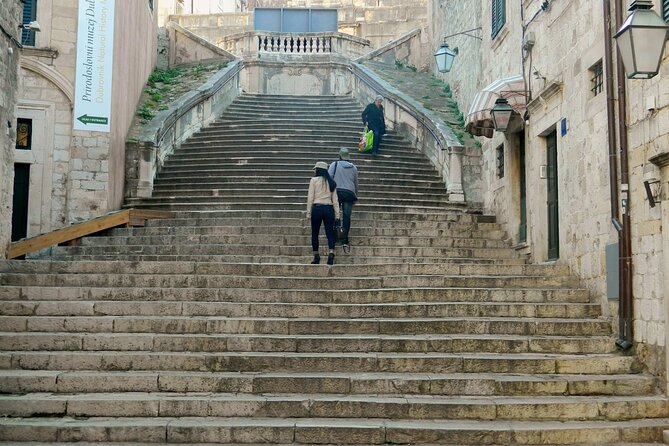
This is the kind of sight that many people pass without realizing it’s doing something specific. Orlando Column is a clock-like monument where the time is shown in both Arabic and Latin numerals, and it only changes every five minutes.
That detail matters because it teaches you how to look. It’s a reminder that Dubrovnik’s identity includes layers of cultural influence and civic life, not just one straight line of style.
Also, when something updates only every five minutes, it’s naturally “slow.” You end up standing there, waiting, and noticing the area around it. It’s a good breather during the walk, and it gives you a moment to watch how the square functions.
Rector’s Palace and Church of St. Blaise: where civic and sacred meet
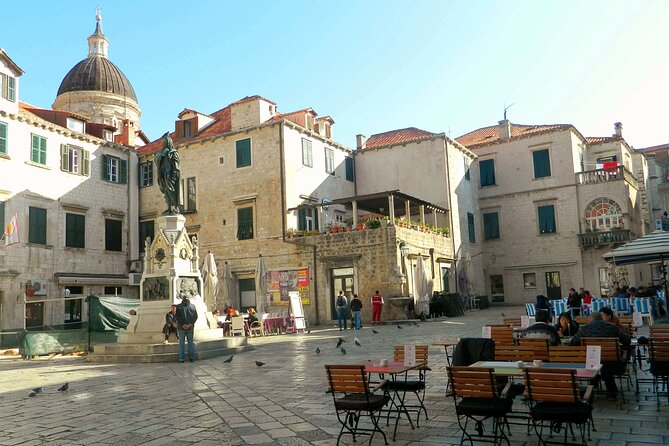
As you move through the main square area, you’ll see the Rector’s Palace and the Church of St. Blaise, Dubrovnik’s patron saint. These stops add contrast. One side tells you about governance and the people who ran the city. The other signals belief and identity.
The Church of St. Blaise stop is useful because it grounds Dubrovnik’s self-image. When you know the patron saint connection, you start recognizing how the city frames itself through ceremony and symbolism.
The Rector’s Palace view also helps you understand why Dubrovnik’s Old Town feels so “organized.” It’s not random. The city was built to support civic life, and the guide’s commentary helps you see how public space and authority were connected.
Bell Tower and the big finish at the Cathedral of the Assumption

Near the end you’ll reach key religious architecture, including the Bell Tower area and the Cathedral of the Assumption. The cathedral is a beautiful Baroque sanctuary built in the 18th century after an earthquake destroyed the original church.
This rebuilding fact is a big deal. It’s how you connect the modern sight to Dubrovnik’s real history of damage, recovery, and defensive pride. If you’ve already heard stories about conflicts, earthquakes become part of the same thread, because they forced the city to keep reinventing itself.
By the time you arrive, the tour has already walked you from water systems to monastic life to government space. So the cathedral stop doesn’t feel isolated. It feels like the culmination of a city that was both practical and spiritual, both civic-minded and tradition-driven.
Guides and pacing: why this works even if you hate tours

The experience is built around the guide, and the best signs are practical: clear structure, room for questions, and a pace that doesn’t steamroll you.
In the guide roster for this operator, names like Elvis, Toni, Natalia, Sara, Kat, and Tihomir show up. The pattern in what you want from your guide is consistent: they explain not only what you’re seeing, but how Dubrovnik life evolved. You’ll also get local pointers, like what to do next after your walk.
Pacing is another quiet strength. People doing a short Old Town walk often worry it will feel rushed or too much like a sprint. Here, the tone is generally steady and gentle, with time for you to stop and look closely, and the guide can help keep the group listening together.
Price and value: what $31.46 buys you in real terms
At $31.46 per person for roughly 1.5 hours, you’re paying for a guided route that would be slower and more confusing without narration. Dubrovnik’s Old Town is compact, but it’s not simple to interpret. A guide saves you from doing the “read one plaque, miss the next detail, forget what it meant” cycle.
This also feels like a good investment because you’re getting orientation plus context. You don’t just learn facts. You learn how to look. After the walk, you can decide what deserves extra time, what you only need a quick look at, and what you want to revisit from a different angle.
Small group size (max 16) is part of the value equation too. In a crowd, you lose focus. In a smaller group, you can ask questions and hear the guide without constantly raising your voice.
One thing to keep in mind: this tour doesn’t replace a full day of wall walking or museums. It’s designed as a strong introduction, so the value is in setting direction for the rest of your visit.
What to wear and bring so the walk stays fun
Since this is a walking tour through stone streets and historic sites, plan for comfort first. Wear shoes with grip, because Old Town surfaces can feel slick, especially in shade.
Bring water if you tend to get thirsty, even though food and drinks are not included. Also, consider sunglasses or a hat. Your day in Dubrovnik might be hot, and even with shade stops, the city can feel sun-heavy.
If you want the best experience for hearing, stand where the guide can see the whole group and you can hear clearly. Dubrovnik’s streets are lively, so you’ll enjoy the tour more if you’re not stuck behind someone tall.
Who should book this Dubrovnik Old Town walk
This is a great match if you:
- want a morning overview so you can plan the rest of your day confidently
- prefer a short guided route rather than climbing long city walls
- like architecture, civic history, and “why this looks like this” explanations
- want a local guide who can answer questions and share practical context
It may not be the best match if you already know Dubrovnik well and are only chasing very specific sites. Since the tour is short, it’s not designed for deep museum time.
Also, if you’re hard of hearing or sensitive to accents/noise, arrive with realistic expectations. A few past participants have noted audio issues, so your best defense is choosing a good spot near the guide and coming prepared to concentrate.
Should you book Dubrovnik Old Town Walking Tour?
Yes, I’d book it if this is your first or second day in Dubrovnik and you want a clean, structured introduction. For the price, you’re buying orientation, meaningful context, and a walking route that connects major sights like Onofrio’s Fountain, the Franciscan cloister, Orlando Column, and the Cathedral of the Assumption.
If you’re the type who likes to read the city as you walk, this tour helps you do it without getting lost in trivia. And because it’s short, it leaves you time to return on your own to the places you loved most.
FAQ
How long is the Dubrovnik Old Town Walking Tour?
It runs for about 1 hour 30 minutes.
Where does the tour start?
You meet at Elite Travel Walking Tours, Brsalje ul. 1, 20000, Dubrovnik, Croatia.
What time does it start?
The start time is 10:30am.
Is the tour in English?
Yes, it’s offered in English.
What’s included in the price?
A local guide is included.
What is not included?
Hotel pickup and drop off are not included, and food and drinks are not included unless specified.
How big is the group?
The tour has a maximum of 16 travelers.
What happens if weather is bad?
The experience requires good weather. If it’s canceled due to poor weather, you’ll be offered a different date or a full refund.
Can I cancel for a full refund?
Yes, free cancellation is available up to 24 hours in advance for a full refund.
Walk It: More of Dubrovnik at Ground Level

Still on the Walls? Keep Reading
Freshly written up around Dubrovnik


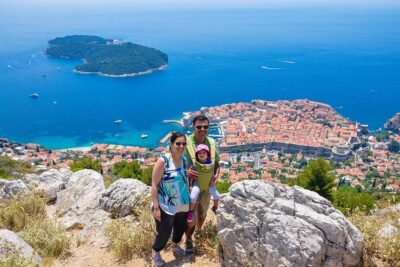


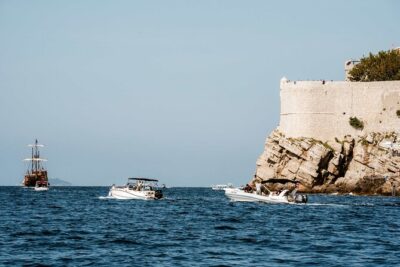
Dubrovnik City Walls & Old Town Walks, top to bottom.
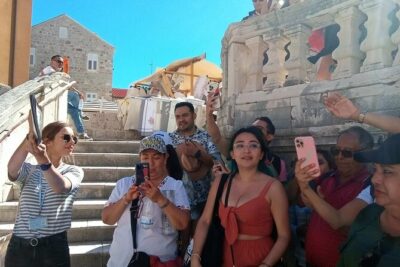 ★ 4.8Dubrovnik: Old Town Walking TourFrom $235,174 reviews
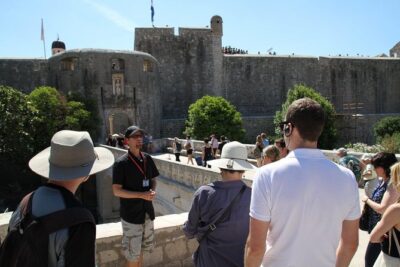 ★ 5.0Dubrovnik Discovery Old Town Walking TourFrom $244,458 reviews
 ★ 5.0Dubrovnik Old Town History Walking TourFrom $241,684 reviews
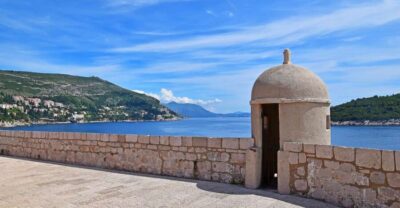 ★ 4.8Dubrovnik: City Walls Early Morning or Sunset Walking TourFrom $291,523 reviews
 ★ 5.0Dubrovnik: Ancient City Walls & Wars Walking TourFrom $301,270 reviews
 ★ 5.0Dubrovnik Combo: Old Town & Ancient City WallsFrom $521,019 reviews
★ 4.9Dubrovnik: Old Town Walking TourFrom $23792 reviews
★ 5.0Dubrovnik Combo: Old Town & Ancient City WallsFrom $521,019 reviews
★ 4.9Dubrovnik: Old Town Walking TourFrom $23792 reviews
 ★ 4.8Dubrovnik: Old Town & City Walls Guided Tours ComboFrom $50697 reviews
Browse the lists this tour appears in