
REVIEW · PRIVATE
Private Electric Rickshaw Tour of Split
Split is easier from three wheels. A private electric rickshaw glides you past key highlights while you ask your driver-guide questions, with easy stops and quietly eco-friendly rides.
I love the private pace that lets you pause at major sights, and I love how the ride saves your legs for the photo points you would otherwise have to rush.
One drawback to plan for: you still do short walks at each stop, and the tour runs best in good weather.
In This Review
- Key highlights at a glance
- Split in Fast Forward: Why a Private Electric Rickshaw Works
- Meeting at the Palace Model, Then Rolling Through Old Split
- Riva Harbor and Prokurative: The Quick City Onramp
- Croatian National Theater and the Street-View Theater of Split
- Diocletian’s Palace Gates and Substructures: The Main Event
- Golden Gate Area Icons: Grgur Ninski and the Photo Moments
- Matejuška Fishing Harbor and Sustipan: Sea Views With Local Texture
- Marjan Forest Park, Meštrović Gallery, and Beach Breaks
- Price and Value at $46.10: When It Makes Sense
- Should You Book This Electric Rickshaw Tour?
- FAQ
- How long is the Private Electric Rickshaw Tour of Split?
- Is this tour private?
- What sights are included on the route?
- What is included in the price?
- Where do we meet, and does the tour end nearby?
- What is the capacity per rickshaw?
- What happens if the weather is poor?
Key highlights at a glance
- Private electric rickshaw ride with your own driver-guide for questions on the move
- Diocletian’s Palace gates and substructures on a tight circuit you do not have to map
- Fast orientation stops at Riva Harbor and Prokurative before the big-ticket sights
- Marjan Forest Park time (longer tour) with an art stop and beach breaks
- Va Bene café drink included on the largest tour option
- Cruise-port friendly routing and you end back where you start
Still weighing it up? These Split trips also came through our review desk.
- Split: Krka Waterfalls Trip with Boat Cruise and Swimming★ 4.8 · 10,519 reviews
- From Split: Krka Waterfalls, Food & Wine Tasting Tour★ 5.0 · 9,326 reviews
- Blue cave, Mamma Mia and Hvar, 5 islands speedboat tour★ 5.0 · 7,150 reviews
- From Split: Krka Waterfalls, Food & Wine Tasting Tour★ 4.9 · 6,598 reviews
Split in Fast Forward: Why a Private Electric Rickshaw Works

Split is one of those cities where the sights are famous, but the getting between them can feel like a workout. This private electric rickshaw tour is built to solve that. You get a loop that hits the big icons and the viewpoints without the constant stop and start of walking.
I especially like the private setup. Your driver-guide can tailor what you ask for, whether you want quick context or more detail on what you are seeing. And because the vehicle is electric, the whole vibe feels more modern and low-fuss while you glide through historic streets and coastal areas.
There is also a practical angle here: you can choose a short or longer run. A longer option leans into parks and viewpoints around Marjan, so you do not just stay in the old town loop.
Meeting at the Palace Model, Then Rolling Through Old Split
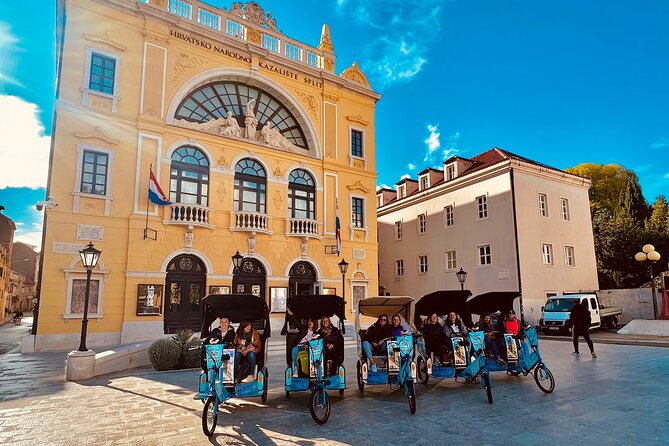
The tour meets at the Model of Palace on Obala Lazareta 1. It is a good anchor point because it puts you close to the historic core right away, and you end back at the same spot.
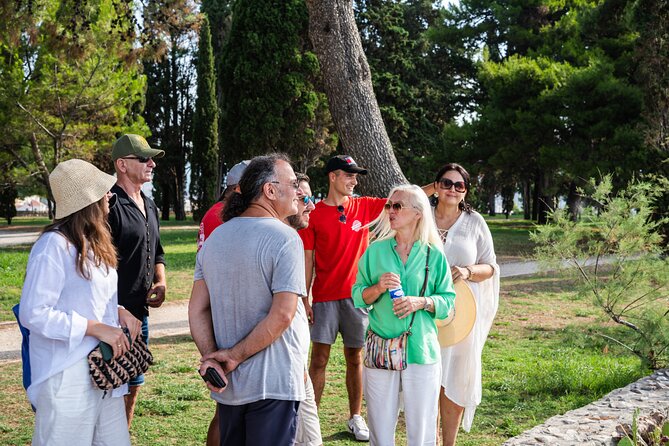
Once you start moving, the rickshaw becomes your moving base. You can take photos, get quick orientation, and then hop out for short visits at each stop. That rhythm matters in Split, because some of the most important sights are clustered but still spread across a few different neighborhoods and levels.
Also, think about how you will use the time. If you are the type who likes to read signs slowly and ask questions, the private format helps. If you are more “see it, shoot it, move on,” you still get enough time to recognize what you are looking at, especially around Diocletian’s Palace.
Riva Harbor and Prokurative: The Quick City Onramp
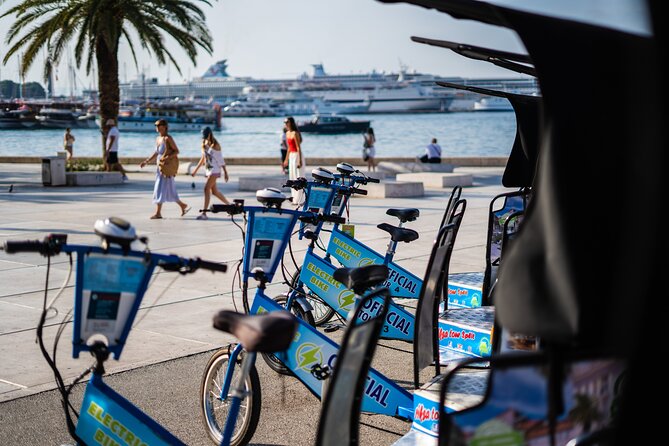
Riva Harbor is your first taste of Split’s everyday energy. The Riva is the waterfront promenade along the harbor, lined with palm trees, cafes, and restaurants. Even with only a brief stop, you get the postcard view of the Adriatic and the sense of where locals gather.
From there you roll to Prokurative, a wide square known for its grand colonnades, arches, and elegant facades. The name has Latin roots, tied to the idea of “representation,” which fits the square’s feel. It also helps you reset your bearings: you start to understand the city’s main sightlines before you tackle the palace area.
What I like here is the order. You are not thrown straight into the most complicated site first. You get a bit of sea air, a sense of scale, and a quick architectural primer, so the rest feels easier.
Croatian National Theater and the Street-View Theater of Split
Next up is the Croatian National Theater (HNK). It was founded in 1893, and the facade shows off neoclassical styling with striking architectural details. Even if you do not attend a performance, the building gives you a feel for how Split values culture beyond its Roman core.
This stop is short, but it works because it gives you contrast. You have just seen the waterfront and Venetian-looking colonnades, and now you get a grand civic landmark tied to modern Croatian cultural life. It helps the city feel like more than just ruins and gates.
If you are traveling with anyone who enjoys architecture or performance arts, this is a nice breather. And if you are time-crunched, it still gives enough payoff in just a few minutes to justify the stop.
- Split: Krka Waterfalls Trip with Boat Cruise and Swimming
★ 4.8 · 10,519 reviews - From Split: Krka Waterfalls, Food & Wine Tasting Tour
★ 5.0 · 9,326 reviews - Blue cave, Mamma Mia and Hvar, 5 islands speedboat tour
★ 5.0 · 7,150 reviews - From Split: Krka Waterfalls, Food & Wine Tasting Tour
★ 4.9 · 6,598 reviews - Split/Trogir: Blue Cave, Mamma Mia, Hvar and 5 Island Tour
★ 4.6 · 6,320 reviews
Diocletian’s Palace Gates and Substructures: The Main Event
Then the tour leans hard into what Split is most famous for: Diocletian’s Palace. The rickshaw circuit takes you around the palace so you can see major entrances and landmarks without doing a long, exhausting walk in one go.
You will encounter the gates that define the palace’s layout. There is the Golden Gate on the north side, built in the 4th century AD. Its original golden decorations are gone today, but the carvings and reliefs still show the craftsmanship and importance of the entrance.
You also get the Silver (Eastern) Gate on the east side. The silver-toned decorations that once adorned it are long vanished, but the name still points to the palace’s original ceremonial look. Up close, it is about reading architectural details rather than needing big modern signage.
And on the southern side, you come to the Bronze Gates (sometimes described as Brass in tour materials). These ornate gates include two main doorways separated by a central pillar, with intricate bronze reliefs and mythological scenes. This is one of those stops where the gate feels like a storybook panel, even if you only spend a minute or two.
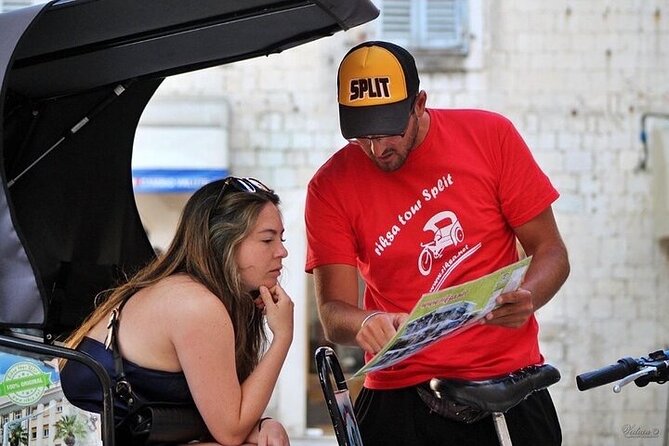
Now for the part many people remember most: the substructures. You explore the underground complex inside Diocletian’s Palace. It was used for practical purposes in ancient times, including storage and living quarters, and you can view features like a bronze entrance door. Having your driver-guide explain what you are looking at helps a lot here, because underground spaces can otherwise feel like a corridor of stone.
Golden Gate Area Icons: Grgur Ninski and the Photo Moments
Right near the palace entrances is one of Split’s most recognizable street-level landmarks: the Grgur Ninski statue. Gregory of Nin was a Croatian bishop from the 10th century, and the big bronze statue in front of the northern gate is what most visitors aim for.
The statue is about 7 meters high and was made in 1929 by sculptor Ivan Meštrović. There is also a local tradition that rubbing the big toe brings good luck. It is a goofy ritual in the best way, and it gives you something fun and quick to do while you wait for the best photo angle.
This is another stop that works because it is practical. You get the Roman palace context from earlier, then you see how later Croatian history and modern sculpture still shape how the city looks today.
Matejuška Fishing Harbor and Sustipan: Sea Views With Local Texture
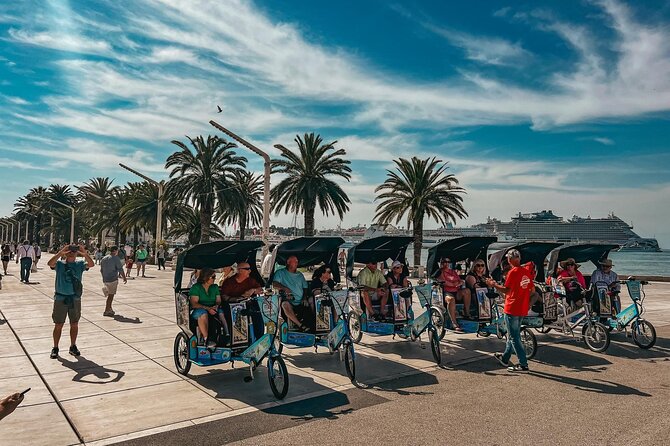
After the palace focus, the tour turns toward a more everyday Split. At Matejuška Fishing Harbor, you get a feel for the city’s fishing culture. Colorful boats and nets line the harbor, and the area is tied to the fish market and daily catch scene.
Even on a short stop, it is a different sensory experience than the palace. You are closer to saltwater life. You are also seeing how the old town connects directly to the sea, not as a background but as a working part of daily routine.
Then you head to Sustipan, a rocky promontory overlooking the Adriatic. Sustipan has a strategic past, serving as a defensive point, and you can see remains of ancient stone walls and fortifications. Today, it functions more like a calm viewpoint spot, with space for a slow walk and panoramic views of the coast and nearby islands.
If you choose a longer rickshaw run, these stops help the day feel rounded. You get the Roman big deal and the cultural big deal, plus a look at how people live by the water.
Marjan Forest Park, Meštrović Gallery, and Beach Breaks
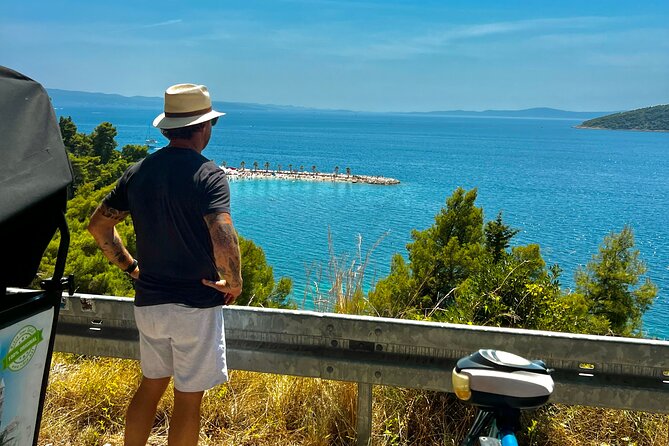
The Marjan section is where the tour turns into a full change of scenery. Marjan Forest Park is large, about 178 hectares, with pine forests, Mediterranean shrubs, and rocky coastal viewpoints. It also has a network of walking and jogging trails, so even a short visit can feel like a reset.
One of the park’s iconic landmarks is St. Nicholas Church, perched atop the highest peak and dating to the 13th century. You are not necessarily doing a full hike on this rickshaw tour, but you are surrounded by enough greenery and open views to understand why locals and visitors love the area.
Within Marjan, there is also time for the Meštrović Gallery. It is dedicated to sculptor Ivan Meštrović and is housed in a villa built by him. You can see sculptures, drawings, and architectural designs, with an emphasis on how he shaped human form through a style mixing neoclassicism and modernism. The gardens and city plus sea views outside the gallery area are part of the payoff too.
From there, the tour can include beach time, including Obojena Svjetlost and Kašjuni Beach. Obojena Svjetlost gets its name from color effects reflected in the sea, and it is described with turquoise waters, soft golden sand, and amenities like beach bars and restaurants. Kašjuni sits at the foot of Marjan hill, with pebble and sand areas and pine-tree shade that can make it easier to stay out longer in the sun.
On many longer options, you also reach Bene Beach. It is on the western side of Marjan and is known for clear turquoise water, pebbly shores, and pine trees. It is described as family-friendly, with calmer, shallow water that suits less confident swimmers.
And yes, there is a small extra on the largest tour: a free drink at Va Bene café on Bene Beach. It is a simple inclusion, but it is the kind of thing that makes the beach stop feel less like a quick photo break and more like an actual pause.
If your focus is history only, you may find Marjan a bit more than you planned. But if you want views and a change of pace from stone streets, Marjan is where the day turns memorable.
Price and Value at $46.10: When It Makes Sense
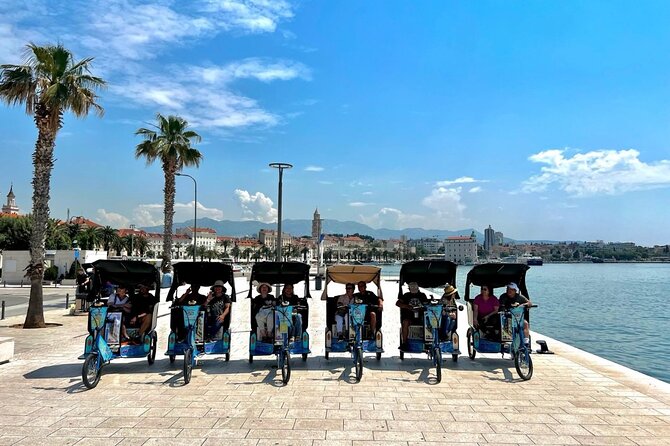
At $46.10 per person, this tour is not just a taxi with sightseeing. You are paying for a private electric rickshaw, a driver-guide, and transportation between a sequence of high-impact stops. That can be strong value when you compare it to the time you would spend sorting routes, walking between gates, and trying to see Diocletian’s Palace plus beaches in one day.
It is also a smart choice if you have limited time. Split can be deceptively easy to underestimate, especially when you factor in the walking from one viewpoint to the next. The rickshaw keeps you moving, so you actually get to enjoy the stops instead of using your energy just to travel between them.
One more value point: the tour can include entry/admission for Marjan Forest Park and Bene Beach, plus that drink on the largest tour. So on a longer day, the “extras” add up to something you would otherwise have to pay for separately.
My quick rule for value: if you want to cover a lot of Split without spending the day on your feet, the price feels fair. If you want a slower day focused on one neighborhood, you might not need a private loop.
Should You Book This Electric Rickshaw Tour?
Book it if you want maximum highlights with minimal legwork. It is especially worth it if your day includes Diocletian’s Palace plus a viewpoint and at least one green or beach stop around Marjan.
You should also book early. The tour notes that these experiences sell out regularly, so waiting can leave you stuck with fewer time slots.
Skip it or plan carefully if weather is questionable, because the experience requires good weather. Also, remember that rickshaw time does not eliminate all walking, so wear comfortable shoes for the short stop-and-step moments.
If you want a Split day that feels organized, ask for the longer run. That is where the pacing often clicks, with parks and coastal scenery replacing a rush-only old town approach, while your driver-guide keeps the story straight as you go.
FAQ
How long is the Private Electric Rickshaw Tour of Split?
It typically runs from about 30 minutes up to about 2 hours 30 minutes, depending on the route length you choose.
Is this tour private?
Yes. It is a private tour, so only your group participates.
What sights are included on the route?
You will pass key areas like Riva Harbor, Prokurative, the Croatian National Theater, Diocletian’s Palace and its gates, Grgur Ninski statue, Matejuška Fishing Harbor, and Sustipan. On longer options, it can also include Marjan Forest Park, the Meštrović Gallery, and beach stops like Obojena Svjetlost, Kašjuni, and Bene Beach.
What is included in the price?
The tour includes the rickshaw, a driver-guide, and private transportation. The largest tour option also includes a free drink at Va Bene café, plus entry/admission for Marjan Park and Bene Beach.
Where do we meet, and does the tour end nearby?
You start at the Model of Palace at Obala Lazareta 1, Split. The tour ends back at the same meeting point.
What is the capacity per rickshaw?
The maximum capacity is 2 adults and 1 child up to 10 years old.
What happens if the weather is poor?
The tour requires good weather. If it is canceled due to poor weather, you will be offered a different date or a full refund.
Freshly written up around Split

Private, top to bottom.
 ★ 4.7Dubrovnik: Blue & Green Caves Private Boat Tour with DrinksFrom $73814 reviews
 ★ 5.0Dubrovnik Private Speedboat Tour to Elaphite Islands with DrinksFrom $386660 reviews
 ★ 5.0SPLIT-PRIVATE Walking Tour of Diocletian’s Palace & Old TownFrom $240467 reviews
 ★ 5.0Tour The Game of Thrones – Private Walking TourFrom $185464 reviews
 ★ 4.0Private Krka Waterfalls tour with 30min Boat CruseFrom $301458 reviews
 ★ 5.0Dubrovnik: Private Boat Tours to Elaphite IslandsFrom $604437 reviews
 ★ 5.0Split by Private Electric Rickshaw – Palace & Hidden GemsFrom $48412 reviews
 ★ 5.0Private Blue cave, Mamma Mia and Hvar, 5 islands tour from SplitFrom $1,572387 reviews