
REVIEW · ROVINJ, POREC & THE LIM FJORD
Rovinj: Guided Walking Tour
Rovinj turns history into street-level stories. This 90-minute guided walk threads together island origins, old town lanes, and a hilltop finish at Saint Euphemia with serious Adriatic payoff.
I especially like the guide’s style, Goran, who mixes clear storytelling with humor and keeps the questions coming. I also love the practical side, you get local coffee, cakes, gelato, and beach-area tips alongside the big history beats.
One consideration: about half the walk runs through the historic old town on cobblestones, and the climb up to the church can be tiring for anyone with limited stamina. This tour is not suitable for mobility impairments.
In This Review
- Key highlights to expect from this Rovinj walking tour
- Entering Rovinj like an island town
- Meeting just off the farmers market, then easing into the old town
- Valdibora Square and Bridge Square: the geography lesson you can’t get from a guidebook
- Carera Street: trade money, 18th-century wealth, and how streets show class
- The waterfront stop and the Aperol Spritz moment
- Cobblestones, walls, and the old Jewish Ghetto area by the Arch of the Bearded
- Saint Euphemia church and the best sunset vantage point in the Adriatic
- What makes the guide the main attraction, especially Goran
- Where to eat, drink, and wander next after the tour
- Price and time: is $32 worth 90 minutes in Rovinj?
- Who this Rovinj walking tour suits best
- Should you book this Rovinj guided walking tour?
- FAQ
- How long is the Rovinj guided walking tour?
- How much does the tour cost?
- Where do we meet the guide?
- What languages are available?
- What is included in the price?
- What is not included?
- Is the tour suitable for people with mobility impairments?
- Is there free cancellation?
Key highlights to expect from this Rovinj walking tour
- Why Bridge Square has no bridges: the story behind the old channel that used to be there
- Valdibora Square orientation: the first area you see from the north, used as a quick history compass
- Carera Street trade wealth: how olive oil, fish, and wine shaped 18th-century prosperity
- Old Jewish Ghetto area near the Arch of the Bearded: you’ll spot how tight streets and walls shaped everyday life
- A waterfront stop for an Aperol Spritz: the views come with a built-in break
- St. Euphemia church hilltop sunset: the tour ends where the skyline framing is the best
More of the west Istrian coastline
- Rovinj: Sunset Cruise with Swim Stop, Drinks, and Fruits★ 4.9 · 944 reviews
- Rovinj: Sunset Boat Trip with Dolphin Watching★ 4.6 · 644 reviews
- From Poreč: Lim Fjord, Rovinj, and Vrsar Boat Trip★ 4.7 · 276 reviews
- Rovinj: Sunset & dolphin group tours with Catamaran★ 5.0 · 227 reviews
Entering Rovinj like an island town
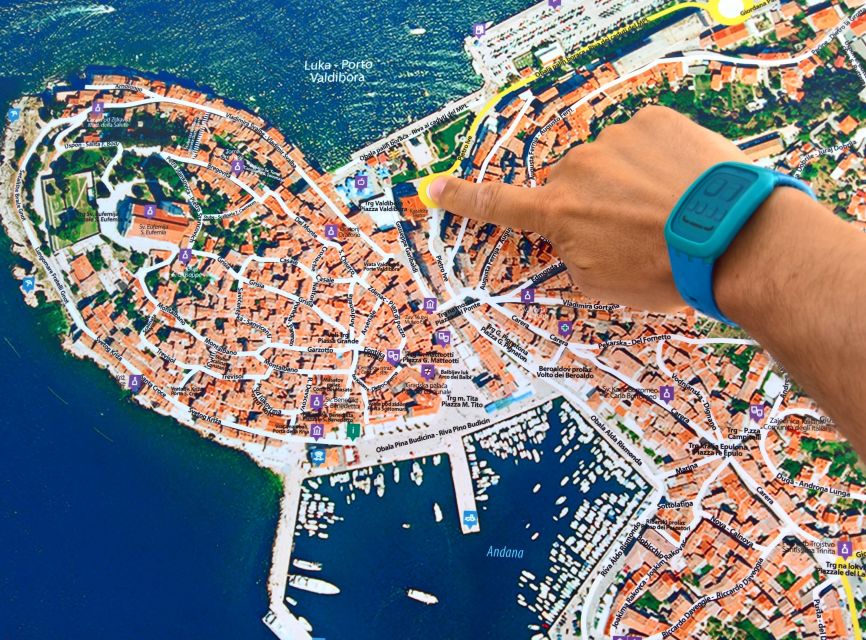
Rovinj is one of those places where the map feels almost misleading. You see a town on the coast, but the story the guide tells is that this place grew as an island community, with water shaping daily life. And the walk makes that idea physical, you’re shown where a channel and even a bridge used to be, then how that channel was filled in about 1000 years ago.
That’s the magic of this tour. You stop at viewpoints and city corners, but you’re also getting the “why” behind the layout. You’re learning how geography, trade, and defensive walls all left fingerprints on what you see today.
If you like tours that explain the logic of a place, not just the postcard photo, this one fits. With a local, city-born perspective and a lot of room for questions, it’s the kind of walk that helps you understand Rovinj fast.
Meeting just off the farmers market, then easing into the old town
You meet your guide in front of the white WW2 memorial on Pietra Ive street, just off the local farmers market area. It’s a good way to start, because you’re in the lower town where locals actually move through the day.
The tour runs for 90 minutes, so it’s long enough to cover real ground but short enough that you’re not stuck for hours. The guide is a local licensed professional, and the experience is in English, Italian, Portuguese, French, or Croatian.
Because roughly half the tour goes through cobblestoned historic streets, I’d plan for a slower rhythm than you might expect on a flat promenade. If you’re the type who likes comfortable shoes and not just good views, you’re already thinking in the right direction.
Valdibora Square and Bridge Square: the geography lesson you can’t get from a guidebook
Valdibora Square is the first major zone people notice when approaching Rovinj from the north. That makes it a smart starting point, because the guide can orient you before you get tangled in lanes.
This is where the island story gets specific. You’ll learn exactly where the channel was, and where the related bridge used to be. Then you’ll hear how that channel was landfilled about 1000 years ago, changing Rovinj from island to coastal town over time.
And then there’s the clever detail that makes the whole explanation stick. You’ll hear why there are no bridges at Bridge Square today. Instead of just pointing at a spot, the guide ties the missing bridge to the filled-in waterway you just learned about. It’s history you can see, because the streets and viewpoints are part of the evidence.
Carera Street: trade money, 18th-century wealth, and how streets show class
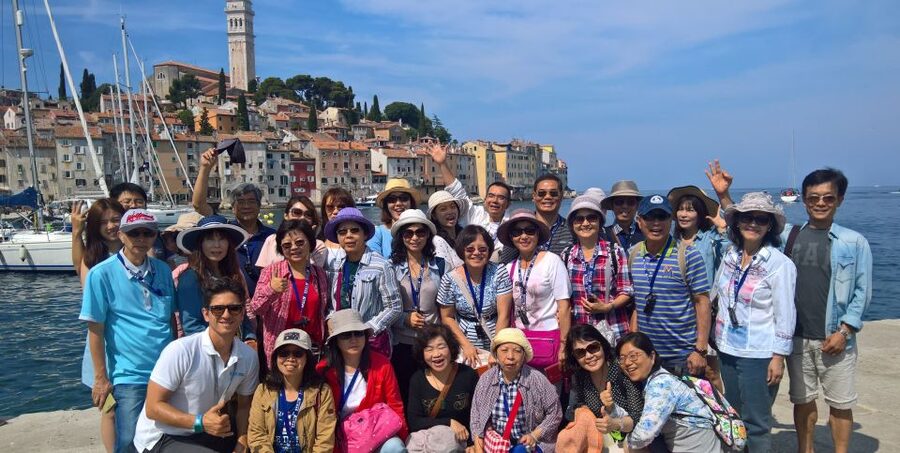
Once you’re oriented, you walk along Carera Street, the kind of street where you can almost read the city’s past with your eyes. In the 18th century, wealth in Rovinj was built through trade, especially in olive oil, fish, and wine. The guide connects those trade goods to the architecture and the way the town developed.
I like this segment because it explains why certain areas feel more prosperous. You’re not just hearing facts like a museum audio track. You’re getting a mental model: trade created money, money funded expansion and prestige, and later the town’s “look” followed that economic momentum.
This is also a helpful moment to ask questions. The guides tend to keep it conversational, and if you want to understand the region beyond Rovinj, this is a good time to ask.
More Rovinj covered at walking pace
- Rovinj: Guided Walking Tour
★ 4.8 · 113 reviews - Rovinj walking tours
★ 5.0 · 94 reviews
The waterfront stop and the Aperol Spritz moment
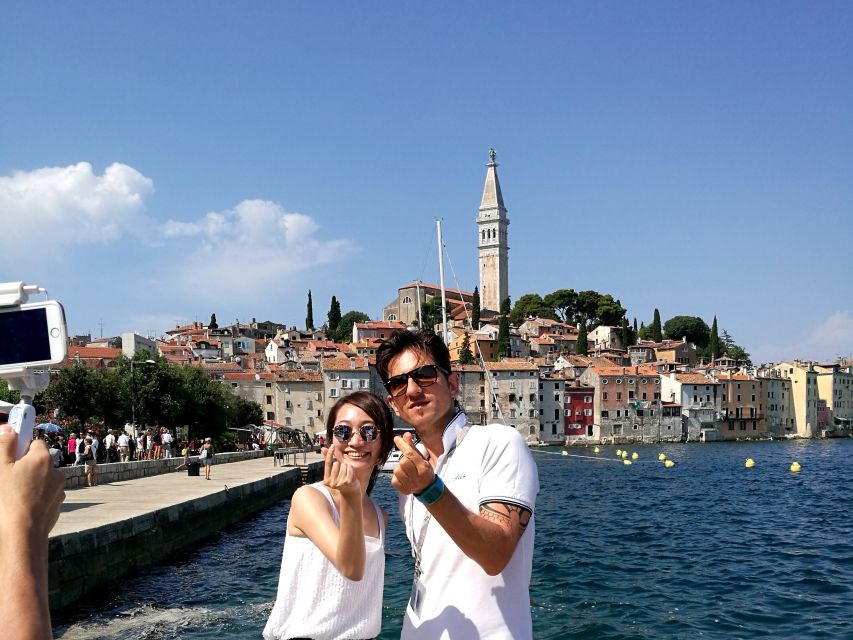
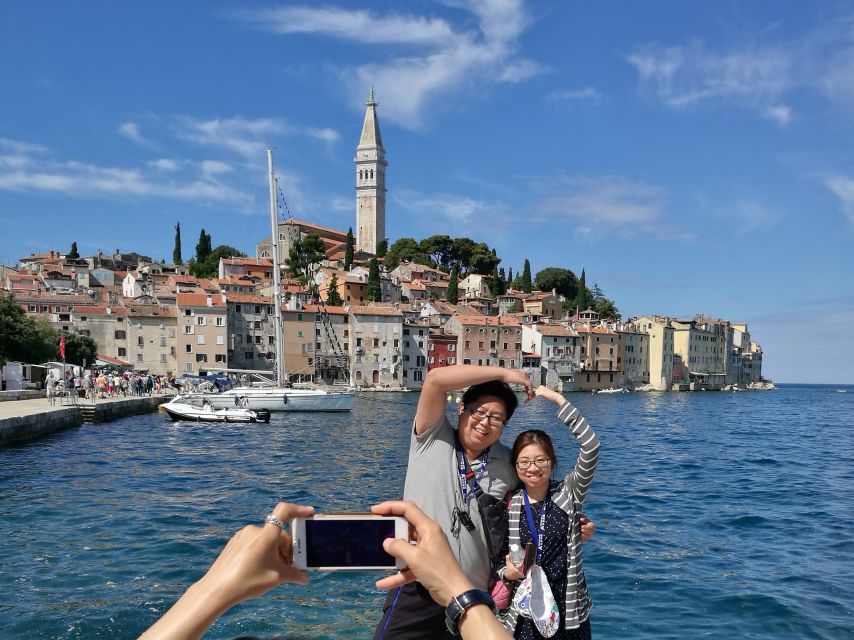
You’ll reach the waterfront, and it’s treated as a must-see pause, not a rushed photo line. The viewpoint matters here, because you’re looking at Rovinj against the blue Adriatic waters, and the town’s skyline does a lot of the work for you.
This stop is also positioned as a great moment to grab an Aperol Spritz. The key value is not the drink itself, it’s the timing. You rest while the scenery is at its most memorable, and then you head back into the maze of cobbled streets with better energy and better context.
If you’re planning your own drinks later, keep the timing in mind. You’ll leave with a stronger sense of where the water framing is best, so you can pick your own spot again after the tour.
Cobblestones, walls, and the old Jewish Ghetto area by the Arch of the Bearded
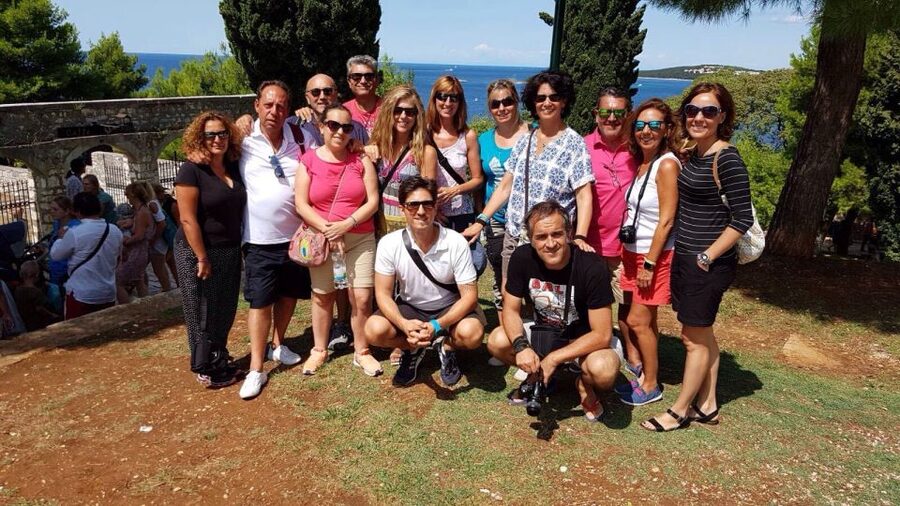
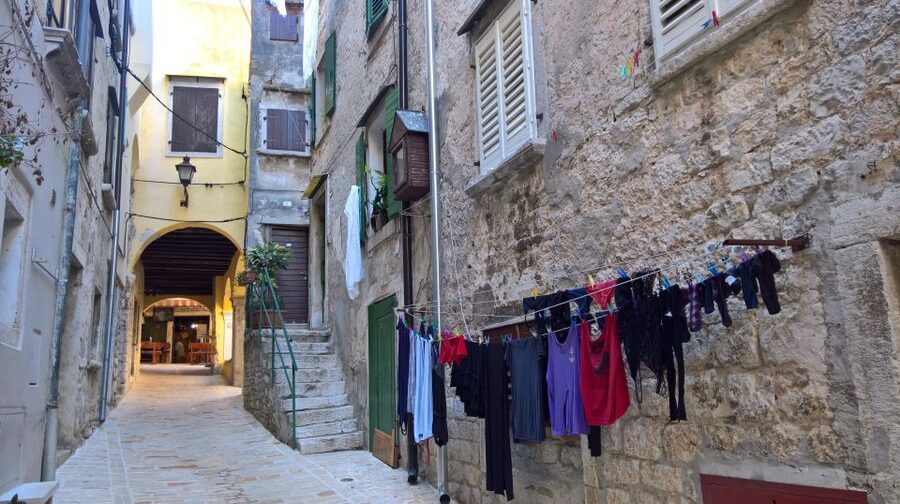
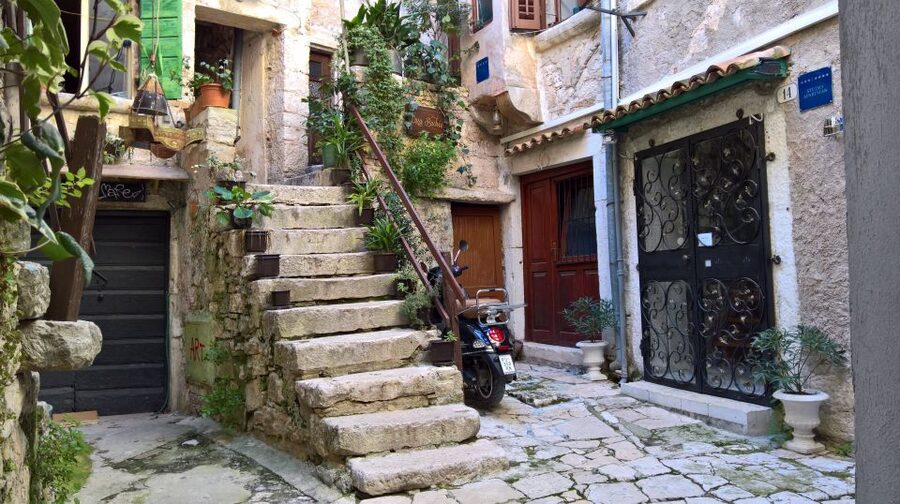
After the waterfront, the route gets tighter and more atmospheric. You navigate through cobbled streets toward the old Jewish Ghetto and the stables area. The guide also points out the area just off the Arch of the Bearded, which adds a landmark you can later reference when you wander on your own.
The old town maze can feel like you’re just walking in circles unless someone gives you structure. Here, the structure is historical and physical: you’re guided along ancient city walls and shown how space shaped life. In a small island setting, density and protection weren’t abstract ideas, they were daily realities.
I like that this part of the tour doesn’t just list names. It helps you picture how thousands of locals lived on a small island for centuries. Once you understand that, the lanes and walls stop looking like random old stone and start looking like practical design.
Saint Euphemia church and the best sunset vantage point in the Adriatic
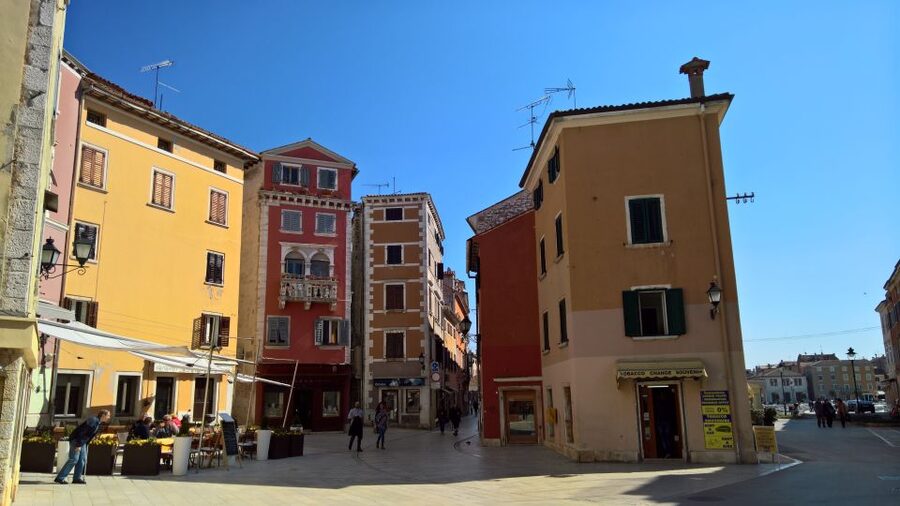
The tour climbs toward the top of the hill where Saint Euphemia watches over Rovinj. You follow the ancient city walls upward, and the skyline begins to widen with every step. That gradual reveal is part of why ending here works so well.
The walk up is described as fairly easy, but it’s still a climb. If you’re someone who gets tired on uneven ground, you should factor that in. The cobblestones and uphill stretch are exactly why the tour is not recommended for mobility impairments.
At the church area, you reach the finish point, and the view is the payoff. It’s positioned as a prime location to watch the best sunset in the Adriatic. Even if you’re not a serious sunset person, you’ll likely understand why this spot became the ending point. The angle, the skyline, and the water all line up in a way that feels made for an evening finale.
What makes the guide the main attraction, especially Goran
The tour’s reputation is strongly tied to the guides, and the name that shows up again and again is Goran. People consistently praise his sense of humor, how he keeps stories engaging, and how clearly he answers questions. That matters because Rovinj has layers, and without a good guide, you can end up with disconnected facts.
Here’s what you get from that kind of guiding:
- A local point of view on daily life topics, not only old buildings
- Explanations that feel tailored, with time for follow-up questions
- Recommendations that go beyond generic sightseeing
You’ll also leave with practical food and drink direction. The tour highlights where to get the best coffee with a view, and where to find sublime cakes and gelato. You’ll also learn where locals buy their fruits and vegetables. Those details help you experience Rovinj like a resident, not a checklist.
In one of the standout review patterns, Goran’s recommendations include restaurant suggestions and dessert picks, and the group interaction is friendly. In at least one small group of five, he spoke directly to everyone and kept the energy inclusive.
Where to eat, drink, and wander next after the tour
The best tours give you a map in your head, not just a few photos. This one aims to do that by pairing history with specific “go here” ideas.
By the end, you should know:
- where locals go for fruits and vegetables
- where to find the best coffee and which spots offer a view
- where to get cakes and gelato that really hit
The tour also points out where the best beach areas are. That’s important because Rovinj’s best water time is not always the same place you’d first pick from a distance. The guide’s local knowledge helps you pick a beach area that fits how you want to spend your afternoon.
After you finish at Saint Euphemia, you’re also in a strong position for evening wandering. If you’re staying overnight, you can use the tour’s landmarks as anchors. You’ll remember streets, angles, and viewpoints in a way that makes free exploration feel easier.
Price and time: is $32 worth 90 minutes in Rovinj?
At $32 per person for about 90 minutes, this is priced like a serious walking experience, not just a casual stroll. For that amount of time, you’re getting a local licensed guide plus a structured route through major Rovinj themes: island geography, trade wealth, historic religious quarters, and a hilltop church finish.
Value is also about how the time is used. A good tour doesn’t waste minutes on guesswork. Here, the guide uses smart orientation points like Valdibora Square early, then connects them to Bridge Square later, so the city’s layout makes sense as you walk.
One more value indicator is consistency. The experience holds a high rating of 4.8 with over 100 reviews, which usually means the guide quality and overall flow are reliable.
If you want Rovinj to feel understandable instead of overwhelming, $32 for 90 minutes can be a smart use of your first day. It gives you the context to enjoy everything else you do afterward.
Who this Rovinj walking tour suits best
This tour fits you best if you:
- enjoy guided walking that explains why things look the way they do
- want a local perspective, especially on neighborhoods and old quarters
- like history that connects to geography, street layout, and daily life
It also works well if you want a smoother first visit. Rovinj’s old town is charming, but it can be easy to get lost without a framework. This tour gives you that framework quickly.
You should skip it if you need an accessibility-friendly route. It is not suitable for people with mobility impairments, and the cobblestones plus the climb to the church are part of the experience.
Should you book this Rovinj guided walking tour?
Yes, I’d book it if you want the fast-track version of Rovinj understanding. You get island-origin context, trade history connected to real streets, and a finish that actually matters for your sunset plans. The biggest selling point is the guide experience, especially Goran, with clear English and a humor-filled approach that keeps the walk moving and questions welcome.
Skip it if cobblestones and uphill walking are a problem for you, because that part is built into the route. If you’re comfortable walking on uneven historic streets and don’t mind a climb, this is a high-value way to turn Rovinj from pretty into meaningful.
FAQ
How long is the Rovinj guided walking tour?
The tour lasts 90 minutes.
How much does the tour cost?
The price is $32 per person.
Where do we meet the guide?
Meet in front of the white WW2 memorial on Pietra Ive street, just off the farmers market.
What languages are available?
The tour is offered in English, Italian, Portuguese, French, and Croatian.
What is included in the price?
A local licensed and professional guide is included.
What is not included?
Personal expenses like food or drinks are not included.
Is the tour suitable for people with mobility impairments?
No. The route includes cobblestones and a walk up to the church area, so it is not suitable for people with mobility impairments.
Is there free cancellation?
Yes, you can cancel up to 24 hours in advance for a full refund.
Walk It: More of Rovinj at Ground Level

The West Istrian Coast



Freshly written up around Rovinj

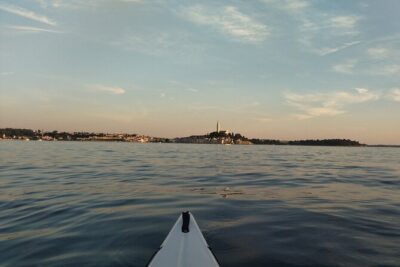


Rovinj, Porec & the Lim Fjord, top to bottom.
 ★ 4.6Vrsar: Dolphin Watching Boat Tour including DrinksFrom $291,227 reviews
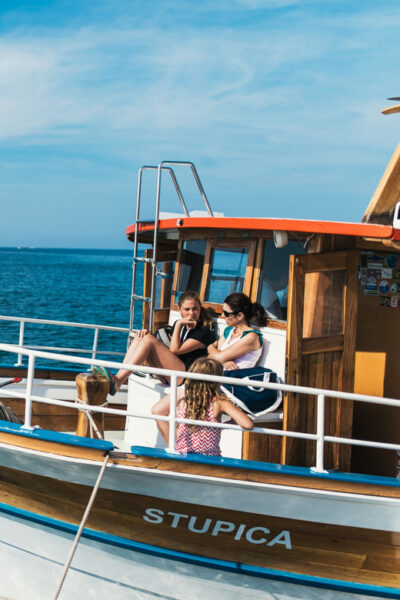 ★ 4.9Rovinj: Sunset Cruise with Swim Stop, Drinks, and FruitsFrom $36944 reviews
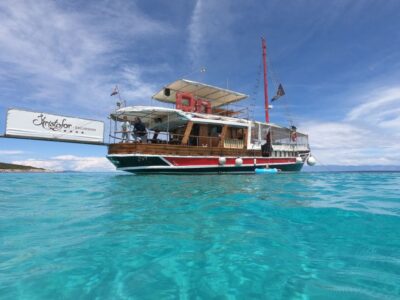 ★ 4.7Poreč: Evening Boat Trip to Discover DolphinsFrom $35909 reviews
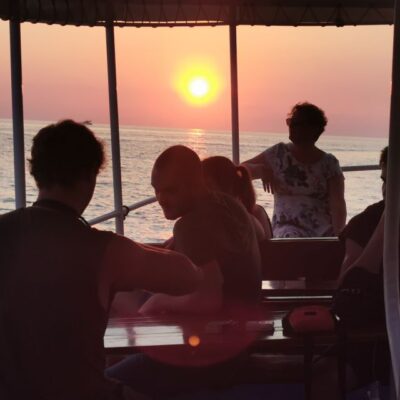 ★ 4.6Rovinj: Sunset Boat Trip with Dolphin WatchingFrom $35644 reviews
 ★ 4.4Vrsar: Dolphin Watching Boat RideFrom $29425 reviews
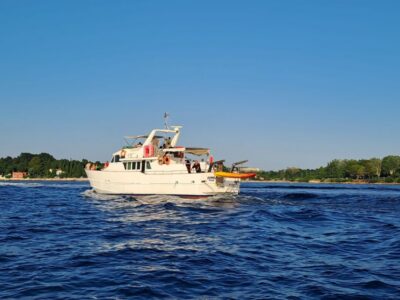 ★ 4.5Umag: Sunset Cruise with Dolphin SpottingFrom $41382 reviews
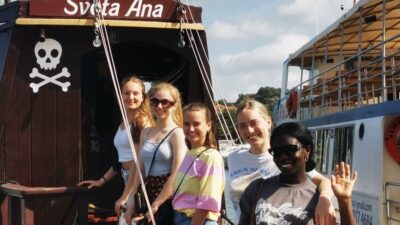 ★ 4.2Vrsar: Lim Fjord Boat Tour with Swimming near Pirate’s CaveFrom $29322 reviews
 ★ 4.8Poreč: Panoramic Morning Cruise Among 20 Islands with DrinksFrom $28281 reviews
Browse the lists this tour appears in