REVIEW · CROATIA
Secret Split: Socialist Architecture & brutalism – Urban Utopia
Concrete utopia meets real sidewalks. This Secret Split walk takes you from Split’s usual Roman story to a post-World War II neighborhood built on bold social ideas. I like how the tour connects Split 3 to real-world daily life, not museum theory, and I especially like the way the guide explains brutalist design as care for people, especially kids and families. One drawback to consider: it is squarely about modern planning and architecture, so if you want classic old-town highlights only, this route may feel like a detour.
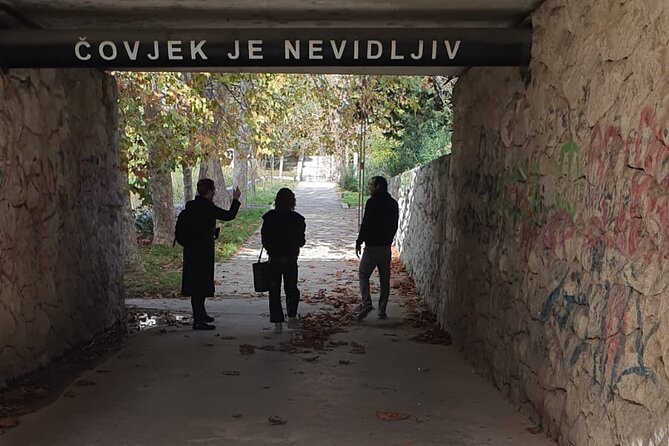
This is also a very human kind of architecture tour. With a passionate guide named Mirjana, you get clear local context and practical understanding of how these blocks shape routines today. Expect a walk that stays grounded, showing raw buildings, clean geometry, and open spaces, plus chances to meet local artists and activists tied to the neighborhood’s present-day culture.
In This Review
- Key takeaways before you go
- Why Split 3 matters more than Split’s Roman core
- Papandopulova ulica: Split 3 and MoMA’s Concrete Utopia
- Split-Dalmatia County: the socialist answer to growth
- A city within a city: pedestrian life and community spaces
- Art activism in Split: how critical communication shows up
- What the guide Mirjana brings to the walk
- Duration and pacing: 1 to 3 hours where it counts
- Price and value: paying for context, not just walking
- Where to start, where to end, and how to pair it
- Should you book Secret Split: Socialist Architecture and Brutalism?
- FAQ
- How long is the Secret Split tour?
- Where does the tour start and end?
- What is the tour price?
- What is included in the tour?
- Are there any admission fees at the stops?
- Is this a private tour?
- What is the cancellation policy?
- What days and hours does it run?
- Is it accessible for most travelers?
Key takeaways before you go
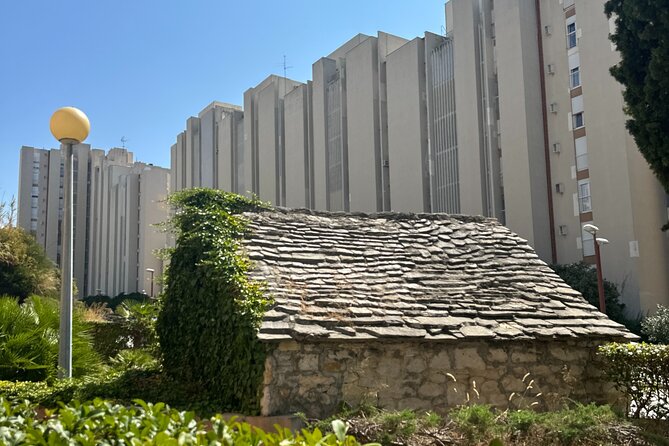
- Split 3 is the star, a large post-war socialist urban plan in Split that helped shape modern thinking about housing.
- Concrete is explained as intention, not just texture, with focus on community spaces and pedestrian life.
- MoMA’s Toward a Concrete Utopia (New York, 2018) frames why this area matters beyond Croatia.
- You’ll walk a residential zone, a city within a city that many visitors never reach.
- Art and activism show up too, including time to meet local creatives connected to critical communication.
- Private group format, so your questions can actually land with your licensed guide and heritage interpreter.
Still weighing it up? These Split trips also came through our review desk.
- Split: Krka Waterfalls Trip with Boat Cruise and Swimming★ 4.8 · 10,519 reviews
- From Split: Krka Waterfalls, Food & Wine Tasting Tour★ 5.0 · 9,326 reviews
- Blue cave, Mamma Mia and Hvar, 5 islands speedboat tour★ 5.0 · 7,150 reviews
- From Split: Krka Waterfalls, Food & Wine Tasting Tour★ 4.9 · 6,598 reviews
Why Split 3 matters more than Split’s Roman core
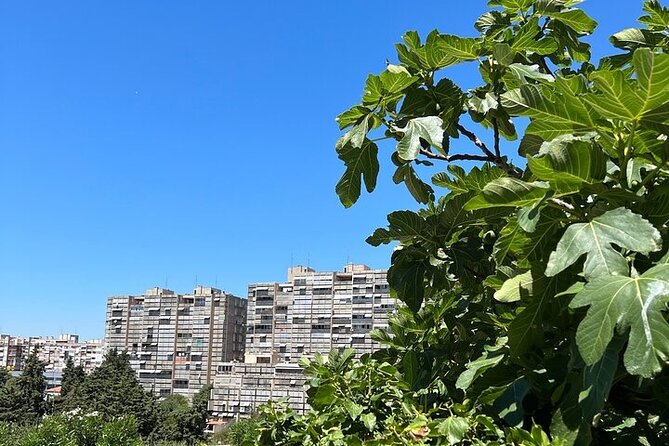
Split is famous for emperors, ruins, and stone nostalgia. This tour flips the script. You start looking at Split as a place that kept rebuilding its life after the 1940s, when concrete and planning were treated like serious tools for shaping society.
The heart of the experience is a neighborhood called Split 3, developed after World War II as an expansion of Split. The idea was ambitious: build a whole piece of city design for work, home, kids, and public life, with pedestrian-friendly space and community in mind. The result is a portion of Split that feels intentionally made, with geometry you can read at street level, not just admire from a distance.
What I like most is the way the tour rejects nostalgia. It does not ask you to romanticize the past. Instead, it helps you notice what still works, what feels unfinished, and why some planning dreams turn into lasting urban patterns even when the original plan never fully lands on paper.
Papandopulova ulica: Split 3 and MoMA’s Concrete Utopia
Your first stop is along Papandopulova ulica. This is where you start to see why Split 3 ended up in international architecture conversations, including the MoMA exhibition Toward a Concrete Utopia (New York, 2018).
This part of the walk focuses on the design language of the 1970s built environment. You will see raw structures, clean lines, and the kind of open space that is meant to be shared, not squeezed. If you usually treat brutalism as a style word, this is where it becomes something more practical. You get a sense of how concrete, repetition, and spatial planning were used as a system for living.
The tour’s biggest value here is explanation. You are not just looking at buildings, you are learning what the architects and planners wanted to achieve with the layout. It helps you understand why the area can feel orderly, even when it looks uncompromising. Brutalism here is not just about exposing materials. It is framed as an approach that tried to treat housing as a public responsibility, with space designed for everyday interactions.
A small consideration: the stop is short, about 38 minutes, so you will want to slow your pace during the walk and ask questions while you have them. If you rush, you might miss the logic behind what you are seeing.
Split-Dalmatia County: the socialist answer to growth
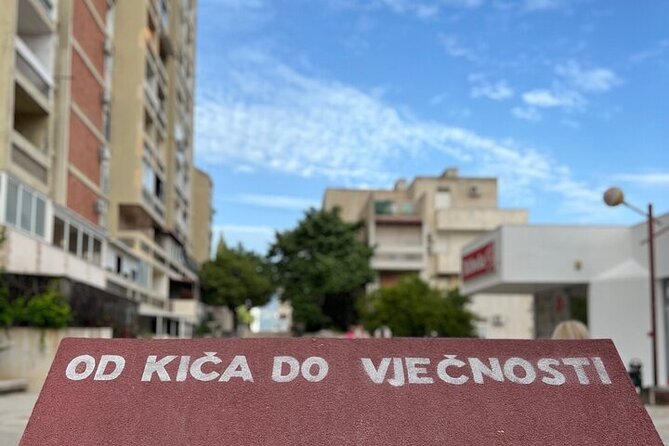
Next you move into a broader explanation tied to the Split-Dalmatia County area. This is where the tour places Split 3 in its real context, rapid demographic growth. When a city grows fast, you need more than new buildings. You need a plan for streets, services, and how people move through daily life.
Here’s the useful part for you as a visitor: the tour does not pretend the plan was fully realized exactly as imagined. It explains that Split 3 was an answer, but it also ended up only partly achieved. Still, it remains important in the story of 20th century urbanism and architecture, not only in Croatia but across the wider world.
I like this section because it teaches you how to read ambition in urban design. You start noticing what looks complete, what feels transitional, and what might have been intended differently. Even if you are not a planning nerd, you will walk away with better instincts for why some neighborhoods feel coherent, while others feel like compromises.
If you enjoy understanding cities as systems, this is a strong fit. If you only want pretty photos and quick sightseeing, you might find yourself wanting more time in this stop to absorb the logic. The tour is built to be efficient, but the ideas are deep.
A city within a city: pedestrian life and community spaces
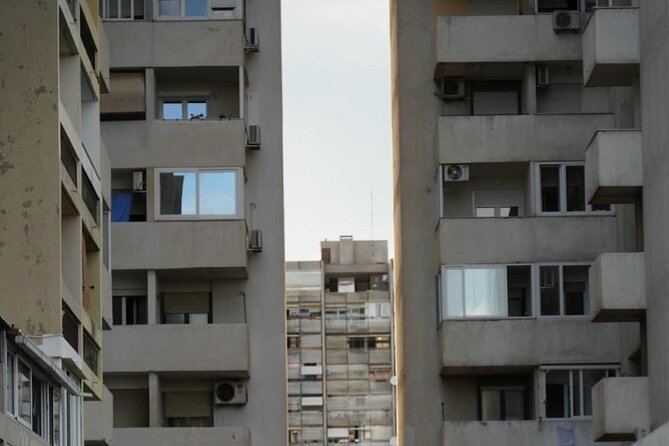
Some architecture tours stop at façades. This one keeps moving, because the real point is what happens between buildings. Split 3 is described as a fully pedestrian zone designed for community, for children, and for daily life. That idea matters more than it sounds.
As you walk through the residential area, you start seeing how the layout supports slower movement. Pedestrian space is not just convenience. It changes how people meet, how kids play, how neighbors spend time outside, and where daily routines take place. You also see open spaces that are meant to serve groups, not only individuals.
This is where brutalism gets reframed. Concrete can look cold in photos. But in a designed community zone, it is part of an overall care plan. The tour encourages you to look beyond the material and focus on the human intention: clarity, function, and shared space.
Also, because you are away from the most visited core, the walk gives you a different flavor of Split. It feels more lived-in, more local. You are not just passing through. You are encountering a neighborhood built to host life at street level.
- Split: Krka Waterfalls Trip with Boat Cruise and Swimming
★ 4.8 · 10,519 reviews - From Split: Krka Waterfalls, Food & Wine Tasting Tour
★ 5.0 · 9,326 reviews - Blue cave, Mamma Mia and Hvar, 5 islands speedboat tour
★ 5.0 · 7,150 reviews - From Split: Krka Waterfalls, Food & Wine Tasting Tour
★ 4.9 · 6,598 reviews - Split/Trogir: Blue Cave, Mamma Mia, Hvar and 5 Island Tour
★ 4.6 · 6,320 reviews
Art activism in Split: how critical communication shows up
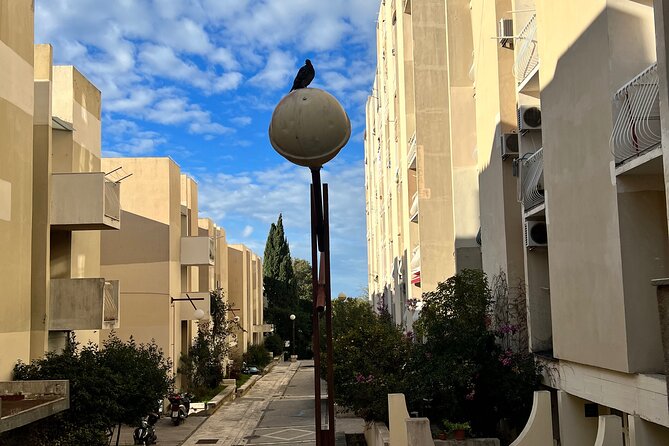
The third stop turns from architecture to culture, focusing on art activism and the need for explicit critical communication in Split, Croatia. The tour keeps this practical by connecting it to people you can actually meet.
This is one of the more distinctive parts of the whole experience because it refuses to treat architecture as a dead artifact. Instead, it treats the neighborhood as an active stage where artists and activists respond to the ongoing realities of city life.
You also get a chance to meet local artists and activists as part of the tour. That matters because the design story gains a second layer. The buildings are not just the past. They are a backdrop for present-day voices, and the tour helps you understand why people still care about how spaces communicate.
The caution here is simple: if you come expecting purely technical architecture jargon, you might be surprised by the shift into activism and message. But if you like modern cities as living conversations, this stop adds genuine meaning.
What the guide Mirjana brings to the walk
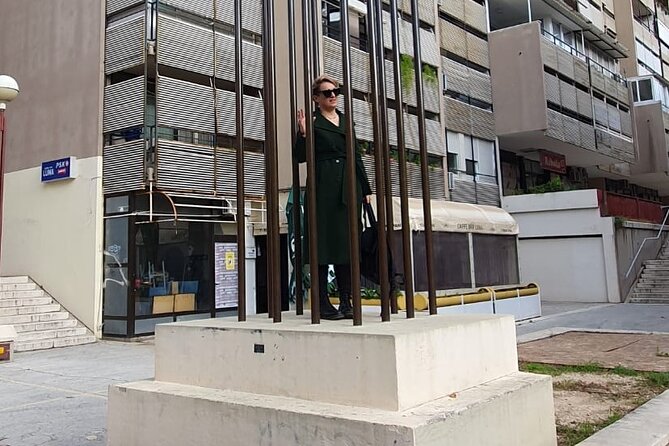
A big reason this tour earns top marks is the guide experience. One review highlights Mirjana, described as passionate and knowledgeable about her city, and that personal, tailored feel is exactly what you want from an architecture walk.
A tour like this can easily become either a lecture or a photo walk. The strongest versions combine street-level observation with clear storytelling. That is the sweet spot here. When someone is genuinely invested, you get more than facts. You get the why, and you get the local nuance that makes concrete feel understandable instead of intimidating.
For your planning, think about the kind of tour you enjoy. If you like asking questions and getting straight answers, you’ll probably have a good time. The tour format is private, meaning only your group participates, so the pacing can work better for conversation than with larger crowds.
Duration and pacing: 1 to 3 hours where it counts
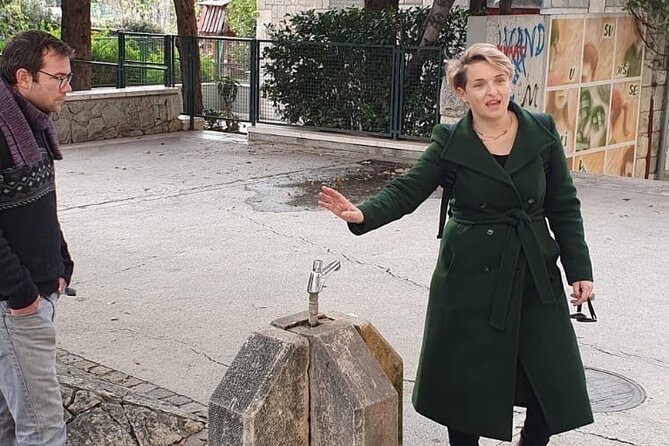
The total experience runs about 1 to 3 hours. Each stop is timed enough that you can cover ground, but not so packed that you never pause.
You will spend time at:
- Papandopulova ulica, roughly 38 minutes
- Split-Dalmatia County, roughly 25 minutes
- Split, focusing on art activism, roughly 35 minutes
Those stop lengths are short enough that you should come ready to pay attention. This is not a slow wander where you can drift into the background. You will get a guided line through the neighborhood, and then you can decide what to revisit on your own afterward.
I also like the structure because it mirrors the tour’s concept of city layers. You start with the architecture identity, zoom out to the planning logic, then connect it to lived culture through art and activism.
Price and value: paying for context, not just walking
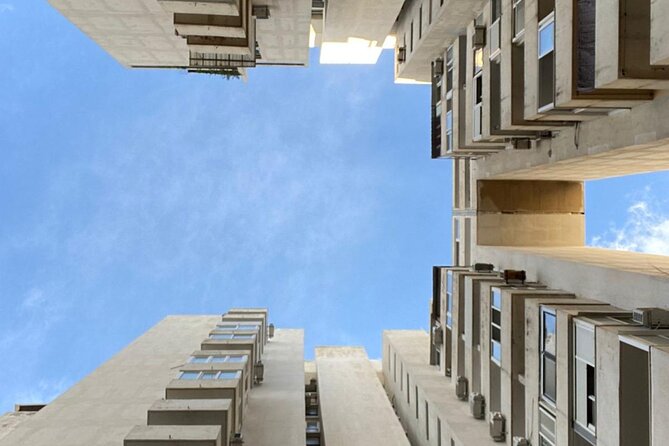
The price is $113.90 per person. That sounds like a real spend, so the value question matters. What you actually get is a licensed tourist guide plus a certified heritage interpreter. That is a key point. You are paying for interpretation, and for someone trained to explain why the place matters.
The tour also includes:
- Visiting the residential area of Split
- Meeting local artists and activists
And for the listed stops, the admission ticket is free. So you are not budgeting for entry fees at each location. You get a focused, curated route that many visitors never touch.
Booking tends to happen around 12 days in advance on average, which suggests this is a popular way to experience a specific side of Split. If you are going off-season or with flexible dates, you might still find openings, but early booking helps your odds.
If you are interested in architecture, modern history, urban planning, or how public space shapes community, this price can feel fair because the guide time is doing the heavy lifting. If your interest is mainly casual sightseeing, you might feel it is pricier than general walking tours.
Where to start, where to end, and how to pair it
You meet at Ul. Šime Ljubića 3, 21000, Split, Croatia, and the tour ends back at the meeting point. That round-trip structure is useful because it makes planning easy. You can fit it into a day that also includes the classic old-town sights without worrying about a long commute across the city afterward.
It also runs on a schedule listed from Monday through Thursday, with hours from 8:00 AM to 7:00 PM. If you are traveling during those days, you can usually align it with morning or afternoon energy.
This is near public transportation, which helps if you are staying outside the most central areas. Service animals are allowed as well, and most travelers can participate, so it is not limited to only certain fitness levels.
My practical suggestion: treat this as your modern Split anchor. If you spend the morning in ancient Split, use the afternoon for this. Or do it the other way around. Either pairing makes the contrast more rewarding.
Should you book Secret Split: Socialist Architecture and Brutalism?
Book this if you want Split with a different lens. You’ll enjoy it most if you care about modern city design, if you want to see brutalism with explanation, and if you like the idea of learning how planning affects daily life. The top-rated guide experience, highlighted by Mirjana’s passion and knowledge, is exactly what makes the ideas click instead of staying abstract.
I would skip it or at least consider your expectations if your time in Split is very limited and you only want Roman-era highlights. This tour is not nostalgic. It is focused on a post-war neighborhood and the social experiment behind it, including how that story connects to international architecture attention.
If you like cities as living systems, not just postcard sights, this is one of the smarter ways to spend an afternoon in Split. You come away seeing concrete as a language, not just a material.
FAQ
How long is the Secret Split tour?
The duration is listed as approximately 1 to 3 hours.
Where does the tour start and end?
The tour starts at Ul. Šime Ljubića 3, 21000, Split, Croatia, and ends back at the same meeting point.
What is the tour price?
The price is $113.90 per person.
What is included in the tour?
It includes a tour with a licensed tourist guide and certified heritage interpreter, visiting the residential area of Split, and meeting local artists or activists.
Are there any admission fees at the stops?
For the listed stops, the admission ticket is free.
Is this a private tour?
Yes. Only your group will participate.
What is the cancellation policy?
Free cancellation is available. You can cancel up to 24 hours in advance for a full refund.
What days and hours does it run?
Opening hours listed are Monday through Thursday, 8:00 AM to 7:00 PM.
Is it accessible for most travelers?
The info says most travelers can participate, and service animals are allowed.