
REVIEW · TOURS
Storytelling World War II in Split Tour
Split’s streets hold wartime scars you can still read. This 2-hour WWII tour connects famous landmarks with the moments that shook the city, using old archive photographs and a storyteller guide, Ina Nikolic.
I especially like that it stays practical and focused on places you can actually stand in today, from Split Riva to Prokurative. I also like the pacing and variety, short stops that help you absorb big stories without feeling rushed. One possible drawback: expect a fair amount of standing around between points, since you’re often listening at the very spots where events unfolded.
With a max group size of 15 and English narration, you get a small-group experience without needing museum passes. If you’re sensitive to stories involving bombing and wartime punishment, you may want to prepare yourself mentally before you go.
In This Review
- Key highlights worth your time
- Why a WWII Tour in Split Works So Well
- Price and What Makes It Good Value (2 Hours, Small Group, Real Photos)
- Getting There: Meeting at Split Riva, Ending by Trg Republike
- Stop-by-Stop: From Split Riva to Prokurative in About Two Hours
- Stop 1: Split Riva, where the war story gets explained
- Stop 2: Green Market and the story of the bombing
- Stop 3: Eastern (Silver) Gate, a doorway into wartime context
- Stop 4: Diocletian’s Palace Peristyle, which parts were attacked
- Stop 5: Narodni Trg, the main square and terrible events
- Stop 6: Marmontova Ulica, the everyday street that carried horror
- Stop 7: Prokurative, prisons and executions at the end
- Photos, Aerial Maps, and How the Guide Makes It Click
- The Pace: Expect Standing, Short Stops, and Clear Story Structure
- Language, Group Size, and Questions That Actually Get Answered
- Who Should Book This WWII Storytelling Tour
- Should You Book This Split WWII Tour with Ina?
- FAQ
- What is the duration of the WWII storytelling tour in Split?
- What is the price per person?
- Is the tour offered in English?
- Where does the tour start and end?
- Is pickup available?
- How many people are in the group?
- Is it free to enter the stops?
Key highlights worth your time
- Ina Nikolic’s WWII storytelling connects local events to the bigger war picture, with helpful context beyond 1940s headlines
- Archive photos from the Museum of Split City archive are used in the tour, not just generic images
- Street-level stops take you from the waterfront to Diocletian’s Palace and on to Prokurative
- Diocletian’s Palace wartime details help you see which parts were attacked, right in the stonework
- Small group size (max 15) keeps it personal enough for questions
- Near public transport and central meeting points make it easier to fit into your day
Still weighing it up? These Split trips also came through our review desk.
- Split: Krka Waterfalls Trip with Boat Cruise and Swimming★ 4.8 · 10,519 reviews
- From Split: Krka Waterfalls, Food & Wine Tasting Tour★ 5.0 · 9,326 reviews
- Blue cave, Mamma Mia and Hvar, 5 islands speedboat tour★ 5.0 · 7,150 reviews
- From Split: Krka Waterfalls, Food & Wine Tasting Tour★ 4.9 · 6,598 reviews
Why a WWII Tour in Split Works So Well
Split looks like a postcard city, but this tour forces you to see the other layer. World War II here is not just a chapter in a book. It shows up in street corners, in gates, in palace spaces, and in the way the city rebuilt after damage. You walk through a place that has been lived in for centuries, then you hear what warfare did to it at street level.
I like that the tour doesn’t try to overwhelm you with dates. Instead, it gives you a sequence of stops and a story for each one. That matters because it helps your brain map history onto real geography. You end up remembering where things happened, not just what happened.
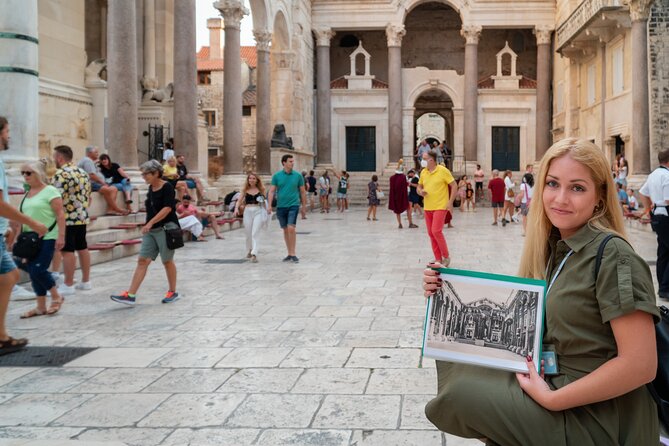
Another reason this tour feels worthwhile is the way it uses visuals. You get to gaze at archival photographs tied to the city’s WWII period. The photos are kept in the Museum of the City of Split archive, and the guide has permission to use them. You’re not just hearing talk, you’re comparing then-and-now.
Now, a quick reality check. This is a history tour with heavy themes: bombing, prisons, executions, and other wartime events. If you know you struggle with that kind of material, consider whether you want your evening or your day to include difficult stories. The good news is that the tour stays structured, so you always know what the next stop is about.
Price and What Makes It Good Value (2 Hours, Small Group, Real Photos)
At $60.01 per person for about 2 hours, this tour is priced like a focused, guided experience rather than a big bus attraction. For your money, you’re getting a licensed local guide, English narration, and a small group capped at 15 travelers. That group size helps in a subtle way: you’re closer to the guide, and questions are easier to ask.
You’re also getting something that many history tours skip: actual period imagery. The tour includes WWII photographs kept in the Museum of the City of Split archive. They’re not always on permanent display, which means you’re not relying on whatever happens to be hanging in a gallery that day. Visual context makes the stories stick.
Most stops are marked as admission ticket free, so you’re not juggling extra fees mid-walk. You still need to show up and follow the route, but you’re not hit with unexpected entry charges.
If you’re comparing this to other city tours, the best way to judge value is this: you’re paying for guided interpretation of a specific wartime theme in Split’s exact places, not for a general overview. If WWII history, or Croatian wartime experiences, are what you care about, you’re likely to feel like you got your money’s worth.
Getting There: Meeting at Split Riva, Ending by Trg Republike
The tour starts at Obala Hrvatskog narodnog preporoda 27, 21000 Split. The end point is Trg Republike, on the Prokurative square area. This is convenient because you finish in the historic center near the promenade, so you can continue your evening without feeling stuck far from everything.
Pickup is offered with a clearly stated option: Trajektna luka Split, Obala kneza Domagoja. If you’re using transit around the harbor area, that matters because you can plan your day around one fixed location. You’ll also want to have your mobile ticket ready.
One more practical point: the meeting area is in the old center, and the route stays walkable with short stop durations. You won’t need long-distance travel gear, but comfortable shoes help because you’ll be on city streets and stone surfaces for the full two hours.
Stop-by-Stop: From Split Riva to Prokurative in About Two Hours
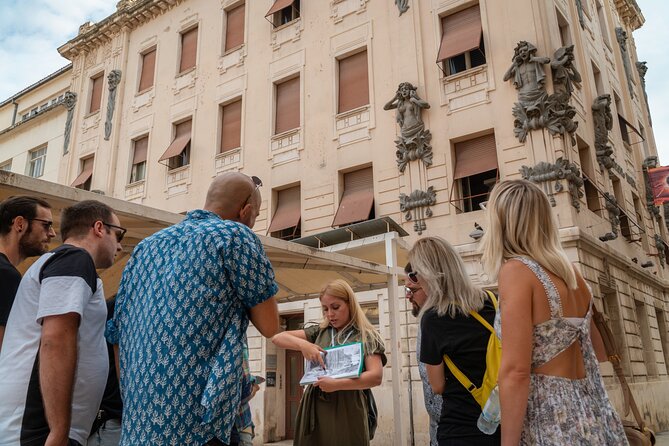
This tour works as a chain of locations. Each stop takes a small slice of time, and then the guide connects it to what you just saw. That approach keeps the story from feeling like random trivia. Here’s what you can expect from the main sequence.
- Split: Krka Waterfalls Trip with Boat Cruise and Swimming
★ 4.8 · 10,519 reviews - From Split: Krka Waterfalls, Food & Wine Tasting Tour
★ 5.0 · 9,326 reviews - Blue cave, Mamma Mia and Hvar, 5 islands speedboat tour
★ 5.0 · 7,150 reviews - From Split: Krka Waterfalls, Food & Wine Tasting Tour
★ 4.9 · 6,598 reviews - Split/Trogir: Blue Cave, Mamma Mia, Hvar and 5 Island Tour
★ 4.6 · 6,320 reviews
Stop 1: Split Riva, where the war story gets explained
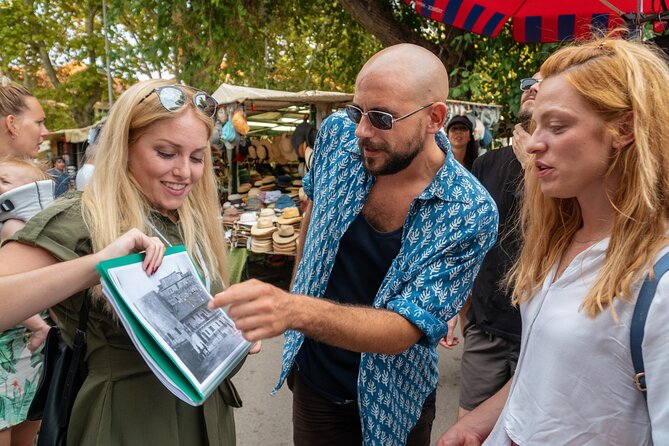
You meet at Split Riva. This is the “set the stage” moment. You’ll hear where and why the war in Split started, as explained by your local guide. It’s a smart first stop because Riva gives you a natural sense of place, plus it’s the kind of public space where wartime movement and decisions often had visible impact.
Even if you’ve already walked near the waterfront on your own, you’ll view it differently afterward.
Stop 2: Green Market and the story of the bombing
Next comes the Green Market, where the guide talks about the most horrific bombing in Split. Market squares are where daily life happens, so a WWII story in that setting hits harder. You’re not just hearing about destruction in the abstract. You’re hearing it in a place that still feels like a living neighborhood.
This stop is brief, but it’s built for emotional impact. If you tend to skim over history because it feels too distant, this is one of the places that brings it close.
Stop 3: Eastern (Silver) Gate, a doorway into wartime context
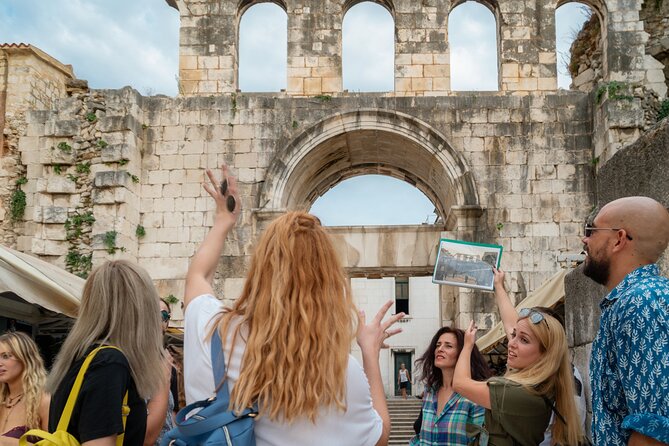
Then you reach the Eastern (Silver) Gate, the eastern entrance to Diocletian’s Palace. This isn’t only a sightseeing moment. The gate becomes a transition point, helping you move from the city’s public areas into the ancient palace structure that later served as part of the wartime landscape.
Think of it like turning a page. You’re entering a different “chapter” of the city.
Stop 4: Diocletian’s Palace Peristyle, which parts were attacked
At the Peristyle of Diocletian’s Palace, you learn which parts of the palace were attacked during the war. This is one of the best contrasts on the route: you stand in a Roman emperor’s space, then you hear about how that stonework held damage and meaning in WWII.
I like this stop because it teaches you how to look. Instead of only hearing that something happened, you learn to connect the story to the structure you see.
Stop 5: Narodni Trg, the main square and terrible events
At Narodni Trg, you’ll hear what terrible events took place there during the war. Main squares were often focal points for gatherings, movement, and public consequences. In a city like Split, those squares still function as social spaces, so the historical layer can feel very close.
This stop is another short one, but it often becomes a turning point in how you understand the city’s wartime experience.
Stop 6: Marmontova Ulica, the everyday street that carried horror
On Marmontova Ulica, the guide explains why this main street is also a witness to the horrors of war. Streets like this are easy to walk past without thinking, which makes this stop useful. You’re learning to read the city like a map of lived history.
It’s also the kind of stop that helps you connect the earlier locations. The “pattern” of the war story becomes clearer as you go.
Stop 7: Prokurative, prisons and executions at the end
The tour ends at Prokurative, where you learn about prisons and executions during the war. Ending here is meaningful because it shifts from bombing and public spaces into the darker machinery of wartime control and punishment.
This is where the tour’s emotional weight is strongest. Your guide ties the locations together so the final stop feels like a conclusion, not just another spot on the route.
Photos, Aerial Maps, and How the Guide Makes It Click
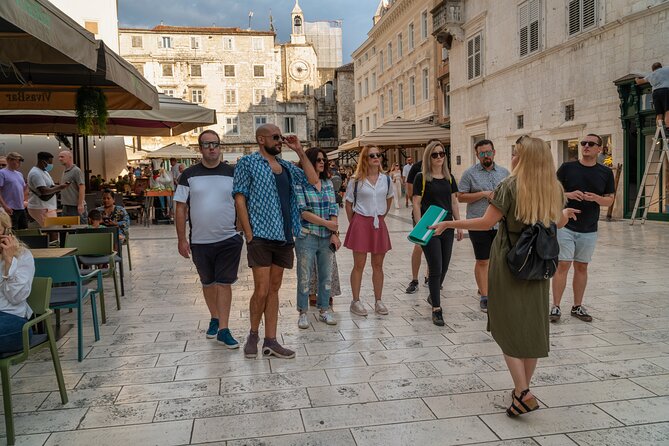
A big part of why this tour lands is the way it uses images. You’ll gaze at WWII archival photographs kept in the Museum of the City of Split archive, with permission for tour use. That means you’re more likely to see historically specific material, not generic war scenes.
Some guides also use aerial maps and lots of visuals to help you understand where things happened then versus now. On this tour, that kind of added visual can make a huge difference, especially if you’re the type who needs geography to feel real. When you see the city from above, you start to understand why the bombing hit where it did, and why certain zones mattered.
Another standout from the experience is the guide’s storytelling range. Ina Nikolic is the named guide, and the tour style is built around historical narrative rather than just reciting facts. You can expect her to connect local wartime events to wider context, including references that reach later conflicts, and she also addresses topics such as Jewish history as part of the WWII perspective.
That broader context is useful for you because it stops the stories from feeling like sealed boxes. History becomes part of a longer chain of what people faced.
The Pace: Expect Standing, Short Stops, and Clear Story Structure
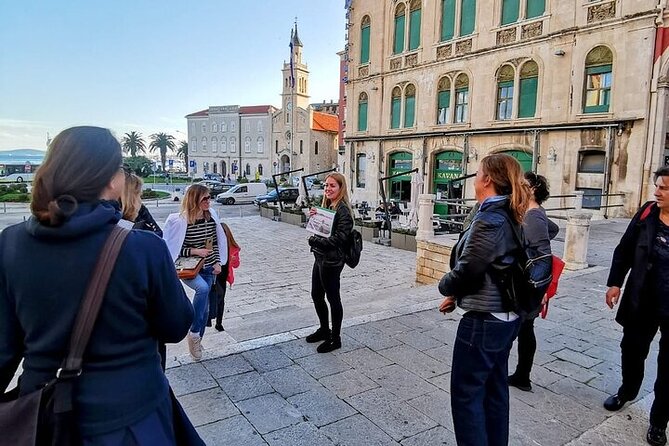
From the way the route is structured, you should plan for mostly listening and standing. The stop times are short, often in the 5 to 15 minute range, and the tour is about moving between meaningful points rather than covering long distances fast.
So yes, it’s not a power-walk tour. It’s more like a guided walk with frequent “pause here, look at this, listen to this” moments. That matches the content. WWII stories land best when you’re still enough to take in the setting and the visuals.
This matters for your comfort. If you have mobility challenges, you might find parts of it tiring, especially if you’re sensitive to standing in one place. On the positive side, the tour is central, and it’s designed so that you aren’t stuck wandering far from the old town core.
Language, Group Size, and Questions That Actually Get Answered
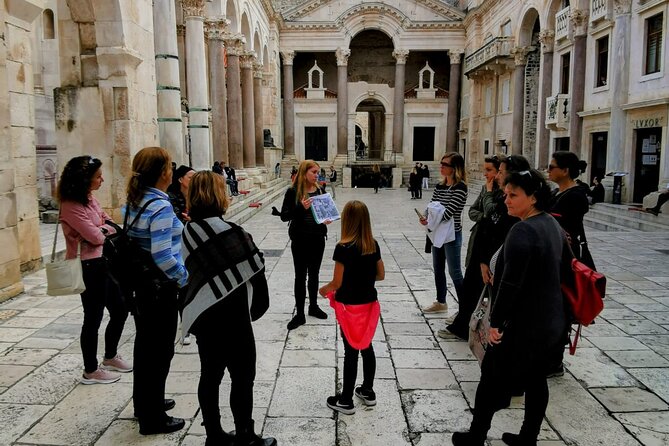
The tour is offered in English, and the group size is capped at 15. That’s a great size for questions. When history has emotional topics and complicated local details, it helps when the guide can slow down or clarify without juggling a huge crowd.
Ina Nikolic’s style is built for story flow. She’s not just presenting locations, she’s explaining why those places matter in the war story of Split. That’s why many people leave with a feeling that they understood the city in a new way, not just the dates.
Also, service animals are allowed, and the tour is near public transportation. That’s a practical plus if you’re coordinating with your broader Split schedule.
Who Should Book This WWII Storytelling Tour
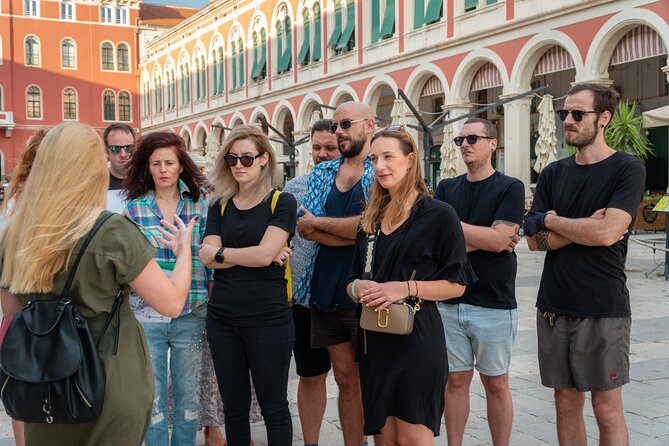
This tour fits best if you want a WWII-focused experience in Split, not a generic “old town highlights” walk. If you’re drawn to how war changes cities, and you like learning through specific places rather than sweeping lecture style, you’ll probably enjoy it.
It’s also a strong pick if you like photos and visual aids. The archive photographs, plus the chance to see mapping visuals, give you more than one way to take the story in.
If you’re traveling with a teen or a history-minded adult, the pacing and story clarity can make it work well as a shared learning moment. Even if someone is new to WWII history, the guide’s local-first approach can be easier to follow than a purely global timeline.
If you want a relaxing, lighthearted stroll, you may prefer a different kind of tour. This one is serious, because the subject is serious.
Should You Book This Split WWII Tour with Ina?
Book it if you want a small-group, English-language WWII experience in Split’s real locations, with archive photographs that add weight to the stories. The price feels fair when you factor in the guide, the visuals, the stop-by-stop structure, and the fact that you’re not paying extra admission at the points along the way.
Skip it or choose another option if you know you won’t enjoy listening-heavy content with a lot of standing, or if you’d rather avoid wartime punishment stories like prisons and executions.
If you like history that connects across time, this tour also offers that added payoff. Ina Nikolic doesn’t keep the story trapped in 1940s headlines. She connects local experiences to broader context, which helps you understand why WWII mattered in Split, and how that memory echoes later.
In short, this is a focused WWII walk through Split’s most meaningful spaces, guided by a storyteller historian. If that’s your kind of travel, it’s an easy yes.
FAQ
What is the duration of the WWII storytelling tour in Split?
It lasts about 2 hours.
What is the price per person?
The price is $60.01 per person.
Is the tour offered in English?
Yes, it is offered in English.
Where does the tour start and end?
It starts at Obala Hrvatskog narodnog preporoda 27, 21000 Split, Croatia, and ends at Trg Republike (Prokurative square), 21000 Grad, Split, Croatia.
Is pickup available?
Pickup is offered from Trajektna luka Split, Obala kneza Domagoja.
How many people are in the group?
The tour has a maximum of 15 travelers.
Is it free to enter the stops?
The stops listed are marked as admission ticket free.
Freshly written up around Split

Tours, top to bottom.
 ★ 5.0Blue Cave Small-Group Boat Tour from DubrovnikFrom $849,360 reviews
 ★ 5.0From Split: Krka Waterfalls, Food & Wine Tasting TourFrom $459,326 reviews
 ★ 5.0Blue cave, Mamma Mia and Hvar, 5 islands speedboat tourFrom $1117,150 reviews
★ 4.9From Split: Krka Waterfalls, Food & Wine Tasting TourFrom $446,598 reviews
★ 5.0Blue cave, Mamma Mia and Hvar, 5 islands speedboat tourFrom $1117,150 reviews
★ 4.9From Split: Krka Waterfalls, Food & Wine Tasting TourFrom $446,598 reviews
 ★ 4.6Split/Trogir: Blue Cave, Mamma Mia, Hvar and 5 Island TourFrom $1096,320 reviews
 ★ 4.9Dubrovnik: Epic Game of Thrones Tour + Lokrum & Saver OptionFrom $255,995 reviews
 ★ 4.8Dubrovnik: Old Town Walking TourFrom $235,174 reviews
 ★ 4.8Dubrovnik: The Original Game of Thrones Tour & Lokrum OptionFrom $265,064 reviews