
REVIEW · DUBROVNIK CITY WALLS & OLD TOWN WALKS
Walls of Dubrovnik: Small-Group 2-Hour Tour With a Local
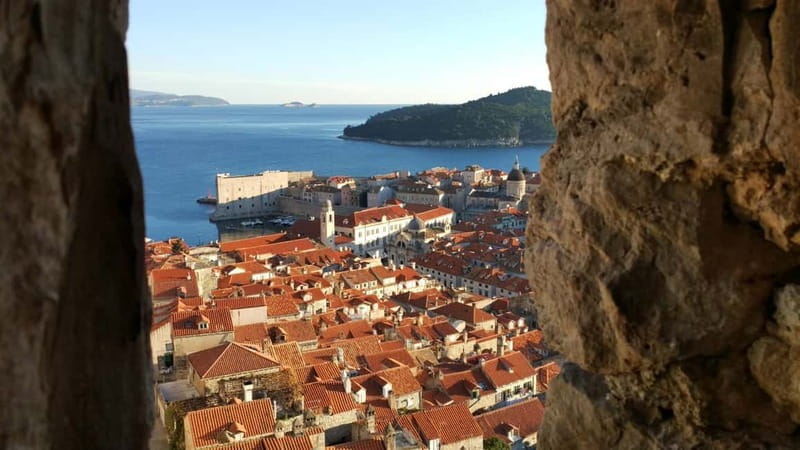
Dubrovnik’s walls teach you how cities survive. This 2-hour, small-group walk links military defenses to dramatic viewpoints over the Old town and the Adriatic. I especially love the harbor perspective you get early on, and the way the guide turns stonework into a story you can picture. One consideration is that the route is stair-heavy, with more than 700 stairs, so it is not a walk for anyone who struggles with steep climbs.
You also get the kind of attention you rarely see on big tours. The group is limited to eight guests per guide, and the guide is licensed and speaks English, so you can ask questions and get clear answers as you go. Guides in this style also use quick check-ins, which helps the time feel focused instead of dragged out.
Price-wise, the math matters. The tour is listed at $36 per person, but the city walls entrance ticket is not included, so you will want to budget for that separately (or plan to use a Dubrovnik Pass if you have one).
In This Review
- Key Highlights Worth Climbing For
- Entering Dubrovnik by Way of Defense, Not Only Sights
- Where to Meet: Fort Revelin Corner and the Red and White Flag
- First Climb: Harbour Viewpoint to the Northern Walls
- Fort Revelin: Why It Guarded the Eastern Approach
- A Tower Moment: Ottoman Diplomacy Explained Through Strategy
- Minčeta Fortress and Michelozzi: The Highest Point With Meaning
- Stradun From Above: The Photo Angle You Will Actually Remember
- Western Stretch: Forts Lovrijenac and Bokar at the Pile Gate
- Southern Walls: Oldest and Youngest Sections, Venice Rivalry
- Near the End: Fort St John and the Old Port
- The Stair Reality: 700+ Steps and Why It Changes the Tour
- Price and Value: $36 Does Not Include the Walls Ticket
- Small-Group Energy, and Why the Guide Matters
- Who Should Book This Walls Tour
- Should You Book the Walls of Dubrovnik Tour?
- FAQ
- How long is the Walls of Dubrovnik small-group tour?
- Where do I meet the guide?
- How big is the group?
- Is the city walls entrance ticket included in the $36 price?
- How much is the city walls ticket if I do not have a Dubrovnik Pass?
- Can I use a Dubrovnik Pass to enter the walls?
- Is the tour suitable for wheelchair users or people with mobility impairments?
- Are there lots of stairs?
- What language is the tour guide?
- Is the tour cancelled for free if my plans change?
Key Highlights Worth Climbing For
- Old Harbor views paired with how the harbor was protected, not just a pretty panorama
- Fort Revelin and Minčeta Fortress explained like active strategy, with siege details you can see
- Ottoman-era diplomacy vs. battle tactics, tied to a specific tower story
- Stradun photo angle from the walls, a view that feels made-for-cameras
- Lovrijenac and Bokar as gate guardians, including the startling note about wall thickness (up to 12 meters)
- Small-group pace with real-time Q and A, plus the guide keeping people engaged
Different routes over the walls and through the old streets
- Dubrovnik: Old Town Walking Tour★ 4.8 · 5,174 reviews
- Dubrovnik Discovery Old Town Walking Tour★ 5.0 · 4,458 reviews
- Dubrovnik Old Town History Walking Tour★ 5.0 · 1,684 reviews
- Dubrovnik: City Walls Early Morning or Sunset Walking Tour★ 4.8 · 1,523 reviews
Entering Dubrovnik by Way of Defense, Not Only Sights
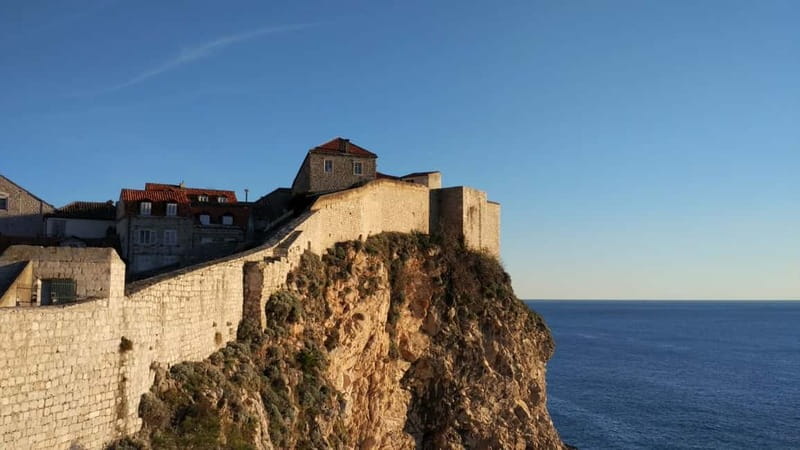
This tour works because it treats the walls as the main character. You are not just looking at Dubrovnik from above, you are learning why each stretch exists and what it was meant to stop. That turns the walk from sightseeing into practical history, with explanations that connect geography, weapons, and politics.
I like that the guide keeps the story grounded in what you can actually see on the stone. Bows and arrows, siege tactics, and the logic behind towers and forts are all described in a way that helps you picture what an attack would have required. When you can imagine a threat, the city feels smarter and more human.
The setting also does half the work. From the walls, you get constantly shifting views across the Old Harbor and out toward the Adriatic, so even a pause in the narration feels worth it. If you enjoy history but hate lectures, this is the style that usually clicks.
Where to Meet: Fort Revelin Corner and the Red and White Flag
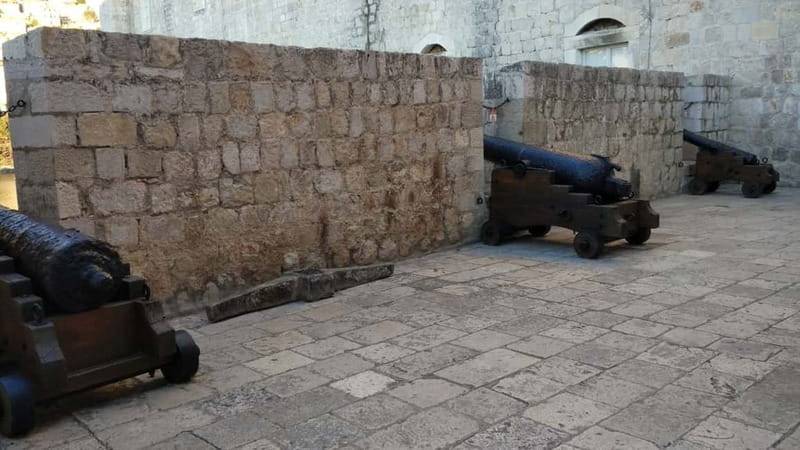
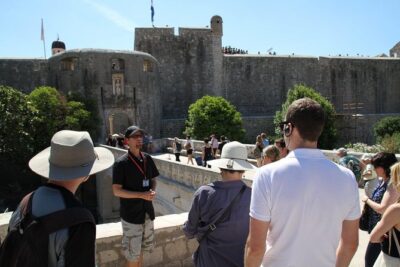
Meet at the square in front of Fort Revelin, near the Ploče Gate. Look for your guide in the corner of the square by the cannon, holding a red and white flag.
This matters because the tour is short at two hours. You will want to arrive a few minutes early and keep it simple: find the flag, match the face to the guide, and get moving. Once you start climbing, the time adds up fast.
The tour ends back at the meeting point, so you are not left figuring out a long transfer after you finish. That is a big deal on a day when your energy is going to be spent on steps, not logistics.
First Climb: Harbour Viewpoint to the Northern Walls
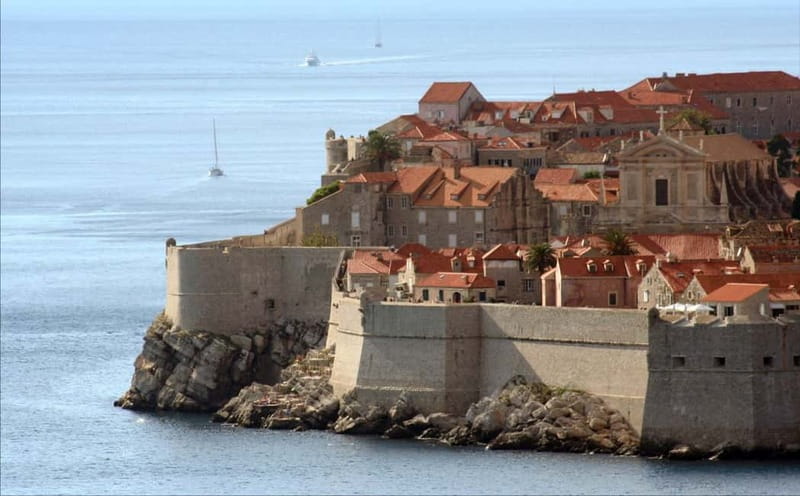
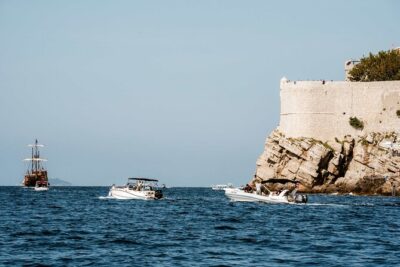
You start at a harbor viewpoint and then begin ascending the walls right away. The first payoff is the Old Harbor view, which is not just aesthetic. The guide explains how the harbor functioned as the lifeline for the Dubrovnik Republic, with maritime activity, trade, and the need to protect that economic engine from enemy incursions.
That framing changes how you watch the coastline. Instead of seeing boats and blue water, you start noticing strategic lines of sight and thinking in terms of access. It is the difference between admiring the view and understanding why this city built this way.
As you walk along the northern stretch, the tour shifts into medieval warfare. You will get stories that mention bows and arrows, stone boulders, and the kinds of siege tactics defenders prepared for. The point is not to make you a military expert, it is to show how the walls were designed for real threats, not just symbolism.
Fort Revelin: Why It Guarded the Eastern Approach
Fort Revelin is one of the key anchors of the route, and the guide explains it as a guard for the eastern approach to the Old Town. Standing there, you can understand why an extra defensive feature near a gate area makes sense. Attackers do not all come from one direction, and strongpoints like this helped shape how an assault could unfold.
This is where the tour helps most people who feel intimidated by history. You are not asked to memorize dates. Instead, you connect a place name to a function. Fort Revelin equals protection for a specific approach, and the walls around it were built to support that job.
If you like feeling oriented, this is a good moment to ask questions. In a small group, you can usually get your guide to slow down and explain relationships between towers, gates, and routes.
- Blue Cave Small-Group Boat Tour from Dubrovnik
★ 5.0 · 9,360 reviews - Full-Day Dubrovnik Elaphite Islands Cruise with Lunch and Drinks
★ 5.0 · 8,823 reviews - Dubrovnik: Epic Game of Thrones Tour + Lokrum & Saver Option
★ 4.9 · 5,995 reviews - Dubrovnik: Elaphiti Islands Full-Day Cruise with Lunch
★ 5.0 · 5,938 reviews - Dubrovnik: Old Town Walking Tour
★ 4.8 · 5,174 reviews
A Tower Moment: Ottoman Diplomacy Explained Through Strategy
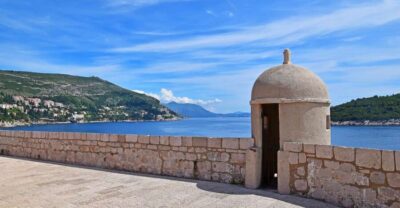
At a strategic tower, the guide tells the story of Dubrovnik Republic’s relationship with the powerful Ottoman Empire. The key theme here is diplomacy often winning over armed conflict.
This part works because it prevents the tour from becoming a nonstop attack narrative. You learn that defenses were important, yes, but politics also mattered. The city-state was dealing with big forces, and the ability to navigate that pressure is part of how Dubrovnik endured.
You might find yourself looking at the same stretch of wall differently after this. Instead of thinking only in terms of violence, you start thinking in terms of deterrence and negotiation. That shift makes the walls feel more like a living system and less like an ancient prop.
Minčeta Fortress and Michelozzi: The Highest Point With Meaning
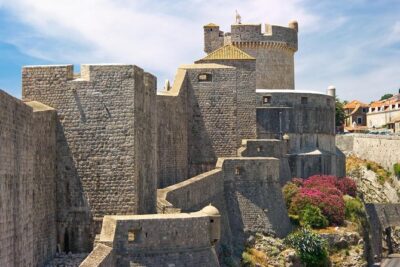
One of the biggest highlights is Minčeta Fortress. You reach it midway through the walk, and the view is the kind that makes people stop talking for a second. The guide also explains the contribution of Italian architect Michelozzi to the fortress.
This is not just an architectural name-drop. You get the story of the old gun foundry and the cannons that once defended the walls. If you have ever wondered how military industry and city defense connected, this is the section that answers it in a practical way.
And yes, you also get a strong photo moment. The tour is designed so you can pause and look without falling behind. For many people, Minčeta is where the tour clicks emotionally, because you can see how the whole system of walls fits together from above.
Stradun From Above: The Photo Angle You Will Actually Remember
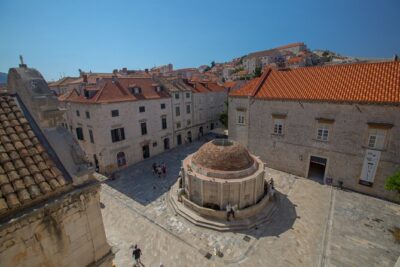
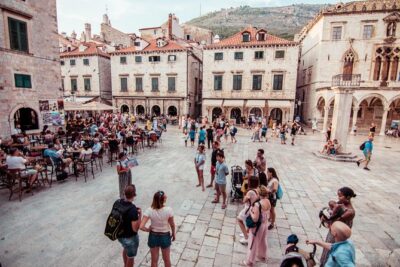
Midway through the walk, you get a photo opportunity that frames Stradun, Dubrovnik’s main street, from a unique vantage point. Stradun is where most people end up later for dining and strolling, so seeing it from the walls gives you a strong sense of layout.
I love this kind of viewpoint because it helps you make sense of the city quickly. Once you know where Stradun sits relative to the gates and forts, your later walking feels more intuitive. You are not wandering, you are navigating.
The view also makes the walls feel connected to daily life. Even though this tour focuses on defenses, the city below is still a city where people lived, worked, and traveled. Seeing that street from above is a reminder of what these defenses were protecting.
Western Stretch: Forts Lovrijenac and Bokar at the Pile Gate
Continuing along the western stretch, you learn about Forts Lovrijenac and Bokar and their strategic role in protecting the Pile Gate. This is where the guide brings numbers into the story, including the fact that some sections of Lovrijenac’s walls can reach a thickness of twelve meters.
That detail is the kind that makes the walls feel real. Twelve meters is not subtle. You start understanding that these were serious structures meant to resist impact, withstand siege conditions, and keep defenders functioning even under pressure.
If you are a fan of tactical architecture, you will probably enjoy how the guide ties placement to purpose. Forts do not sit where they do by accident. They sit there because geography and access routes demanded it.
Also, small-group pace matters here. You can hear the explanation and still have time to look around without constantly sprinting to catch up.
Southern Walls: Oldest and Youngest Sections, Venice Rivalry
On the southern stretch, the tour highlights both the oldest and youngest sections of the walls. The guide explains Dubrovnik’s historical ties with Venice and the enduring rivalry between these maritime powers.
This part adds context beyond one enemy or one time period. Dubrovnik’s walls were not built in a single moment and then forgotten. They changed as the city’s needs and political pressures changed.
If you like to understand how cities adapt, you will appreciate this framing. The wall line becomes a timeline, and the guide points out how different sections reflect different eras and concerns. You end up with a better sense of why the walls look the way they do today.
Near the End: Fort St John and the Old Port
As the route moves toward the end, you pass Fort St John and then the Old Port area. Even without turning this into a long stop, the guide keeps connecting what you see to what was required for defense and control.
The Old Port section is a natural capstone because the tour started by talking about harbor protection. You are finishing in the same broader theme, which makes the whole walk feel cohesive.
If you are tired by this point, this is where a good guide earns their pay. You need enough energy to keep listening, but you also want time to absorb what you have already learned.
The Stair Reality: 700+ Steps and Why It Changes the Tour
Let’s talk about the stairs. There are more than 700 stairs on this tour, and there is no elevator or escalator. The tour requires a moderate level of fitness and is not recommended for people with walking difficulties.
This is not just a comfort issue. The walls walk hits your legs and your breathing. That affects how much you can enjoy the viewpoints, and how easily you can pause for photos. If you go in expecting an easy stroll, you will probably feel frustrated halfway through.
The tour is also not suitable for people with mobility impairments, wheelchair users, or people afraid of heights. The route is high and exposed at points, and the city walls are exactly what they sound like.
For best results, plan for it like a hike. Wear shoes meant for stone stairs, take your time at viewpoints, and do not treat the 2-hour label like a guarantee you will feel fresh at the end.
Price and Value: $36 Does Not Include the Walls Ticket
The tour price is $36 per person for a 2-hour guided walk with a local English-speaking guide. The important catch is that the entrance ticket for the city walls is not included.
Here is how to budget based on what the operator states:
- Regular city walls ticket price is 40 Euros, bought at the entrance by cash or card
- In January, February, November, and December the ticket costs 20 Euros
- Students with valid ISIC and under-18s pay 15 Euros
- If you have a Dubrovnik Pass, you can enter the walls for free and skip the line, and the operator strongly recommends it
So is this still good value? In many cases, yes, because you are paying for more than access. You are paying for a licensed guide who connects the wall fabric to weapons, siege tactics, and diplomacy, and you get a small group size capped at eight. Without that, you could technically walk the walls on your own, but you would miss the functional explanations that make the route click.
If you do not already have a Dubrovnik Pass, your total cost becomes tour price plus the walls ticket. Factor that in early so you do not get surprised at the gate.
Small-Group Energy, and Why the Guide Matters
The tour is limited to eight participants per guide, which changes the feel. You get more space to ask questions, and your guide can keep an eye on pacing. In history tours, group size often decides whether you feel cared for or lost in a crowd.
It also helps that guides here seem to use active techniques. One guide named Marko is noted for being engaging and witty, and in at least one case, he managed to keep a 10-year-old interested for the full two hours. That is not an automatic guarantee, but it tells you the approach is built for attention, not just facts.
Marko has also been described as local, with deep passion and lived experience. Another plus reported in the same spirit is that he used quick quizzes during the walk to keep people involved and attentive.
For you, the takeaway is simple: choose this tour if you want a guide who talks like a person, not a script. If you want a quiet self-guided experience, this might be too interactive.
Who Should Book This Walls Tour
This is a strong fit if you:
- Want the walls explained in terms of forts, gate defense, and how attacks were resisted
- Like panoramic viewpoints but also want context behind them
- Prefer a small group (up to eight) over large tour crowds
- Are comfortable with stairs and heights, or at least plan to take breaks
You might reconsider if:
- You have low fitness or any walking limits, because the route is stair-heavy
- You use a wheelchair or need accessibility accommodations
- Heights make you nervous
It also makes sense for history lovers, but it is not locked into academic talking. The military details are presented so you can picture them as you walk, which is usually what makes people enjoy this kind of tour.
Should You Book the Walls of Dubrovnik Tour?
I would book it if you want your Dubrovnik time to feel connected and purposeful. The walls are iconic, sure, but this tour gives you reasons behind what you see, from Fort Revelin to Minčeta Fortress and the stories around Venice and the Ottoman Empire.
Before you commit, check two practical points: your stair comfort, and your walls ticket plan. If you have a Dubrovnik Pass, the value often improves because you skip the ticket cost and potential line stress. If you do not, budget for the 40 Euros regular walls ticket.
If you are ready for a moderately challenging climb and you like guided storytelling tied to real stone, this is one of the better ways to experience Dubrovnik beyond the postcard routes.
FAQ
How long is the Walls of Dubrovnik small-group tour?
It lasts 2 hours.
Where do I meet the guide?
Meet in the square in front of Fort Revelin, near the Ploče Gate. Look for the guide in the corner of the square by the cannon, holding a red and white flag.
How big is the group?
It is a small group limited to up to eight participants per guide.
Is the city walls entrance ticket included in the $36 price?
No. The city walls ticket is not included.
How much is the city walls ticket if I do not have a Dubrovnik Pass?
The ticket is 40 Euros in regular months. In January, February, November, and December it costs 20 Euros. Students with a valid ISIC card and under-18s pay 15 Euros.
Can I use a Dubrovnik Pass to enter the walls?
Yes. If you have a Dubrovnik Pass, you can enter the walls for free and skip the line.
Is the tour suitable for wheelchair users or people with mobility impairments?
No. It is not suitable for wheelchair users or people with mobility impairments.
Are there lots of stairs?
Yes. The tour involves more than 700 stairs and there is no elevator or escalator.
What language is the tour guide?
The tour is conducted in English by a licensed professional guide.
Is the tour cancelled for free if my plans change?
You can cancel up to 24 hours in advance for a full refund.
Still on the Walls? Keep Reading


Freshly written up around Dubrovnik




Dubrovnik City Walls & Old Town Walks, top to bottom.
 ★ 4.8Dubrovnik: Old Town Walking TourFrom $235,174 reviews
 ★ 5.0Dubrovnik Discovery Old Town Walking TourFrom $244,458 reviews
 ★ 5.0Dubrovnik Old Town History Walking TourFrom $241,684 reviews
 ★ 4.8Dubrovnik: City Walls Early Morning or Sunset Walking TourFrom $291,523 reviews
 ★ 5.0Dubrovnik: Ancient City Walls & Wars Walking TourFrom $301,270 reviews
 ★ 5.0Dubrovnik Combo: Old Town & Ancient City WallsFrom $521,019 reviews
★ 4.9Dubrovnik: Old Town Walking TourFrom $23792 reviews
★ 5.0Dubrovnik Combo: Old Town & Ancient City WallsFrom $521,019 reviews
★ 4.9Dubrovnik: Old Town Walking TourFrom $23792 reviews
 ★ 4.8Dubrovnik: Old Town & City Walls Guided Tours ComboFrom $50697 reviews
Browse the lists this tour appears in