
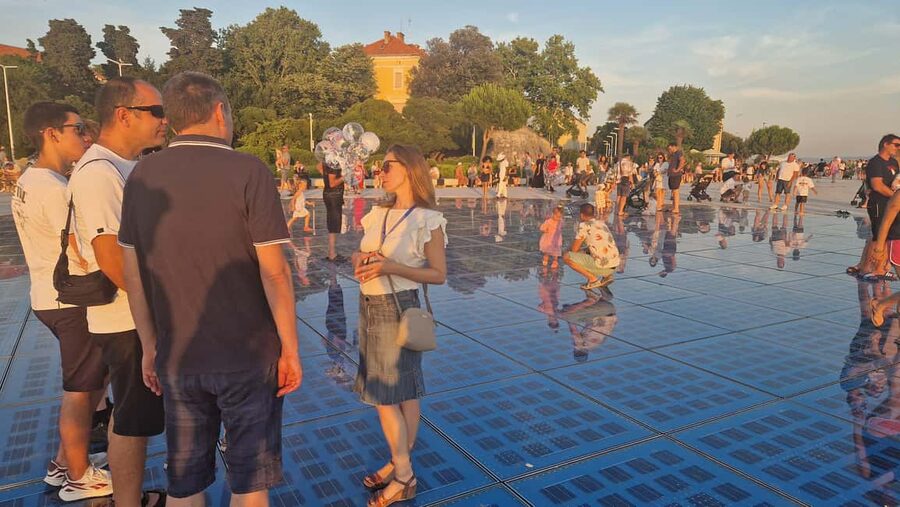
REVIEW · ZADAR OLD TOWN & SEA ORGAN TOURS
Zadar: Hidden Gems and History Tour
Zadar has quiet corners worth your attention. This 2-hour small-group walk strings together 3000 years of landmarks with stories you will not easily find on your own. It is a smart way to get oriented fast while still feeling like a real local stroll through Old Town.
I especially like how the route hits major anchors like St. Donatus and the Roman Forum remains, then connects them to what you can actually see on the street today. I also like the food stop at the Zadar food market, where you taste local produce as a natural end to the walking portion.
One possible drawback: it is a fast, on-your-feet route. If you want long sits, slow museum time, or lots of restroom breaks, you may find the pace a little brisk for 2 hours.
In This Review
- Key highlights to look for on this Zadar tour
- The 2-hour shape of the experience, and why it works
- Meeting at the Greeting to the Sun, then stepping into 3000 years
- Roman Forum remains and St. Donatus: Zadar’s “why this matters” moment
- St. Anastasia bell tower and Melia Aniana arch: photo stops with a purpose
- St. Chrysogonus romanesque apses: the kind of detail you miss alone
- Zadar food market tasting: history ends, local flavor begins
- People’s Square and off-map corners: learning how to “read” Old Town
- Three eastern entrances to the Old Town: gateways and city thinking
- Queen Jelena Madijevka Park finale: where you can breathe and photograph
- The guide factor: why small groups matter here
- Price and value: paying for clarity, not just walking
- Who this tour is best for
- Should you book this Zadar Hidden Gems and History Tour?
- FAQ
- How long is the Zadar: Hidden Gems and History Tour?
- Where do I meet the guide?
- How big is the group?
- What languages are available?
- Is local produce tasting included?
- Is free cancellation offered?
Key highlights to look for on this Zadar tour
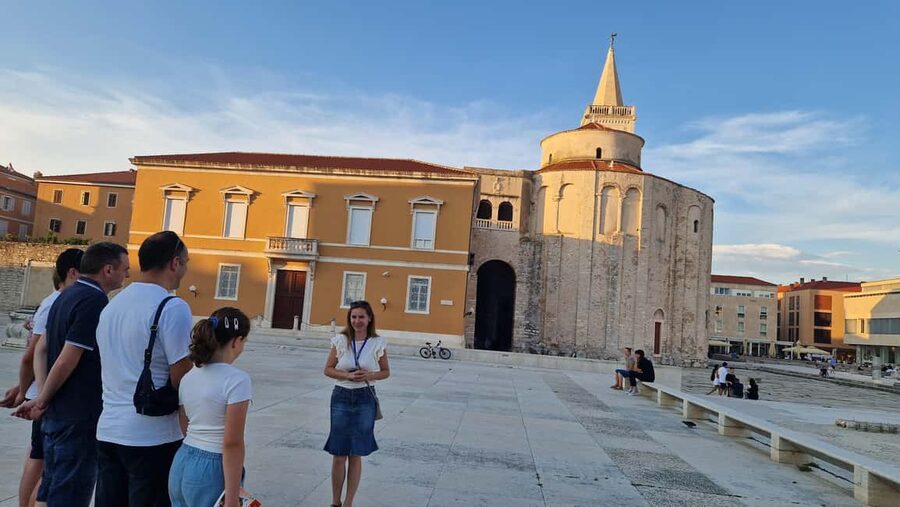
- Greeting to the Sun kickoff, right where modern Zadar meets the old city grid
- St. Donatus plus Roman Forum remains, explained in context as you walk
- St. Anastasia bell tower and Melia Aniana arch photo stops that many self-guided routes miss
- St. Chrysogonus romanesque apses stop, with time to frame your shots
- A focused taste at the Zadar food market to round out the history with local flavors
- A final stroll through Queen Jelena Madijevka Park for picturesque views and a softer landing
Other Zadar outings we thought were worth a look
- Zadar: Plitvice Lakes Guided Day Tour with Tickets★ 4.9 · 3,148 reviews
- Zadar: Kornati Boat Trip with Lunch and Swim Stops★ 4.5 · 1,498 reviews
- Zadar: Plitvice Lakes with Boat Ride and Zadar Old Town Tour★ 4.9 · 1,368 reviews
- From Zadar: Plitvice Lakes with Boat Ride & Zadar Old town tour★ 5.0 · 1,129 reviews
The 2-hour shape of the experience, and why it works
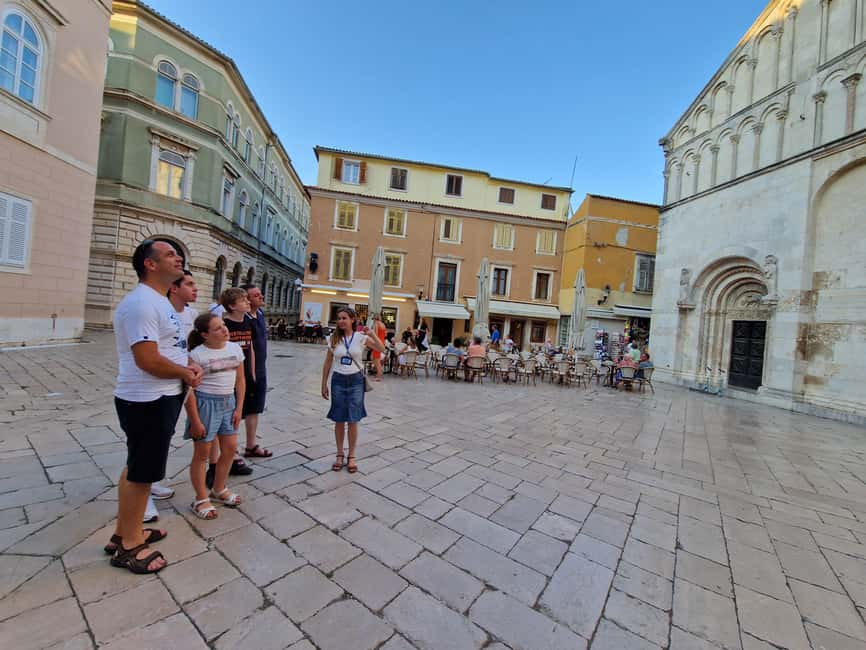
This tour is built for people who want meaningful Zadar context without spending half a day in transit or bouncing between disconnected points. With a duration of 2 hours and a group limited to 10 participants, the guide can keep the story moving while still giving you time at the key viewpoints.
You get a walking route that feels like a guided timeline. You start with the modern landmark at the water, then head toward ancient remains, church architecture, and Old Town spaces. You finish in a park, which is a nice change of pace from the tight stone lanes.
If you only have limited time, this kind of structured route is a good value. You are paying for guidance, pacing, and context, plus a tasting. The price is $29 per person, and for a short walking tour that includes food, it usually pencils out well compared with paying for individual entry-style attractions plus a guide.
Meeting at the Greeting to the Sun, then stepping into 3000 years
You meet at the most recent installation of the Greeting to the Sun. It is a fitting start because Zadar constantly shifts between eras, and this is where the city’s present energy meets the historic center you are about to explore.
From there, the walk takes you toward the remains of the Roman Forum. This is the kind of stop that helps your brain connect dots. Standing where structures once played a public role makes later religious sites feel less random, because you understand how the city’s layout and importance grew over time.
What I like about starting here is the orientation effect. You are not wandering to find your first landmark. You begin with a clear starting point, then the guide steers you through a chain of sights you might otherwise overlook.
Roman Forum remains and St. Donatus: Zadar’s “why this matters” moment

One of the strongest parts of the tour is the way it moves from Roman leftovers to early medieval power, without making you memorize dates. You walk toward the remains of the Roman Forum, then pivot to the church of St. Donatus, including the idea that it is Zadar’s emblematic symbol built in the 9th century.
This matters because St. Donatus is not just impressive to look at. The guide’s job is to make sure you understand what role churches like this played in a city that had already been a Roman hub. When you know what you are looking at, you read the architecture differently. Even a quick glance turns into an informed one.
There is also a stop for the importance of St. Mary’s convent nearby. That kind of detail is the exact thing you usually do not pick up from casual pass-by sightseeing. A guided route can point out how religious institutions shaped daily life, not just skyline views.
If you enjoy learning from the street level, this section is where the tour earns its keep. The cost makes more sense when the guide helps you interpret what your eyes already see.
St. Anastasia bell tower and Melia Aniana arch: photo stops with a purpose
As you continue, the walk includes St. Anastasia bell tower on your way to visit Melia Aniana arch. These are classic Old Town subjects: tall, prominent, and photogenic. But the guide’s value is in telling you what to look for and how the pieces fit together spatially.
You do not just reach the arch, snap a photo, and move on. You get a short narrative thread that makes the arch feel like a stop in a bigger story. That is what helps the route feel more than a checklist.
This is also a smart portion for couples and friends, because you can swap phone-photo angles while still staying together and engaged. With a small group of up to 10, it is easier to pause and reframe without a crowd pushing you along.
Other history-led routes through Zadar
- Zadar: Virtual Reality Guided History Walking Tour
★ 4.4 · 86 reviews - Zadar: Private Walking Tour Through 3,000 Years of History
★ 4.7 · 71 reviews - Zadar: Private walking tour through history and modern time
★ 5.0 · 10 reviews - Group History Walking Tour in Zadar Old Town
★ 5.0 · 4 reviews - Zadar: Guided Old Town History Walking Tour
★ 3.8 · 3 reviews
St. Chrysogonus romanesque apses: the kind of detail you miss alone
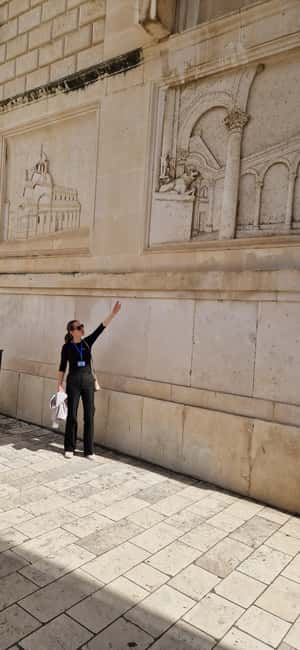
One of the most visually rewarding stops is the church of St. Chrysogonus, specifically the romanesque apses. This is the kind of architectural feature that looks impressive, but only becomes truly interesting when someone points out what makes it romanesque and why it is worth your attention.
You also get time to take photos of the apses, which is important. Architecture tours often move too quickly for good pictures. Here, the guide keeps you focused on the details while still giving you a realistic window to capture them.
If you are the sort of traveler who likes buildings but hates vague commentary, you will probably appreciate this stop. It is concrete. It is visible. It is explained in a way that matches what you can see standing there.
Zadar food market tasting: history ends, local flavor begins
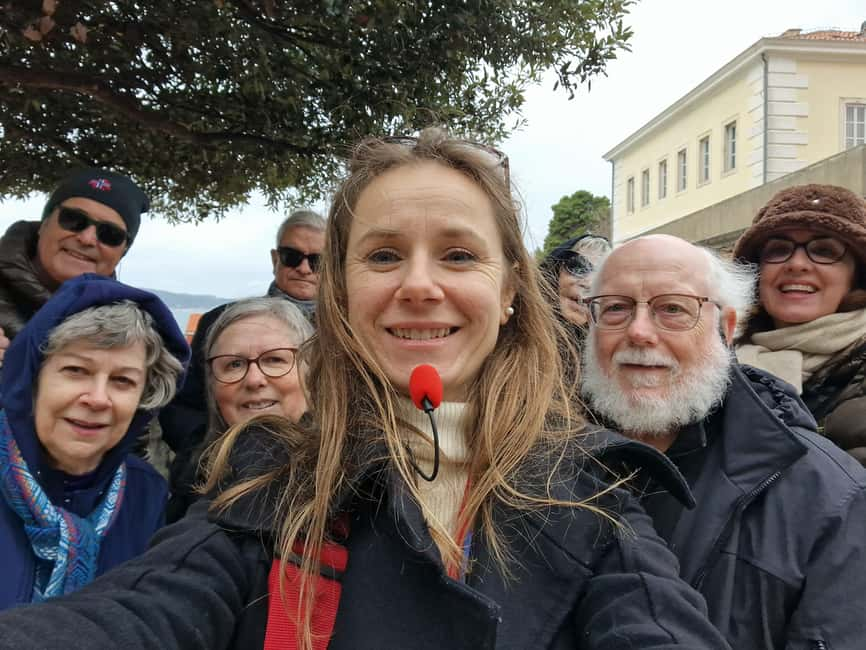
Then comes a change that I always appreciate on walking tours: food that connects to place. You head to Zadar food market, where you taste some local produce. This is included in the tour price, and that inclusion boosts the value.
Why it helps: history is great, but it can also feel abstract if you never touch local daily life. A tasting grounds the experience in something immediate. It is also practical. If you later eat in Zadar on your own, you at least have a reference point for what locals put on the table.
A small caution: the tasting is part of a short 2-hour schedule, so you should treat it as a sample, not a full meal. If you are trying to plan dinner timing, assume you will want something afterward.
People’s Square and off-map corners: learning how to “read” Old Town
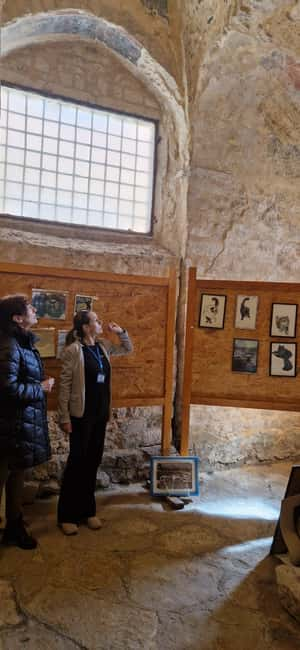
After the market tasting, you continue toward People’s Square. This stop is valuable because it shifts your perspective from religious architecture and Roman remains to civic space. It is another clue about how different kinds of public life shaped the city.
From there, the tour points you toward one of the off-the-map experiences in the route: a place that is not charted on city maps. That is the exact payoff you want from a guided walk. You are not only collecting famous structures, you are learning the small spatial logic of how neighborhoods connect.
This is also where a guide earns trust. A good guide notices what most people miss, then explains why it is there. Even if you are a confident wanderer, it is hard to replicate that kind of insight without local storytelling.
Three eastern entrances to the Old Town: gateways and city thinking
The tour then takes you to the remains of three eastern entrances to the Old Town of Zadar. Entrances are interesting because they are practical. They were for movement, control, and access. They also help explain why the old city has the shape it does.
This stop is not just dramatic. It gives you a way to understand the city’s layout. When you stand near former thresholds, you start to imagine how people would have entered, moved, and encountered the heart of the city.
If you like urban history, this is one of the most satisfying segments. It takes what sounds like a minor detail and turns it into a mental map of Zadar’s past.
Queen Jelena Madijevka Park finale: where you can breathe and photograph
The walk ends in Queen Jelena Madijevka Park. Finishing in a park is a smart design choice. It gives you a softer landing after stone streets and dense sightseeing.
This is also a good spot for photos of picturesque views. Even if you have already taken plenty of pictures, you will probably enjoy one last framed moment before you head off on your own.
If you are planning what to do next, this finale helps. You are not left far from the center, and you get a clear place to stop, regroup, and decide on your next meal or stroll.
The guide factor: why small groups matter here
The overall feedback for this experience points to the guide being a major reason people rate the tour highly. One review specifically credits María for explaining everything with a lot of detail, and another notes a professional, high-quality guide experience. There is also the nice bonus that on at least one date, the group had the guide almost to themselves.
That is not just “nice.” It changes the quality of the experience. When the group is limited to 10, you are less likely to get lost in the flow. You can ask a question without the whole group waiting for you to catch up.
You should expect the tour to feel like an active conversation with a clear route, not a lecture from far away.
Price and value: paying for clarity, not just walking
At $29 per person, this tour is priced for a short, guided walking experience with a included tasting. The value comes from three things working together:
- You get the route stitched into a narrative, so the landmarks feel connected instead of random
- You visit stops that are not as obvious if you wander on your own
- You include a food tasting at the Zadar food market, which adds real-world value
If you are the type of traveler who enjoys independent exploration, you might question a guided walk. But this one is only 2 hours, and it is designed to give you context for what you will see later even after the tour ends.
Who this tour is best for
This works especially well if you:
- Want an organized way to see several key Zadar sites without getting overwhelmed
- Like architecture, old city layout, and street-level details
- Prefer small-group tours where you can actually hear the guide
- Enjoy a short food stop that connects to local life
It may be less ideal if you:
- Need very slow pacing, lots of rest stops, or a more museum-style experience
- Are trying to fit in too many other activities right before or right after, since it is a tight 2-hour block
Should you book this Zadar Hidden Gems and History Tour?
If you want a first-pass introduction to Zadar that goes beyond the obvious photo spots, I think it is a strong booking. Start at the Greeting to the Sun, walk through Roman remains toward St. Donatus, pause for romanesque details at St. Chrysogonus, then end with a tasting and a calm park finish. That mix is exactly how to turn a short trip into a more meaningful one.
Book it if your time is limited and you like learning while you walk. Skip it if you want a long, slow sightseeing day, or if you prefer to plan every stop by yourself without a guide stitching the story together.
FAQ
How long is the Zadar: Hidden Gems and History Tour?
The tour lasts 2 hours.
Where do I meet the guide?
Meet your guide at the Greeting to the Sun installation.
How big is the group?
The tour is a small group limited to 10 participants.
What languages are available?
The live tour guide is available in English and Spanish.
Is local produce tasting included?
Yes. Local produce tasting is included as part of the tour.
Is free cancellation offered?
Yes, you can cancel up to 24 hours in advance for a full refund.
Zadar, the Longer Story


Zadar, A Few More Outings




Freshly written up around Zadar

Zadar Old Town & Sea Organ Tours, top to bottom.
 ★ 4.9Zadar: Plitvice Lakes Guided Day Tour with TicketsFrom $883,148 reviews
 ★ 4.8Zrmanja River: Half-Day Guided Kayaking Tour Near ZadarFrom $641,817 reviews
 ★ 4.5Zadar: Kornati Boat Trip with Lunch and Swim StopsFrom $641,498 reviews
 ★ 4.9Zadar: Plitvice Lakes with Boat Ride and Zadar Old Town TourFrom $531,368 reviews
 ★ 4.9From Zadar: Island-Hopping Speedboat Tour with DrinksFrom $381,247 reviews
 ★ 4.1Zadar: Kornati and Telašćica Full-Day Boat Trip with LunchFrom $511,193 reviews
 ★ 4.7Zadar: Plitvice Lakes Full-Day Guided Tour with a Boat RideFrom $58807 reviews
 ★ 3.8From Zadar: Kornati National Park and Telascica Boat TripFrom $64788 reviews
Browse the lists this tour appears in