
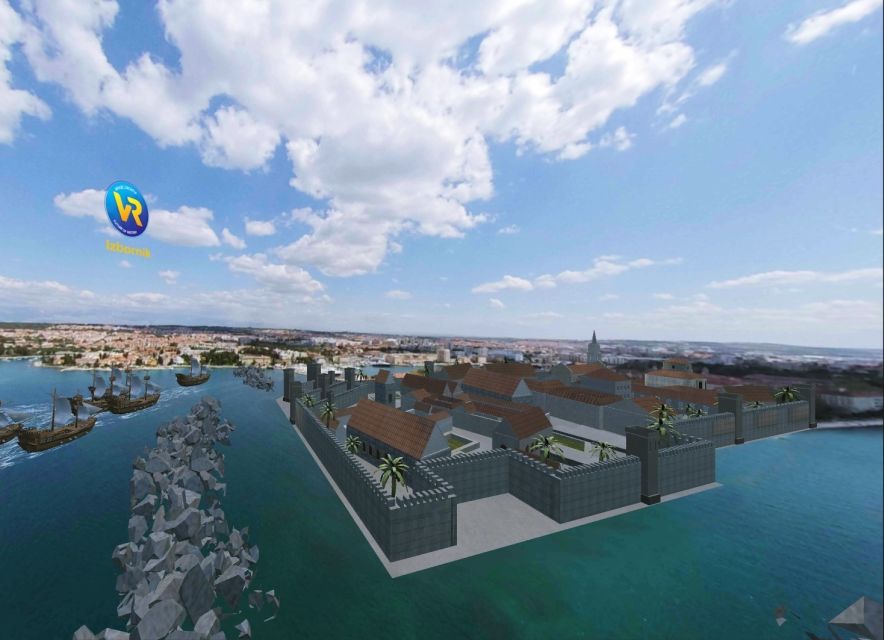
REVIEW · ZADAR OLD TOWN & SEA ORGAN TOURS
Zadar: Virtual Reality Guided History Walking Tour
A quick VR time trip through Zadar’s past. This 2-hour guided walk blends 360° views, 3D reconstructions, and a multilingual audio guide, so you do not just hear about history, you see it. You move through key old-town spots, with an assistant steering you to each VR stop at the right moments.
I especially like two things: the tour puts you at the center of ancient life at the Roman Forum, then later recreates major turning points like the 1202 sea invasion with sound and motion. I also like the small touches the guide manages, including taking you to calmer, shadier spots when you pause for VR.
One thing to consider is that VR tech can be a mixed bag. A couple of experiences report occasional headset glitches and that image quality may not look cutting-edge, so if you are picky about graphics, go in with realistic expectations and focus on the stories and locations.
In This Review
- Key highlights you will notice fast
- Time travel in Zadar: Roman Forum to WWII in 2 hours
- Meeting by Sea Gate, then getting set up for VR
- Roman Forum: standing at the center of ancient Zadar
- 1202 crusade era: invasion coming from the sea
- St. Chrysogonus Church: seeing what is usually closed
- Old city market location: then versus now
- Aerial perspective: hot-air balloon views and WWII attacks
- Audio in 7 languages, simple controls, and a guide who keeps pace
- Price and value: where the $35 fits
- Who should book this VR walking tour in Zadar
- Should you book this Zadar VR history tour?
- FAQ
- How long is the Zadar VR guided history walking tour?
- What is included in the tour price?
- Which languages are available for the audio guide?
- Where do I meet the tour?
- Do I need to bring anything?
- Is the tour wheelchair accessible?
Key highlights you will notice fast

- Roman Forum positioning: you stand where civic life once happened, not just in front of a plaque
- 1202 invasion reenactment: sea attack visuals plus sound effects help the timeline click
- St. Chrysogonus Church access: you see a site that is otherwise closed to the public
- World War II from the air and sea: big historical moments shown with aerial perspective
- Simple next-point control: you pick when to continue, no advanced tech skills needed
- Helpful assistant support: the guide keeps the flow going and helps when you need it
Other Zadar outings we thought were worth a look
- Zadar: Plitvice Lakes Guided Day Tour with Tickets★ 4.9 · 3,148 reviews
- Zadar: Kornati Boat Trip with Lunch and Swim Stops★ 4.5 · 1,498 reviews
- Zadar: Plitvice Lakes with Boat Ride and Zadar Old Town Tour★ 4.9 · 1,368 reviews
- From Zadar: Plitvice Lakes with Boat Ride & Zadar Old town tour★ 5.0 · 1,129 reviews
Time travel in Zadar: Roman Forum to WWII in 2 hours

If you only have a short time in Zadar, this tour is a smart way to get your bearings. In two hours, you connect the dots between different eras using VR reconstructions, so the old streets feel less like a blur and more like a timeline you can point to.
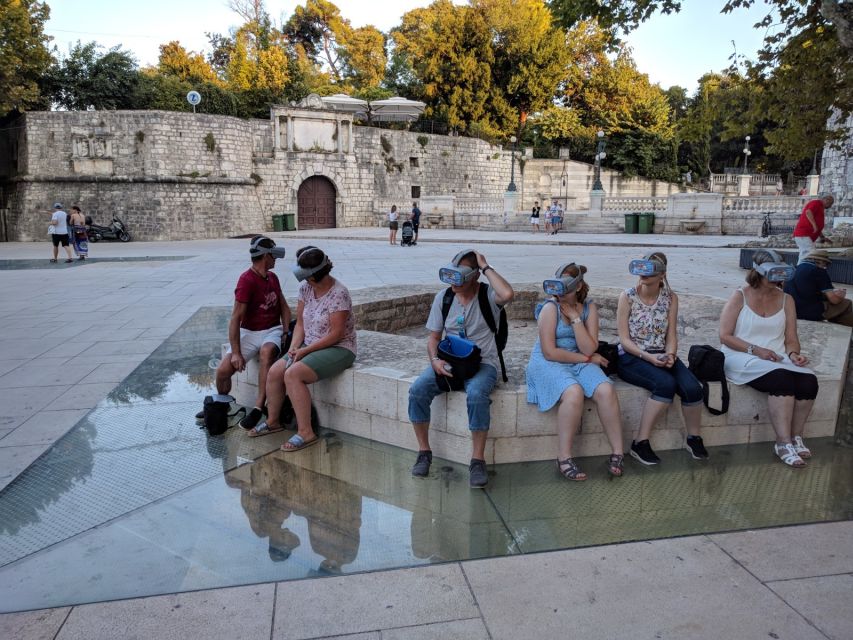
The structure is simple. You start in the old-town area near the Sea Gate, then walk to several “anchors” in Zadar’s center. At each anchor, you switch from today’s view to recreated past scenes, using OculusGo VR glasses, 3D objects, animations, and sound effects.
This is not a lecture tour where you sit and listen. It is a guided walk with planned VR moments, which makes the history easier to remember. The assistant also walks you to the right places, so you are not playing map-chess while trying to follow the story.
Meeting by Sea Gate, then getting set up for VR
You meet at a souvenir shop in a red building next to the Sea Gate, Poljana Pape Aleksandra III 7, 23000 Zadar. It is a convenient starting point if you are already using the Sea Gate area as your base for exploring.
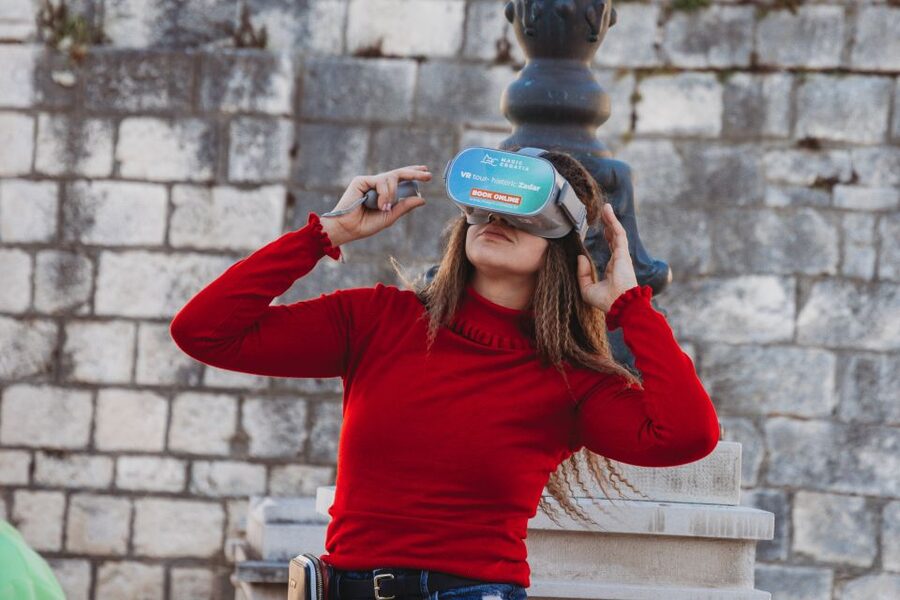
Before the first VR scene, you get fitted with the OculusGo all-in-one headset and a controller. The interface is described as user-friendly, and the assistant stays with you throughout the tour. That matters, because VR is often where “tech friction” happens. Here, you should expect hands-on help if something needs adjusting.
Practical tip: wear comfortable shoes. You are walking through old-town streets between VR stops, and the tour is timed tightly since the full experience runs about two hours.
Roman Forum: standing at the center of ancient Zadar
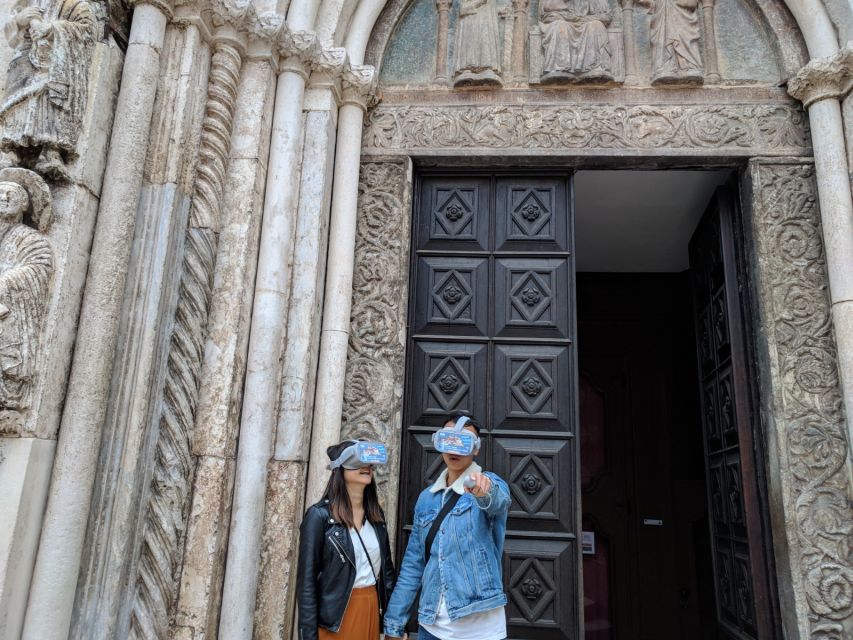
One of the most satisfying parts is when you stand in the center of the Roman Forum. The big win is that you get spatial context. Instead of imagining where power and commerce sat, you experience the viewpoint and then connect it to what is still around you.
VR here focuses on Roman-era social and economic life, with reconstructions that show how the forum functioned as the hub of the city. Even if you are not a Roman history buff, this kind of “place-based” storytelling lands better than dates alone.
What to watch for: the tour builds meaning step by step. You do not just jump into one scene and move on. You see the location, then you see the recreated activity, which helps your brain map today’s streets to yesterday’s rhythms.
1202 crusade era: invasion coming from the sea
Next, the story moves from Roman life to the 4th Crusade era. A highlight is the VR recreation of the invasion coming from the sea in 1202, including animated visuals and sound effects.
This is where the VR format pays off. Attacks can be hard to visualize from words. With the scene recreated around your viewpoint, the timeline becomes more intuitive. You start to understand why the sea mattered so much to Zadar’s strategic position.
Also, this is one of those “you get it in minutes” moments. Even if you normally tune out historical narratives, the combination of motion, audio cues, and viewpoint helps you grasp what was happening and why it mattered.
More Zadar covered at walking pace
- Zadar: Guided Walking Tour
★ 4.8 · 445 reviews - Zadar City Tour 120min Walk
★ 5.0 · 203 reviews - Zadar Walking Tour sponsored by Gligora Cheese and deli.
★ 5.0 · 119 reviews - Zadar: Virtual Reality Guided History Walking Tour
★ 4.4 · 86 reviews - Zadar: Private Walking Tour Through 3,000 Years of History
★ 4.7 · 71 reviews
St. Chrysogonus Church: seeing what is usually closed
Another standout stop is St. Chrysogonus’ Church. The tour includes it even though it is otherwise closed to the public.
This is valuable because it gives you access to a meaningful site without you needing to hunt for special entry times. And because the tour ties it into the VR storytelling, it feels less like a random building visit and more like an episode in the overall Zadar timeline.
In practice, expect the experience to feel different from an outdoor VR stop. You are still walking between points, but the VR moment itself shifts your attention from the present-day setting to a historical visualization tied to the place.
Old city market location: then versus now

The tour also takes you to the location of Zadar’s former city market, which was in a different position compared with today’s layout. That kind of detail is not “fun fact clutter.” It helps you see the city as something that moved and reorganized over time.
When the market location is tied to a VR reconstruction, you can better understand how people once used that space for daily life. This kind of contrast, where the street corner feels familiar but historically it was something else, is one of the reasons a guided VR walk works so well.
Drawback to keep in mind: if you are the type who wants deep, behind-the-scenes explanations at every stop, the tour aims for compact information. The assistant will give what you need, but it is not a drawn-out seminar.
Aerial perspective: hot-air balloon views and WWII attacks
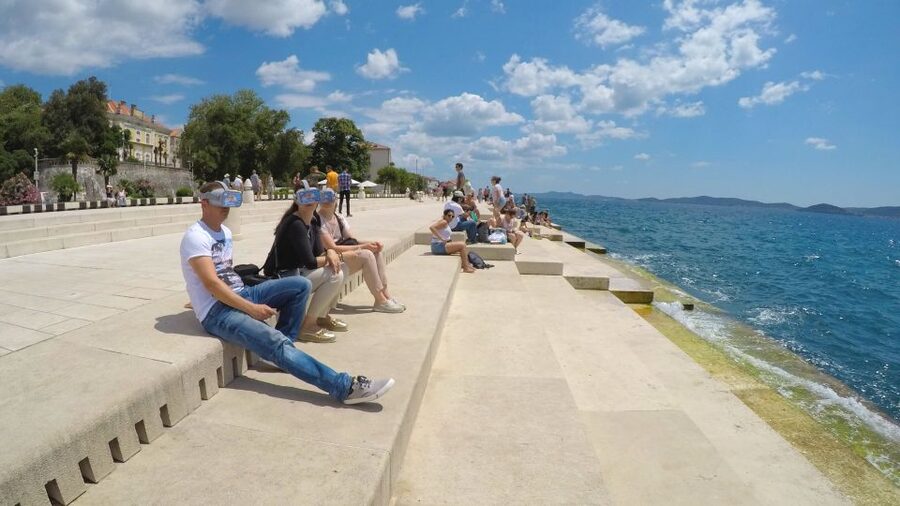
Zadar’s peninsula views are part of the tour’s visual storytelling. You get an aerial view feel of the peninsula, which helps you understand the city’s geography. Then, the WWII chapter gets bigger and darker.
The VR includes attacks from the air and sea during World War II. The key benefit is perspective. History events like air and maritime attacks are hard to picture in a street-level environment. With the VR angle and sound effects, you get a sense of scale and approach that you would not easily get on foot.
Then there is the hot-air balloon perspective. That balloon-style viewpoint is not just eye candy. It reinforces the idea that Zadar is shaped by its coast and the way movement from water and above defined threats and strategy.
Audio in 7 languages, simple controls, and a guide who keeps pace
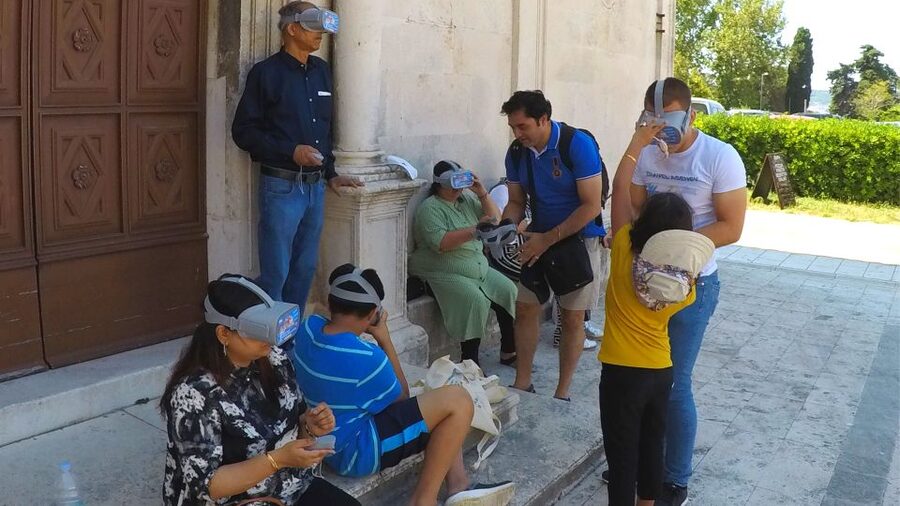
The tour uses an audio guide translated into 7 languages: Croatian, English, Esperanto, French, German, Italian, and Spanish. Even if you are comfortable in English, having multiple language options means you can choose what fits you best without getting stuck.
You also control how the experience flows. The interface lets you choose when to see the next point, which is great for pace. If you want one stop slightly longer, or you need a breather because you are processing VR visuals, you can usually keep things comfortable.
The assistant is a central part of the value. One guide name that came up in real experiences is Veronica. People praised her local knowledge and her ability to answer questions without overwhelming you. Another practical note: when there is a VR pause, the guide can choose calmer, shadier spots. That sounds small, but it makes the experience more pleasant, especially in warm weather.
Potential VR friction still happens sometimes. A few reports mention the headset not working perfectly and needing frequent help. So if you are sensitive to tech issues, plan to stay patient and let the assistant handle adjustments.
Price and value: where the $35 fits
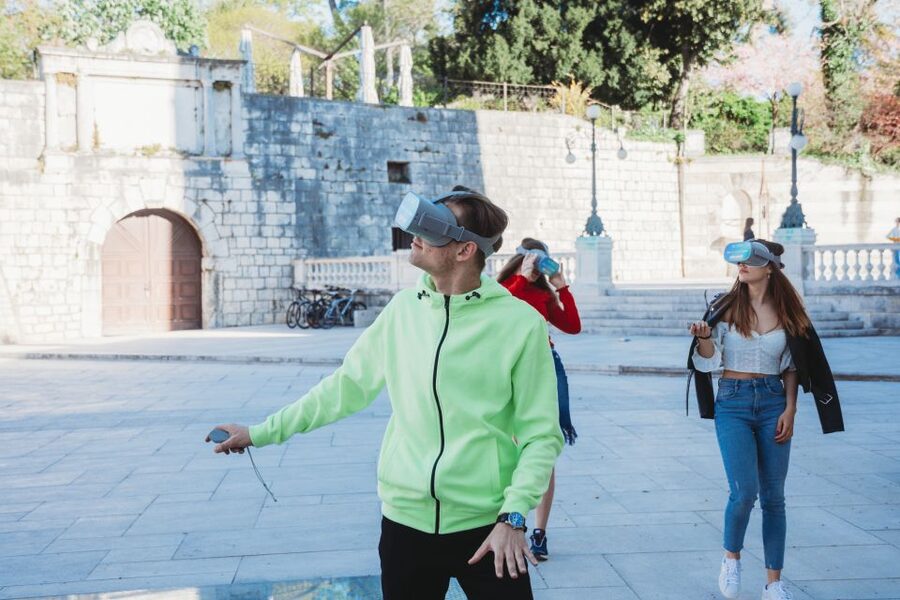
The price is listed at $35 per person for a 2-hour walking tour. On paper, that sounds like a “pay for VR” expense. In practice, what you are really paying for is:
- VR glasses and a controller (OculusGo)
- a tour assistant who guides you to each location
- a planned route through key old-town sites tied to recreated historical scenes
- an audio guide with 7 language options
The value rises because the VR story adds access you would not easily get otherwise, like the St. Chrysogonus Church, described as normally closed to the public. If you were to try to replicate this kind of multi-era walkthrough on your own, you would likely spend more time researching locations and context, and you still would not get the same viewpoint-based reconstructions.
What is not included is food and drinks. Since you are out for about two hours, it is easy to pair the tour with a snack plan before or after. Just do not expect it to include a meal stop.
Who should book this VR walking tour in Zadar
This tour fits best if you want history with a visual hook. It is great for:
- People who like guided structure but do not want a pure museum routine
- Families and kids, since the activity is described as fun and game-like in its VR pacing
- Travelers who learn better through place-based storytelling and 360° visuals
- Anyone who wants a short timeline overview of Zadar’s Roman, crusade era, and WWII chapters
It also makes sense if you are concerned about getting lost in the old town. The assistant walks you to the right places, so your attention stays on the story and the reconstructions, not only on navigation.
If you are someone who wants ultra-modern VR graphics, you might find the visuals not “2025-level” in quality. The experience can still be interesting and informative, but you should not book it expecting the newest hardware look. Treat it more like a story-led reconstruction than a high-end video game.
Wheelchair access is listed as available, which broadens who can participate. The main walking part is part of the tour, so you still may want to judge how comfortable your group is with short city walking between stops.
Should you book this Zadar VR history tour?
I think this is a good booking when you want an efficient, guided way to understand Zadar’s past. The tour’s strongest argument is that it connects locations you can actually stand in with historical moments you can see from a realistic viewpoint. The Roman Forum stop, the 1202 sea invasion sequence, and the WWII aerial and maritime attacks are the kind of scenes that stick.
If you are traveling with mixed ages or mixed interests, this is also an easy win because VR does the heavy lifting of making history feel immediate. And with a 4.4 average rating from 86 reviews, you can assume most people leave feeling it was worth their time.
My advice: book it if you like guided, visual history and you are okay with VR that is more story-focused than graphics-first. Skip it only if VR equipment problems or lower visual fidelity would frustrate you more than they would entertain you.
FAQ
How long is the Zadar VR guided history walking tour?
The tour lasts 2 hours.
What is included in the tour price?
You get VR glasses (OculusGo All-in-One VR headset and a controller), a tour assistant, and the walking tour.
Which languages are available for the audio guide?
The audio guide is translated into Croatian, English, Esperanto, French, German, Italian, and Spanish.
Where do I meet the tour?
Meet at a souvenir shop in a red building next to the Sea Gate, Poljana Pape Aleksandra III 7, 23000 Zadar, Croatia.
Do I need to bring anything?
Bring a passport or ID card.
Is the tour wheelchair accessible?
Yes, wheelchair access is listed as available.
Zadar, the Longer Story



Walk It: More of Zadar at Ground Level



Zadar, A Few More Outings




Freshly written up around Zadar


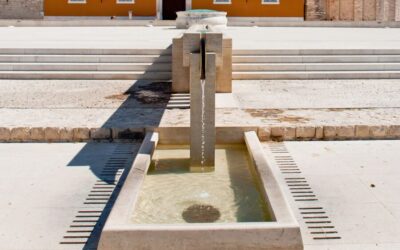
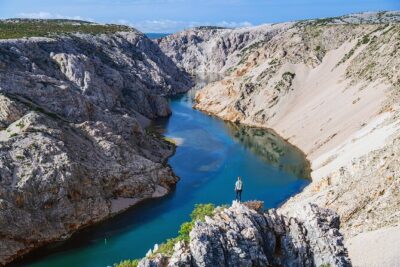
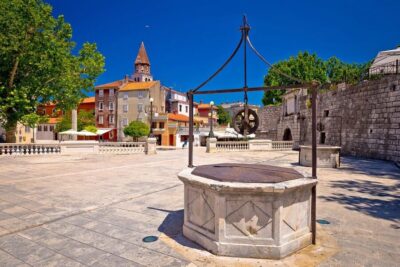
Zadar Old Town & Sea Organ Tours, top to bottom.
 ★ 4.9Zadar: Plitvice Lakes Guided Day Tour with TicketsFrom $883,148 reviews
 ★ 4.8Zrmanja River: Half-Day Guided Kayaking Tour Near ZadarFrom $641,817 reviews
 ★ 4.5Zadar: Kornati Boat Trip with Lunch and Swim StopsFrom $641,498 reviews
 ★ 4.9Zadar: Plitvice Lakes with Boat Ride and Zadar Old Town TourFrom $531,368 reviews
 ★ 4.9From Zadar: Island-Hopping Speedboat Tour with DrinksFrom $381,247 reviews
 ★ 4.1Zadar: Kornati and Telašćica Full-Day Boat Trip with LunchFrom $511,193 reviews
 ★ 4.7Zadar: Plitvice Lakes Full-Day Guided Tour with a Boat RideFrom $58807 reviews
 ★ 3.8From Zadar: Kornati National Park and Telascica Boat TripFrom $64788 reviews
Browse the lists this tour appears in