
REVIEW · ZAGREB CITY & UPPER TOWN TOURS
Classic Zagreb Bike Tour
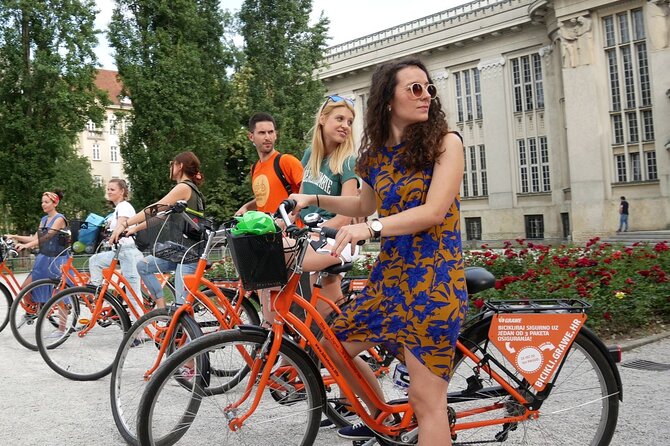
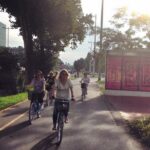
If you like moving faster, this tour fits. It is a Classic Zagreb Bike Tour that turns downtown history into a simple ride with frequent stops, plus a break for coffee, a cold drink, or ice cream. You also get that very practical mix of big sights and quick local context that helps everything you see later make sense.
I especially love the small-group feel. With a maximum of 12 people, the guide can keep an eye on the route, answer questions, and slow down when someone wants details. A second win for me is how the stops are chosen, you go from the Cathedral area to the market life of Dolac, then over to key Upper Town landmarks, ending in the lower-city park and squares so you get a real sense of how Zagreb works.
One thing to consider is that this is a shared street ride through crowded pedestrian zones. Cobblestones, trams, and busy crossings mean you need comfortable bike handling. Also, a minority of riders flagged that bikes and helmets can look worn, so check your brakes and gear right at the start.
In This Review
- 6 things I’d focus on before you ride Zagreb
- Why this Zagreb bike route works (and feels relaxed)
- Price and what you actually get for $54.44
- Group size, guide style, and the names to look for
- Starting point: where to meet and how to arrive ready
- Stop-by-stop: what you’ll see and why each place matters
- Stop 1: Zagreb Cathedral area, where the city’s story begins
- Stop 2: Dolac Market, the belly of Zagreb
- Stop 3: Tkalčićeva Street, where nightlife takes over
- Stop 4: Krvavi Most, Bloody Bridge and the Kaptol and Gradec divide
- Stop 5: Petrini Pyli (Stone Gate) and the patron saint connection
- Stop 6: St. Mark’s Church, a symbol you can recognize later
- Stop 7: Funicular Railway to the Upper Town, 1892 and still going
- Stop 8: Croatian National Theater, Illyrian dreams in a theater building
- Stop 9: King Tomislav Square, Croatia’s early monarchy
- Stop 10: Zrinjevac, the park plan that merges squares
- The breaks that keep you fresh: coffee, cold drinks, and ice cream
- Road safety and bike condition: what to watch before you commit
- Who this tour suits best (and who might skip it)
- Should you book the Classic Zagreb Bike Tour?
- FAQ
- How long is the Classic Zagreb Bike Tour?
- What language is the tour offered in?
- Is the funicular railway included?
- What’s included in the price?
- What’s the maximum group size?
- Where do we meet for the tour?
- Can I cancel for a full refund?
6 things I’d focus on before you ride Zagreb
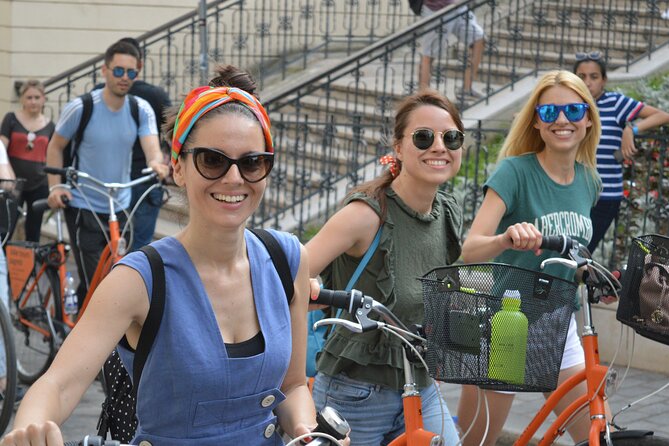
- Small group, max 12 riders means less rushing and more personal guide attention.
- Frequent short stops keep the tour from turning into a long lecture on wheels.
- Coffee, cold drink, or ice cream is built in, so the pace stays pleasant.
- A real Upper Town element via the Zagreb funicular (ticket not included).
- Kaptol and Gradec context comes fast, from Bloody Bridge to the Stone Gate area.
- Bike comfort and safety checks matter, especially in cobblestones and crowded routes.
More Zagreb walks we have reviewed
- From Zagreb: Plitvice & Rastoke Guided Day Trip with Ticket★ 4.9 · 2,955 reviews
- Zagreb: Rastoke & Plitvice Lakes Guided Tour with Ticket★ 4.9 · 1,897 reviews
- Best of Zagreb with the WW2 Tunnels★ 5.0 · 973 reviews
- Plitvice Lakes with Ticket & Rastoke Guided Tour from Zagreb★ 5.0 · 966 reviews
Why this Zagreb bike route works (and feels relaxed)
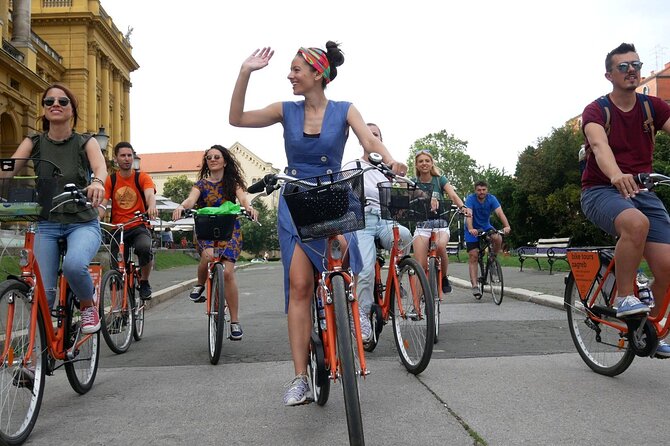
Zagreb can be surprisingly easy to understand once you know its two main “characters”: Kaptol and Gradec. This tour uses that idea well. Instead of only ticking off monuments, it connects streets and squares to the way power, faith, and daily life shaped the city.
The ride length is about 3 hours, which is long enough to see a lot and short enough that you do not feel wrecked. The route is largely designed for sightseeing rather than athletic endurance. In reviews, the experience is often described as a manageable ride with only one steeper moment where you can hop off and walk if needed.
And here is the underrated part: you get motion. On a walking tour, you stop, start, and stare, then you end up tired and still trying to place things in your head. On wheels, you keep your bearings, you get little bursts of scenery, and you learn while you travel. You will leave with an overview that makes later self-guided exploring much simpler.
Price and what you actually get for $54.44
At $54.44 per person, this is not a bargain like a free street meet-up, but it also is not priced like a private car tour. What makes it good value is what is bundled in:
- Bicycle and helmet provided
- Local guide with navigation and commentary
- A break with coffee, a refreshing drink, or ice cream
- A photo from the tour
You also get a practical benefit that you cannot “buy” later easily: someone shows you how to move through historic areas without getting tangled in traffic patterns, wrong turns, or long detours. For many first-timers, that alone saves time and energy.
The only meaningful extra cost mentioned is the funicular railway ticket. If you are curious about Upper Town, that is the one part you will likely pay for separately. Alcoholic drinks are not included, which is fair given the tour duration.
Group size, guide style, and the names to look for
This tour caps at 12 travelers, and it shows in how the route is handled. With a smaller group, the guide can keep everyone together without feeling like a moving conga line. Reviews highlight that guides like Iva, Eva, Filip, Sandro, Zeljka, and Angelica have led the tour, and that the best guides do three things really well:
- They explain the “why” behind each place, not just the dates.
- They share local recommendations for what to eat and where to go next.
- They keep the mood light, sometimes with humor, so the history does not feel stiff.
If you are traveling with kids or you simply want something that is informative but not too intense, this tour style fits. At least one family review mentioned the guide kept young riders engaged with interactive questions, which is exactly what you want from a group ride.
Starting point: where to meet and how to arrive ready
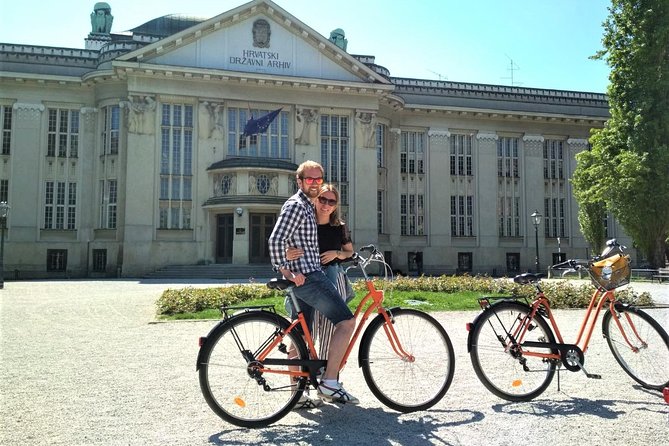
You meet at Jurišićeva ul. 19, 10000 Zagreb and the tour ends back at the same spot.
Because you are riding through busy public space, I recommend showing up with a little buffer. A small timing cushion makes your start calmer, especially if you need help adjusting the helmet or you want a quick moment to test your bike. One review complained about a chaotic start and bike condition, so your best move is simple: check before you roll. Confirm your brakes work and that the seat feels right.
Also, bring a mindset of street riding, not a closed-course parade. Even when the guide is doing everything right, you still share space with pedestrians and public transport in the city center.
More riding we have done around Zagreb
- Zagreb Highlights Bike Tour
★ 5.0 · 208 reviews - Classic Zagreb Bike Tour
★ 5.0 · 193 reviews - Zagreb: 3–Hour Classic Bike Tour
★ 4.6 · 139 reviews - All of Zagreb Bike Tour
★ 5.0 · 97 reviews - Zagreb: 2.5-Hour Highlights Bike Tour
★ 4.8 · 93 reviews
Stop-by-stop: what you’ll see and why each place matters
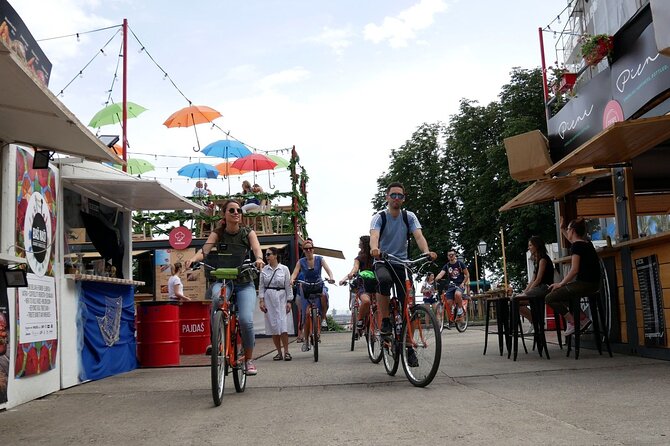
Stop 1: Zagreb Cathedral area, where the city’s story begins
Your first landmark is the Cathedral of Zagreb. The key detail here is the origin story: the history of Zagreb is often tied back to 1093, when the Hungarian king Ladislav founded the Diocese of Zagreb in the area of present-day Kaptol and raised the church to cathedral level at that time.
Why this stop works on a bike tour: it gives you an instant “anchor.” Later landmarks like the Stone Gate and St. Mark’s Church have religious and civic meaning. Starting with the Cathedral helps you read the rest of the route like a map of ideas, not just a set of photos.
Practical note: the stop is about 10 minutes. That is enough for an exterior look and a quick orientation, not enough to turn it into a long interior visit.
Stop 2: Dolac Market, the belly of Zagreb
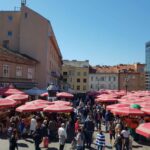
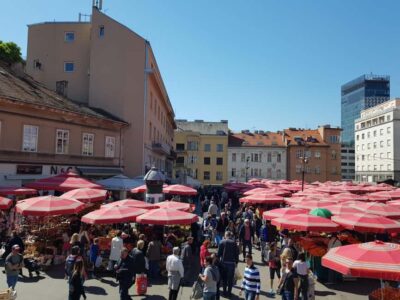
Next up is Dolac Market, often called the belly of the city. This is Zagreb’s largest farmers market, and it is a great place to pause because markets teach you local daily life fast.
Even if you do not buy anything, you get a sense of who shops here and what kinds of goods matter in Zagreb. It is also an easy stop duration, about 10 minutes, so you can stretch, grab a drink if you want, and reset before riding again.
Stop 3: Tkalčićeva Street, where nightlife takes over
Then the tour points you to Tkalčićeva Street. Historically, it functioned as a Zagreb equivalent of the Amsterdam red-light district during the early late 1800s through the 1930s. Today it is the main street for downtown tourism and nightlife.
On a bike tour, this stop is useful because it shows how a street can flip roles over time. You are not just looking at buildings, you are seeing social history in real time.
Keep in mind: this part of the city can be busy, and busy pedestrian zones are where safe riding habits matter most.
Stop 4: Krvavi Most, Bloody Bridge and the Kaptol and Gradec divide
You then reach Krvavi Most, also called Bloody Bridge. The idea is tied to the old border between Gradec and Kaptol across the Medveščak stream. Frequent clashes between the two sides gave the bridge its dark name.
Why I like this stop: it gives a simple geographic explanation for something that otherwise sounds dramatic. When you later see the layout of the city, the “why” becomes obvious.
This is a short stop, about 10 minutes, so it is more about context than lingering.
Stop 5: Petrini Pyli (Stone Gate) and the patron saint connection
The tour heads to Petrini Pyli, the Stone Gate area. The Stone Gate has a shrine of Our Lady of the Stone Gate, and she is also described as the patron saint of Zagreb for many centuries.
This is one of those stops where the guide’s storytelling matters. Without context, it can look like a cool historic structure. With the context, it becomes a symbol of identity tied to how people believed, protected, and prayed in the past.
Stop time is about 10 minutes, so you will likely focus on the exterior and the meaning rather than a deep architectural study.
Stop 6: St. Mark’s Church, a symbol you can recognize later
Next is St. Mark’s Church, one of the oldest buildings in Zagreb and also one of the city’s recognizable symbols. It is mentioned in the 1334 Kaptol Statute, which places it firmly in medieval civic structure.
This stop is about 15 minutes, which is enough time to let the guide walk you through what you should notice. On a bike tour, this works especially well, because you can look up, notice details, and then immediately ride onward instead of losing the thread.
Stop 7: Funicular Railway to the Upper Town, 1892 and still going
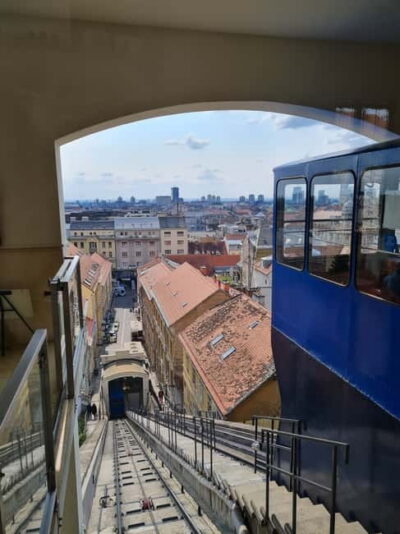
Now for the signature ride element, the Zagreb funicular railway. It is considered the oldest means of public transport for passengers in Zagreb, created in 1892. This is where you get a real change in feel as you move toward the Upper Town area.
Important: the funicular ticket is not included. So budget for it if you want to ride up as planned.
In practical terms, this is also a good pacing tool. The funicular reduces physical strain and lets everyone take in views without turning the tour into a climbing workout.
Stop 8: Croatian National Theater, Illyrian dreams in a theater building
You then pass through the Teatre Nacional Croata area, the Croatian National Theater. It was founded in 1860, and the story connects to the Illyrians and their decades-long aspiration for a Croatian theater in the Croatian language. One named figure connected to those ambitions is Dimitri Demeter.
Why this stop is worth your attention: theater can be easy to miss as a “sight,” but it matters in how a nation defines itself. A guide who knows the context can make a building feel like a cultural event, not a souvenir backdrop.
Stop time is about 20 minutes, so it is slightly longer than some of the other pauses.
Stop 9: King Tomislav Square, Croatia’s early monarchy
After that you reach King Tomislav Square, tied to the first Croatian king Tomislav, dated 925 to 928. Before that, the square’s story includes ruling a principality of Croatia.
This is another short stop, around 10 minutes, but it gives you a timeline of political identity. When you connect Tomislav to later religious sites and civic symbolism, Zagreb starts to feel coherent.
Stop 10: Zrinjevac, the park plan that merges squares
Finally you finish in Zrinjevac. An urban plan was adopted in 1876 to design the lower city, aiming to merge squares into a single framework.
This ending is smart because it relaxes you after the more dramatic stories of earlier stops. It is a good place to reflect and take photos before you ride back to the start.
Stop time is about 20 minutes, so it is not rushed.
The breaks that keep you fresh: coffee, cold drinks, and ice cream
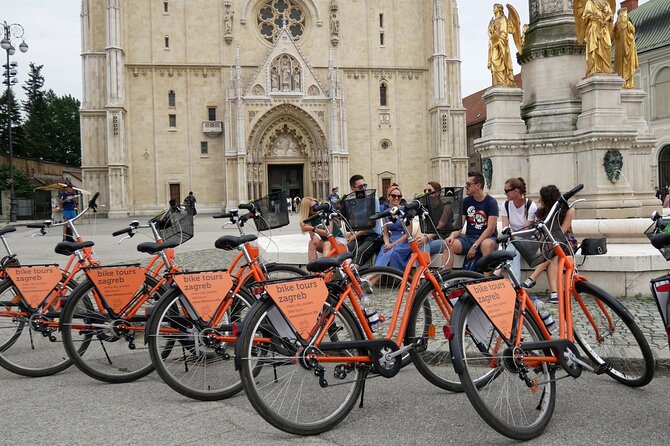
One of the most consistently liked parts is the tour’s built-in snack break. You are offered coffee, a refreshing drink, or ice cream during the trip. That matters more than it sounds in a city like Zagreb, where you might be moving through sun, shade, and crowds in quick bursts.
It also tends to be a social moment. Reviews mention that guides use the break to share suggestions for where to eat, what to try, and what to do next.
Just remember: it is not framed as a long meal stop, it is part of the tour pace.
Road safety and bike condition: what to watch before you commit
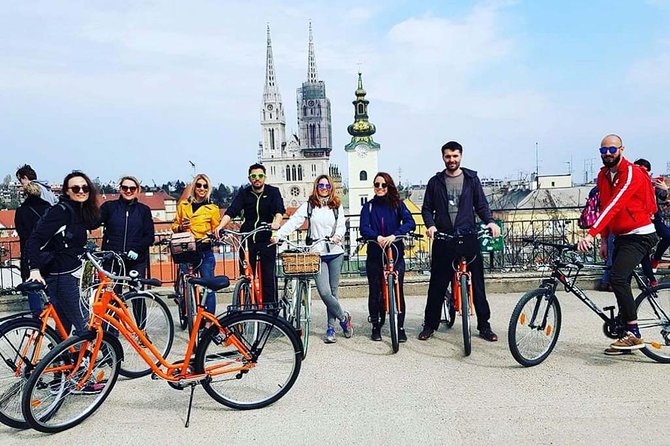
This is the part I want you to take seriously, because it can make or break your comfort.
- One review reported bikes that were not very current, a few in disrepair, and helmets in poor condition, plus a chaotic start and a lack of focus on road safety and keeping the group together.
- Another review still praised the bikes and said rides were comfortable and easy.
So treat bike checks as part of the experience. Before moving:
- confirm brakes feel solid
- make sure you are comfortable on the seat
- check helmet fit
Then ride the way you would in any historic city core: slow through crossings, expect pedestrians, and do not assume you have a clear path just because you see bike lanes or wide walkways.
Also note that one review said the ride was not ideal for non-cyclists due to cobblestones and busy maneuvering through crowds. If you are nervous on a bike around people, you might prefer a walking tour that gives you more control.
Who this tour suits best (and who might skip it)
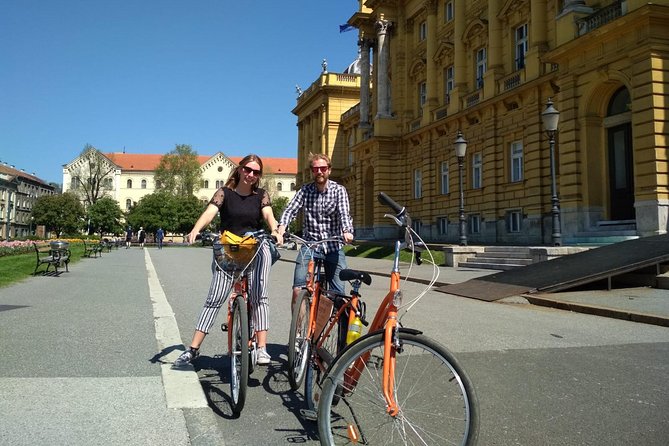
This tour is a great fit if:
- you want a fast orientation to downtown Zagreb
- you like guided context, not just a checklist
- you want a mostly gentle ride with frequent breaks
- you are visiting for the first time and want to understand Kaptol and Gradec quickly
It is less ideal if:
- you struggle with bike handling in crowds or on cobblestones
- you are sensitive to inconsistent bike or helmet condition, even though gear is provided
- you strongly prefer a car-free pace with no street maneuvering
Families can do well here if kids ride confidently, and a review mentioned the guide kept kids interested with questions.
Should you book the Classic Zagreb Bike Tour?
I would book it if you want a smart blend of motion and meaning, a tour that helps you place Zagreb’s major sights in order while still leaving time for wandering afterward.
Book with extra caution if you are a nervous cyclist. In that case, I would still consider it, but show up early, do a full bike check, and be ready to hop off and walk for the one steeper moment some riders mention.
If you want the easiest way to get a first feel for Zagreb without hours of wandering, this is a strong choice, and the small-group size keeps it from feeling like a factory tour.
FAQ
How long is the Classic Zagreb Bike Tour?
The tour runs for about 3 hours.
What language is the tour offered in?
The tour is offered in English.
Is the funicular railway included?
The tour includes the funicular railway stop, but the funicular ticket is not included.
What’s included in the price?
The tour includes bicycle use, helmet use, a local guide, a break with coffee or a refreshing drink or ice cream, and a photo from the tour.
What’s the maximum group size?
The tour has a maximum of 12 travelers.
Where do we meet for the tour?
The meeting point is Jurišićeva ul. 19, 10000 Zagreb, Croatia, and the tour ends back at the same meeting point.
Can I cancel for a full refund?
Yes, you can cancel up to 24 hours in advance for a full refund. If you cancel less than 24 hours before the experience starts, the amount you paid is not refunded.
More Croatian Kilometres by Bike
Zagreb On Foot, Continued
Freshly written up around Zagreb
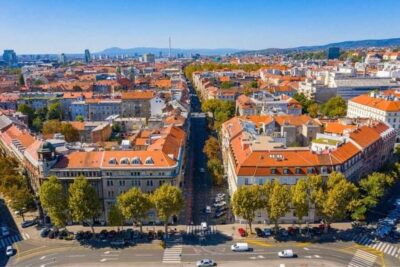
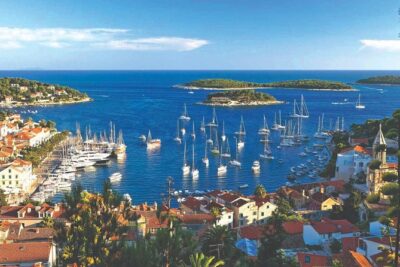
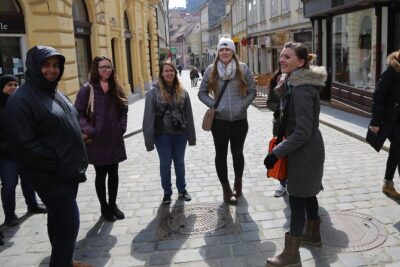
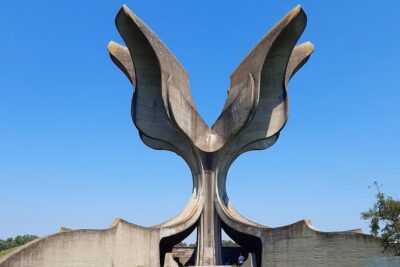
Zagreb City & Upper Town Tours, top to bottom.
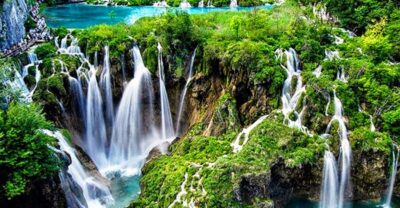 ★ 4.9From Zagreb: Plitvice & Rastoke Guided Day Trip with TicketFrom $612,955 reviews
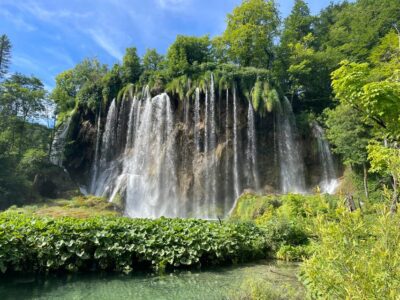 ★ 4.9Zagreb: Rastoke & Plitvice Lakes Guided Tour with TicketFrom $571,897 reviews
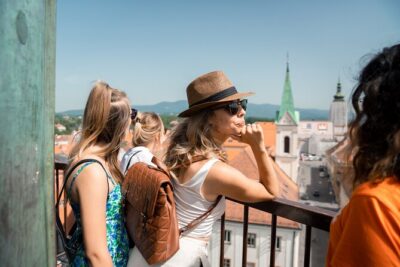 ★ 5.0Best of Zagreb with the WW2 TunnelsFrom $23973 reviews
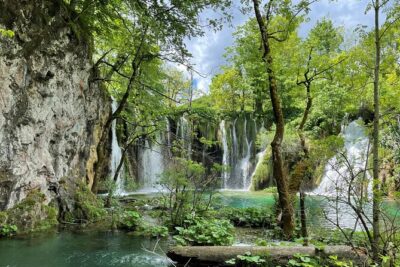 ★ 5.0Plitvice Lakes with Ticket & Rastoke Guided Tour from ZagrebFrom $78966 reviews
 ★ 4.9Zagreb: Small Group Walking Tour City Center and WW2 TunnelsFrom $23895 reviews
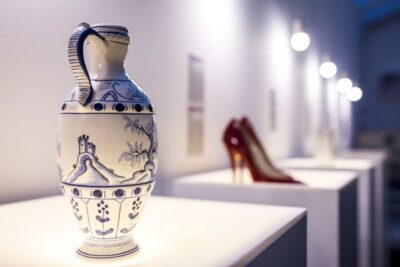 ★ 4.5Zagreb: Skip-the-Ticket-Line Museum of Broken RelationshipsFrom $8847 reviews
 ★ 4.9Zagreb: City and WWII Tunnels Walking TourFrom $23845 reviews
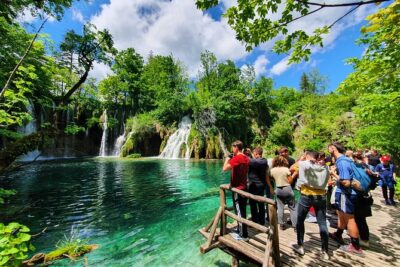 ★ 5.0Plitvice and Rastoke day trip from Zagreb w/ticket (guar. dep.)From $78804 reviews
Browse the lists this tour appears in