
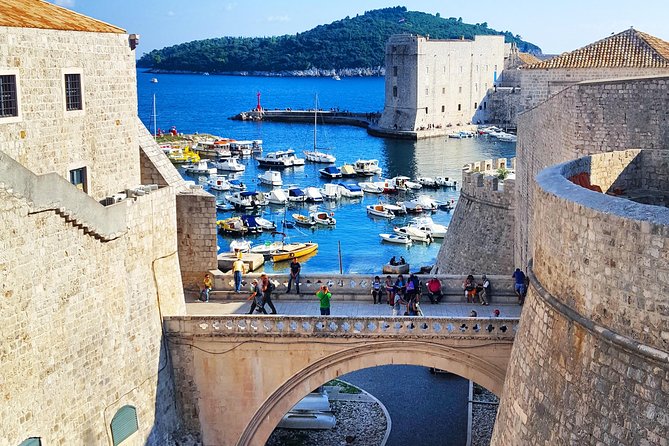
REVIEW · DUBROVNIK CITY WALLS & OLD TOWN WALKS
Dubrovnik walking history tour
Dubrovnik history is easier on your feet. This 90-minute walking tour strings together the Republic of Dubrovnik’s big landmarks, plus the water system that kept the city alive, with a licensed guide doing the explaining. I like that you start at Pile Gate, so you get oriented fast, and I like that the route is built around the places you’ll keep seeing later on your own.
You’ll get a close look at Rector’s Palace and the Sponza Palace, and you’ll also hear why Onofrio’s Fountain mattered (it was the endpoint of a 12 km aqueduct). The Cathedral of the Assumption is a key stop too, with the 1667 earthquake story behind it.
One drawback to plan for: tickets for the city walls are not included, and they cost 35 € per person. If city walls are a must, you’ll want to pair this tour with an extra purchase.
In This Review
- Quick hits
- Why this 90-minute walk is a smart way to learn Dubrovnik
- From Pile Gate toward Sponza Palace, you learn what the city ran on
- Old Town and the Franciscan Monastery, the quiet spine of the walk
- Onofrio’s Fountain and the 12 km aqueduct, where survival becomes architecture
- Rector’s Palace and the Cathedral of the Assumption, power and resilience in one route
- What the $33.61 price gets you, and what costs extra
- Guide style, pacing, and the one risk worth planning for
- Who this tour suits best, and who might want a different option
- Should you book this Dubrovnik walking history tour?
- FAQ
- How long is the Dubrovnik walking history tour?
- Where does the tour start?
- Is the tour in English?
- What is included in the price?
- Are city walls tickets included?
- How many people are in the group?
- Is a mobile ticket used?
- Is there free cancellation?
Quick hits
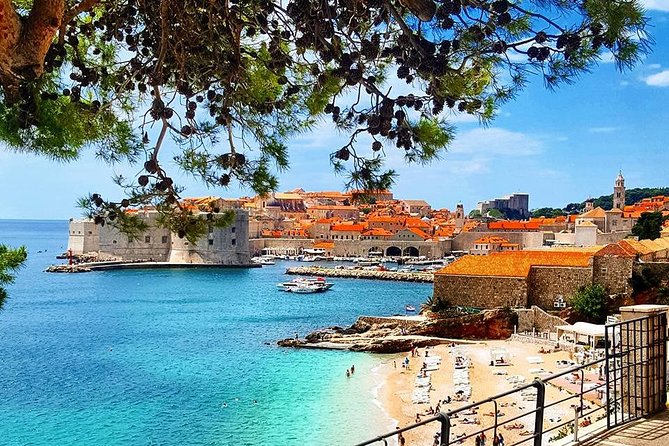
- Pile Gate start means quick orientation in Old Town.
- Rector’s and Sponza Palaces give you Dubrovnik’s political and merchant power in one loop.
- Orlando’s Column ties the city’s identity to freedom and self-rule.
- Onofrio’s Fountain links architecture to daily life, ending a 12 km aqueduct.
- Cathedral of the Assumption shows how the 1667 earthquake reshaped the city.
- Small group size (max 30) keeps the pace manageable for photos and questions.
Different routes over the walls and through the old streets
- Dubrovnik: Old Town Walking Tour★ 4.8 · 5,174 reviews
- Dubrovnik Discovery Old Town Walking Tour★ 5.0 · 4,458 reviews
- Dubrovnik Old Town History Walking Tour★ 5.0 · 1,684 reviews
- Dubrovnik: City Walls Early Morning or Sunset Walking Tour★ 4.8 · 1,523 reviews
Why this 90-minute walk is a smart way to learn Dubrovnik
Dubrovnik can feel like a movie set at first, all bright stone and dramatic views. A walking history tour helps you slow down and spot the meaning behind what you’re seeing. This one is about 1 hour 30 minutes, and that length is a sweet spot. Long enough to connect stories, short enough that you are not fighting fatigue in the heat.
The big value here is the structure: you move through major civic sites, then land on practical life topics like water supply. That matters because Dubrovnik was not just pretty walls. It was a working city that defended itself and managed resources. A good guide turns names on buildings into cause-and-effect.
Another practical plus is the format. You get a mobile ticket, the tour runs in English, and it caps at 30 people. For a first-time visit, that’s a lot easier than trying to figure out what to prioritize while you’re already staring at the skyline.
From Pile Gate toward Sponza Palace, you learn what the city ran on
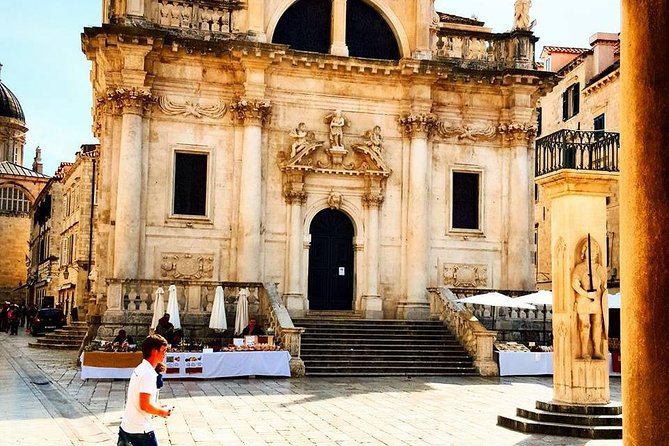
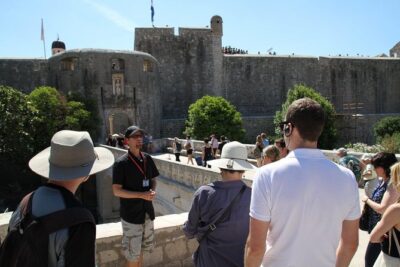
Most tours start with a postcard view. This one starts at Pile Gate, which is how you get your bearings in Dubrovnik. From there, you move through Old Town and head toward the Sponza Palace area, a logical first anchor.
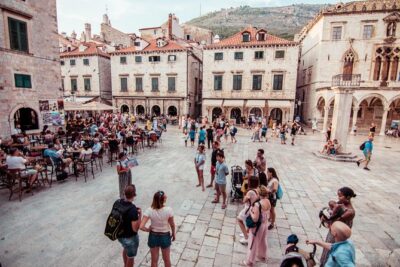
Sponza Palace is one of those locations where Dubrovnik’s identity shows up in plain sight. It’s tied to the city’s commercial and civic life, so it helps you understand why Dubrovnik mattered beyond its defenses. Even if you only catch fragments of the explanations, you’ll start noticing symbols and layout choices that hint at how the city functioned.
A practical tip: wear walking shoes you can trust. Old Town streets can be uneven, and you’ll likely want both comfortable footing and good footing for photos. With a 1.5-hour timeline, you’ll feel every extra minute spent negotiating cobblestones.
Old Town and the Franciscan Monastery, the quiet spine of the walk
After the palace area, the route continues through Old Town and includes the Franciscan Monastery. This is a good balance break. Palaces scream politics. Monasteries bring you back to routine, reflection, and the religious framework that shaped daily life.
You also get a look at Orlando’s Column, a monument tied to the city’s freedom. This stop is especially useful because it gives you an idea of how Dubrovnik talked about itself. When a city remembers its values in stone, you’ll start seeing those values in its public spaces too.
What I’d watch for while you’re walking: the details between the famous stops. In Dubrovnik, the streets and corners often matter as much as the big monuments. If your guide points out a small feature, take a quick step to line it up with the bigger building behind it. That’s where the city starts to make sense.
Onofrio’s Fountain and the 12 km aqueduct, where survival becomes architecture
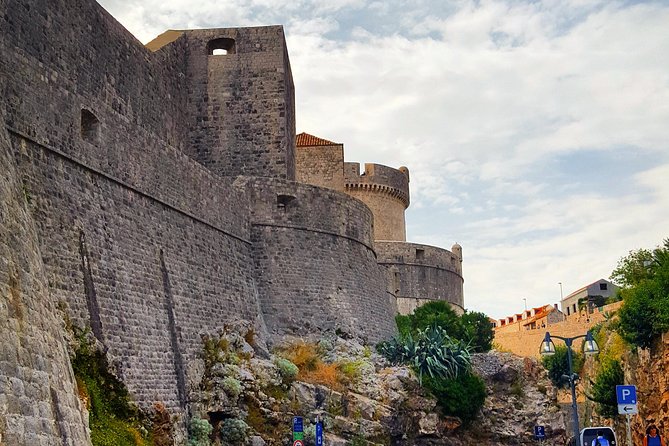
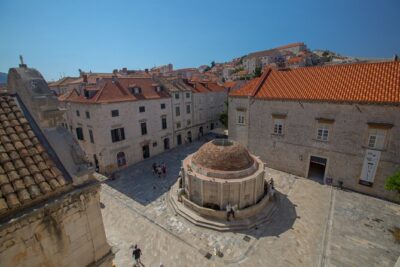
One of the best parts of this tour is the stop at Onofrio’s Fountain. You’re not just going to see a landmark. You’re going to learn the practical story behind it.
The fountain was built in the 15th century at the end of a 12 km aqueduct, and that aqueduct gave Dubrovnik its water supply. That turns the fountain from a nice photo stop into a survival system. Without stable water, you cannot have a city that can endure sieges, handle daily needs, or keep life moving. So when you learn this, the whole Old Town feels more human.
There’s also a small but very real perk: you can refresh and drink water from the fountain. Dubrovnik weather can be deceptively hot, especially if you’re doing multiple activities in a day. Having a planned moment to hydrate makes the walk feel easier and safer.
If you’re visiting during hotter months, take your time at this stop. Don’t treat it like a quick photo. Let it be a reset point, then continue on with less rushing.
More Dubrovnik covered at walking pace
- Dubrovnik: Game of Thrones Walking Tour
★ 5.0 · 1,732 reviews - Dubrovnik: Ancient City Walls & Wars Walking Tour
★ 5.0 · 1,270 reviews - Dubrovnik: Game of Thrones Walking Tour
★ 4.9 · 981 reviews - ‘Game of Thrones’ Walking Tour in Dubrovnik
★ 4.5 · 945 reviews - Dubrovnik: Old Town Walking Tour
★ 4.9 · 792 reviews
Rector’s Palace and the Cathedral of the Assumption, power and resilience in one route

After the water story, the tour shifts toward Dubrovnik’s civic core again, including Rector’s Palace. This is where you get a sharper look at how the Republic of Dubrovnik represented itself.
Rector’s Palace is a big deal for understanding governance. You’re seeing the city’s leadership presence made visible in architecture. It’s a reminder that Dubrovnik’s independence was not only defended with walls, it was also organized with institutions and administration.
Then you move to the Cathedral of the Assumption. This stop matters because the cathedral’s baroque character is linked to the earthquake of 1667, a devastating event that reshaped the city. When you hear the story, the building stops being just impressive. It becomes a record of reconstruction, priorities, and resilience.
One consideration: if you love interior details, plan extra time. This tour focuses on key sights and their meaning, so you might not have long stretches for deep interior viewing. If you want to spend extra time inside, pair this tour with your own follow-up afterward.
What the $33.61 price gets you, and what costs extra
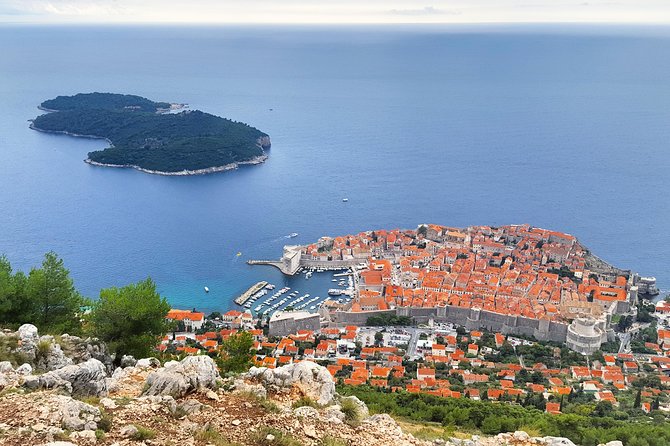
At about $33.61 per person, this tour is priced as an effective orientation plus interpretation package. You’re paying for a licensed guide who explains what you’re seeing while you walk between major landmarks, and you’re not stuck with a self-guided route that leaves you guessing.
Included:
- A licensed tour guide
- A mobile ticket
- The guided walking route through the Old Town highlights (plus the key monument stops mentioned)
Not included:
- City walls and other facilities
- City walls are 35 € per person
Here’s how I’d think about value. If you plan to do city walls anyway, you should factor that 35 € into your total. If city walls are not a priority for you, this tour still stands on its own because it gives you context for everything you’ll see outside the walls too, like Sponza, Rector’s Palace, and the cathedral.
Also note the tour size. Max 30 people is not tiny, but it is manageable. Smaller group dynamics usually means you can ask questions and get human answers, not just a blur of announcements.
Guide style, pacing, and the one risk worth planning for
This tour’s reputation is strong, with a very high recommendation rate and a top rating based on available feedback. The recurring theme is clear communication and an energetic explanation of Dubrovnik. Names you may see associated with the guide include Ines, and some reviews also reference Ynez.
What stands out in the good experiences is the balance. You get history facts plus local insights and practical recommendations. The pacing is also described as thoughtful, with time to absorb sights and take photos without feeling chased.
Now the reality check: there was at least one cancellation reported due to the guide becoming ill in extreme heat, with a full refund issued. That does not mean it happens often, but it does mean Dubrovnik weather is a real factor, and your plan should have some flexibility.
If you’re scheduling multiple things the same day, consider building in breathing room around the tour time. You’ll thank yourself later.
Who this tour suits best, and who might want a different option
This walk is a great match if you want a structured introduction to Dubrovnik without spending hours sorting out what’s important. It’s especially helpful if you like your sightseeing explained in plain language. You’ll also enjoy it if you care about how everyday life worked, because the aqueduct and fountain stop turns “old buildings” into “how people survived.”
You may want something else if:
- You already know the city well and want a slower, deeper dive into fewer sites.
- You mainly want sweeping views and long time on viewpoints, since this route is focused on historic interpretation rather than pure panorama time.
- You want city walls included as part of the same ticket, because they are an extra cost.
Should you book this Dubrovnik walking history tour?
Yes, you should book it if you want a high-value first step in Dubrovnik Old Town. Starting at Pile Gate, getting the Republic story through Rector’s Palace and the Sponza Palace, and then grounding it in water and reconstruction gives you a well-rounded picture in just 90 minutes.
I’d book it especially if you are tight on time and you want a guide to connect the dots. It also helps you plan smarter after the tour. Once you understand why places like Onofrio’s Fountain and Orlando’s Column matter, you’ll spot those stories again as you walk on your own.
If city walls are your top priority, do this tour anyway, then add the walls. Just make sure you budget the 35 € per person so there are no surprises.
Book ahead if you can. This experience tends to be reserved around 48 days in advance, which usually means popular slots can disappear.
FAQ
How long is the Dubrovnik walking history tour?
It runs for about 1 hour 30 minutes.
Where does the tour start?
The meeting point is Art Go’denBrsalje ul. 1, 20000, Dubrovnik, Croatia, near Pile Gate.
Is the tour in English?
Yes, the tour is offered in English.
What is included in the price?
A licensed tour guide is included, along with the guided walking experience. Tickets for the city walls and other facilities are not included.
Are city walls tickets included?
No. City walls tickets cost 35 € per person and need to be purchased separately.
How many people are in the group?
The tour has a maximum of 30 travelers.
Is a mobile ticket used?
Yes, you receive a mobile ticket.
Is there free cancellation?
You can cancel for a full refund up to 24 hours in advance of the experience start time.
Dubrovnik, the Longer Story


Walk It: More of Dubrovnik at Ground Level

Still on the Walls? Keep Reading
Freshly written up around Dubrovnik




Dubrovnik City Walls & Old Town Walks, top to bottom.
 ★ 4.8Dubrovnik: Old Town Walking TourFrom $235,174 reviews
 ★ 5.0Dubrovnik Discovery Old Town Walking TourFrom $244,458 reviews
 ★ 5.0Dubrovnik Old Town History Walking TourFrom $241,684 reviews
 ★ 4.8Dubrovnik: City Walls Early Morning or Sunset Walking TourFrom $291,523 reviews
 ★ 5.0Dubrovnik: Ancient City Walls & Wars Walking TourFrom $301,270 reviews
 ★ 5.0Dubrovnik Combo: Old Town & Ancient City WallsFrom $521,019 reviews
★ 4.9Dubrovnik: Old Town Walking TourFrom $23792 reviews
★ 5.0Dubrovnik Combo: Old Town & Ancient City WallsFrom $521,019 reviews
★ 4.9Dubrovnik: Old Town Walking TourFrom $23792 reviews
 ★ 4.8Dubrovnik: Old Town & City Walls Guided Tours ComboFrom $50697 reviews
Browse the lists this tour appears in