
REVIEW · DALMATIAN FOOD & KONOBA TASTINGS
Split Food Tour: Discover Split One Bite At A Time
Food and history fit together in Split. This one is built as a small-group tasting route through old town streets tied to Diocletian’s Palace.
I love that you get fed at five real local eateries, not just tiny samples. I also like that the guide connects what you taste to what you see, with stops placed for easy sightseeing.
One consideration: it is not set up for vegans or vegetarians, so if your diet is strict, you’ll want to message your needs right after booking.
In This Review
- Key Highlights You Should Know
- Split Food Tour: Why This Tasting Walk Works
- The 4-Hour Flow: Pacing, Group Size, and What You Will Do
- Entering Diocletian’s World on the Way to the First Bite
- Stop 1: Charcuterie Board That Sets the Dalmatian Flavor Baseline
- Stop 2: Black Risotto with Adriatic Cuttlefish Ink
- Stop 3: Pasticada with Gnocchi, Peka Bread, and Rakija
- Stop 4: Burek Snack Stop That Feels Like Real Street Food
- Stop 5: Lavender Gelato or Sorbet to End on a Sweet Note
- How Much Food You Get, and Why It’s Not Just Tiny Samples
- Price and Value: What $145.12 Buys You in Split
- Dietary Needs: What Works and What You Should Double-Check
- What Makes the Guide Part Matter, Not Just the Meal
- Who This Tour Suits Best
- Should You Book This Split Food Tour?
Key Highlights You Should Know
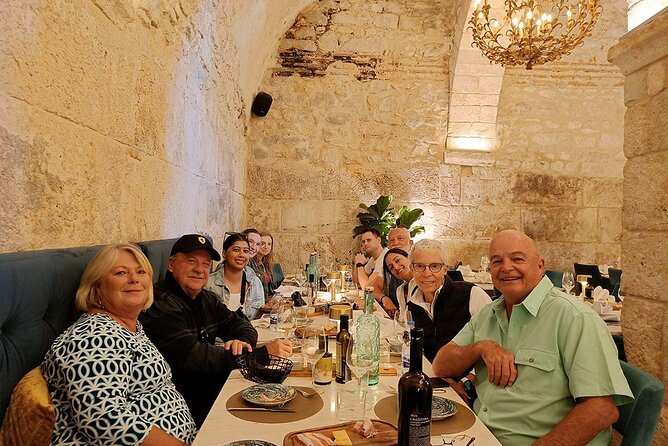
- Five local stops in 4 hours, with enough food to leave satisfied
- Diocletian’s Palace area in the mix, so you get context while you walk
- Rakija shot included, served with a proper Croatian meal stop
- Small group size (max 12) keeps the pace relaxed and questions easy
- Local guide storytelling, often with names you may see in reviews like Ivana, Dino, Marina, Tea, and Yvonne
- Take-home guidebook with ideas for the rest of your Split stay
More konoba tables and food walks nearby
- From Split: Krka Waterfalls, Food & Wine Tasting Tour★ 5.0 · 9,326 reviews
- From Split: Krka Waterfalls, Food & Wine Tasting Tour★ 4.9 · 6,598 reviews
- Split Food Tour: Discover Split One Bite At A Time★ 5.0 · 433 reviews
- Split History and Gastro Small-Group Tour with Food and Drinks★ 5.0 · 375 reviews
Split Food Tour: Why This Tasting Walk Works
Split has a talent for making history feel practical. You’re walking through streets shaped by Roman rule, then sitting down to eat dishes that still show those older influences in the flavors. This tour leans into that link, so the “why” behind the food makes the tastings more memorable than a list of items.
What I like about this setup is the timing. In about 4 hours, you cover multiple parts of the old town without feeling like you’re racing. And because it’s a small group, you’re not stuck listening from the back while everyone funnels through narrow streets.
You also get a simple, efficient structure: eat, listen, walk, repeat. It’s the kind of rhythm that helps you get your bearings fast if it’s one of your first activities in Split.
The 4-Hour Flow: Pacing, Group Size, and What You Will Do
Plan on a mid-day kind of window, roughly 4 hours. The tour is designed as a walking and sightseeing experience, and it ends back at the meeting point, so you’re not stranded across town.
The group is capped at 12 travelers, which changes everything. Small groups mean you hear the guide without straining, and you can ask food questions without the guide rushing to keep pace. It also tends to make the restaurant stops feel more personal, since you’re not constantly rotating tables like a conveyor belt.
You’ll be moving between stops around the old town area, so wear shoes you trust on cobblestones. The tour includes water throughout, which is a smart detail when you’re tasting multiple courses in one stretch.
Entering Diocletian’s World on the Way to the First Bite
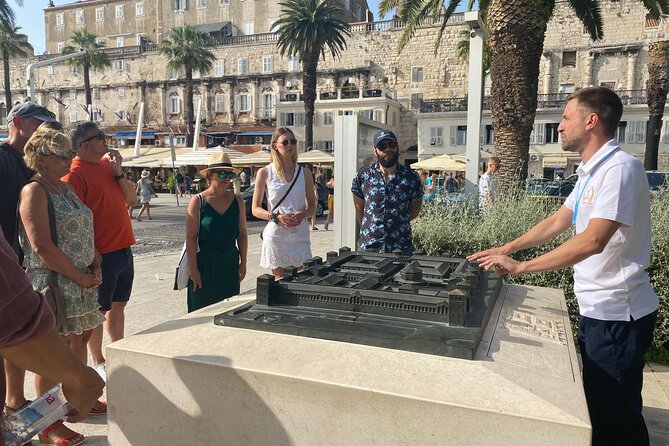
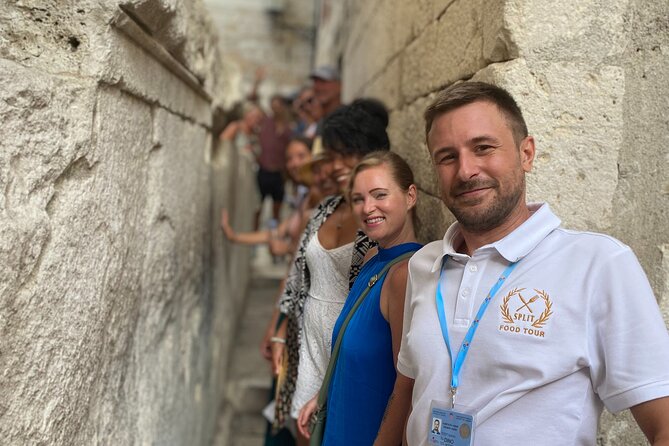
The tour starts by framing Split through the 1700-year-old Diocletian’s Palace and its UNESCO status. You don’t need a history degree to follow along. The guide uses what you see to set up what you’ll eat next.
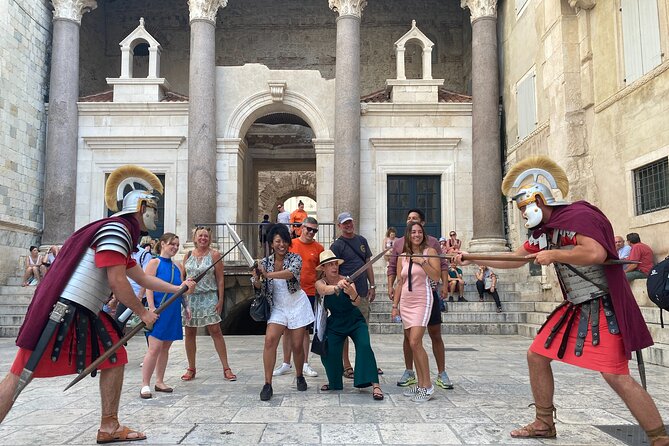
This is one of those experiences where the sightseeing feels earned. Instead of walking past landmarks and hoping it sticks, you get a quick story about how the area evolved, then you sit down to taste food shaped by local traditions.
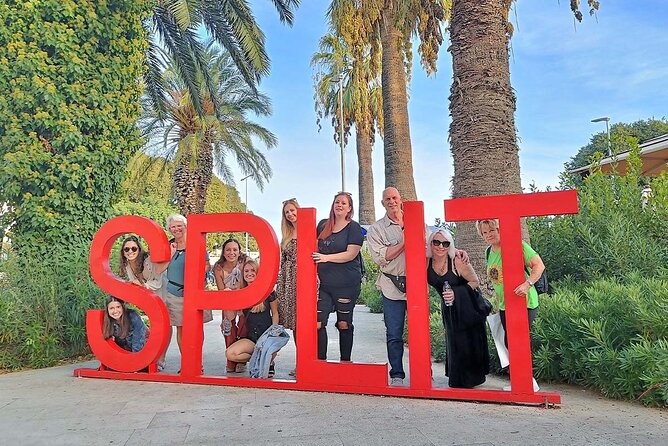
Photo opportunities show up along the route too. If you like getting a few good shots without staging your whole afternoon, you’ll probably appreciate this part of the format.
Stop 1: Charcuterie Board That Sets the Dalmatian Flavor Baseline
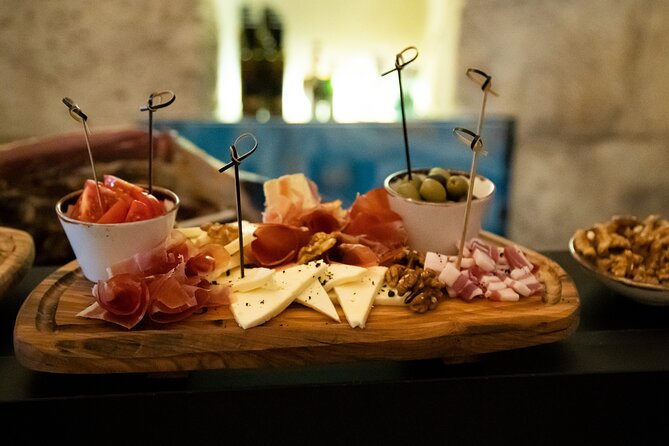
The first tasting is a charcuterie board designed to give you the local starting point. You’ll sample Dalmatian prosciutto and pancetta, plus cheese, olives, and a selection of salts served with home made bread and olive oil.
This is a great “orientation plate.” Prosciutto and pancetta tell you a lot about how the region handles salting and curing, and the olives and olive oil bring in that Mediterranean backbone you’ll keep encountering in Split. The salts add a fun twist because they nudge you to think beyond just taste, and notice how each bite changes.
Practical tip: since this is the early stop, start slow. Bread, olive oil, and cured meats can be very satisfying, and you’ll want energy for the seafood and the dessert later.
More eating and drinking we have done in Split
- Split: Blue Lagoon and 3 Island Cruise with Food and Drinks
★ 4.8 · 1,969 reviews - Krka National Park Tour with tour Guide & Wine tasting from Split & Trogir
★ 5.0 · 1,625 reviews - Split/Trogir: Krka National Park Day Trip with Wine Tasting
★ 4.7 · 925 reviews - Full-Day Catamaran Cruise to Hvar & Pakleni Islands with Food and free Drinks
★ 5.0 · 670 reviews - Dubrovnik Guided Group Tour with Ston Oyster tasting from Split & Trogir
★ 5.0 · 538 reviews
Stop 2: Black Risotto with Adriatic Cuttlefish Ink
Next comes the seafood stop, the one people often remember. You’ll try black risotto made with Adriatic cuttlefish, plus cuttlefish ink, served with local bread and olive oil.
This dish is bold on color and flavor. Ink risotto tends to taste earthy and savory, and it’s a good reminder that seafood cuisine in Croatia is not just about grilled fish. It also shows up in sauces, inks, and comfort-food textures.
A small thing to keep in mind: risotto can vary from kitchen to kitchen in how soft it feels. If you’re used to very creamy, super-smooth risotto, you might notice the texture is firmer than that style. Either way, it’s a meaningful taste of what locals cook with what’s around them.
Stop 3: Pasticada with Gnocchi, Peka Bread, and Rakija
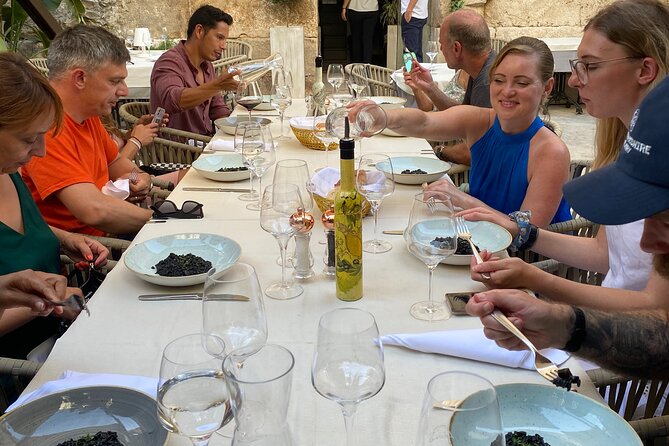
Then you move into the meat course: pasticada, a Dalmatian beef pot roast dish, served with home made gnocchi and peka bread, plus a shot of rakija.
This is where the tour balances the salt-and-ink intensity with a comforting, hearty meal. Pasticada is the kind of dish you eat when you want depth, and the gnocchi plus bread make it feel complete. You’re also getting the alcohol component that’s part of the local drinking culture, not just a token sip.
Rakija matters here. It’s included, so you can plan to try it without hunting for a bar or extra purchase. If you do drink, pace yourself. After several tastings, you’re not racing to finish. You’re here to enjoy the flavors and the stories.
Stop 4: Burek Snack Stop That Feels Like Real Street Food
Mid-tour snacks are sometimes just filler. Here, burek is used as a proper cultural stop. You’ll get thin, flaky dough with different filling options.
Burek works because it’s portable and social. It’s the kind of food people grab and share, and that makes it a nice contrast to the sit-down feeling of the first three courses. It also gives you a breather between heavier tastes.
If you’re the type who loves how street food shows daily life, this stop is a strong one. You’ll get that everyday texture and flavor that doesn’t always show up in more formal restaurant meals.
Stop 5: Lavender Gelato or Sorbet to End on a Sweet Note
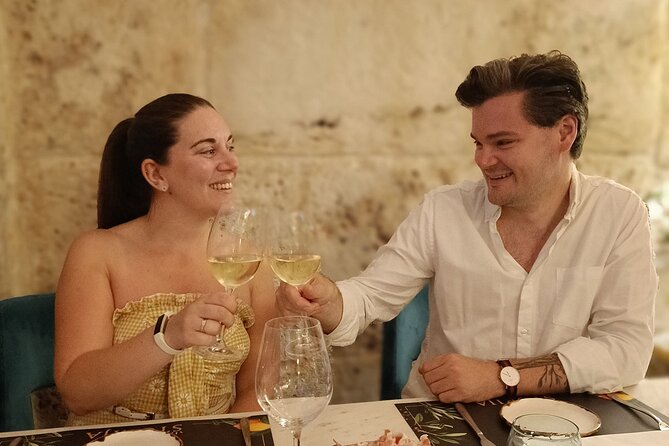
The last stop is dessert: gelato or sorbet, with flavors depending on availability. If it’s on offer, the guide strongly recommends lavender.
Dessert on a food tour is usually where you decide if you had a good experience or just a full one. Lavender is a smart way to end, because it’s distinctive without being chaotic. It feels local, and it also refreshes your palate after salty and savory dishes.
Even if lavender isn’t available on your date, you’ll still finish with a cold, sweet finish that makes the whole route feel like a complete meal rather than disconnected bites.
How Much Food You Get, and Why It’s Not Just Tiny Samples
The tour is built around the idea that nobody leaves hungry. With five different establishments and a mix of board-style food, sit-down courses, a snack, and dessert, it’s designed to fill you up like a real mid-day meal.
The pacing is part of the value. You’re not getting overwhelmed all at once. Instead, each stop plays a role: cured meats prime your palate, risotto shifts you toward seafood depth, pasticada brings comfort and heft, burek adds street-food crunch, and dessert cleans it all off.
If you’re planning other activities the same day, you’ll still have time. But you might want to avoid booking a dinner-heavy plan immediately after, because this tour can easily leave you satisfied for hours.
Price and Value: What $145.12 Buys You in Split
At $145.12 per person, this isn’t the cheapest thing on Split’s menu. But it’s priced like a full experience: five paid food stops, a local licensed guide, history and walking time, water during the tour, and a rakija shot included.
You’re also getting a take-home guidebook, which is a quiet but real form of value. If you use it, it can turn this tour into something that keeps paying off after the tour ends, by helping you choose where to eat and what to do next.
Where the value really shows is in the access angle. The tour is designed around eateries frequented by locals. You’re not just trying to sample food, you’re learning where people actually go, which can save you time and guesswork.
Dietary Needs: What Works and What You Should Double-Check
This tour is not suitable for vegans and it’s also not set up for vegetarians. That matters because several core stops are built around meat and seafood.
The good news is that the experience can accommodate many restrictions if you communicate them after booking. You can request support for things like nut allergies, shellfish allergies, pescatarians, and gluten-free diets. That flexibility can be a big deal when you’re dealing with real allergy needs instead of just personal preference.
My advice: if you have restrictions, message them promptly. Don’t wait until the morning of. The more lead time you give, the more likely you’ll get a comfortable, well-matched substitution instead of a last-minute patch.
What Makes the Guide Part Matter, Not Just the Meal
In Split, a lot of the charm is in the stories. This tour leans on a local licensed guide who connects what you taste to the city around you. In reviews, guides like Ivana, Dino, Marina, Tea, and Yvonne show up often, and the consistent theme is that they mix food talk with city context in a way that’s easy to follow.
The best part is that the guide also helps you understand your bearings. When the history you hear connects to landmarks you can actually see, it sticks. And when a guide explains the dishes in plain language, you understand what you’re tasting instead of just checking items off a list.
Who This Tour Suits Best
This is ideal if you want a single activity that hits multiple goals:
- You want history and food together without adding a second tour.
- You like restaurants that feel local, not just high-traffic.
- You’ll enjoy walking in old town streets and stopping often for bites.
If you’re a solo traveler, the small group size makes it easier to feel included rather than clustered with strangers. If you’re a couple, it’s also a nice shared afternoon because you’ll experience the same five stops and talk about them as you go.
If you’re strictly vegetarian or vegan, look elsewhere. The structure is built around meat and seafood courses, and trying to retrofit the menu may not work well.
Should You Book This Split Food Tour?
Yes, I’d book it if you want a 4-hour, five-stop experience that feeds you and also teaches you how Split’s history shows up on a plate. The price is high enough that it should feel like a real meal, and this one is designed for that.
I’d skip it if your diet is vegan or vegetarian, or if you hate walking and want a purely seated experience. And if you already booked a heavy history tour for the same time window, you may get some overlap in what you learn about the Diocletian area. Still, the food context can make the stories feel worth it all over again.
If you want to leave Split with a handful of dishes you can name, plus ideas for where to eat next, this is a strong choice.
What Lands on the Table in Split


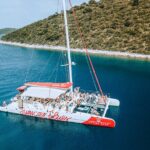
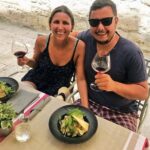
The Split Table, More of It
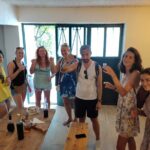
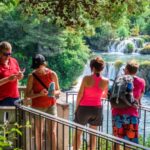
Konoba Tables Around Split

Freshly written up around Split




Dalmatian Food & Konoba Tastings, top to bottom.
 ★ 5.0From Split: Krka Waterfalls, Food & Wine Tasting TourFrom $459,326 reviews
★ 4.9From Split: Krka Waterfalls, Food & Wine Tasting TourFrom $446,598 reviews
★ 5.0From Split: Krka Waterfalls, Food & Wine Tasting TourFrom $459,326 reviews
★ 4.9From Split: Krka Waterfalls, Food & Wine Tasting TourFrom $446,598 reviews
 ★ 5.0Krka Waterfalls, Food & Wine Tasting, Boat Ride & Zadar Old TownFrom $52420 reviews
 ★ 5.0Dubrovnik Old Town Food Tour: Small-Group ExperienceFrom $169419 reviews
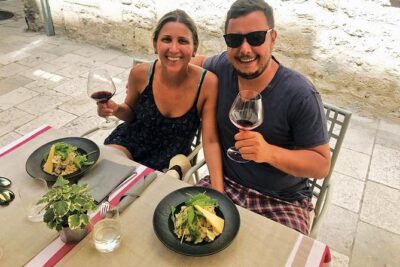 ★ 5.0Split History and Gastro Small-Group Tour with Food and DrinksFrom $139375 reviews
 ★ 5.0All-inclusive Gastro Blue Cave Tour from SplitFrom $247317 reviews
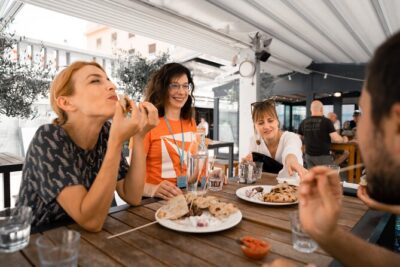 ★ 5.0Taste Zagreb Food TourFrom $106256 reviews
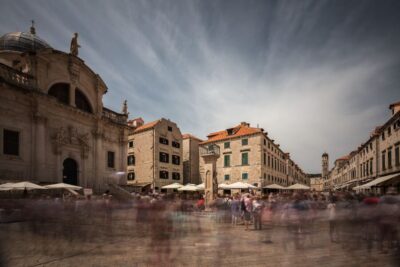 ★ 4.9Dubrovnik Gastronomy: 3-Hour Food and Wine TourFrom $170249 reviews
Browse the lists this tour appears in