

REVIEW · CITY TOURS
Split Tour by Electric Tuk-Tuk: Top City Highlights
Split can feel big when you only have a short port day. This electric tuk-tuk tour is built to help you see more than a walking route, without the hassle of buses on tighter roads.
I especially like the small-group size and how it keeps the pace flexible, so your guide can point out the stuff you’d otherwise miss. Another win is the mix of classic waterfront stops, hilltop viewpoints, and quick beach breaks, so you get the full Split feeling in under two hours.
One thing to consider is that the stops are mostly short photo and orientation moments, not long museum hours. If you want deep time inside major sights, you may need to plan a follow-up on your own.
In This Review
- Key things to know before you go
- Electric Tuk-Tuk in Split: why this beats a bus or just walking
- Timing and route style: how to get real value from 1.5 to 2 hours
- Riva Harbor and St. Francis: start with Split’s postcard center
- Western Coast promenades and the ACI Marina: the sea-luxury side of Split
- Zvončac and Sustipan: parks with sea views and a calmer pace
- Archaeological Museum and the Meštrović Gallery: quick culture hits, not a marathon
- Beach stops near Marjan: Obojena Svjetlost, Villa Dalmacija, and Kasjuni
- Poljud Stadium and Teraca Vidilica: architecture and sea-level views
- Prokurative and Republic Square: finish where Split feels most alive
- Who should book this Split electric tuk-tuk tour (and who should skip it)
- Tips to make your ride smoother (and your photos better)
- Should you book the Split Tour by Electric Tuk-Tuk?
- FAQ
- How long is the Split tour?
- Is pickup available for this tour?
- What language is the tour offered in?
- What is the group size?
- Are tickets, food, and drinks included?
- What if the weather is bad?
- What is the cancellation deadline for a full refund?
Key things to know before you go

- Electric tuk-tuk access to spots bigger vehicles usually cannot reach
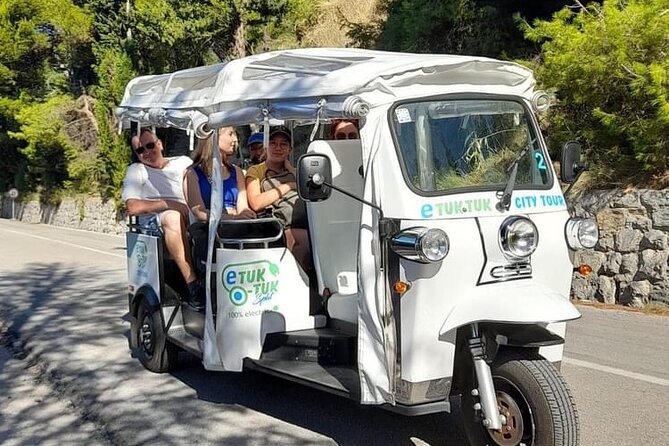
- Small group (max 8) means more back-and-forth and easier photo stops
- Flexible timing options, with departures from morning to evening
- A tight highlight route that mixes harbors, parks, viewpoints, and beaches
- Tickets and meals not included, so bring a plan for museum or gallery entry
More city-scale tours around Split
- Split: City Highlights Electric Tuk-Tuk Tour★ 4.9 · 1,317 reviews
- Split Game of Thrones Tour: City of Dragons★ 4.7 · 556 reviews
- Eco City Tour Split★ 5.0 · 538 reviews
- City Bike Tour of Split★ 5.0 · 331 reviews
Electric Tuk-Tuk in Split: why this beats a bus or just walking
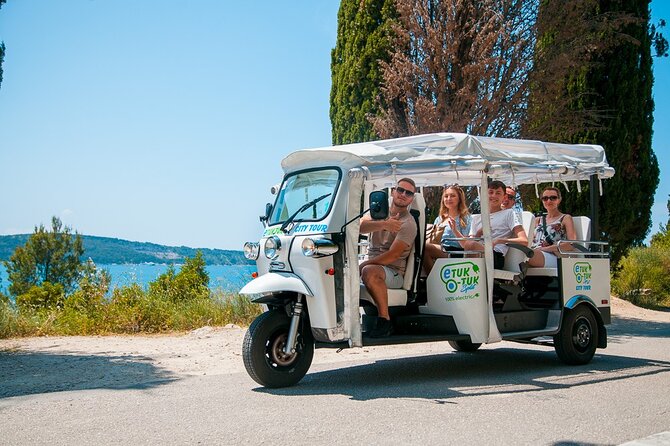
Split has a way of making you rethink your transportation. Some areas are easy on foot, but the moment you want both the waterfront and the hills, walking alone can eat up your time fast. A tuk-tuk solves that by getting you across town without forcing you into long travel stretches.
This is also a calmer ride than you might expect. The vehicles are electric, which usually means less noise, less drama at stops, and a more relaxed vibe overall. And because it’s set up for city roads, you can get to viewpoints and coastal edges that feel like they’d be annoying to reach by bus.
I like the practical promise here: you cover more ground than a walking tour, while still getting personal attention from your guide. Guides in this style often share stories that connect the landmarks, so the ride feels like an orientation you can build on later.
Timing and route style: how to get real value from 1.5 to 2 hours
The whole tour runs about 1 hour 30 minutes to 2 hours. That speed is the point. You are not buying a slow, museum-only experience. You are buying a curated highlights circuit that helps you choose your next moves.
If you have limited time, I’d treat it like a first-day reset. One of the smartest ways to use this kind of tour is to do it early in your visit, then come back later for the places that called your name. Guides like Luca and Emir are the kind that make that second visit easier, because they point out what is worth your extra time.
Also, plan your expectations around photo stops. Many locations are quick stops where you get the view, a short explanation, and time to move to the next spot. The one longer moment is typically around Teraca Vidilica, where you can pause and enjoy the scenery.
Riva Harbor and St. Francis: start with Split’s postcard center
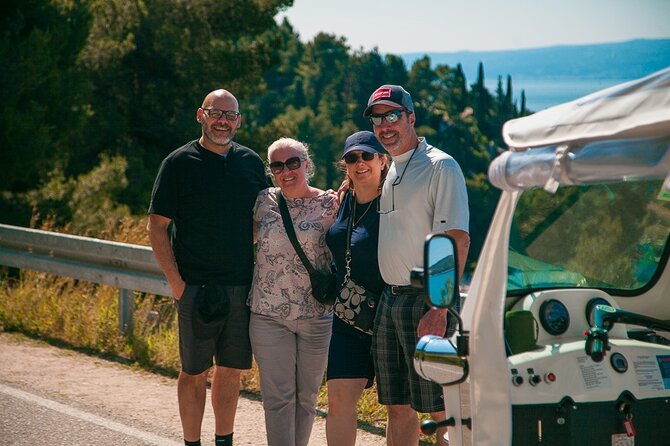
Riva is the classic Split waterfront promenade, lined with palm trees, cafes, and people doing that slow Mediterranean thing. Even if you’ve seen photos, it helps to stand here and get your bearings. Riva is also a natural launch point because it connects you to the old-town fabric and the sea-front rhythm of the city.
From there, the tour shifts to a quieter, more historical mood with the Church and Convent of St. Francis at the western end of the Riva promenade. This is a 13th-century site with a blend of Gothic and Baroque features. What I like about this stop is the contrast: you go from the lively harbor walkway into something hushed, with historic altars, paintings, sculptures, and even tombs of prominent figures.
Practical note: because this is a contemplative site, it’s a good place to slow down for a few minutes and take a breather from sun and crowds. It can also be an easy way to understand how Split’s layers of culture sit right next to everyday life.
Western Coast promenades and the ACI Marina: the sea-luxury side of Split
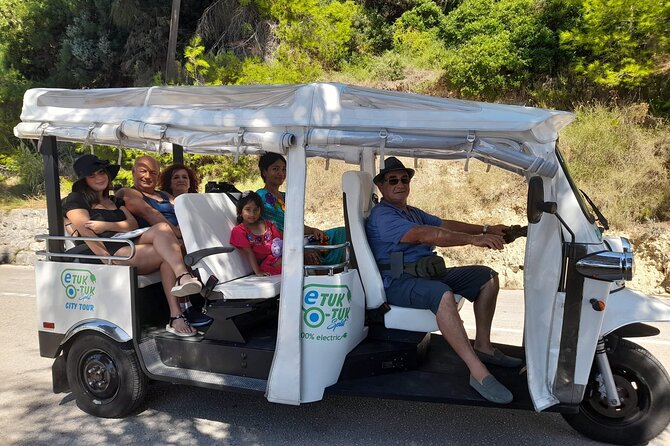
Next comes Zapadna Obala (the Western Coast), a sleek modern waterfront stretch with wide pathways and views over yachts at the marina. This part of the tour works for two types of travelers: the ones who love architecture and design, and the ones who just want the best sea photos without hunting.
The scenery here also gives you a different perspective of old-town Split. You can look toward the harbor and hills while walking along a cleaner, more spacious promenade. And if you time it for later in the day, it’s a strong area to catch soft light across the water.
Then you roll to ACI Marina Split, right by Marjan Hill. It’s a practical place as much as a scenic one, with modern facilities and easy access to the coastline. Even if you never board a boat, it helps you feel like Split is more than old stone and street corners. It’s also a gateway to the islands.
One drawback to keep in mind: some of these stops are mainly visual. If you’re hoping to stroll for an hour, this section is more about orientation and photos than long wandering.
- Split: Krka Waterfalls Trip with Boat Cruise and Swimming
★ 4.8 · 10,519 reviews - From Split: Krka Waterfalls, Food & Wine Tasting Tour
★ 5.0 · 9,326 reviews - Blue cave, Mamma Mia and Hvar, 5 islands speedboat tour
★ 5.0 · 7,150 reviews - From Split: Krka Waterfalls, Food & Wine Tasting Tour
★ 4.9 · 6,598 reviews - Split/Trogir: Blue Cave, Mamma Mia, Hvar and 5 Island Tour
★ 4.6 · 6,320 reviews
Zvončac and Sustipan: parks with sea views and a calmer pace

Split’s best breaks from traffic and crowds often sit in parks. Two stops do that well here.
Zvončac is a green pocket near the center, not far from the Riva promenade. It has shaded paths, Mediterranean plants, and open spaces that feel easy for a short break. There’s also a small playground, so it can be a pleasant moment for families. If you want a tiny nature reset between bigger sights, this works.
Then you head toward Sustipan, a park near the marina with dramatic sea views. Sustipan sits in a place that used to be tied to an old monastery and cemetery, so it has a quiet, reflective atmosphere. It’s the kind of stop that makes you understand why locals schedule weddings and romantic moments outdoors here.
This section is where you often feel the benefit of the tuk-tuk. The stops are close enough to chain together, but far enough that you’d spend time walking uphill or cutting through streets without a plan.
Archaeological Museum and the Meštrović Gallery: quick culture hits, not a marathon
Split has two standouts that many first-timers rush past. This tour slows down just enough to cover them.
The Archaeological Museum in Split (founded in 1820) is the oldest museum in Croatia. You can expect artifacts spanning prehistoric, Roman, early Christian, and medieval periods. The highlights often include items tied to Salona, which is one of Croatia’s biggest ancient sites, along with Roman-era sarcophagi and inscriptions.
This museum stop can be a great choice if you want context for the city fast. It connects the story of Split to the wider region, so later you see Roman remains or early-Christian clues with better eyes.
Then comes the Meštrović Gallery in a villa setting surrounded by gardens. Ivan Meštrović is Croatia’s famous sculptor, and the gallery gives you access to sculptures, drawings, and architectural designs. The outdoor garden areas matter here because the views over the Adriatic are part of the experience, not an afterthought.
Important practical point: the tour does not include tickets. So if you plan to go inside museums or galleries during your visit, budget for entry costs separately.
Beach stops near Marjan: Obojena Svjetlost, Villa Dalmacija, and Kasjuni
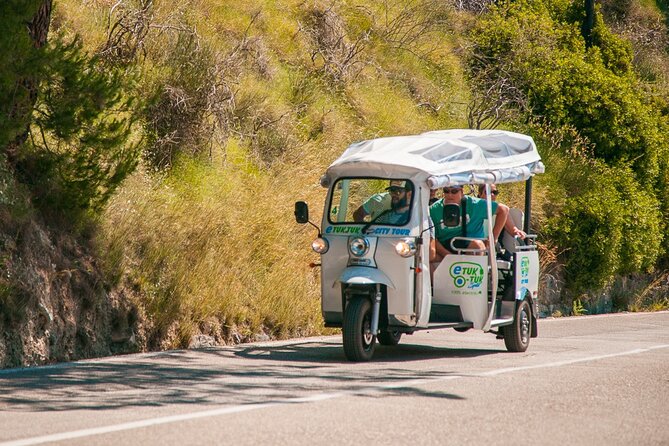
Marjan Peninsula is where Split’s coastline turns into a calmer, more natural playground. This tour touches three beach-related stops, and each has a different flavor.
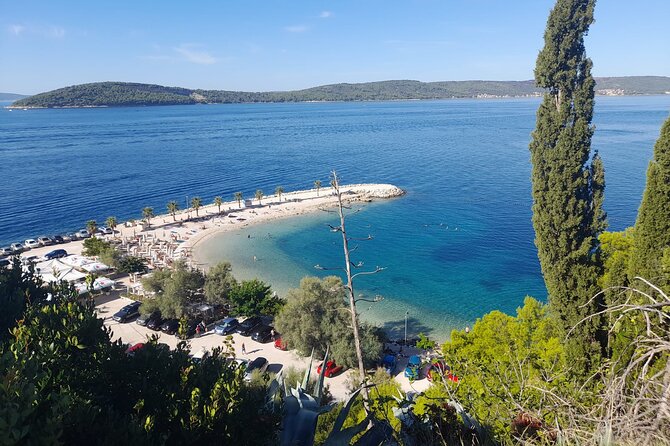
First is Obojena Svjetlost beach, described as a peaceful cove with crystal-clear water and a pebbled shoreline. It’s the kind of spot where you get that postcard water look without needing a long boat ride.
Then there’s Villa Dalmacija, a historic seaside property known for privacy, gardens, and access to a private beach. Even if your time there is more about views than a full beach session, it’s still a memorable change in pace. Think terrace and sea atmosphere, not a chaotic public beach.
Finally, you reach Kasjuni Beach, a pebble beach set in pine trees, with shade and a relaxed feel. It’s also set up for convenience with loungers, umbrellas, and a beach bar. The water can be inviting for swimming, especially if you get there on a warmer day, and the shallow areas are typically better for easier dips.
One honest consideration: beach stops in a highlight tour tend to be time-limited. If you want real swim time, pack for it. Sunscreen and a quick-dry towel can be the difference between a “nice view” stop and an actual beach break.
Poljud Stadium and Teraca Vidilica: architecture and sea-level views
Split is not only about old stone. It also has modern identity, and Poljud Stadium is a perfect example.
Poljud Stadium was built in 1979 for the Mediterranean Games and is home to Hajduk Split. The stadium’s shell-like design makes it a standout, and it’s also a photographer’s dream because the curves frame the surrounding sea and hills. If you’re aiming for the best light, try for a later time slot when the sun softens the shadows.
After that, the tour shifts to Teraca Vidilica, a cafe and restaurant on Marjan Hill with panoramic city and Adriatic views. This is where the ride turns into a chance to slow down. You can grab a drink or something light, and just take in the bigger view of Split. It’s not just scenic, it also helps you understand how the city is laid out.
If you’re the type who likes to plan later, this is a smart stop. From here, you can often see what neighborhood to target next for dinner or an evening walk.
Prokurative and Republic Square: finish where Split feels most alive
The ride ends in the heart of the city at Republic Square, also called Prokurative. It’s a neo-Renaissance square framed by elegant colonnades and historic buildings with views toward the sea. The inspiration is often compared to St. Mark’s Square style, though the feel is distinctly local.
This final stop is useful because it connects your tuk-tuk route back to your next move. If you want to walk toward Diocletian’s Palace area afterward, or simply sit for coffee and people-watch, you are in the right zone to do it.
It’s also a great place to regroup. After a fast highlight circuit, your eyes are usually tired, and a comfortable square with cafes and open space helps you reset.
Who should book this Split electric tuk-tuk tour (and who should skip it)
I’d recommend this tour if you:
- Have a short time in Split, especially on a cruise port schedule
- Want a fast first pass that helps you choose what to revisit later
- Like variety, not just old-town streets
- Prefer a relaxed small-group feel instead of a crowded bus
It’s also friendly for people who may not want to do a lot of uphill walking. The tuk-tuk helps you avoid the “now I’m stuck sweating uphill” problem that can happen on Marjan routes.
I’d be more cautious if you:
- Want long, detailed museum time as the main goal
- Plan to swim for hours at the beaches
- Need a very strict sequence of stops and long duration at each location
If your ideal day is deep-dive sightseeing, this tour is still useful, but you should treat it as an orientation tool, then build on it.
Tips to make your ride smoother (and your photos better)
A few small choices can make this tour feel way better:
- Dress for sun and quick changes. You’ll be out and about, then you’ll hop between shaded parks and open waterfront views.
- Bring something for beach moments if you actually want to swim. The route includes beaches, even if time is limited.
- Wear comfortable shoes. Even with tuk-tuk travel, you still walk a bit at each stop.
- Ask your guide for the best photo angle. Different guides lean into different viewpoints. In past rides, guides like Lovre, Tony, Marino, Ivan, Marko, and Amar have been noted for making photo moments easy, not awkward.
- If you’re doing the tour early, you can map out a walking plan afterward. It’s a great combo when you pair this with extra time around Diocletian’s Palace.
Also, Split streets can be bumpy. Even in an electric tuk-tuk, expect some road shake. It’s part of the fun, but it helps to sit back, relax, and enjoy the views.
Should you book the Split Tour by Electric Tuk-Tuk?
If you want a smart, time-efficient way to see Split’s highlights, I think this is a strong buy. The small-group format and the ability to reach places beyond what buses do make it feel genuinely practical. You get waterfront scenes, quieter parks, a couple of major cultural stops, and Marjan viewpoints in a single outing.
Book it when you need a fast start, especially if it’s your first or second day and you want to decide what to revisit. Skip it only if you are chasing long museum hours or a full beach day. For most visitors, this is a fun way to get your bearings fast, then turn your remaining time into something more personal.
FAQ
How long is the Split tour?
It runs about 1 hour 30 minutes to 2 hours (approx.).
Is pickup available for this tour?
Pickup is offered. You can also arrange a return drop-off at the cruise ship if you let the operator know in advance.
What language is the tour offered in?
The tour is offered in English.
What is the group size?
This tour has a maximum of 8 travelers.
Are tickets, food, and drinks included?
No. Tickets, food, and drinks are not included.
What if the weather is bad?
The experience requires good weather. If it is canceled due to poor weather, you will be offered a different date or a full refund.
What is the cancellation deadline for a full refund?
Free cancellation is available up to 24 hours in advance of the experience start time for a full refund.
City-Scale Tours in Split




Freshly written up around Split



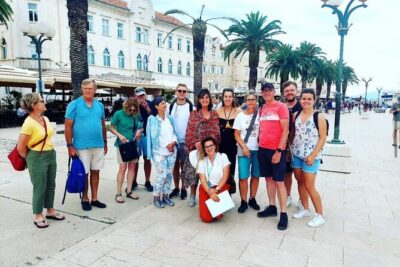
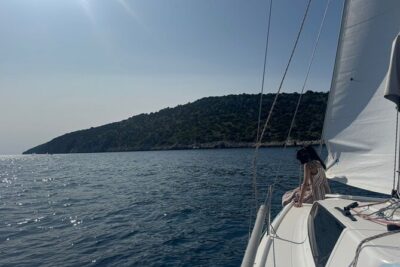
City Tours, top to bottom.
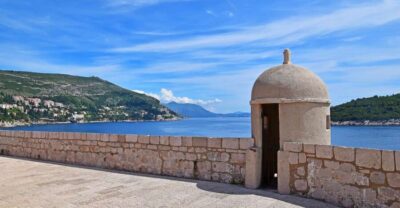 ★ 4.8Dubrovnik: City Walls Early Morning or Sunset Walking TourFrom $291,523 reviews
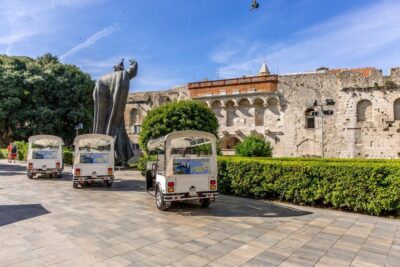 ★ 4.9Split: City Highlights Electric Tuk-Tuk TourFrom $501,317 reviews
 ★ 5.0Dubrovnik: Ancient City Walls & Wars Walking TourFrom $301,270 reviews
 ★ 5.0Dubrovnik Combo: Old Town & Ancient City WallsFrom $521,019 reviews
 ★ 4.9Zagreb: Small Group Walking Tour City Center and WW2 TunnelsFrom $23895 reviews
 ★ 4.9Zagreb: City and WWII Tunnels Walking TourFrom $23845 reviews
 ★ 3.7Hop On Hop Off Panoramic bus – Zagreb City TourFrom $25769 reviews
 ★ 4.8Dubrovnik: Old Town & City Walls Guided Tours ComboFrom $50697 reviews
Browse the lists this tour appears in