
REVIEW · ZAGREB CITY & UPPER TOWN TOURS
Zagreb: Restaurants, Food & Old Town Walking Tour
Your stomach leads the way in Zagreb. This small-group afternoon walk strings together Old Town landmarks and restaurant stops, with Croatian wine and rakija tastings along the way. I like that the group maxes at 15, which keeps the vibe social and questions actually get answered. I also like that the route is built around several restaurant tastings, so you end up properly fed without hunting for dinner plans.
The tradeoff is walking over hilly ground with cobblestones and stairs. If you want flat, no-effort sightseeing, this might feel like more movement than you expected.
In This Review
- Key highlights worth showing up for
- Zagreb food as a walking itinerary (and why it feels efficient)
- Ban Jelačić Square and European Square, your orientation in 15 minutes
- Restaurant stop 1 at Ul. Augusta Cesarca 2: Istrian cold bites and wine
- Dolac Market area: where Zagreb shops for flavor
- Restaurant stop 2 at Dolac 2: warm appetizers from Zagreb region
- Tkalčićeva Street and the Stone Gates, old defenses meet daily life
- Zagreb Cathedral, St. Mark’s Square, and Gradec’s defense tower
- Uspinjača funicular to Strossmayer promenade: the view you walk for
- Restaurant stop 3 at Mesnička ul. 6: the Zagreb and Zagorje main dish
- Tunnel Grič and the Bloody Bridge, history with a dark edge
- Restaurant stop 4 at Skalinska ul. 5: the dessert surprise and dessert wine
- Price and value: why $107.68 can work for the right traveler
- Who this tour suits best, and who should think twice
- Should you book this Zagreb food and Old Town walk?
- FAQ
- What is included in the Zagreb restaurants, food, and old town walking tour?
- How long is the tour and when does it start?
- How much walking is involved?
- Is there a vegetarian option?
- Is there a gluten-free menu?
- What group size should I expect?
Key highlights worth showing up for

- Four restaurant stops with food built around regional Croatian flavors, plus wine pairings
- Ban Jelačić Square to Gradec views in one flowing circuit, not a scatter of stops
- Dolac Market for that classic Zagreb food-market atmosphere since 1930
- Iconic landmarks on the way: Stone Gates, Zagreb Cathedral, St. Mark’s Square, and more
- Rakija and dessert wines so you taste beyond the usual beer-and-salad tour
- Max 15 people for a more personal tour pace and easier conversations
More Zagreb walks we have reviewed
- From Zagreb: Plitvice & Rastoke Guided Day Trip with Ticket★ 4.9 · 2,955 reviews
- Zagreb: Rastoke & Plitvice Lakes Guided Tour with Ticket★ 4.9 · 1,897 reviews
- Best of Zagreb with the WW2 Tunnels★ 5.0 · 973 reviews
- Plitvice Lakes with Ticket & Rastoke Guided Tour from Zagreb★ 5.0 · 966 reviews
Zagreb food as a walking itinerary (and why it feels efficient)
A good food tour should do two things at once: teach you how locals think about eating, and also make your time efficient. This one hits both. You get a guided stroll through Zagreb’s key neighborhoods while multiple restaurants keep feeding you along the way, so the day never turns into that awkward stage of, Now what do we eat?
The timing also helps. Starting at 4:00 pm means you’re catching late-day light as you head toward the old core, and you’ll likely finish with plenty of energy left for an evening stroll or one last drink on your own.
Group size matters here, too. With a maximum of 15, you get more interaction with the guide, and it’s easier for the group to stay together when the route turns steep or slows for photos.
Ban Jelačić Square and European Square, your orientation in 15 minutes
You begin at Ban Jelačić Square, which locals also call Jelačić plac. It’s the heart of events and day-to-day life, and it sits under the old cores of Kaptol and Gradec. Even if you’ve only just arrived, this is where Zagreb starts to make sense: not as a museum city, but as a city with a rhythm.
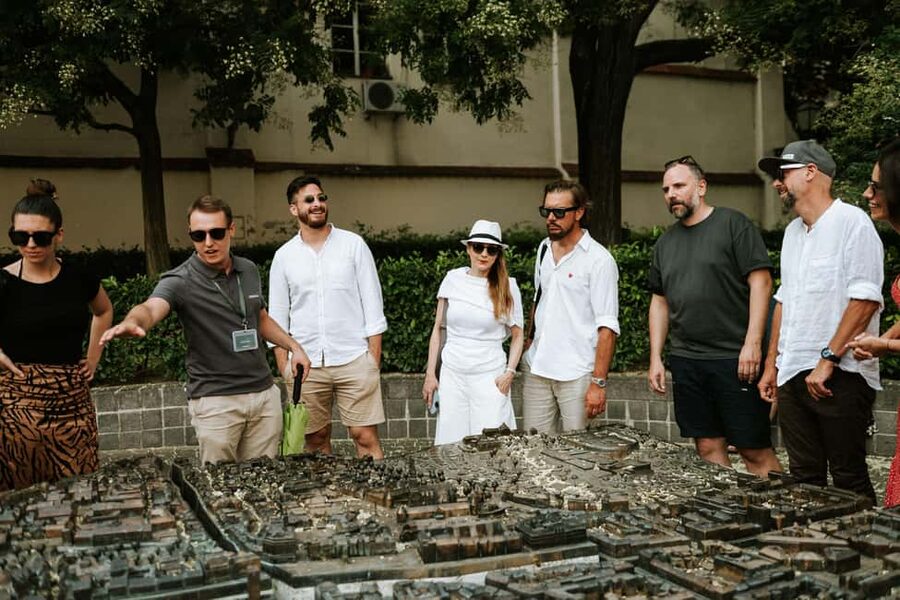
After a brief walk, you reach European Square, overlooked by the cathedral. It’s also the kind of place that hosts outdoor events, including craft markets and DJ sets. One fun touch is a miniature model of Zagreb, showing major locations and street layout. It’s the sort of thing that helps you connect the dots as you move uphill later.
Restaurant stop 1 at Ul. Augusta Cesarca 2: Istrian cold bites and wine
The first meal stop sets the tone: a cold appetizer tied to the Istrian region. You’ll learn what Istra is known for, especially when it comes to regional eating habits and what locals pair with those flavors. Then you’ll taste the dish alongside wine from the region.
Why this works well at the start: cold appetizers are easy to enjoy while everyone is still finding their footing on the walk. It’s also a smart way to introduce Croatian regional variety early, instead of saving it for later when you might feel too full to pay attention.
Practical note: this is a walking tour, so keep your water handy. Some stops are indoors, some are on the move. Being hydrated makes the whole evening feel smoother.
Dolac Market area: where Zagreb shops for flavor

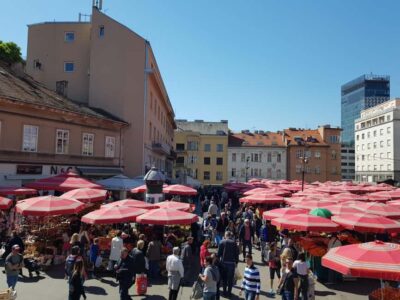
Between restaurant stops, you’ll head to Dolac Market, one of Zagreb’s most visited food markets since 1930. What I like about Dolac is that it gives you both textures of everyday Zagreb food culture: a traditional open market feel, plus a sheltered section right beside it.
Dolac is one of those places that turns your meal tour into a real sense-of-place experience. You see how vendors present produce, and you get a reminder that Zagreb eats locally, seasonally, and with pride.
Even if you do not plan to shop, it’s worth looking around. This stop helps you understand why the restaurants you’ll visit later are able to serve flavors that feel specific, not generic.
More Zagreb covered at walking pace
- Zagreb: Small Group Walking Tour City Center and WW2 Tunnels
★ 4.9 · 895 reviews - Zagreb: City and WWII Tunnels Walking Tour
★ 4.9 · 845 reviews - Walking tour of Zagreb
★ 5.0 · 383 reviews - Zagreb Small Group Guided Walking Tour with WW2 Tunnels
★ 5.0 · 380 reviews - Zagreb: Restaurants, Food & Old Town Walking Tour
★ 5.0 · 191 reviews
Restaurant stop 2 at Dolac 2: warm appetizers from Zagreb region
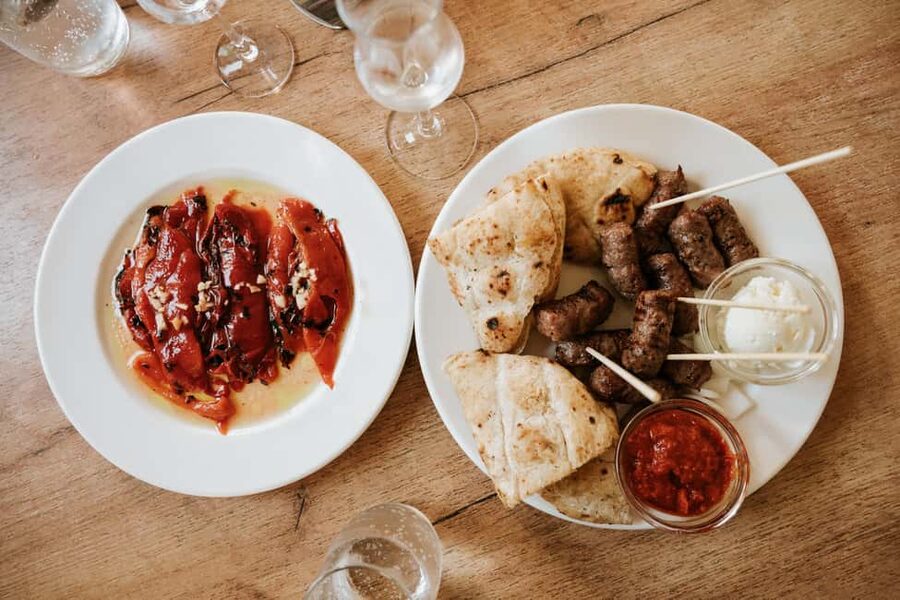
Next comes warm appetizers at Dolac 2, focused on flavors from the Zagreb region. This is where your belly starts to catch up with the history lesson you’ve been getting on the move. The tastings are meant to keep you comfortable for the rest of the tour, especially as the route climbs.
Warm plates after the market also make sense in a practical way. By now you’ve walked long enough that something hot and filling feels like a reset, not just another bite.
You’ll also keep tasting drinks and wine pairings, so the experience stays anchored in food and not just sightseeing with snacks.
Tkalčićeva Street and the Stone Gates, old defenses meet daily life
After Dolac, you move through Tkalčićeva Street, often described as Zagreb’s liveliest street. It’s a mix of cafes, smaller restaurants, traditional shops, and boutiques, which makes it feel like Zagreb’s present tense. You’re not just walking through monuments. You’re walking through where people actually go.
Then you reach the Stone Gates, one of Zagreb’s most important monuments. They originally served as part of the defense system in the 13th century, and today they’re also associated with faith and a quieter atmosphere where people may pray and light candles. It’s a noticeable mood shift from the earlier street energy.
This stop is a good reminder of something I always look for in Old Town walking tours. The best ones show you how a city’s past isn’t sealed behind glass. It’s still used, still meaningful, still part of the daily flow.
Zagreb Cathedral, St. Mark’s Square, and Gradec’s defense tower

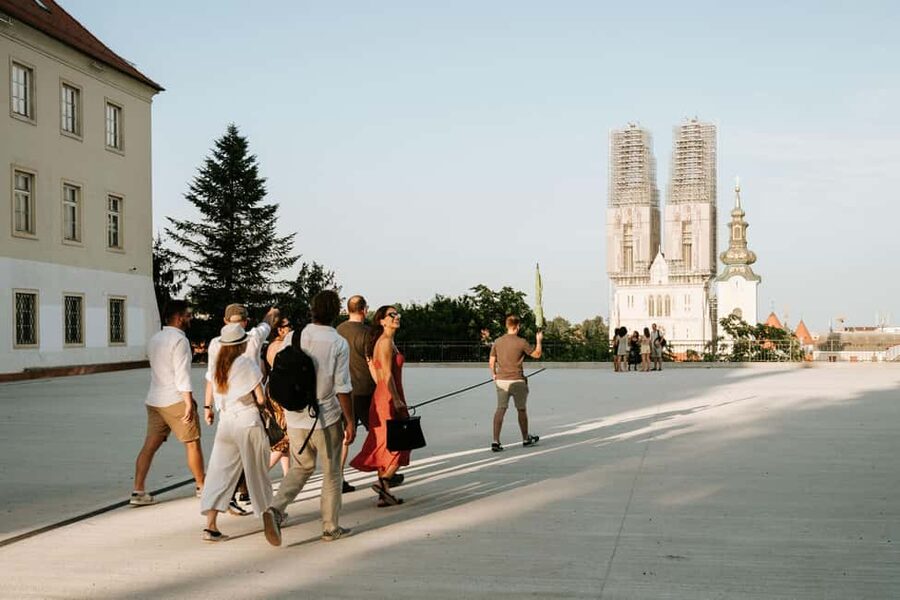
You then visit Zagreb Cathedral, a Roman Catholic church in Gothic style and the second tallest building in Croatia. Its two spires are visible from different parts of the city, which is helpful for orientation when you’re later hunting views. There’s also a treasury housing important religious documents and items, so even the building has layers beyond the facade.
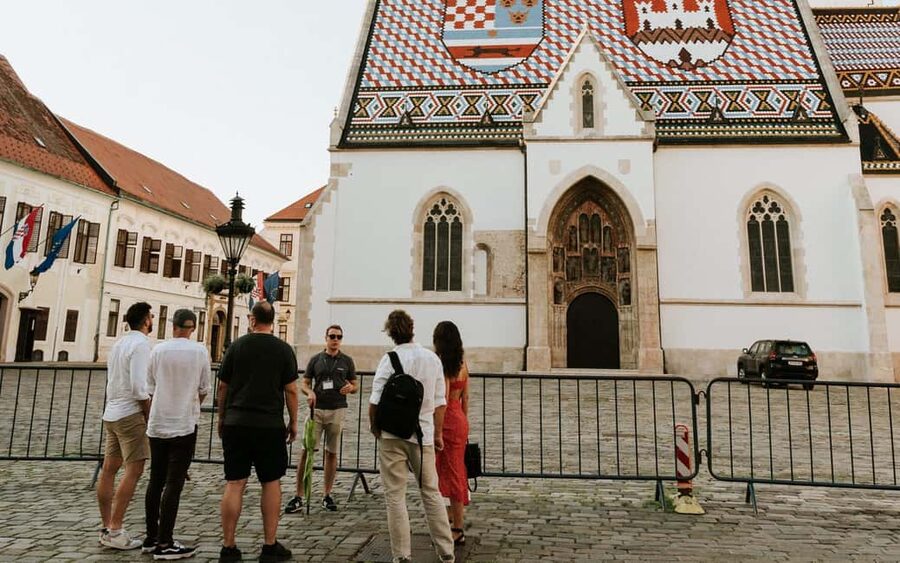
From there, you go to St. Mark’s Square, named after the church there. The square is also connected to Croatian political life because it is the location of the Croatian parliament. It’s one of those places where architecture and civic identity meet in a very direct way.
Next up is a defense tower in Gradec, one of the last remnants of Zagreb’s ancient defense system. Gradec sits higher, and the tower adds a sense of the hilltop stronghold that shaped the city’s layout.
Uspinjača funicular to Strossmayer promenade: the view you walk for
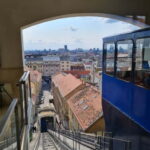
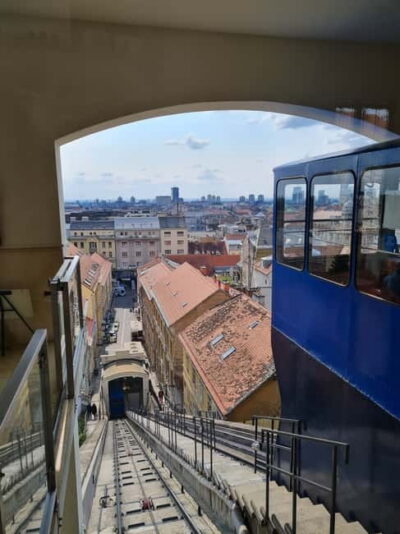
Now you hit one of Zagreb’s most iconic “how is this real” moments: the Uspinjača stairs and funicular ride. It’s described as the world’s shortest funicular ride and the first form of public transportation in Zagreb and beyond. Even if you don’t ride it, it’s worth spotting because it’s such a Zagreb-specific piece of practical ingenuity.
This section matters because the tour shifts from historical walls to panorama. From the Strossmayer promenade, you get one of the best views over Zagreb. This is where the walk pays you back. You pause, take pictures, and absorb how the city’s two old cores relate to each other.
Expect this portion to include some stairs and uneven footing. If you’re sensitive to hills, go slow and pace yourself. You’ll still enjoy it.
Restaurant stop 3 at Mesnička ul. 6: the Zagreb and Zagorje main dish
Your third meal stop is at Mesnička ul. 6, where you’ll have a main dish connected to Zagreb and Zagorje. You’ll also hear about the city’s culinary culture and broader Croatian food traditions.
This stop also has a nice extra dimension: the restaurant may include historical replicas and fascinating pictures, so while you eat, you’re not separated from the storytelling. It’s a chance to sit down, rest your legs, and get the tour back in balance.
If you’re the kind of eater who enjoys specific regional items, you might recognize some classic names from past tours, like cevapi and strukli showing up on menus in general. The exact lineup can vary, but the aim stays consistent: warm comfort food that feels Croatian, not tourist-fied.
Tunnel Grič and the Bloody Bridge, history with a dark edge
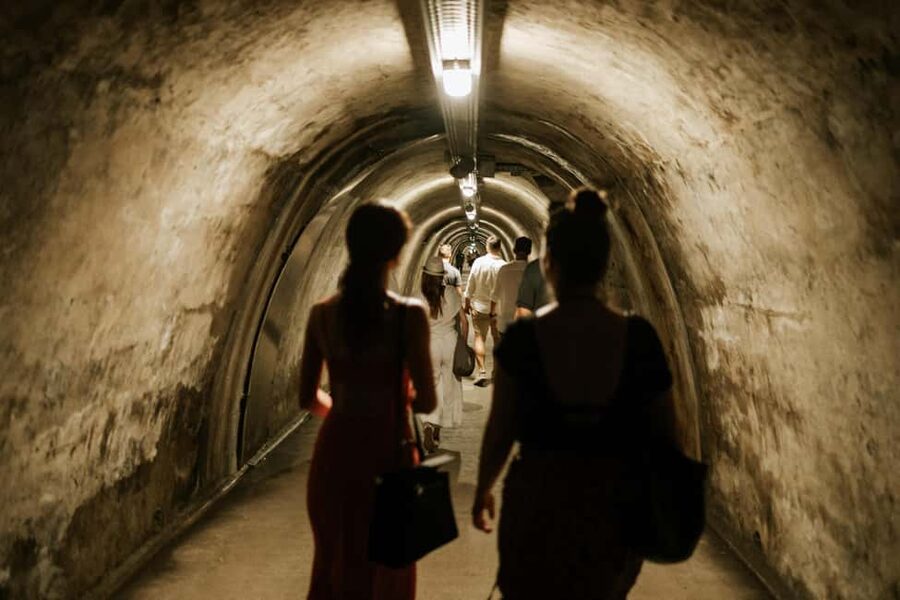
After the main dish, you pass through Tunnel Grič. Built during World War 2, it originally functioned as a bomb shelter and was later used as a pedestrian tunnel and promenade. The space gives you a physical sense of how Zagreb adapted in crisis, and it adds a serious note to what is otherwise a fun, food-focused evening.
Then comes Bloody Bridge, connected to conflict between Kaptol and Gradec. These two settlements were eventually joined into Zagreb, but the name remains tied to the fighting. The bridge area may feel small, yet it carries that old-city rivalry in its name and stories.
This is where the tour stops being only about taste. You realize you’re walking through the same streets shaped by old power struggles, trade, and identity.
Restaurant stop 4 at Skalinska ul. 5: the dessert surprise and dessert wine
Your final stop is at Skalinska ul. 5, where you’ll taste a regional dessert that is kept as a surprise. You’ll also taste several regional wines specifically used for desserts.
I like that the tour finishes this way. Dessert is not just a sweet ending. It’s also a chance to see how Croatian wine culture adjusts for flavors like fruit, cream, or spice. Dessert wines can be heavy or sweet depending on style, so having a pairing helps you actually understand the logic behind it.
If you are someone who enjoys the last course more than the first, this ending can feel like the payoff. Reviews also suggest pairings can be generous, and desserts have been described as delicious when delivered as part of the tour’s finish.
Price and value: why $107.68 can work for the right traveler
At $107.68 per person, you’re paying for several things at once: a professional local guide, a structured walking route through major Old Town sights, and multiple restaurant tastings. Those tastings include food and drink, including wine tastings and rakija (Croatian brandy).
Here’s the honest math of value. If you booked dinner and drinks on your own, it could easily reach a similar number, especially in a central area. This tour replaces the guesswork by delivering scheduled stops and pairings, plus the historical context that helps you appreciate what you’re looking at.
The tour also has a small-group structure, which tends to raise quality. When you add that the tour is about 3 to 4 hours, starting at 4:00 pm, it becomes a great “I need a plan” activity for your first or last day.
One consideration is that you are moving the whole time. If you prefer long sit-down meals and minimal walking, you may feel you paid for steps more than you wanted. But if you like getting your bearings fast, the price feels more justified.
Who this tour suits best, and who should think twice
This tour is ideal if you want:
- A guided first walk through Zagreb’s core sights
- Multiple chances to eat and drink without making separate reservations
- Regional Croatian food focus, including wine and rakija
- A small group pace, up to 15 people
It may be less ideal if:
- You have a strong need for gluten-free options, because there are no gluten-free menus
- You follow a vegan diet, because the tour is not recommended for vegans
- You dislike hills, cobblestones, or stair-heavy routes, because the tour includes stairs and Gradec area elevation
If you’re vegetarian, you can request a vegetarian menu. If you have dietary needs beyond that, plan to message ahead, since the tour’s menu structure is not described as flexible beyond the vegetarian request.
Should you book this Zagreb food and Old Town walk?
If you want an evening that combines Zagreb landmarks with real eating, I think this is a strong pick. You’re not just passively looking at buildings. You’re tasting regional flavors while you learn why those neighborhoods and monuments matter.
Book it if:
- You like food tours that include wine, and you want a guided way to understand Croatian cuisine
- You want a compact route through Ban Jelačić Square, Gradec, Dolac Market, and key Old Town sights in one sitting
- You prefer small-group tours where your guide can actually keep up a conversation
Skip it (or at least rethink) if:
- You cannot do cobblestones and stairs, even with comfortable shoes
- Gluten-free is non-negotiable for you
- You are vegan and need a fully vegan plan
If you do book, my practical tip is simple: wear shoes you can walk in for hours, and go into it hungry. This is the kind of tour where you’ll likely feel satisfied by the end, and you’ll remember Zagreb as much for its food stops as for its spires and squares.
FAQ
What is included in the Zagreb restaurants, food, and old town walking tour?
You’ll get a professional local guide and multiple tastings: food samples, wine tastings with several Croatian wine types, and rakija tasting with 1 Croatian rakija (brandy).
How long is the tour and when does it start?
The tour lasts about 3 to 4 hours and starts at 4:00 pm.
How much walking is involved?
It is a walking tour with cobblestone streets and hills, including stair sections. Comfortable clothing and shoes are recommended.
Is there a vegetarian option?
A vegetarian menu is available on request.
Is there a gluten-free menu?
No gluten-free menus are offered.
What group size should I expect?
The tour has a maximum of 15 travelers. Confirmation is received at booking, and the tour requires a minimum number of travelers to operate.
The Zagreb Table, More of It





Walk It: More of Zagreb at Ground Level


Zagreb On Foot, Continued

Freshly written up around Zagreb
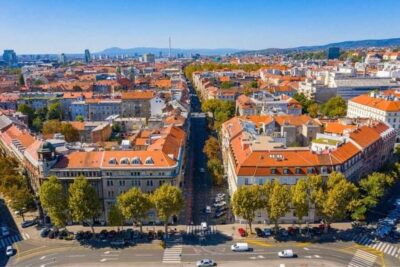
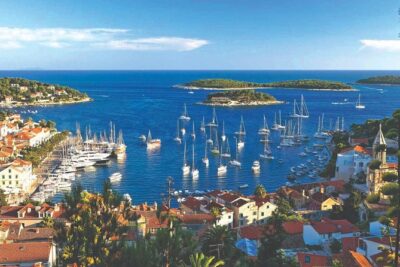
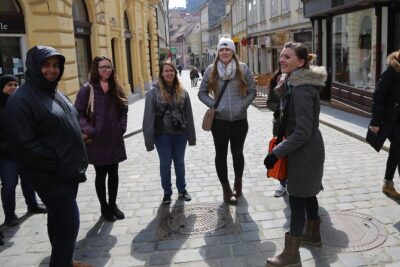

Zagreb City & Upper Town Tours, top to bottom.
 ★ 4.9From Zagreb: Plitvice & Rastoke Guided Day Trip with TicketFrom $612,955 reviews
 ★ 4.9Zagreb: Rastoke & Plitvice Lakes Guided Tour with TicketFrom $571,897 reviews
 ★ 5.0Best of Zagreb with the WW2 TunnelsFrom $23973 reviews
 ★ 5.0Plitvice Lakes with Ticket & Rastoke Guided Tour from ZagrebFrom $78966 reviews
 ★ 4.9Zagreb: Small Group Walking Tour City Center and WW2 TunnelsFrom $23895 reviews
 ★ 4.5Zagreb: Skip-the-Ticket-Line Museum of Broken RelationshipsFrom $8847 reviews
 ★ 4.9Zagreb: City and WWII Tunnels Walking TourFrom $23845 reviews
 ★ 5.0Plitvice and Rastoke day trip from Zagreb w/ticket (guar. dep.)From $78804 reviews
Browse the lists this tour appears in