
REVIEW · FOOD & DRINK
Split: Food Tasting Walking Tour
Split has a way of turning food into a story. In this 2-hour walking tour, you eat your way through Diocletian’s Palace and historic markets, with a guide who ties each bite to the city around it. You start near the Golden Gate, then hop from the Green Market to the Fish Market, with sweets and savory stops in between.
I love how much variety you get for $51. You taste classics like sugared almonds, Soparnik, prosciutto, chocolate treats, rafiol cake, and salted anchovies, all while learning how locals actually eat and shop. I also like that you get traditional recipes, so the tour doesn’t end when your feet stop.
One consideration: this is a short loop, so you’ll leave wanting more. If you have strong wine cravings, note that one portion includes a glass of local wine, but you should not expect an all-day drink program. Also, the walking route is not wheelchair accessible.
In This Review
- Key stops and why they matter
- Golden Gate, Roman walls, and the pace that keeps you eating
- Green Market tastings: arancini, sugared almonds, and a morning sweet start
- Soparnik in Diocletian’s world, plus prosciutto you’ll want again
- Fish market magic at Peškarija, with salted anchovies and marenda
- The chocolate shop with a Guinness record, then rafiol cake at an old bakery
- What the bar and restaurant tastings add to the loop
- Guides like Marta, Jakov, Slavko, Ina, and Antonia, and why that affects your results
- Value check: what $51 buys you in 2 hours
- Practical tips so you stay comfortable and hungry in Split
- Should you book this Split Food Tasting Walking Tour?
- FAQ
- How long is the Split Food Tasting Walking Tour?
- Where do I meet, and where does the tour end?
- What’s included in the price?
- What language is the tour guide?
- Is the tour wheelchair accessible?
- Is it allowed for unaccompanied minors?
Key stops and why they matter
- Golden Gate start in Diocletian’s Palace area, so you begin in the historic core.
- Green Market tastings including arancini and sugared almonds in sugar.
- Soparnik, a UNESCO-listed Dalmatian specialty paired with local wine.
- Peškarija fish market, famous for its age, with tastings tied to marenda brunch habits.
- Chocolate shop visit tied to a Guinness record for a massive chocolate bar.
- Sweet finish at an old bakery, featuring rafiol cake.
More Split covered at walking pace
- Split: Old Town and Diocletian Palace Walking Tour★ 4.9 · 4,727 reviews
- Walking Tour of Split and Diocletian’s Palace★ 5.0 · 2,588 reviews
- Krka Waterfalls tour with Trogir Walking tour and Krka panoramic boat cruise★ 5.0 · 1,659 reviews
- Split & Diocletian’s Palace Walking Tour★ 5.0 · 1,125 reviews
Golden Gate, Roman walls, and the pace that keeps you eating
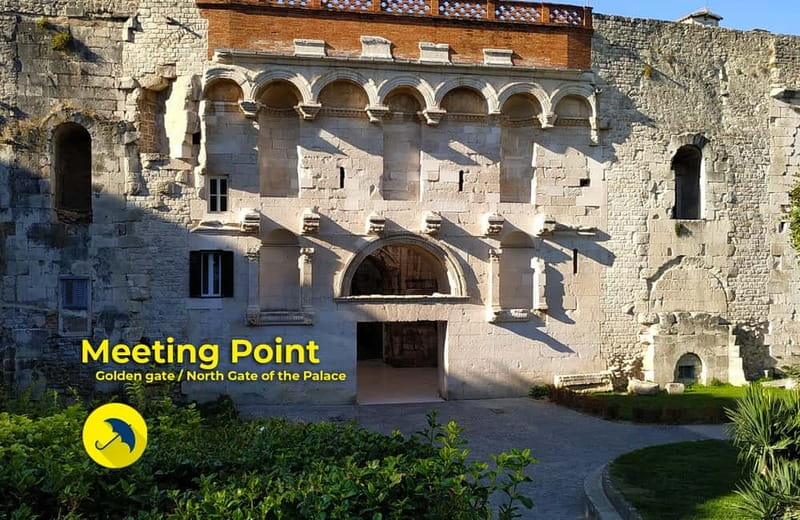
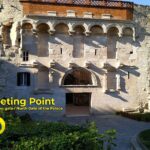
The tour meets at Golden/North Gate, near the statue of Gregory of Nin, and you’re looking for a blue umbrella. From the jump, you’re in the thick of Split’s historic geography. Diocletian’s Palace is not a museum feeling, it’s a lived-in maze of stone streets, small storefronts, and quick turns that make you pay attention.
Because it’s a guided food walk, the pacing is built around short tastings and quick context. Each stop is timed so you don’t end up standing around while everyone else eats. You get little bursts of flavor, then you move. That matters in Split, where the heat and crowds can add up fast.
You also get a real advantage by starting in the palace area. You see how modern life layers onto Roman bones, and you’re not just watching history from a distance. You’re tasting the present version of Dalmatian food, right where it’s sold.
Green Market tastings: arancini, sugared almonds, and a morning sweet start
Your first meaningful taste comes early, with a local café stop. Expect a quick food moment that feels like the warm-up act before the markets. Then you head into the Old Market area for a longer Green Market stop.
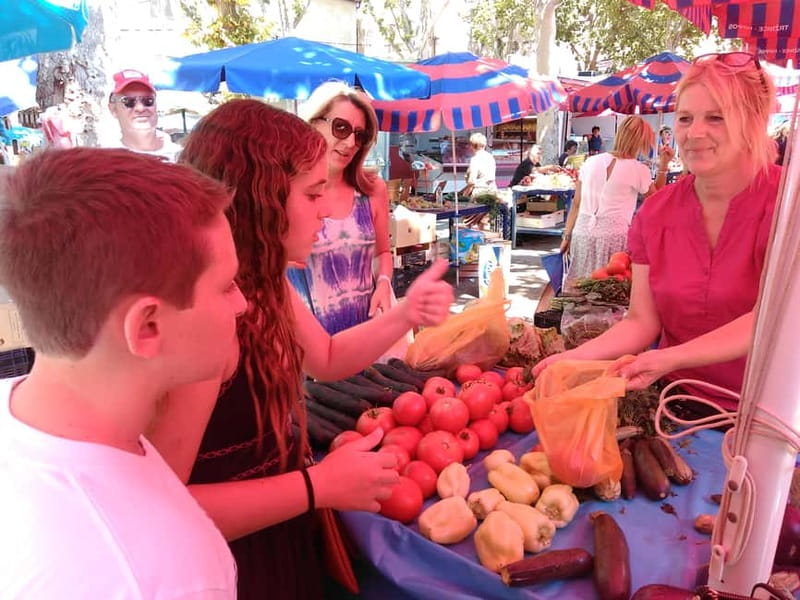
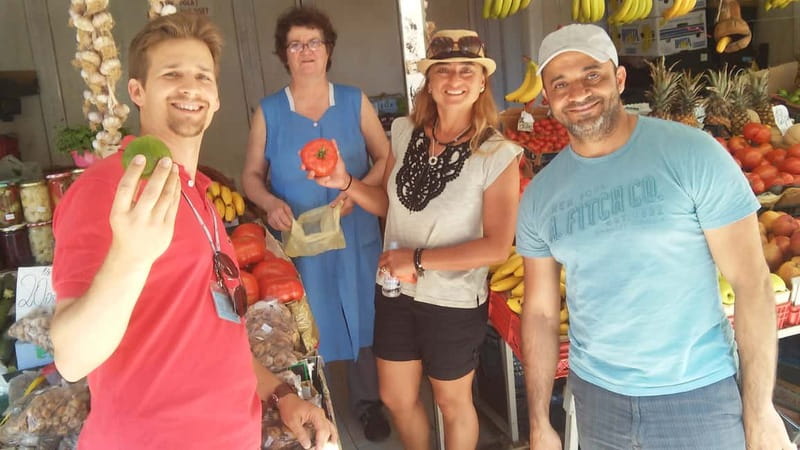
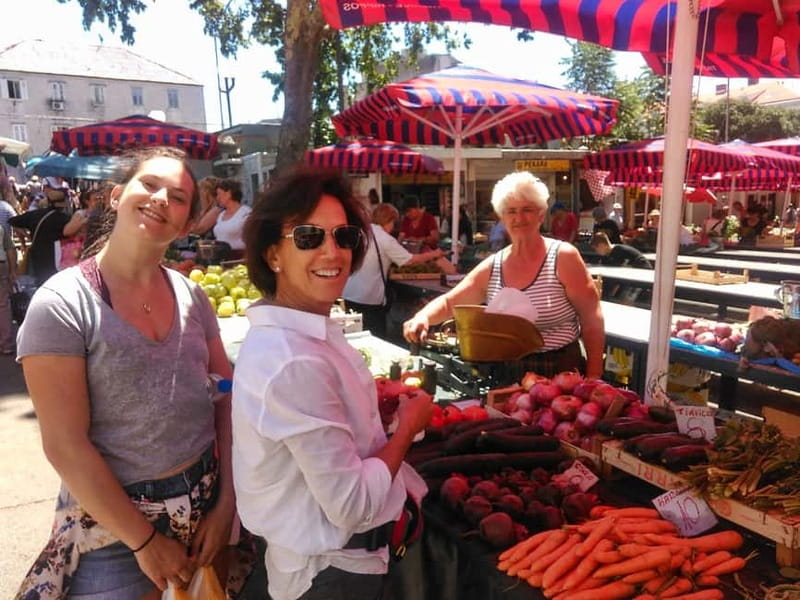
In the Green Market, you’ll taste arancini, small local bites, and sugared almonds to sweeten your morning. These are the kinds of snacks that locals pick up without making a whole event out of it. That’s what I like about this part of the tour. It’s not fancy, it’s practical, and it shows you the baseline of Dalmatian flavors.
This is also where you start learning how the food scene works in Split. Market shopping here is fast and social. Vendors talk, people browse, and you taste on the way. The guide’s role becomes clear: they help you understand what you’re seeing and why it matters, so you can shop smarter later.
Soparnik in Diocletian’s world, plus prosciutto you’ll want again
After the market warm-up, the tour moves into heavier local specialties. You get Soparnik with a glass of local wine. Soparnik is a distinctive Dalmatian flatbread, and it has UNESCO recognition, which is a clue that this is not just a random street snack. It’s a dish with deep roots and a clear identity.
If you’re the type who usually orders the safe thing on vacation, Soparnik is the moment to step out of autopilot. It’s described as a unique dish protected by UNESCO, which means you’re eating something tied to tradition, not only to tourism.
Then comes the kind of stop that makes this tour worth doing even if you think you already know Croatian food. You’ll try traditionally made prosciutto while you keep strolling through Split’s medieval streets. That’s important, because prosciutto tastes best when it’s paired with context. The guide connects the dots between the food, the region, and the daily culture behind it.
One small watch-out: this portion is timed, so if you’re the chatty type, keep your questions rolling, but don’t let yourself get stuck outside the group rhythm. You’ll have chances to ask more later, especially around the fish and sweet stops.
Fish market magic at Peškarija, with salted anchovies and marenda
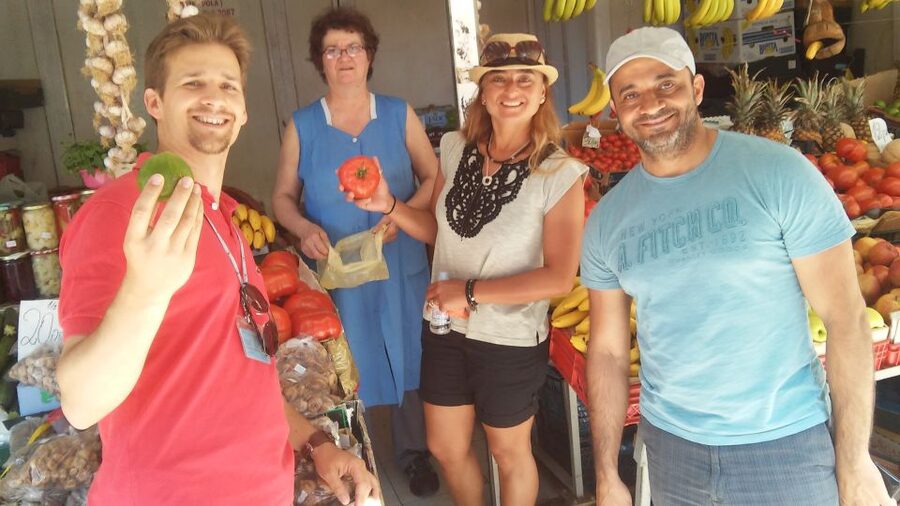
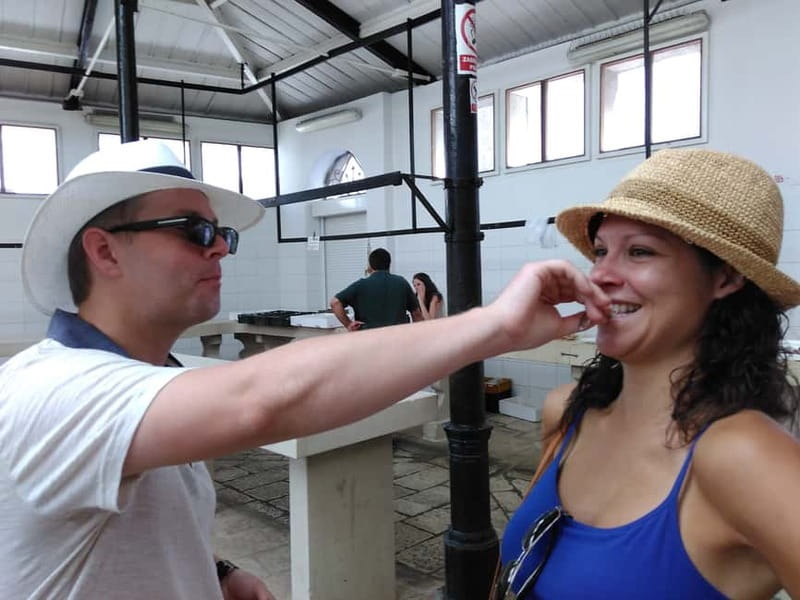
The Fish Market stop is the headline for a lot of people, and it’s easy to see why. Peškarija is described as the second oldest in Europe, and the tour notes that original benches are more than 120 years old. That alone turns a simple market visit into something you can actually feel under your feet.
The guide also teaches you how to eat salted anchovies, and the tour connects it to marenda, a Dalmatian brunch. This is a detail that helps you understand the meal pattern behind the food. It’s not only about flavor, it’s about when and how locals snack and eat together.
If you’re hoping for a classic tourist seafood tasting, this is better. Instead of handing you a plate and sending you off, you get a mini food lesson. You learn the proper bite approach as part of the experience, which makes the anchovies far more satisfying.
Also, you’ll want to show up hungry for this segment. Anchovies are salty and intense. The rest of the tour gives you enough sweet and bread-based balances to keep it fun, but this stop is still a real taste moment.
More eating and drinking we have done in Split
- Split: Blue Lagoon and 3 Island Cruise with Food and Drinks
★ 4.8 · 1,969 reviews - Krka National Park Tour with tour Guide & Wine tasting from Split & Trogir
★ 5.0 · 1,625 reviews - Split/Trogir: Krka National Park Day Trip with Wine Tasting
★ 4.7 · 925 reviews - Full-Day Catamaran Cruise to Hvar & Pakleni Islands with Food and free Drinks
★ 5.0 · 670 reviews - Dubrovnik Guided Group Tour with Ston Oyster tasting from Split & Trogir
★ 5.0 · 538 reviews
The chocolate shop with a Guinness record, then rafiol cake at an old bakery
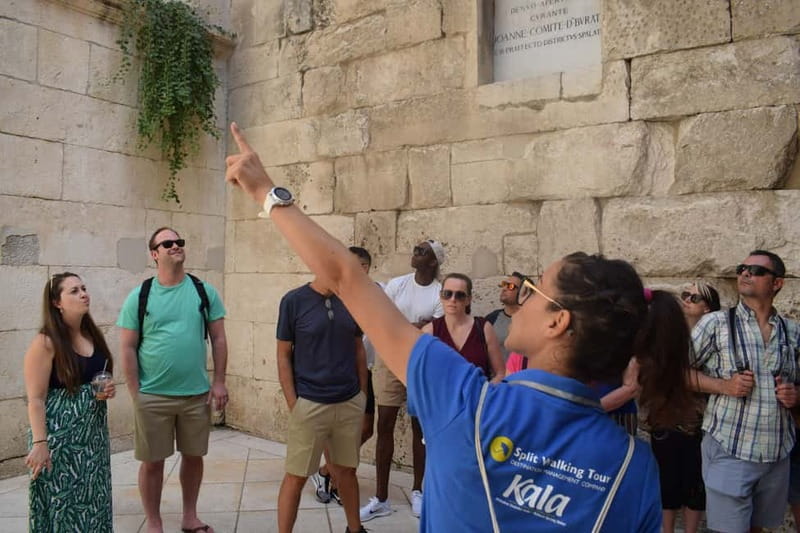
Split doesn’t just do savory. It does sweet, and this tour leans into that with two stops that feel like a storybook detour.
First, you visit a chocolate shop that includes a Guinness record for the largest chocolate bar in the world. Even if you’re not chasing records, it’s a fun way to break the walk and see how Split’s food culture mixes tradition with modern attention.
Then you go to an older bakery to try rafiol cake. The tour calls out the bakery as among the oldest, and rafiol is a beloved local sweet. This is one of those tastings that can make you plan your next meal on the spot. You’ll finish the tour thinking about what you want to buy again and where you’d like to return.
If sweets are not your thing, don’t worry. The rafiol stop is part of a wider set of tastes, not a sugar-heavy finale. You’ll still get the savory anchors: markets, Soparnik, prosciutto, and fish.
What the bar and restaurant tastings add to the loop
After the fish market, the tour continues with a local bar tasting and then a local restaurant tasting. Both are set up as short, clear food stops, about 15 minutes each.
This matters because it keeps the tour from turning into a shopping mission. Markets can be overwhelming if you’re not sure what to look for. These later tastings help you consolidate what you’ve learned earlier. By the time you’re at the restaurant, you can taste with better context, not just curiosity.
You also get a practical benefit: the guide can point you toward places to return after the tour. Multiple guide experiences highlighted in customer feedback emphasize that people walk away with recommendations. Even without a formal shopping list, you’ll leave with stronger instincts about what to order when you’re eating on your own.
Guides like Marta, Jakov, Slavko, Ina, and Antonia, and why that affects your results
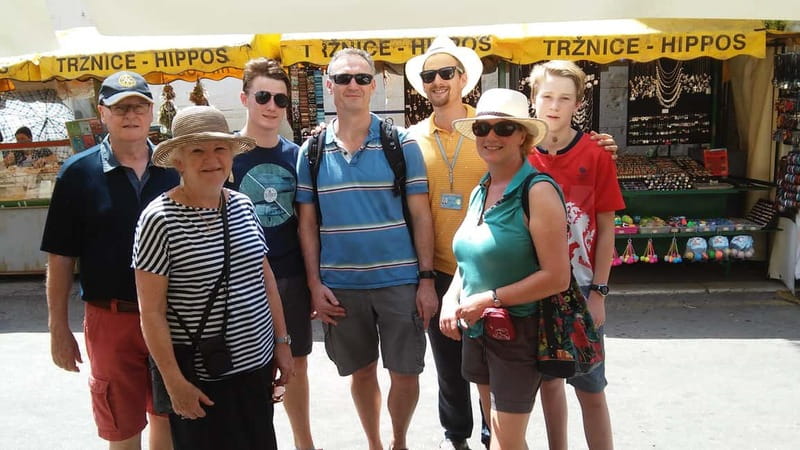
A food tour succeeds or fails based on the guide. Here, the standout theme in feedback is guide personality plus food knowledge, with names like Marta and Jakov appearing again and again, along with Slavko, Ina, and Antonia.
What you should care about as a rider is how they connect taste to place. The best guides don’t just list ingredients. They help you understand what’s typical, what’s special, and what you should try again later. In this tour, that shows up through the mix of market tastings, historic street context around Diocletian’s Palace, and the lessons tied to specific foods like Soparnik and marenda.
You can also tell the best guides are comfortable answering questions. If you’re the kind of person who asks why something is eaten at certain times or how it’s made, this tour structure makes it easier for those answers to fit naturally.
Value check: what $51 buys you in 2 hours
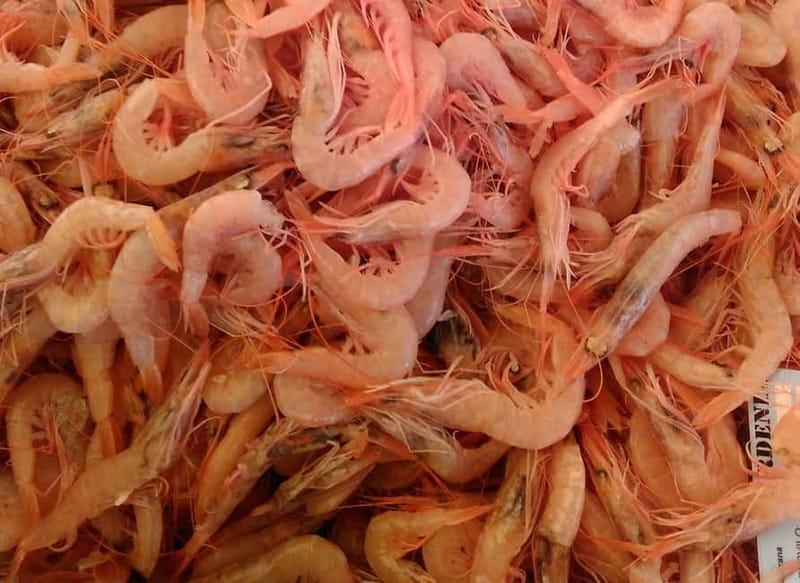
$51 for a 2-hour walking food tour is a reasonable price when you look at what’s included. You get a live English guide, a run of food tastings across multiple locations, and traditional recipes to take away.
Where the value really lands is the mix of settings. This is not just eating in one neighborhood. You move through the historic palace core, the Green Market and Old Market area, the fish market, and then you finish with sweet stops and restaurant sampling. Each setting changes the kind of food you encounter.
Also, you’re paying for translation of culture. Tastings are great, but the history and food stories are what turn tasting into learning. You’re not only eating. You’re figuring out how Split’s Mediterranean cuisine works in real life.
One more practical value point: the tour gives you a head start. When you do this earlier in your trip, you tend to shop smarter and order with more confidence later. If you wait until the end, you can still enjoy the food, but you have fewer chances to act on what you learn.
Practical tips so you stay comfortable and hungry in Split
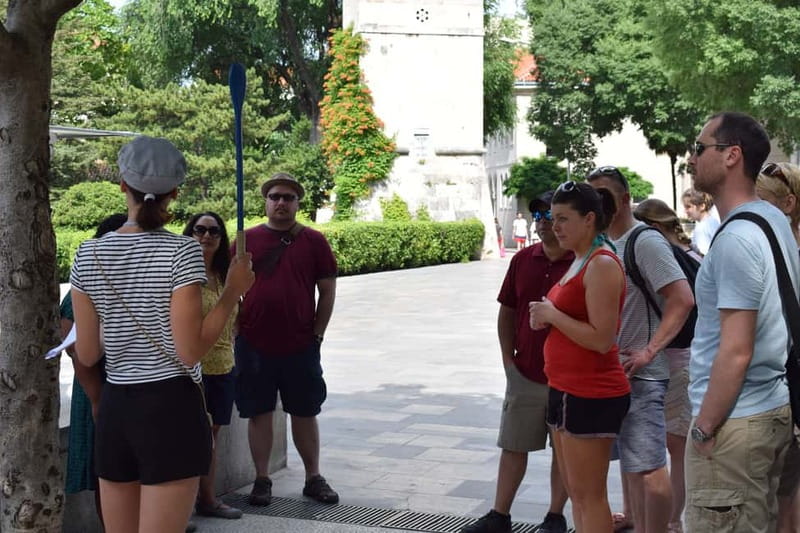
Split rewards smart packing. Wear comfortable shoes, because you’ll be walking across old stone streets. Bring sunglasses and a sun hat, especially if your start time is during a bright part of the day.
Also, pace your own appetite before you meet. You’re going to taste multiple items, including savory and sweet bites. If you show up stuffed from a late breakfast, you’ll lose some of the fun. If you show up very hungry, you’ll enjoy the rhythm even more, but be ready for salty flavors at the fish market.
A simple strategy: treat each stop as a checkpoint. Taste, ask one or two questions, then move on. That way you get the full loop without turning it into a long meal.
Should you book this Split Food Tasting Walking Tour?
Book it if you want a high-signal intro to Split food in a short window. It’s especially good if you like Diocletian’s Palace and want your history lesson tied to what people actually eat. The UNESCO-recognized Soparnik, the Peškarija market experience, the marenda anchovy lesson, and the Guinness-linked chocolate stop make this tour feel like more than a generic tasting list.
Skip it or think twice if you need wheelchair-friendly access, since the route is not accessible for wheelchair users. Also, if you expect a long, wine-centered evening, this is not that kind of tour, even though a glass of local wine is part of the Soparnik portion.
If you’re planning only one food-focused activity in Split, this is a strong pick. Just go in hungry, bring good walking shoes, and let the guide lead you through the flavors of the palace.
FAQ
How long is the Split Food Tasting Walking Tour?
It lasts about 2 hours.
Where do I meet, and where does the tour end?
You meet at Golden/North Gate near the statue of Gregory of Nin, looking for the blue umbrella. The tour ends back at the same meeting point.
What’s included in the price?
The price includes a guide, food tastings, and traditional recipes. Extra purchases at the markets are optional and not included.
What language is the tour guide?
The tour has a live guide in English.
Is the tour wheelchair accessible?
No. The tour is not accessible for wheelchair users.
Is it allowed for unaccompanied minors?
No. Unaccompanied minors are not allowed, and children must be accompanied by an adult.
What Lands on the Table in Split

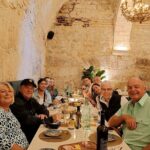
The Split Table, More of It
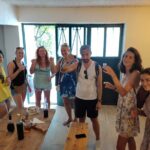
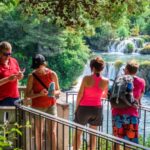
Walk It: More of Split at Ground Level
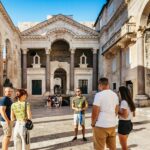
Freshly written up around Split


Food & Drink, top to bottom.
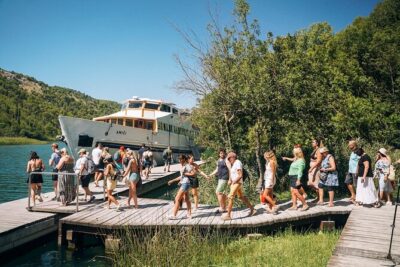 ★ 5.0From Split: Krka Waterfalls, Food & Wine Tasting TourFrom $459,326 reviews
★ 4.9From Split: Krka Waterfalls, Food & Wine Tasting TourFrom $446,598 reviews
★ 5.0From Split: Krka Waterfalls, Food & Wine Tasting TourFrom $459,326 reviews
★ 4.9From Split: Krka Waterfalls, Food & Wine Tasting TourFrom $446,598 reviews
 ★ 4.8Split: Blue Lagoon and 3 Island Cruise with Food and DrinksFrom $811,969 reviews
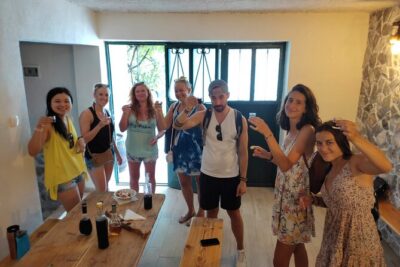 ★ 5.0Krka National Park Tour with tour Guide & Wine tasting from Split & TrogirFrom $501,625 reviews
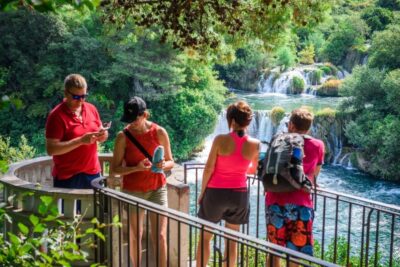 ★ 4.7Split/Trogir: Krka National Park Day Trip with Wine TastingFrom $49925 reviews
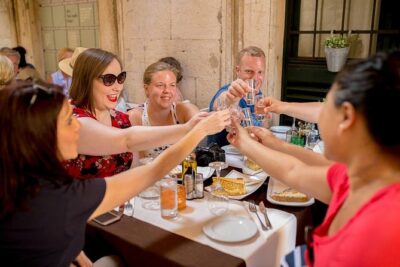 ★ 5.0Dubrovnik Food and Drink Walking Tour with a Local GuideFrom $175654 reviews
 ★ 5.0Dubrovnik Guided Group Tour with Ston Oyster tasting from Split & TrogirFrom $84538 reviews
 ★ 5.0Split Food Tour: Discover Split One Bite At A TimeFrom $145433 reviews
Browse the lists this tour appears in