
REVIEW · SPLIT OLD TOWN & PALACE WALKS
Walking Tour of Split with a ‘Magister’ of History
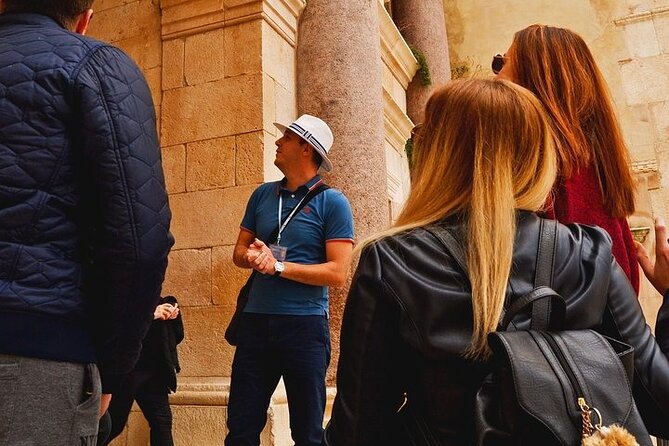
Split’s Roman roots feel close on foot. I like this walk because it turns Diocletian’s Palace into something you can actually read as you go, helped by 3D reconstructions. The small group size also makes it easier to ask questions and linger at the details that usually get ignored.
The main tradeoff is simple: this is built around seeing the big sites from the outside. You won’t enter the cathedral or the Temple of Jupiter, and the tour does not include museum time, so plan to add those later if you want interiors.
In This Review
- Key highlights worth your attention
- Split’s Roman start: Brass Gate to the Riviera views
- Peristyle square: why the palace layout clicks faster
- Saint Domnius: the mausoleum-cathedra switch you can understand from outside
- Temple of Jupiter: spotting Roman construction quirks without buying a ticket
- Eastern Gate and Grgur Ninski: views plus meaning
- Vestíbulum and private space: where emperors once lived
- Noble palaces along the way: medieval life using Roman structure
- Game of Thrones sightings, without turning the tour into a fan crawl
- Golden Gate and the north wall: defenses built on Roman bones
- City Museum courtyard and the Venetian thread you can spot
- Old Town Hall on Piazza: a finish that helps you orient fast
- Price and value: what $34.83 buys you in real terms
- Who this walking tour is best for (and who should add other tickets)
- Quick practical tips before you go
- Should you book Toni Šare’s Split history walk?
- FAQ
- How long is the walking tour?
- Where does the tour start and end?
- Is the tour offered in English?
- What is the price per person?
- Does the tour include museum or paid site entry?
- Which major sights are not entered during the tour?
- How large is the group?
- Do I get a mobile ticket?
- Is it affected by weather?
Key highlights worth your attention
- Porta Aenea start at the Brass Gate, right where the palace story begins
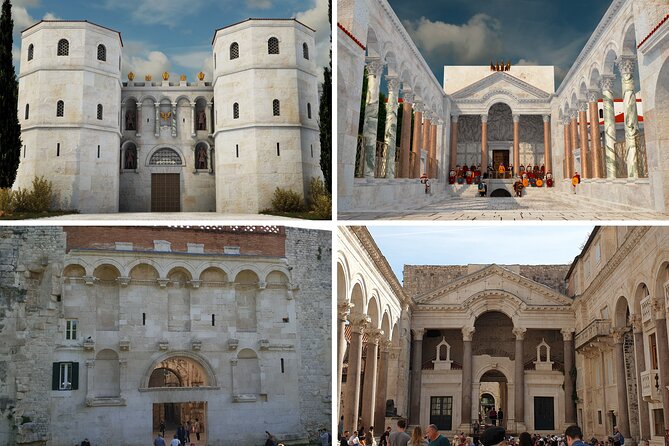
- 3D reconstructions that help you picture what’s missing from the Roman complex
- Saint Domnius outside-only context, including how the mausoleum became a cathedral
- Temple of Jupiter viewpoints plus explanations of construction quirks you can spot
- Golden Gate north-wall views showing how medieval defenders used Roman structure
- Finish at Narodni trg (Pjaca) for an easy jump into the rest of Old Town
Other walks through the palace quarter and the alleys behind it
- Split: Old Town and Diocletian Palace Walking Tour★ 4.9 · 4,727 reviews
- Walking Tour of Split and Diocletian’s Palace★ 5.0 · 2,588 reviews
- Split & Diocletian’s Palace Walking Tour★ 5.0 · 1,125 reviews
- Walking Tour of Split with a ‘Magister’ of History★ 5.0 · 1,122 reviews
Split’s Roman start: Brass Gate to the Riviera views
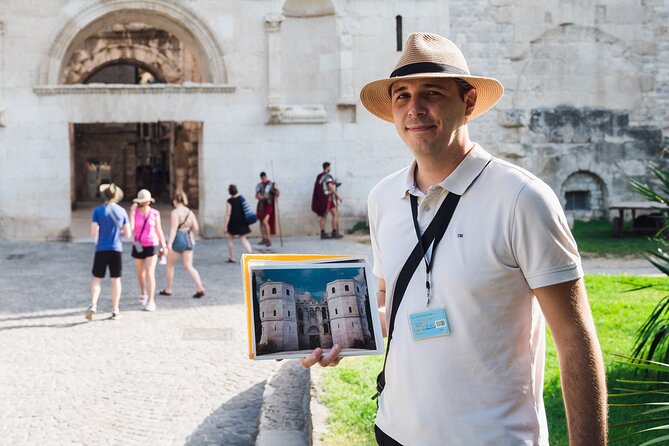
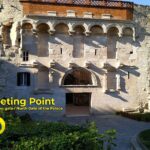
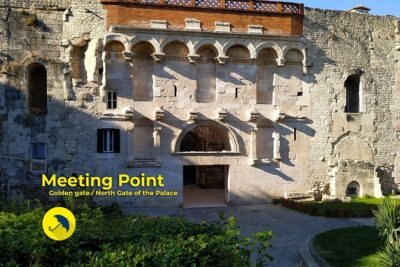
You begin at the Brass Gate (Porta Aenea), a practical meeting spot that also sets the tone. From here, Split’s old city rhythm feels immediate, and the palace is no longer an abstract ruin. The walk starts with the kind of intro that makes the rest easier, including graphic and model references to what you’ll see deeper in the complex.
Right after that, you get a strong sense of the palace’s geography from the Riva Harbor area. Even if you have photos, standing where the city meets the sea gives you a better idea of why Diocletian’s project shaped everything that followed. The southern wall of the palace becomes a visual anchor, which matters later when you compare gates, squares, and defensive walls.
Peristyle square: why the palace layout clicks faster
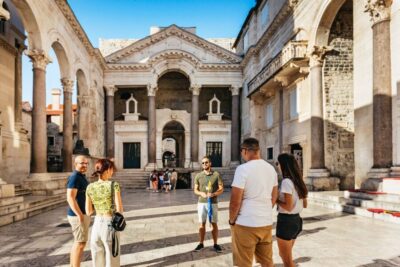
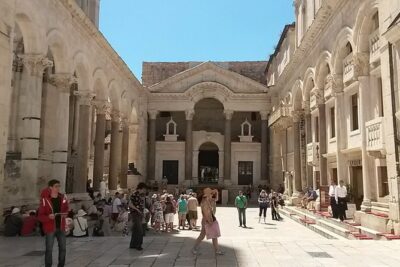
The heart of Diocletian’s Palace is the Peristyle, the central square you still feel today. The best part is that you’re not just looking at stones, you’re learning how the space worked. Toni Šare uses 3D reconstructions here, so preserved Roman structures make more sense in their original setting.
This stop is short, but it’s efficient in the good way. You’ll see incredibly preserved Roman elements and get a sense of scale that’s hard to grasp from street level alone. The value is not only the photos in your head, it’s learning what to look for, like where decorations would have been and how openings and circulation likely felt in daily life.
Saint Domnius: the mausoleum-cathedra switch you can understand from outside
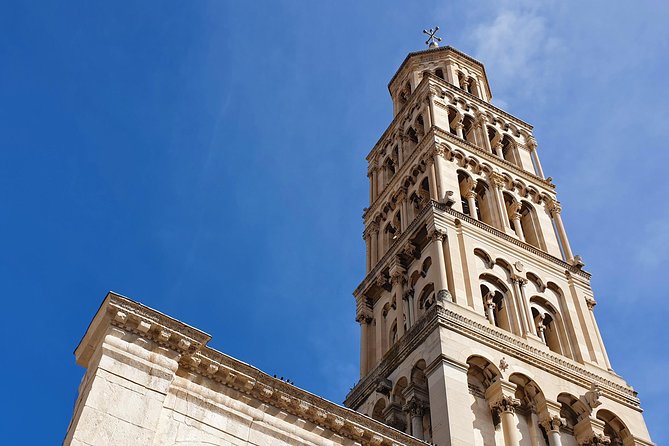
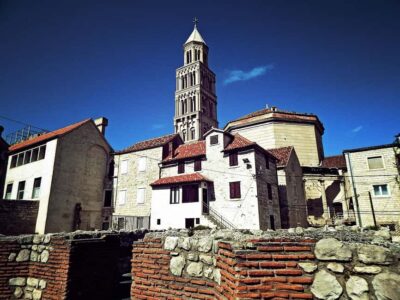
Next comes Cathedral of Saint Domnius, one of the best-preserved Roman survivals in Split. The tour keeps you outside, but that works because the exterior tells a story. You’ll learn how the mausoleum of Emperor Diocletian was later converted into a Christian cathedral, and why the building’s continued use mattered.
Toni Šare also explains the bell tower and what changes came with the Christian era. Even without going inside, you’ll leave with a clear mental timeline for the building, instead of treating it like a static landmark. If you plan to visit later, this context helps you spot what’s Roman versus what’s later adaptation.
Temple of Jupiter: spotting Roman construction quirks without buying a ticket
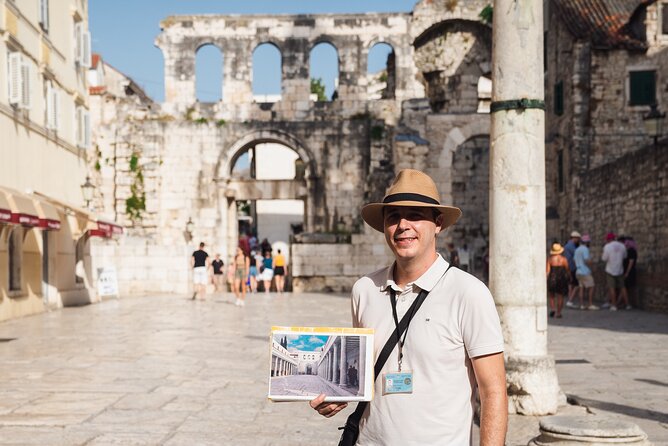
You then see the Temple of Jupiter, often described as one of the best-preserved late Roman temples in the world. You will not enter, but you still get a lot out of the exterior because you’re shown what to notice. Toni points out anomalies and even mistakes the Romans may have made while building it, which is exactly the kind of detail that makes architecture feel human.
This stop is a good reminder that Roman work was impressive, but not magic. Seeing the temple from outside means you can keep moving while still gaining real architectural literacy. It’s also a practical choice if you want your day to stay focused on walking rather than waiting in lines.
More Split covered at walking pace
- Krka Waterfalls tour with Trogir Walking tour and Krka panoramic boat cruise
★ 5.0 · 1,659 reviews - Split Walking Tour with Professor of History
★ 5.0 · 926 reviews - Split: Diocletian Palace & Old Town Guided Walking Tour
★ 4.7 · 882 reviews - From Split: Krka Waterfalls Cruise & Trogir Walking Tour
★ 4.7 · 681 reviews - Split: History and Heritage Walking Tour
★ 4.9 · 650 reviews
Eastern Gate and Grgur Ninski: views plus meaning
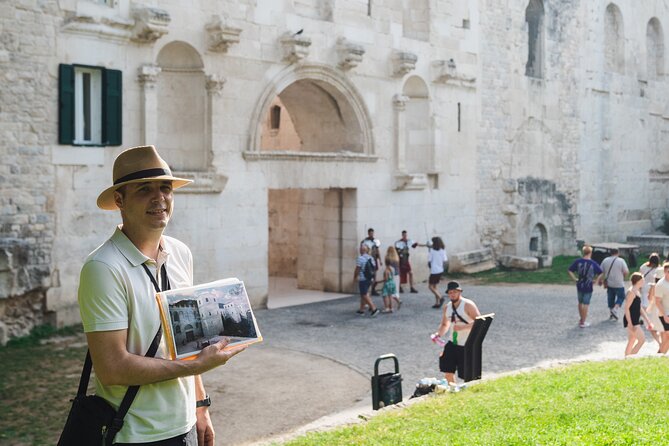
At the Eastern (Silver) Gate, you’re in a sweet spot for palace views. On one side sits the cathedral area, on the other you can see the Silver Gate, and underneath you can spot the only preserved part of the original road. That last bit helps connect the palace complex to the city street level you walk later.
Then you head to the Grgur Ninski Statue, one of Split’s most recognizable landmarks. Toni explains what the statue represents and why it matters for Croatian language and culture in early medieval times. That’s a key moment in this tour, because it shifts you from Roman stones to the identity of later Croatia, all while you’re still moving through the palace neighborhoods.
Vestíbulum and private space: where emperors once lived
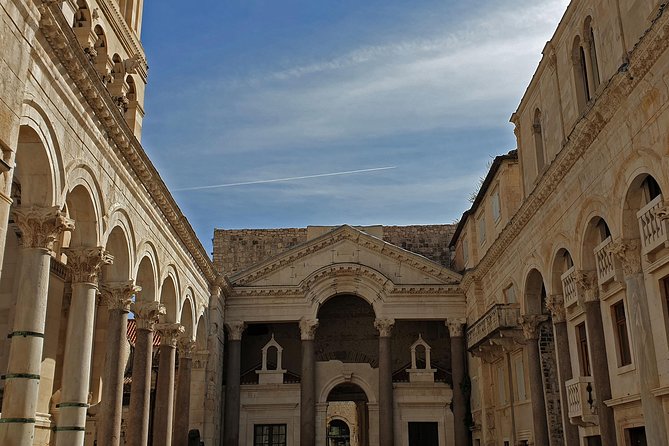
The Vestibulum of Diocletian’s Palace is next, and it’s a smart pivot from public square to private residence. From this entrance space, you’ll get taken around the remains of Diocletian’s private residence. The key value here is learning how the palace was organized, not only what’s left of it.
If you’ve ever seen a palace ruin and felt lost, this section is built to fix that. You start understanding why some areas feel more ceremonial and others more controlled. Even with limited space and partial remains, the explanation helps you map the invisible rooms and movement patterns.
Noble palaces along the way: medieval life using Roman structure
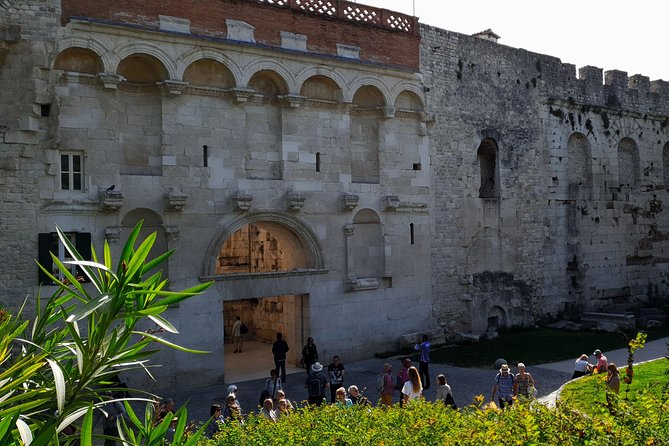
As you continue, you pass through the various noble family palaces that line the palace complex and surrounding streets. This part is useful because it avoids turning Split into a museum of one era. You’ll hear how medieval, Renaissance, and early modern life filled in the Roman shell, with older structure still doing real work.
This is also where walking feels especially good. Short pauses are built in so you can look up at details like facades and street-level scale. And because the route keeps you outside, you can adapt to changing light and crowd levels without feeling trapped inside.
Game of Thrones sightings, without turning the tour into a fan crawl

If your group is interested, Toni can point out Game of Thrones filming locations in Split that you pass by, and you may also run into the fan shop. It’s optional, and the main point remains the palace and city history, not TV trivia.
I like this approach because it keeps your attention grounded in place. A filming location is fun, but the real payoff is linking it to the real streets and the layers of building reuse you’re already learning.
Golden Gate and the north wall: defenses built on Roman bones
The Golden Gate is the main entrance, and it’s often the one people remember. Here, you’ll see it as the most preserved of four entrances, also the most decorated and the most memorable. That’s not just about beauty, it’s about how the palace projected power outward.
From this viewpoint, you can also see the northern wall and get a clearer idea of defense. Toni explains how the medieval city used Roman-made structures for protection and how they removed parts they didn’t need anymore. This is one of the most “Split” moments of the entire walk, because it shows history as a practical process, not a neat timeline.
City Museum courtyard and the Venetian thread you can spot
Near the end, you get a stop tied to the City Museum of Split, inside a Renaissance noble palace. You do not enter the museum, but you can see the courtyard, and that’s enough to appreciate how later eras remodeled noble life around old bones. Toni also connects these palaces to Venetian history, which helps explain why certain architectural styles feel familiar in coastal Adriatic cities.
I find courtyard viewing works well on a history walk. It gives you a break from constant street-level looking, and it rewards your earlier attention to scale and decoration. By the time you’re done here, you’re ready for a final stretch that feels like a “return to the city.”
Old Town Hall on Piazza: a finish that helps you orient fast
The tour ends at Narodni trg, also known as Pjaca, Split’s main square since medieval times. The logic is great: finishing at the city’s central hub makes it easy to plan the next hours without guessing where you are. You’ll see the 14th century Town Hall and surrounding structures that make the square feel like the old civic center it is.
Even if you’re heading to dinner right away, you’ll get value here. Orientation matters when streets twist, and this is one of the simplest places to regroup, map your next stops, and avoid walking in circles.
Price and value: what $34.83 buys you in real terms
At $34.83 per person, this walk sits in a fair spot for a guide-led history experience. The biggest value is that you’re not paying for museum entrances you might skip anyway. The tour includes a guide, Toni Šare, and 3D reconstructions, which are the kind of added context that turns “I saw it” into “I understood it.”
The duration, roughly 1 hour 40 minutes to 1 hour 50 minutes, is also part of the value. It’s long enough to cover multiple key stops inside Diocletian’s Palace, but short enough that you can still stack another activity the same day. Reviews also hint at smart timing options, like choosing an evening slot to help with summer heat, which is a practical detail if you’re planning your schedule.
Who this walking tour is best for (and who should add other tickets)
This is ideal if you’re visiting Split for the first time and you want a strong foundation. You’ll enjoy it most if you like architecture, city layers, and explanations that connect Roman building choices to later reuse. It’s also a good pick if you prefer walking through open air rather than sitting through indoor museum time.
You might want to add separate plans if you love interiors. Because the cathedral and Temple of Jupiter are not entered, you will miss interior details that some visitors come specifically for. If you’re the type who wants to read everything inside museum rooms, you’ll still need museum visits after this walk to go deeper.
Quick practical tips before you go
Wear shoes with solid grip. Old Town streets can be uneven and your pace depends on how long you linger at specific stones and viewpoints. Also, the experience works best in good weather, so keep some flexibility in your schedule if clouds or rain roll in.
Bring a small amount of patience for stops that are short. Some of the most meaningful spots here are brief, but the explanations are designed to be taken in quickly while you still have the building in front of you.
Should you book Toni Šare’s Split history walk?
Yes, I’d book it if you want to understand Diocletian’s Palace without buying a pile of tickets. The combination of outside-only major sights, strong place-based storytelling, and Toni Šare’s 3D reconstructions makes your time in Split feel more purposeful.
Skip it only if you specifically want museum entry or you’re determined to see interiors on this particular day. If your goal is a well-paced orientation through Roman to medieval Split, this is one of the most practical ways to get there fast.
FAQ
How long is the walking tour?
The tour runs about 1 hour 40 minutes to 1 hour 50 minutes.
Where does the tour start and end?
It starts at the Brass Gate (Porta Aenea) by Obala Hrvatskog narodnog preporoda 22 in Split, and it ends at Narodni trg (Pjaca) in Split.
Is the tour offered in English?
Yes, the tour is offered in English.
What is the price per person?
The price is $34.83 per person.
Does the tour include museum or paid site entry?
No. You do not enter any museums or other paid sites.
Which major sights are not entered during the tour?
The Cathedral of Saint Domnius and the Temple of Jupiter are explained from the outside, not entered.
How large is the group?
The tour has a maximum of 18 travelers.
Do I get a mobile ticket?
Yes, it includes a mobile ticket.
Is it affected by weather?
Yes, it requires good weather. If it is canceled due to poor weather, you will be offered a different date or a full refund.
Split, the Longer Story

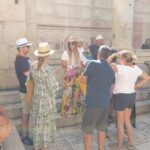

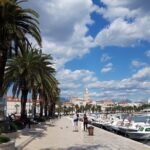

Walk It: More of Split at Ground Level
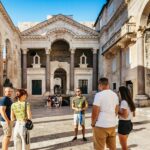
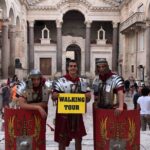

Inside the Palace Walls

Freshly written up around Split
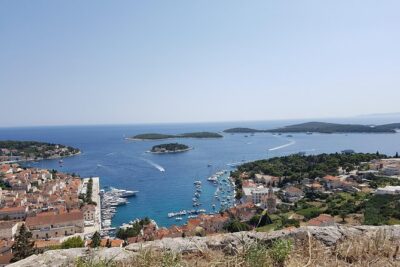


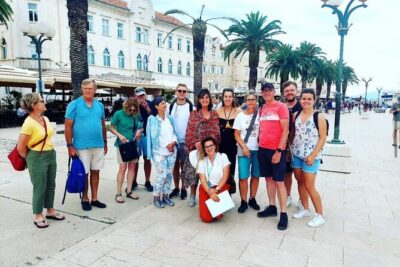

Split Old Town & Palace Walks, top to bottom.
 ★ 4.9Split: Old Town and Diocletian Palace Walking TourFrom $174,727 reviews
 ★ 5.0Walking Tour of Split and Diocletian’s PalaceFrom $482,588 reviews
 ★ 5.0Split & Diocletian’s Palace Walking TourFrom $211,125 reviews
 ★ 5.0Split Walking Tour with Professor of HistoryFrom $24926 reviews
 ★ 4.7Split: Diocletian Palace & Old Town Guided Walking TourFrom $17882 reviews
 ★ 4.8Split: Game of Thrones Tour with Diocletian’s Palace CellarFrom $41545 reviews
 ★ 5.0Diocletian’s Palace and Old Town SMALL GROUP Walking TourFrom $16502 reviews
 ★ 5.0SPLIT-PRIVATE Walking Tour of Diocletian’s Palace & Old TownFrom $240467 reviews
Browse the lists this tour appears in