
REVIEW · ZADAR OLD TOWN & SEA ORGAN TOURS
Zadar: Evening Walking Tour of the Old Town
Zadar at night has a way of slowing you down fast, and this 70-minute walk is built for that. You start in the old core on the peninsula, then you work your way through major landmarks, ending with the Sea Organ, where the sea turns architecture into sound. I love the tight focus, it packs a lot of “first time in Zadar” orientation into one comfortable hour. I also love the Sea Organ payoff, especially in evening conditions when the promenade feels extra atmospheric.
Two things make the experience feel worth the time. First, you get a guided thread through the Old Town so the streets, squares, and churches stop being random stops. Second, the guide’s storytelling brings names and places into context, from the Forum area to Kalelarga, Zadar’s best-known promenade street.
One consideration: it is an evening walking tour, and 70 minutes still means you are on your feet. If you want a long, slow sit-down break, you might feel a little rushed, so plan for quick pauses rather than long ones.
In This Review
- Key moments to look forward to
- A 70-minute route that teaches you Zadar’s shape fast
- Meeting at Five Wells Square, then getting oriented without stress
- Kalelarga and the old promenade street energy
- Forum, People’s Square, and the city center’s power spots
- St. Donatus and St. Anastasia: two big church stops, one compact payoff
- The Sea Organ by Nikola Bašić, where the sea becomes the music
- How much is $28, and why the value makes sense
- What group pace feels like, and what to bring
- Who this tour suits best
- Should you book this Zadar evening walk?
- FAQ
- How long is the Zadar evening walking tour?
- Where does the tour start?
- Is the tour guided, and what language is available?
- What major sights are included on the walk?
- Is the Sea Organ included?
- How much does it cost, and is cancellation flexible?
Key moments to look forward to
- Kalelarga and the main squares, so you learn Zadar’s center without getting turned around
- Five Wells Square as a starting point, a smart way to orient yourself early
- St. Donatus Church and St. Anastasia’s Cathedral, major sights in a compact route
- The Sea Organ by Nikola Bašić, sound created by the sea, not instruments
- A guide-led introduction to Zadar, which helps the old walls and monuments click
Other Zadar outings we thought were worth a look
- Zadar: Plitvice Lakes Guided Day Tour with Tickets★ 4.9 · 3,148 reviews
- Zadar: Kornati Boat Trip with Lunch and Swim Stops★ 4.5 · 1,498 reviews
- Zadar: Plitvice Lakes with Boat Ride and Zadar Old Town Tour★ 4.9 · 1,368 reviews
- From Zadar: Plitvice Lakes with Boat Ride & Zadar Old town tour★ 5.0 · 1,129 reviews
A 70-minute route that teaches you Zadar’s shape fast
This is the kind of tour that works when you have limited time and you want your bearings to be right from the start. The Old Town sits on a peninsula, surrounded by parks and city walls, and the walk is designed to show you how that setting frames the historic core. In practical terms, you are getting a layout lesson: where the key squares connect, where the big sights cluster, and how the waterfront fits into the story.
The timing also matters. Seventy minutes is short enough that you can handle it on an arrival day, yet long enough to feel like you actually saw the essentials rather than just passing by them. If you are trying to avoid “checklist sightseeing,” this format helps, because the guide keeps you moving with meaning attached to each stop.
And yes, this is an evening walk, so the mood tends to be softer. You are not looking at stone monuments in harsh noon light, and the promenade at the end often feels like a natural transition from city sightseeing to waterfront time.
Meeting at Five Wells Square, then getting oriented without stress

You meet at Trg Pet Bunara (Pet Bunara Square), also known as Five Wells Square. That is a useful choice because it puts you in the middle of the Old Town’s pedestrian web right away. From here, the guide begins with a short introduction to the city, so you know what you are looking at before you start stacking photos.
One of the best parts of this kind of meet-up spot is that it reduces decision fatigue. You do not need to figure out where to start, which gate to find, or which direction makes the most sense. The tour simply moves you from the introduction into the Old Town’s main sights.
It also sets you up for an easy mental map: Old Town landmarks, then the big promenade street, then the churches, then the waterfront. That order is not random, and it helps you remember the city as a connected walk rather than scattered scenes.
Kalelarga and the old promenade street energy
A major stop is Kalelarga, Zadar’s most popular street. This is where you see what the city feels like when locals and visitors mix. Even if you are not staying long, it helps to walk the street the way residents likely experience it on a regular evening: slow enough to notice details, but structured enough to keep your bearings.
Kalelarga is important on two levels. First, it is a genuine landmark, so it earns its place on any first-timer route. Second, it is a practical connector. When you learn how this street ties into squares and nearby sights, you can navigate Zadar later on your own without constantly checking your map.
Also, your guide’s stories here tend to matter. A guide who can connect street layout with historical context can turn a walk that would otherwise feel like “just strolling” into something you remember, like why certain spaces became centers in the first place.
Forum, People’s Square, and the city center’s power spots
The tour includes the Forum area and People’s Square. These stops are more than photo opportunities. They show you how Zadar’s civic life has been organized in public space for a long time. When you walk from one square to another with context, you start to understand the logic behind the city’s layout.
Here is what you should watch for: the way streets funnel you into these open spaces. City walls and the peninsula setting keep movement focused, and these central areas feel like natural stages. That stage effect is what makes squares memorable. You feel like you can picture everyday gatherings because the space still does that job.
If you are the type who likes to connect architecture to daily life, these center stops are where the tour earns its value. You are not only seeing landmarks, you are learning how the city “works” in walkable chunks.
More Zadar covered at walking pace
- Zadar: Guided Walking Tour
★ 4.8 · 445 reviews - Zadar City Tour 120min Walk
★ 5.0 · 203 reviews - Zadar Walking Tour sponsored by Gligora Cheese and deli.
★ 5.0 · 119 reviews - Zadar: Virtual Reality Guided History Walking Tour
★ 4.4 · 86 reviews - Zadar: Private Walking Tour Through 3,000 Years of History
★ 4.7 · 71 reviews
St. Donatus and St. Anastasia: two big church stops, one compact payoff
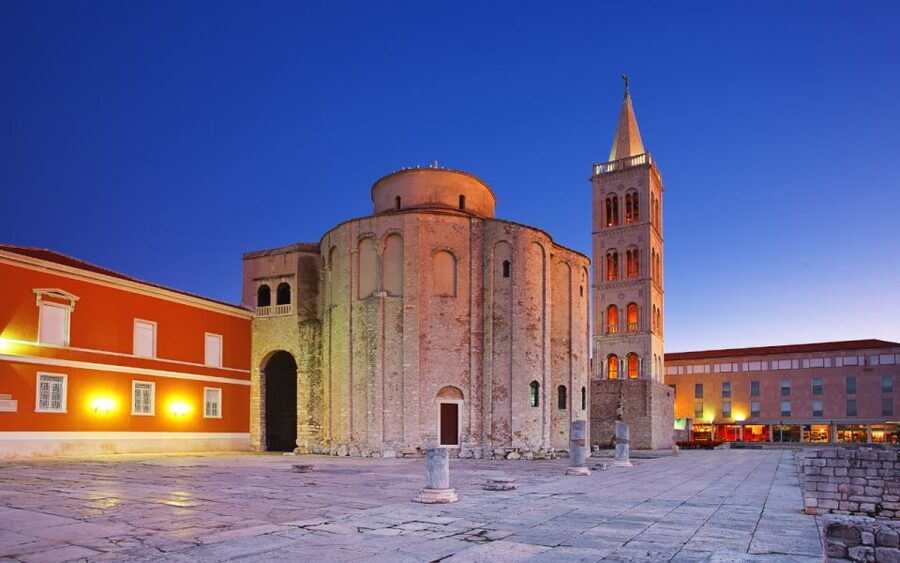
The route covers St. Donatus Church and St. Anastasia’s Cathedral. Even if you only skim a few details inside when doors are open, seeing these from the outside gives you immediate context for Zadar’s historic identity. They are the kind of churches that people remember because they are distinctive and they mark important points in the visual skyline.
The key thing about this tour is that it does not treat churches as isolated “things to see.” The guide keeps them connected to the story of the Old Town and what made this peninsula a cultural hub. That is how you avoid the classic walking-tour problem: you end up with a bunch of impressive stops and no real sense of how they relate.
A practical note for you: since the total walk is 70 minutes, the church stops are likely focused. Go with the mindset of a quick, meaningful look rather than expecting a long, slow museum-style visit.
The Sea Organ by Nikola Bašić, where the sea becomes the music
The star finish is the Sea Organ, designed by local architect Nikola Bašić. This is one of those places where you understand why Zadar is different from many other Adriatic towns. The Sea Organ is built into perforated stone stairs descending into the sea, and inside there is a system of pipes and whistles. When the sea moves, air is pushed through the system, producing sound.
The effect is genuinely hypnotic. The tone can feel wistful, and the volume can increase when a boat or ferry passes by. That detail matters because it changes your role from spectator to participant. The ocean is the performer, and you are standing in the middle of the setup.
Also, you can take advantage of the setting. The steps off the promenade are part of the experience, and you can swim from there while listening to the sound if conditions allow. Even if you do not swim, the idea gives the Sea Organ a more interactive feel than a typical waterfront attraction.
If you want the best chance at a satisfying sound experience, do not arrive with a strict expectation that it will be constant. The sea sets the tempo, so the tour’s evening timing helps, but the ocean is still the boss.
How much is $28, and why the value makes sense
At $28 per person for a 70-minute live guided walk, you are paying for two things: concentration and context.
Concentration means you hit major Old Town sights in one logical sequence. You are not spending your limited time figuring out how to combine Forum, central squares, Kalelarga, churches, and the Sea Organ into a route. The tour does that for you, and that saves energy and decision-making.
Context means a guide connects the “what” with the “why.” The reviews strongly emphasize how engaging and informative guides can be, with names like Jasmina, Marija, and Marina showing up as examples of guides who tell captivating stories and speak English clearly. That matters more than people think. When your guide explains what you are seeing, you stop treating Zadar like a set of postcards and start treating it like a place with a timeline.
So is it cheap? No. But for a one-hour evening orientation that includes the Sea Organ as a destination, the value holds. If you have limited days and you want to stop missing the main threads of the city, this price is reasonable for what you get.
What group pace feels like, and what to bring
Because it is a walking tour timed to 70 minutes, you should expect steady movement and short stops rather than long lingering. That is not a downside if you like momentum. It is a downside if you prefer slow wandering with lots of personal free time.
What to bring:
- Comfortable shoes, since the route is on foot and includes a waterfront segment
- A light layer for evening air along the promenade
- Your curiosity, because the story heavy parts are designed to make sights stick in your memory
If you are traveling with someone who hates structured plans, you can still use this tour as a backbone. Walk it once, then spend the rest of your night exploring streets you liked most.
Who this tour suits best
This is a strong fit if you:
- Are visiting Zadar for a short time and want the Old Town highlights in one hour
- Like evening atmosphere and want a waterfront stop with a real sense of place
- Want a guided thread through Forum, Five Wells Square, Kalelarga, and major churches
It is also a good option if you enjoy hearing city layout explained. The peninsula setting, parks, and city walls are part of the experience, and the tour uses them to give you orientation quickly.
If you already know Zadar’s history well and you do not need context, you might get more out of a self-guided evening walk. But for most first-time visitors, the guided structure saves time and makes your photos mean something later.
Should you book this Zadar evening walk?
I think you should book this tour if you want a simple, high-impact Old Town introduction that ends at the most distinctive Zadar feature, the Sea Organ. The 70-minute length is practical, and the route hits the big visual markers you will otherwise spend time hunting for.
Skip it only if you hate walking in the evening or you are looking for a long, leisurely experience with extended stops. Otherwise, this is a smart way to see Zadar’s center, learn how it connects, and finish with sound that the sea creates on its own terms.
FAQ
How long is the Zadar evening walking tour?
The tour lasts 70 minutes.
Where does the tour start?
You meet at Trg Pet Bunara (Pet Bunara Square) in Zadar.
Is the tour guided, and what language is available?
Yes. It is a live tour with an English speaking guide.
What major sights are included on the walk?
The tour covers the Old Town main sights such as Forum, Five Wells Square, Kalelarga, People’s Square, St. Donatus Church, St. Anastasia’s Cathedral, and the Sea Organ.
Is the Sea Organ included?
Yes. The tour includes the Sea Organ, designed by Nikola Bašić, and it is part of the walking route.
How much does it cost, and is cancellation flexible?
The price is $28 per person. There is free cancellation up to 24 hours in advance for a full refund.
Walk It: More of Zadar at Ground Level



Zadar, A Few More Outings




Freshly written up around Zadar
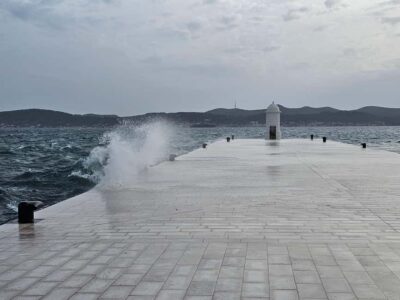
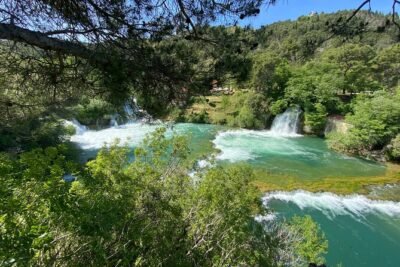
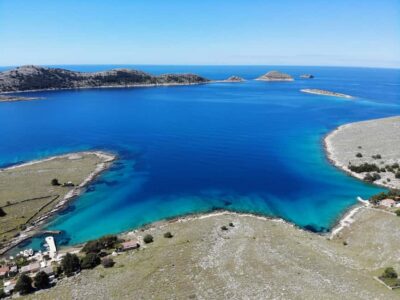

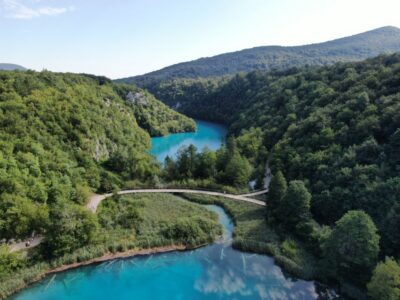
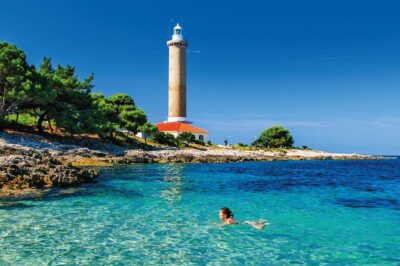
Zadar Old Town & Sea Organ Tours, top to bottom.
 ★ 4.9Zadar: Plitvice Lakes Guided Day Tour with TicketsFrom $883,148 reviews
 ★ 4.8Zrmanja River: Half-Day Guided Kayaking Tour Near ZadarFrom $641,817 reviews
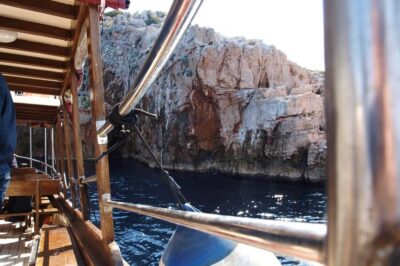 ★ 4.5Zadar: Kornati Boat Trip with Lunch and Swim StopsFrom $641,498 reviews
 ★ 4.9Zadar: Plitvice Lakes with Boat Ride and Zadar Old Town TourFrom $531,368 reviews
 ★ 4.9From Zadar: Island-Hopping Speedboat Tour with DrinksFrom $381,247 reviews
 ★ 4.1Zadar: Kornati and Telašćica Full-Day Boat Trip with LunchFrom $511,193 reviews
 ★ 4.7Zadar: Plitvice Lakes Full-Day Guided Tour with a Boat RideFrom $58807 reviews
 ★ 3.8From Zadar: Kornati National Park and Telascica Boat TripFrom $64788 reviews
Browse the lists this tour appears in