
REVIEW · ZADAR OLD TOWN & SEA ORGAN TOURS
Zadar Walking Tour sponsored by Gligora Cheese and deli.
Zadar’s old streets make sense in 90 minutes. This guided walk is built for first-timers and history fans, starting right at Narodni trg so you do not waste time hunting. I like how the route hits the big names fast, and how the guide throws in practical picks for where to eat and shop, including Gligora Cheese and deli style stops.
The pace is brisk but comfortable, and most church and monument stops have admission listed as free. The main drawback is simple: you cover a lot of ground in a short time, and in warm weather the walk between stops can feel a bit much.
If you want a guided foundation before you wander on your own, this is a solid value at $18.14 for an English-speaking small group tour of about 1 hour 40 minutes.
In This Review
- Key highlights worth planning for
- Meeting on Narodni trg: an easy start, fewer headaches
- People’s Square and City Guard walls: the medieval skeleton of Zadar
- From St Lawrence church remains to pre-Romanesque clues
- St Simeon’s silver casket: a stop that feels surprisingly human
- Five Wells and Queen Jelena Madijevka Park: water engineering in plain sight
- Trznica Zadar market: where locals shop, and where your guide earns their keep
- Church of St Chrysogonus and St Anastasia: Romanesque and Cathedral scale
- St Donatus and the Roman Forum: the circular icon in everyday street life
- What the best guides actually do for you on this walk
- Price, logistics, and the walking reality of 1 hour 40
- Who should book this Zadar walking tour, and who should skip it
- Should you book this Zadar Walking Tour?
- FAQ
- How long is the Zadar Walking Tour?
- What is the price per person?
- Where is the meeting point?
- Is the tour offered in English?
- Are there multiple departure times?
- What is the maximum group size?
- Do the stops require paid admission?
- Do I get a mobile ticket?
- Can I cancel for a full refund?
Key highlights worth planning for
- Easy central meeting spot on Narodni trg, right where most first-time walks begin
- Major landmarks in one loop including Five Wells, Trznica, St Donatus, and the Cathedral of Saint Anastasia
- Free-entry stops listed for each landmark so your money goes to the guide, not entrances
- Local food and cheese guidance tied to the Gligora sponsor, plus market time at Trznica
- A guide who answers questions and keeps the pace moving, with examples like Melina, Jasmina, Sara, and Inez from recent tours
Other Zadar outings we thought were worth a look
- Zadar: Plitvice Lakes Guided Day Tour with Tickets★ 4.9 · 3,148 reviews
- Zadar: Kornati Boat Trip with Lunch and Swim Stops★ 4.5 · 1,498 reviews
- Zadar: Plitvice Lakes with Boat Ride and Zadar Old Town Tour★ 4.9 · 1,368 reviews
- From Zadar: Plitvice Lakes with Boat Ride & Zadar Old town tour★ 5.0 · 1,129 reviews
Meeting on Narodni trg: an easy start, fewer headaches
If you only remember one practical thing about this tour, make it the meeting point. You start at People’s Square, Narodni trg, and that is about as clear as it gets in an old town. Narodni trg is the civic center of Zadar, so even if you arrive early, you are in the right orbit.
The walk is designed around the Old Town core, so you are not bouncing across neighborhoods on public transit. And since the tour ends back at the same meeting point, you do not need to figure out a separate drop-off.
You also get a real scheduling perk: departures run at three morning or afternoon options, so you can match it to your day. That matters in Zadar because you often want a morning tour to beat the heat, or a later one when you still have energy for dinner.
Lastly, this is a small group max, up to 30 people, which helps the guide keep track of the group and answer questions along the way. In the reviews, I saw lots of praise for guides like Melina and Sara keeping it lively and understandable, even when people had questions.
People’s Square and City Guard walls: the medieval skeleton of Zadar
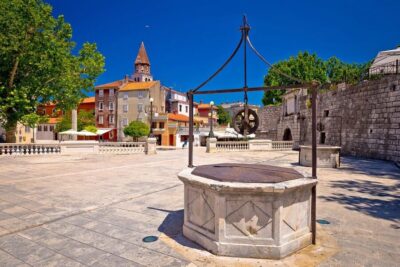
Stop one is People’s Square, also called Narodni trg. This is not a random plaza. It has roots back to the Middle Ages, and it was formed as Platea Magenta, the center of public life. That is your first clue that Zadar’s present-day layout is built on earlier civic needs.
On the northern side, you see the City Guard, Gradska straža. The building was designed by the Venetian architect Michele Sanmicheli and built in 1562. It is one of those details that feels dry on paper, but on the ground it snaps into place: you can look around and understand why this square mattered.
Right in the same area, you also get a sense of how layered the city is. Even if you are not a museum person, it is useful to know you are standing on a long-running stage for civic life. Guides like Melina and Mirena often bring these facts to life with street-level context, which is exactly what you want on day one.
Possible drawback to keep in mind: you are starting with landmarks, so if you are hoping for a more scenic waterfront start, this tour is more about old-town architecture than views.
From St Lawrence church remains to pre-Romanesque clues
Next comes the remains of St Lawrence church, a pre-Romanesque survival from the 11th century. The tricky part is that it is not in an obvious, standalone building. You reach it through the premises of Cafe Lovro on the square.
So what makes this stop worth your time? It gives you a concrete example of how early Zadar is still present, just not always in a way that looks like a big monument. When you later walk the old streets on your own, you will recognize the city as more than medieval theater sets.
This stop is also a good temperature check for the tour style. You get quick, targeted history with location context, so you do not feel like you are listening to a lecture while waiting for the next corner. It is designed to keep your attention while still moving.
Because the route is short between stops, this part can work well for kids and multi-generation groups too, as long as everyone is fine with a steady walk. One family-friendly note from recent experiences: guides asked questions and adjusted their storytelling to keep a 10-year-old engaged.
St Simeon’s silver casket: a stop that feels surprisingly human
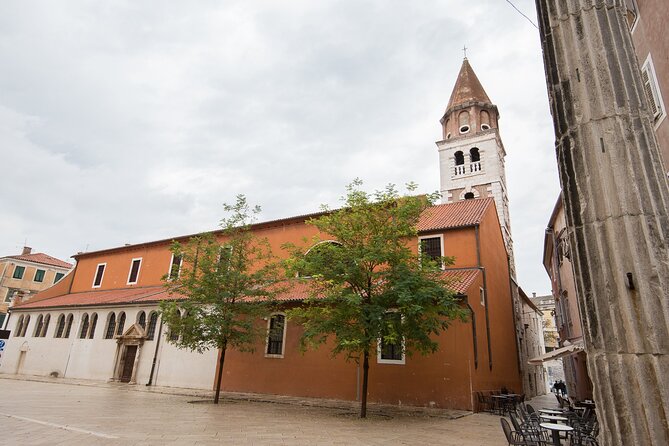
Then the tour moves to the Church of St Simeon, where the star feature is a mummified body attributed to Simeon, often described as the God-receiver from the Gospel of Luke. The body is kept in a silver casket of major artistic value, and Zadar preserves this relic because Saint Simeon is the city’s patron saint.
Now, you do not have to be religious to feel the emotional weight of this. It’s one of the few stops on the walk that feels intimate, like you are meeting a story rather than just admiring a building. And since this is Zadar, the relic is not just a generic Christian reference. It is attached to the city’s identity.
There is also an art angle: the casket is considered among the most valuable medieval goldsmith work in Croatia. That means you are not only hearing a religious narrative. You are also learning why craftsmanship and devotion both landed here.
Timing note: this is a quick stop, so if you want slow photo time, you will likely get a better second look later. The tour is about orientation first.
More Zadar covered at walking pace
- Zadar: Guided Walking Tour
★ 4.8 · 445 reviews - Zadar City Tour 120min Walk
★ 5.0 · 203 reviews - Zadar Walking Tour sponsored by Gligora Cheese and deli.
★ 5.0 · 119 reviews - Zadar: Virtual Reality Guided History Walking Tour
★ 4.4 · 86 reviews - Zadar: Private Walking Tour Through 3,000 Years of History
★ 4.7 · 71 reviews
Five Wells and Queen Jelena Madijevka Park: water engineering in plain sight
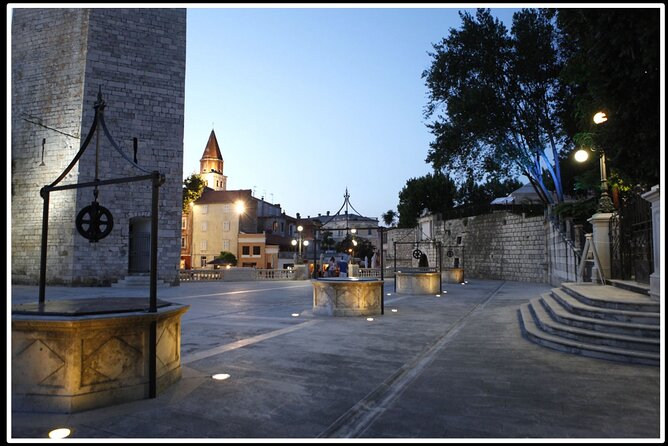
Five Wells is where the tour’s medieval logic becomes almost practical. The square name comes from five wells lined up in a row. In the Middle Ages, the area sat near a defensive ditch below the old city walls. Later, during the 16th century, the Venetians helped Zadar withstand Turkish sieges by building a large water cistern, with those five ornamental wellheads.
It is one of those places where the architecture is basically an answer to a survival problem. When you understand that, the site stops being just a pretty detail. It becomes infrastructure history.
Right above and around this area is Perivoj kraljice Jelene Madijevke, Queen Jelena Madijevka Park. The park sits on top of the Grimani bastion by Five Wells Square. Founded in 1829 by Austrian commander Baron Franz Ludwig von Welden, it is described as the first public park in Dalmatia, built by turning a military structure into a garden space.
If you like seeing how cities reuse land, this is a satisfying stop. You also get a short break from walking intensity without losing the theme of old Zadar. Think of it as a quick mental reset before the market part.
What to watch for: parks and squares can still be bright and hot in warm months. Bring water and plan to shade-hop when you can.
Trznica Zadar market: where locals shop, and where your guide earns their keep
Trznica Zadar is Zadar’s main green market, located in the old part of the peninsula area, with a closed fish market as part of the complex. This is not a souvenir bazaar vibe. It is presented as one of the key traditional places for urban daily life.
You will hear that it has an uninterrupted long story, with references to the idea that it has the longest uninterrupted history in Zadar. Even though it has been in its current place since 1952, it used to be at the Roman Forum location. That is a big hint that markets and civic life have moved around in the same core zones for centuries.
Expect an active, food-focused stop: locally grown organic food, fruits, vegetables, freshly caught fish, and home-grown meat. There are also traditional indigenous products and souvenirs.
This is also where the Gligora cheese sponsor makes sense. In reviews, the cheese connection is a highlight, with guides taking people to a cheese store and including cheese tasting. If you like eating local as part of your sightseeing plan, this is the point where the tour stops feeling like a history class and turns into a practical Zadar skills lesson.
If you want the guide to help you choose what to buy later, ask questions here. Tell them what you like, and you will likely get specific suggestions rather than generic advice.
Church of St Chrysogonus and St Anastasia: Romanesque and Cathedral scale
After the market, the tour hits two church stops that show different styles and different eras.
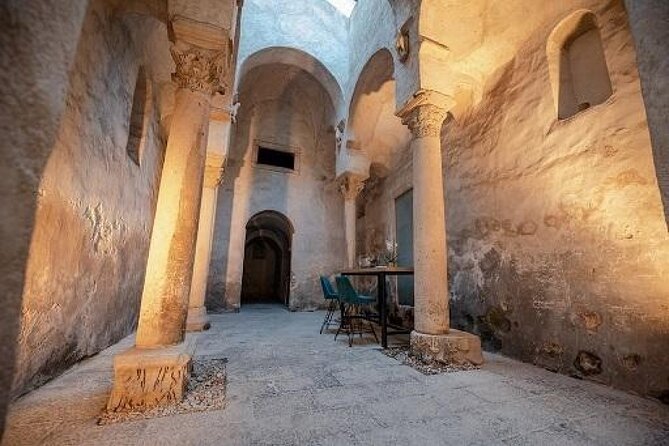
First is the Church of St Chrysogonus, called Crkva sv. Krševana. The Romanesque church was consecrated in 1175. It was built at the site of a Roman emporium and replaced an earlier Church of Saint Anthony the Hermit. It is also noted as the only remaining part of a larger medieval Benedictine abbey.
A very human story sits inside the building’s timeline: in 1387, Elizabeth of Bosnia, described as a murdered queen dowager of Hungary and Dalmatia, was secretly buried in the church. Her body remained for three years before being moved to the Székesfehérvár Basilica.
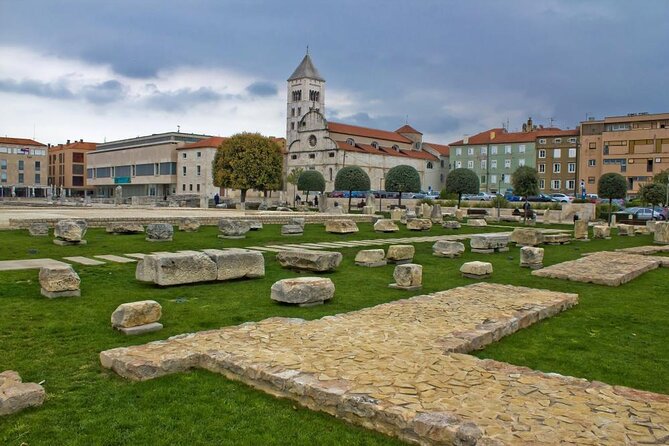
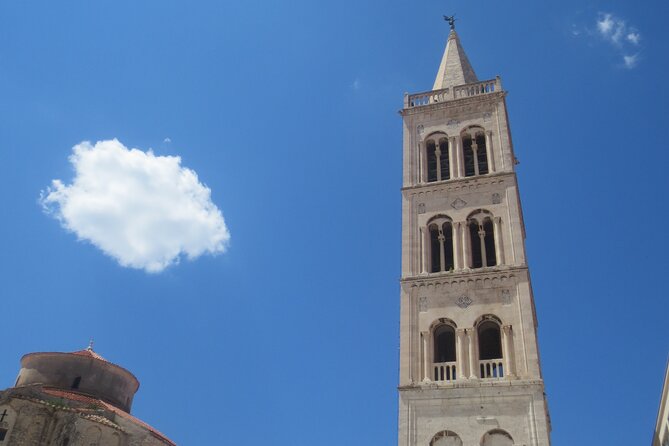
Then you get the Cathedral of Saint Anastasia, built in the 12th and 13th centuries. It has a richly decorated facade and a three-nave interior, with remains of frescoes in the side apses. Zadar’s cathedral was badly bombed during WWII and has since been reconstructed.
On the altar in the left apse is a marble sarcophagus containing relics of St Anastasia. The choir has lavishly carved stalls. If the cathedral is closed when you arrive, you can still peek inside via a glass vestibule, which the tour notes as often available.
Practical consideration: since you are on a timed walking loop, plan for short interior time. This is about seeing and understanding, not lingering for hours.
St Donatus and the Roman Forum: the circular icon in everyday street life
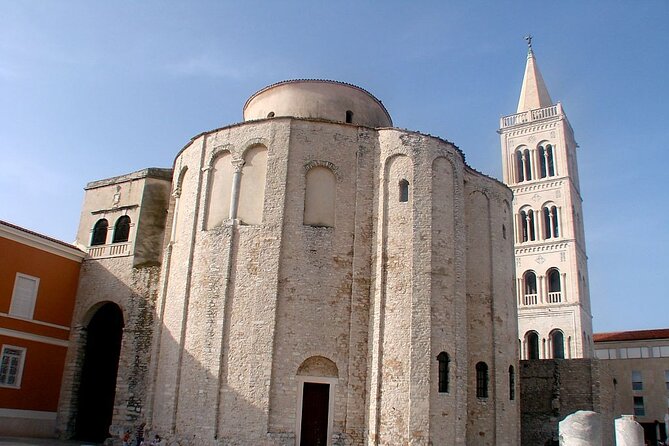
St Donatus is often Zadar’s most recognizable silhouette, and this tour treats it with the context it deserves. It is tied directly to the ancient Forum, constructed between the 1st century BC and the 3rd century AD. The Forum was the civic and religious hub in Roman times, and the church dominates one side of this space.
You will hear how the church dates from the beginning of the 9th century and is Byzantine-style and circular, commissioned by a bishop after whom it was named. It is also described as one of only a handful of buildings from the early Croatian kingdom that survived the Mongol invasion of the 13th century.
Inside, the details are the point. The church is described as having a simple, unadorned interior, with two complete Roman columns recycled from the Forum. Even the paving slabs are part of the story, with slabs revealed after the original floor was removed.
Also, this is not a silent relic you never see used. The tour notes that the church has not been used for services for around 200 years, and today it often serves as a concert hall or exhibition space.
Why this stop matters for your trip: once you see St Donatus in its Forum context, you start noticing Roman leftovers all over Zadar. The city suddenly feels like one long set of overlaps rather than isolated sights.
What the best guides actually do for you on this walk
The itinerary is strong on paper. But what makes this tour stand out in real life is how guides shape it into an easy, memorable story.
In recent experiences, guides such as Melina, Jasmina, Sara, Hajdi Josic, and Lucinja are repeatedly praised for being engaging and for keeping the walk moving with the right amount of detail. You do not just get dates and names. You get why those facts mattered to everyday life.
Food guidance is a consistent theme. Because the tour is sponsored by Gligora Cheese and deli, you get the kind of advice that helps you shop like a local. One highlight from recent tours: a guide bringing the group through the fish market and including cheese tasting, plus tips on what to buy and where to eat afterward.
Pace is another big factor. The tour is about 1 hour 40 minutes, which means you will cover major stops without turning it into an all-day mission. That pace also means your guide has to pick the most useful points, not just the most impressive ones. In reviews, people liked the balance between information and movement.
If you want to maximize value, do this: ask your guide for one practical recommendation during the market stop, then follow it that same evening. A tour that helps you eat well in the next 24 hours is doing its job.
Price, logistics, and the walking reality of 1 hour 40
Let’s talk value in plain terms. You pay $18.14 per person for an approximately 1 hour 40 minute guided walk in English, with a maximum group size of 30. Most listed landmarks are free to enter on the tour plan, so you are paying mainly for interpretation, routing, and the local shopping and eating advice.
For many first-time visitors, that is a smart spend. You could wander alone and see the big sights, sure. But a good guide helps you connect the dots: Roman Forum to medieval civic square to defensive water works to a modern cathedral rebuilt after WWII.
The flexible departure options are also a value add because they reduce scheduling stress. You can pick a morning or afternoon slot that fits your energy and the sun.
Main consideration is heat and comfort. The walking is short between stops, but the old town can still feel warm and exposed in certain months. If you tend to overheat, bring water and plan for shade breaks whenever you can.
Also, one hiccup showed up in past experiences: some people had trouble finding the exact meeting spot and felt directions were not clear enough. In your case, the best move is simple: aim to arrive a few minutes early at Narodni trg and use your map app to confirm the square location before you look for your guide.
Who should book this Zadar walking tour, and who should skip it
This is a good fit if you want:
- A fast orientation to Old Town Zadar, with major monuments and churches in one loop
- Free-entry stops where your guide explains what you are looking at
- Practical food advice, including cheese and market tips, tied to Gligora Cheese and deli
It is also a nice choice for history buffs who like facts, but prefer them delivered in a walkable way. People also described the tour as working well for adults and kids, especially when guides keep questions flowing and storytelling clear.
You might want to consider another option if:
- You dislike brisk pacing and want long, slow museum-style time
- You are very sensitive to warm weather walking between stops
- You need extremely detailed free time at each church. This tour is built for seeing and understanding, not for hour-long interior hangs
Should you book this Zadar Walking Tour?
I would book it if you are visiting Zadar for the first time and you want a guided route that makes the city’s layout click fast. The best part is that you get a lot of meaningful stops for the price, and many of the landmarks are free to enter as listed in the route. Add in the market time and the cheese and deli angle, and it becomes more than photo ops.
Before you go, do one thing that improves your whole experience: plan your appetite. Decide what you want to eat after the tour, then use your guide’s advice at Trznica and the cheese-related stop. That turns a guided walk into an evening you will actually remember.
FAQ
How long is the Zadar Walking Tour?
The tour runs about 1 hour 40 minutes.
What is the price per person?
The price is $18.14 per person.
Where is the meeting point?
The tour meets at People’s Square, Narodni trg, 23000, Zadar, Croatia, and it ends back at the same meeting point.
Is the tour offered in English?
Yes, it is offered in English.
Are there multiple departure times?
Yes. You can choose from three morning or afternoon departures.
What is the maximum group size?
The tour has a maximum of 30 travelers.
Do the stops require paid admission?
The tour lists admission for the stops as free.
Do I get a mobile ticket?
Yes, the tour uses a mobile ticket.
Can I cancel for a full refund?
Yes. You can cancel for a full refund if you cancel at least 24 hours in advance.
Walk It: More of Zadar at Ground Level


Zadar, A Few More Outings




Freshly written up around Zadar
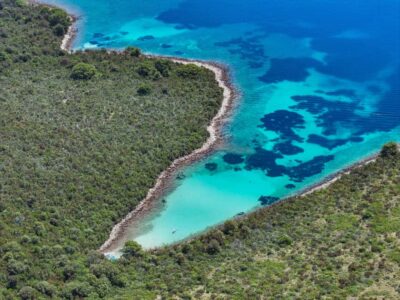
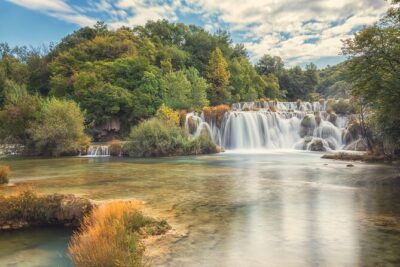
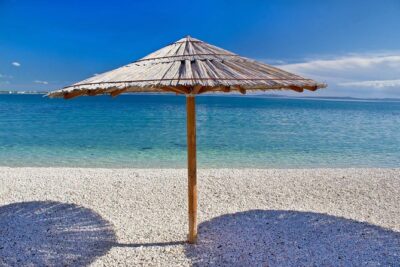
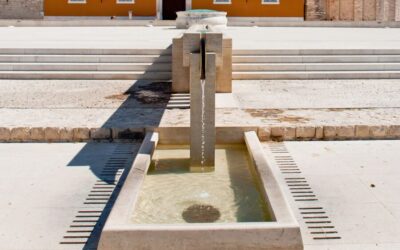
Zadar Old Town & Sea Organ Tours, top to bottom.
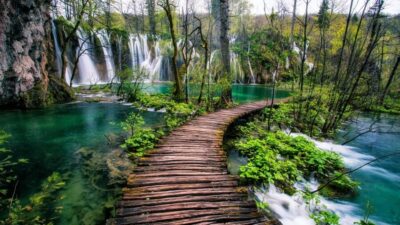 ★ 4.9Zadar: Plitvice Lakes Guided Day Tour with TicketsFrom $883,148 reviews
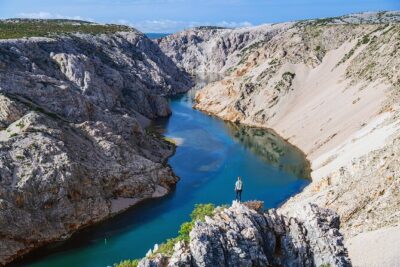
 ★ 4.8Zrmanja River: Half-Day Guided Kayaking Tour Near ZadarFrom $641,817 reviews
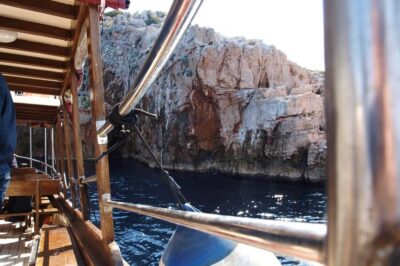 ★ 4.5Zadar: Kornati Boat Trip with Lunch and Swim StopsFrom $641,498 reviews
 ★ 4.9Zadar: Plitvice Lakes with Boat Ride and Zadar Old Town TourFrom $531,368 reviews
 ★ 4.9From Zadar: Island-Hopping Speedboat Tour with DrinksFrom $381,247 reviews
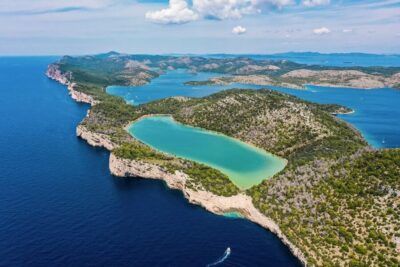 ★ 4.1Zadar: Kornati and Telašćica Full-Day Boat Trip with LunchFrom $511,193 reviews
 ★ 4.7Zadar: Plitvice Lakes Full-Day Guided Tour with a Boat RideFrom $58807 reviews
 ★ 3.8From Zadar: Kornati National Park and Telascica Boat TripFrom $64788 reviews
Browse the lists this tour appears in