

REVIEW · ZADAR OLD TOWN & SEA ORGAN TOURS
Zadar City Tour 120min Walk
Zadar’s waterfront installations start the story. This 120-minute Zadar City Tour pairs modern sea-powered art with the city’s Roman and medieval layers. I like that it’s organized and easy to follow, and I especially like the small-group size that keeps the walk feeling personal, not rushed.
Two stops set the tone fast: the Sea Organ and the solar-powered Greeting to the Sun. You get clear explanations at each stop, plus a route that hits the big visual landmarks of Old Town without turning into a long museum day.
One consideration: it’s still a walk with limited sit-down time, toilets aren’t included, and it isn’t recommended if mobility is an issue. Also, some churches and institutions have viewing outside only, so you will not get full interior visits.
In This Review
- Key highlights at a glance
- How this 2-hour Zadar walk actually feels
- Starting at the solar installation: Greeting to the Sun
- Sea Organ: hearing the sea play the city
- Saint Anastasia Cathedral area: Romanesque scale without waiting in lines
- The Forum stop: Roman ruins you can read like a map
- St. Donatus and the rotunda moment
- St. Maria Benedictine Monastery area: art, but mostly from outside
- Sea Gate and the Old Town squares: a smooth shift from monuments to streets
- St. Simon, Rector’s Palace, Five Wells, and the Captain’s Tower
- Perivoj park and the finishing note near the Land Gate
- Price, value, and what is actually included
- Who should book this, and who should skip it
- Quick tips to get the most from the walk
- Should you book this Zadar City Tour?
Key highlights at a glance
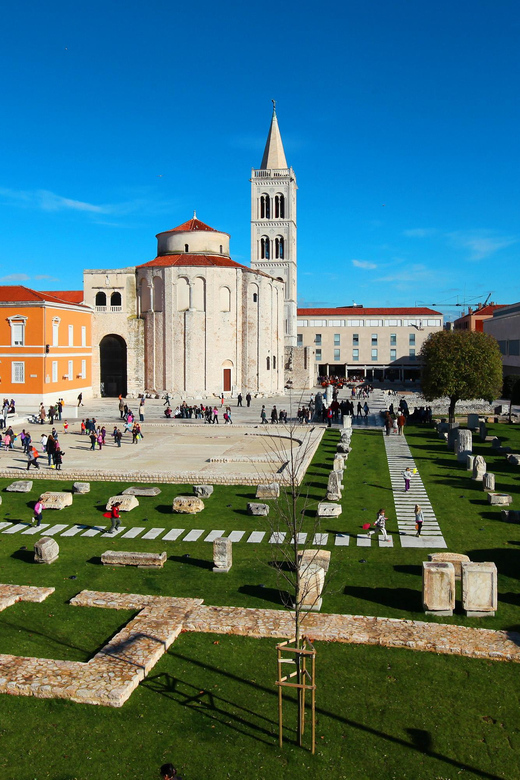
- Sea Organ (2005), where waves power the sound through underground pipes
- Greeting to the Sun, solar system floor art you can revisit later at night
- St. Donatus and the Roman Forum area, major landmarks packed into a short route
- Saint Anastasia Cathedral area, the biggest Romanesque church in Dalmatia from the outside
- Maraschino and cheese tastings may be included along the way
- Max 16 travelers, so questions feel welcome and the pace stays human
Other Zadar outings we thought were worth a look
- Zadar: Plitvice Lakes Guided Day Tour with Tickets★ 4.9 · 3,148 reviews
- Zadar: Kornati Boat Trip with Lunch and Swim Stops★ 4.5 · 1,498 reviews
- Zadar: Plitvice Lakes with Boat Ride and Zadar Old Town Tour★ 4.9 · 1,368 reviews
- From Zadar: Plitvice Lakes with Boat Ride & Zadar Old town tour★ 5.0 · 1,129 reviews
How this 2-hour Zadar walk actually feels
This tour is built for the sweet spot most cruise-port or short-stay visitors need: you get the headline sights in about 2 hours, and the route flows through the historic core without feeling like a marathon. The group size stays capped at 16, which matters in a place like Zadar where narrow streets can otherwise turn a sightseeing plan into a traffic jam.
The guiding style is practical. You will get orientation at the start, then stop-by-stop context that links one era to the next. That is the real value here. You are not just collecting photos of famous buildings. You are learning what changed, who controlled the city at different times, and why each landmark ended up where it did.
There is also a nice rhythm. You walk a bit, listen, pause at viewpoints, then move on. Reviews highlight how guides like Dorja and Ivan kept the pace comfortable and easy to hear, even for seniors. If you prefer a structured tour but still want to wander on your own afterward, this format fits.
Starting at the solar installation: Greeting to the Sun
You begin at the Greeting to the Sun installation, where the guide points out the solar system-themed design. The floor installation is powered by a solar panel concept, so you can already tell this is a modern chapter in Zadar’s story, not just a medieval one.
Look for the guide with a white ZADAR CITY TOUR umbrella near the solar system installation at the start time. If you are on an 11 AM departure, this is your kickoff moment, typically quick, but it sets up what you will keep seeing: the city blends eras in real space.
Here’s the best part for your own planning. If your schedule allows, go back later the same day. One tip from past guests is that the Greeting to the Sun looks spectacular at night, once the waterfront lights and the solar artwork are doing their thing. Even if your tour day is bright and busy, you can still make the evening payoff.
Sea Organ: hearing the sea play the city
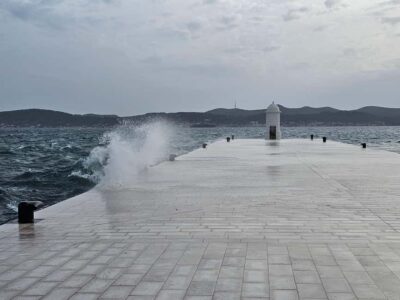
Next comes the Sea Organ, one of Zadar’s most talked-about waterfront installations. It is shaped like a piano keyboard staircase along the promenade, and the idea is simple: the sea “plays” the instrument.
What makes it memorable is the mechanism. Past guests described how passing vessels and waves create wake, which pushes air through underground pipes. That moving air then produces sound through the walkpath. It is a clever use of environment as the energy source, and once you learn the logic, you hear the place differently.
This stop is short, around 10 minutes, but it is one of those “stop and actually pay attention” moments. If you rush it, you miss what makes it special. I would treat this as your first unplanned pause of the day. Let the waves do their work while the guide explains what you are hearing and why it was designed this way.
Saint Anastasia Cathedral area: Romanesque scale without waiting in lines
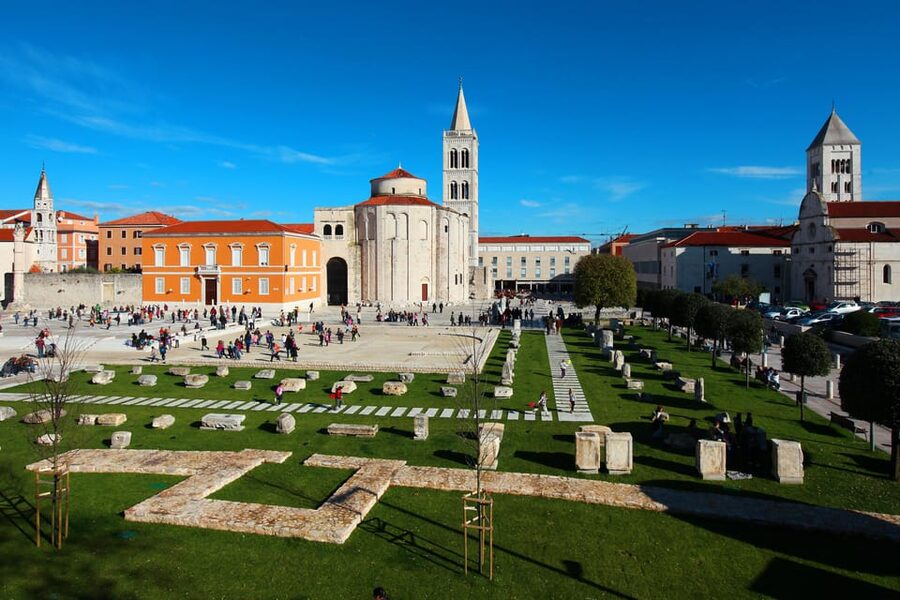
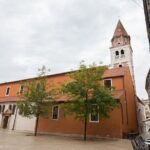
The tour then heads to the Cathedral of Saint Anastasia area. From the outside, you get a sense of why it is described as the biggest Romanesque church in Dalmatia. The guide will point out that it is the resting place associated with the city patron, Anastasia.
The key detail for your expectations: no entrance is included here. You are viewing the cathedral area as part of the Old Town walk, not doing an indoor stop. For some people, that is perfect, because it keeps the 2-hour schedule intact. For others, it means you might still want a later visit if interiors matter to you.
If you like big exterior architecture, this stop still delivers. If you only want indoor churches, you may feel like you are ticking boxes. I treat it as a “scale check” before the tour moves deeper into the Roman Forum and the pre-Romanesque era.
More Zadar covered at walking pace
- Zadar: Guided Walking Tour
★ 4.8 · 445 reviews - Zadar City Tour 120min Walk
★ 5.0 · 203 reviews - Zadar Walking Tour sponsored by Gligora Cheese and deli.
★ 5.0 · 119 reviews - Zadar: Virtual Reality Guided History Walking Tour
★ 4.4 · 86 reviews - Zadar: Private Walking Tour Through 3,000 Years of History
★ 4.7 · 71 reviews
The Forum stop: Roman ruins you can read like a map

One of the most satisfying parts of this route is the Forum area, tied to a 1st-century BC Roman Forum layout. The guide connects the dots so you see what you are looking at instead of just noticing scattered remnants.
This stop helps you understand the geography of Zadar’s Old Town. The Forum is positioned in the middle of the peninsula area, surrounded by remains of ancient Roman architecture. When you know that it was once a civic and public space, it becomes easier to imagine what the streets looked like when Rome was in charge.
Time is generous enough for a quick “visual recon” but short enough to keep momentum. Expect around 15 minutes here. Also, since you are not stuck indoors, you can stay oriented even if your day includes a lot of walking already from port to Old Town.
St. Donatus and the rotunda moment
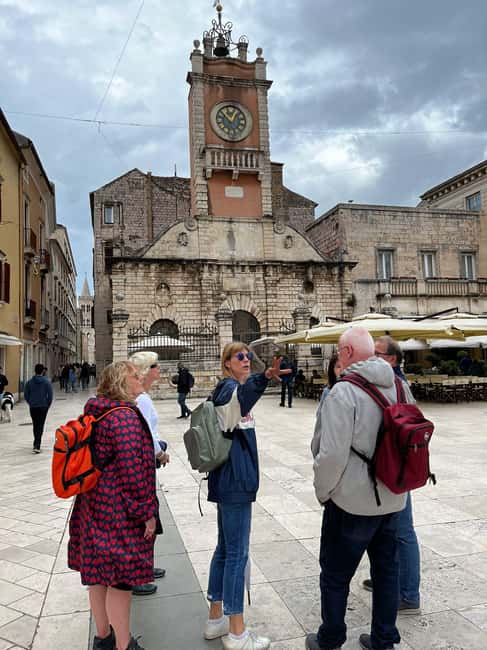
Then you hit the Church of St. Donatus, a landmark that looks instantly recognizable once you see it. This is the 9th-century church built in a pre-Romanesque style, and it sits as a huge rotunda placed in the heart of the Roman Forum complex.
Again, no entrance is included. You are meant to take in the visual impact and the relationship between eras: Roman Forum structure outside, Donatus as the monumental layer on top. It is one of the clearest examples on the walk of how Zadar keeps building on earlier foundations.
If you like architecture, this is where your photos usually turn out best without even trying. The building’s shape and placement practically frame the surrounding story by themselves. Even if you do not go inside any church on the tour, this stop is still a core reason to book.
St. Maria Benedictine Monastery area: art, but mostly from outside
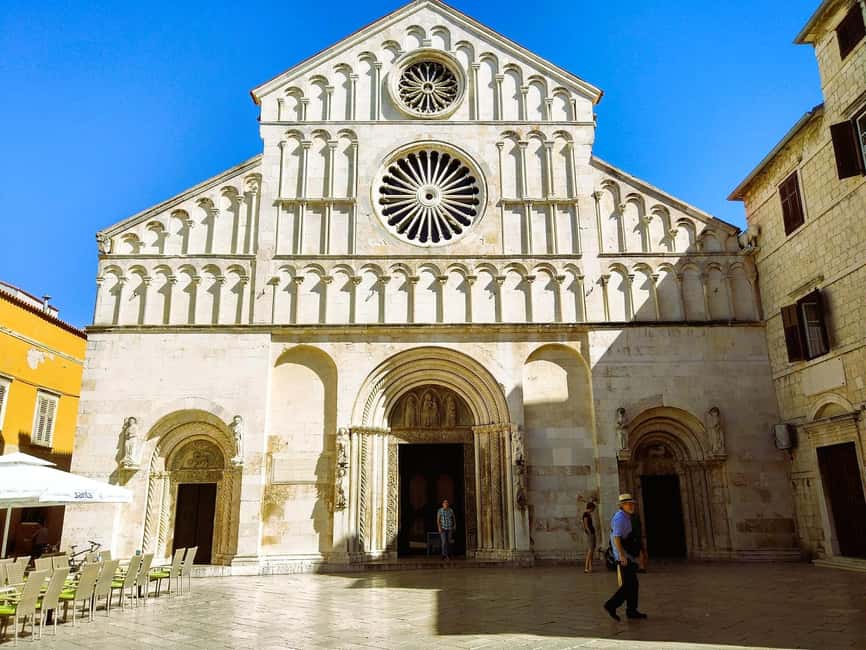
Next is the Benedictine Monastery of St. Maria area, including a Renaissance church connected to the 11th-century Benedictine feminine convent. The guide will mention that there is a permanent exposition of religious arts, but this walk stop does not include entrance.
So what do you get? Mostly context and exterior viewing. You learn what the monastery represents historically, then you move on. If you are the type who wants museum time, you might later add an independent visit to anything you are interested in.
This is still a helpful stop because it expands the story beyond Rome and early medieval architecture. It signals that Zadar’s identity was shaped by religious communities long after the Roman era faded. It also gives the feet a short break before you continue to the sea gate and squares.
Sea Gate and the Old Town squares: a smooth shift from monuments to streets
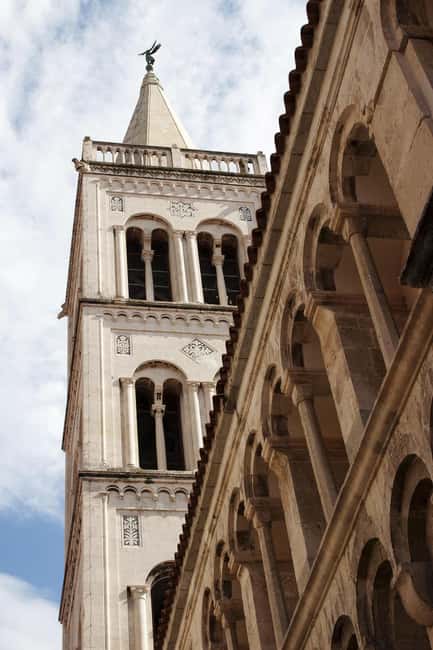
After the churches and Forum area, the tour shifts into the street-level parts of Zadar. The Sea Gate (Morska vrata) is up next, a 16th-century city gate with Roman elements. Think of it as a boundary marker, the place where the old city says, this is where coastal life and fortifications meet.
Then you land at Narodni trg, a medieval square with a 16th-century loggia and a city guard element. This is one of those stops that makes you realize Zadar is not just monuments on postcards. It has lived-in public spaces that still shape how you move through the city.
These are also easier stops if you are tired. You can pause, look around, and take in the surrounding architecture without the urgency of an interior visit. If your plan includes a lunch or gelato afterward, these squares are smart waypoints.
St. Simon, Rector’s Palace, Five Wells, and the Captain’s Tower
This mid-to-late part of the walk is where you get a “best hits” feeling. There are several exterior-only viewing stops, but each one contributes a different chapter.
- Church of St. Simon: you will see the church that houses the saint’s body inside a huge 14th-century sarcophagus described as a goldsmith’s masterpiece. No entrance is included, but the detail is worth knowing because it changes how you look at the building.
- Knezeva Palaca Zadar / Rector’s Palace Zadar: a recently restored prince’s palace that you view from the outside.
- Five Wells: a renaissance square with 5 well crowns, a visual landmark that feels quirky in a good way because it is so specific.
- Captain’s Tower: the tower with medieval crown walls, which helps you keep the fortification theme alive as you continue deeper into the Old Town layout.
These stops are short, a few minutes each. That can be a downside if you prefer long explanations at fewer places. But if you want a compact overview, it is exactly the right strategy.
Also, this stretch is where many guides get extra credit for clarity and pacing. If you ever feel like history explanations are turning into a lecture, this is the moment to remind yourself: you are walking through layers, not sitting in a classroom. When the guide times it well, it feels like you are reading a story that happens to be built in stone.
Perivoj park and the finishing note near the Land Gate
The tour then takes you to Perivoj kraljice Jelene Madijevke, described as one of the first public parks in Croatia. This is a nice reset after centuries of buildings. You still get a viewpoint and a break, and it makes the end of the route feel less abrupt.
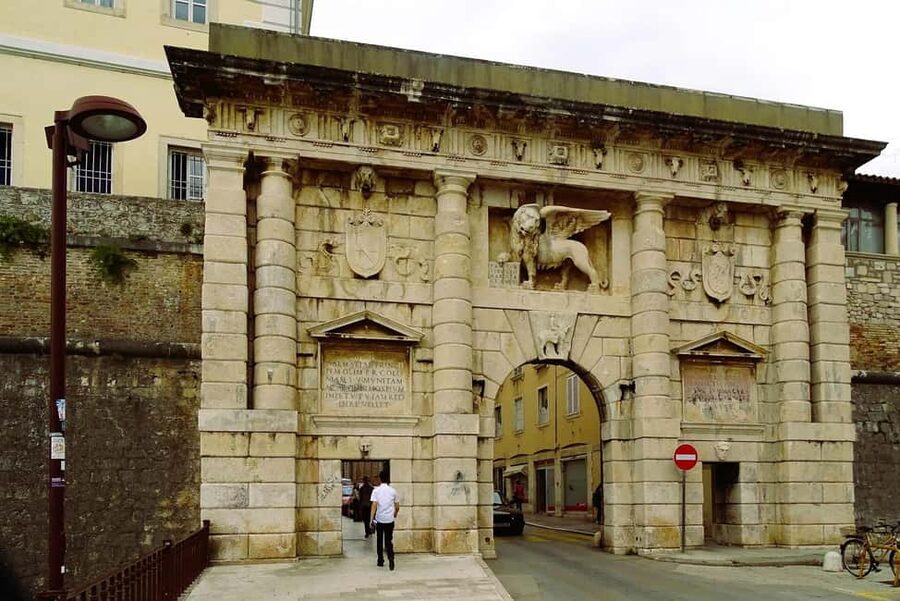
Finally, there is also a note about an evening session. For the 18:30 tour, the start point is near the Zadar Land City Gates. The guide waits in front of the gates beside the bikes, at a huge Land Gate built as a triumphal arch connected with the Venice Republic land gate idea. If you are choosing the later departure, that is your meeting orientation.
The tour ends in a different location than where it started, so don’t plan a tight “meet at 2:00 PM, grab a cab at 2:10” kind of schedule. Instead, treat it as a repositioning walk, you’ll end closer to places you can explore next.
Price, value, and what is actually included
At $32.67 per person for about 2 hours, the value comes from four places.
First, you get a small-group format, capped at 16 travelers. That keeps the explanations personal enough to be useful.
Second, you get free viewing stops at several big landmarks, plus the guide narrative ties the areas together so you understand what you are seeing. That turns “just walking around Old Town” into something more structured.
Third, there may be possible free tastings on the way, specifically Maraschino and cheese tastings, as well as possible free entrance to a medieval church. The key word is possible, so do not assume every group will get every tasting option. Still, when it happens, it is a fun way to connect the food culture to the places you walked past.
Fourth, you get the option for pickup depending on which version you book. If you are working around a cruise port day and you want fewer steps, pickup can be worth it. If you are already near the center port area, pickup might be unnecessary.
From a practical standpoint, I think this is a smart buy if you have limited time and you want a guided thread through Zadar’s highlights. If you love wandering unguided and already know what you want to photograph, a self-guided route might feel cheaper. But the tour does a good job making those monuments make sense quickly.
Who should book this, and who should skip it
This tour is best for you if:
- you want a high-quality overview in a short time
- you like architecture and want help connecting eras, Roman to medieval to modern installations
- you prefer a structured walk rather than figuring it out one sign at a time
- you want possible local tastes like maraschino and cheese without a pushy sales vibe
You should think twice if:
- you need lots of indoor time, because several stops are view-only outside
- you do not handle walking well, since it is not recommended for mobility issues
- you are traveling with kids, because it is not suitable for children
- you really need bathroom breaks on a schedule, because toilet breaks aren’t included
Quick tips to get the most from the walk
A few small moves will help this tour feel effortless.
Wear comfortable shoes with grip. Old Town streets can be uneven, and the tour keeps moving from stop to stop.
Plan for sun and wind. One review noted changing weather conditions, and this is still an outdoor-heavy walk. If you run hot, dress lightly. If you run cold, bring a light layer.
If you care about the most stunning photo of the solar installation, schedule flexibility. I like the idea of doing the tour earlier, then returning later for the Greeting to the Sun at night, when it can look especially dramatic.
And if you arrive by cruise: Zadar has two ports. If your ship docks near the meeting area, pickup may be unnecessary. If you do need a transfer, plan it early so you are not sprinting across the port like it is a sporting event.
Should you book this Zadar City Tour?
Book it if you want an organized, short Old Town walk that links sea-powered modern art with Roman and medieval Zadar in a way that actually sticks. The Sea Organ and Greeting to the Sun alone make it worth your morning or afternoon, and the Forum and St. Donatus stops are where the city history becomes visual and understandable.
Skip it if you need lots of interior admissions, require frequent breaks, or you cannot handle sustained walking. This tour is built around pacing and exterior viewing, not a museum marathon.
If your goal is a smart first pass through Zadar, with a guide who can explain what you are looking at and keep the group moving smoothly, this one fits the bill.
City-Scale Tours in Zadar




Walk It: More of Zadar at Ground Level


Zadar, A Few More Outings




Freshly written up around Zadar
Zadar Old Town & Sea Organ Tours, top to bottom.
 ★ 4.9Zadar: Plitvice Lakes Guided Day Tour with TicketsFrom $883,148 reviews
 ★ 4.8Zrmanja River: Half-Day Guided Kayaking Tour Near ZadarFrom $641,817 reviews
 ★ 4.5Zadar: Kornati Boat Trip with Lunch and Swim StopsFrom $641,498 reviews
 ★ 4.9Zadar: Plitvice Lakes with Boat Ride and Zadar Old Town TourFrom $531,368 reviews
 ★ 4.9From Zadar: Island-Hopping Speedboat Tour with DrinksFrom $381,247 reviews
 ★ 4.1Zadar: Kornati and Telašćica Full-Day Boat Trip with LunchFrom $511,193 reviews
 ★ 4.7Zadar: Plitvice Lakes Full-Day Guided Tour with a Boat RideFrom $58807 reviews
 ★ 3.8From Zadar: Kornati National Park and Telascica Boat TripFrom $64788 reviews
Browse the lists this tour appears in