
REVIEW · SPLIT OLD TOWN & PALACE WALKS
Diocletian’s Palace Small Group Tour in Split
Two hours in Split feels like Roman time warp. You get Diocletian’s Palace plus the surrounding old-town streets, explained by a real local guide in a small-group format.
I especially love how the guide makes the place feel usable, not just ceremonial, with stops that link the palace’s Roman layout to how the town actually sounds and moves today. I also like that most of the key palace areas on this walk have free admission, so your money goes to the guidance and timing, not ticket juggling.
One thing to keep in mind is that cathedral entry is not included, so if you want that add-on, you’ll need to plan it separately. The upside, though, is that the tour stays focused and doesn’t turn into an all-day crawl.
In This Review
- Key things to know before you go
- Diocletian’s Palace: why this old fort still runs Split
- The 2-hour small-group format, with smart pacing
- Stop 1: Diocletian’s Palace, the massive “palace” that acts like a fortress
- Stop 2: The Peristyle square and why it echoes like a stage
- Stop 3: The Vestibulum and its clever geometry
- Stop 4: Diocletian’s Cellars, the best-preserved substructures
- Stop 5: The Golden Gate and the moment Diocletian entered
- Guides truly drive the value: what to look for in a good walkthrough
- Value check: what’s included, what’s free, and what you may add later
- Practical tips for walking the palace streets
- Who should book this tour, and who might skip it
- Should you book Diocletian’s Palace small group tour?
- FAQ
- How long is the Diocletian’s Palace small group tour?
- Where does the tour start in Split?
- Is the tour offered in English?
- Is a ticket included for Diocletian’s Palace areas on this tour?
- What is included in the price?
- What physical level is required?
- Is free cancellation available?
Key things to know before you go
• Multiple departures throughout the day, so you can pick a time that fits your crowd tolerance
• Peristyle first impressions, including the square’s layout and famous acoustics
• Vestibulum geometry, with its striking outside rectangle and inside circular plan
• Cellars that explain the palace system, not just “cool tunnels”
• Golden Gate history tied to Diocletian’s entry date in 305
• Free access to the main palace stops, while the cathedral ticket is on your list
Other walks through the palace quarter and the alleys behind it
- Split: Old Town and Diocletian Palace Walking Tour★ 4.9 · 4,727 reviews
- Walking Tour of Split and Diocletian’s Palace★ 5.0 · 2,588 reviews
- Split & Diocletian’s Palace Walking Tour★ 5.0 · 1,125 reviews
- Walking Tour of Split with a ‘Magister’ of History★ 5.0 · 1,122 reviews
Diocletian’s Palace: why this old fort still runs Split
Split is one of those places where the city center is not a museum that you pass by. It is the city you live in, shop in, and cross on your way to gelato. Diocletian’s Palace is the anchor. Today it forms about half the old town and the city center, so when you walk inside it, you feel the scale right away.
What makes this tour work is that it teaches you how to read the palace. You do not just hear dates. You learn what the walls meant, where authority was placed, and why certain areas were designed for gatherings, performance, or defense. Once you understand the palace layout, the rest of the old town starts making more sense, even if you still get turned around once or twice. That is part of the fun.
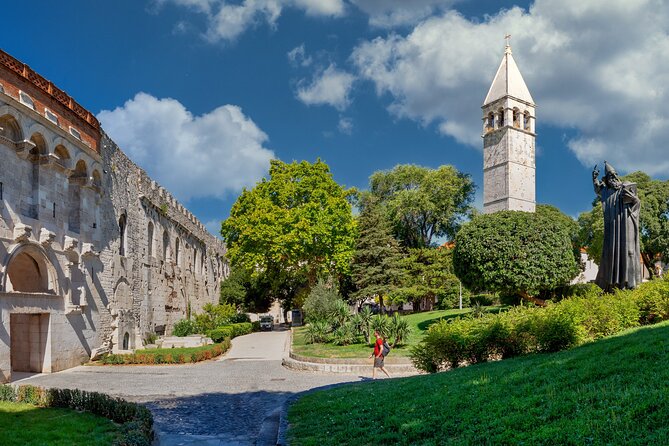
And yes, you’ll see how the ancient site sits next to later centuries. The palace area is full of visual time mixing, from famous landmarks like the Egyptian sphinx you’ll spot in the old town area to buildings from much later periods. A good guide helps you notice what you’re looking at, instead of just walking past it.
The 2-hour small-group format, with smart pacing
This is an about-2-hour walking tour, built for moderate physical fitness and a comfortable tempo. You’ll spend time in a handful of key palace zones, rather than trying to cover everything the city has to offer. That matters, because Diocletian’s Palace can feel like a maze, and not the “I’m having a great time” kind every minute. The guide’s job is to keep your bearings while you wander.
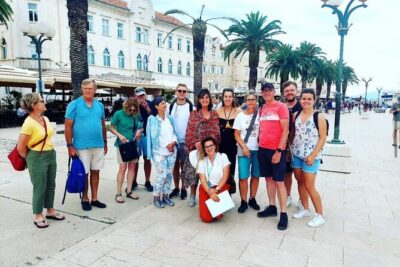
Group size has a max of 99 travelers, but the experience has often been run in a smaller feel, and I like that you can sometimes get an even tighter group. You’ll also see different guide personalities. In past groups, guides like Luka and Sandra have been praised for blending clear explanations with a friendly style, and Jelena has also shown how much value you can get when your guide shares practical local tips, not just facts.
If you’re visiting for the first time, this tour is ideal because it gives you structure fast. You get a mental map of where the major palace parts sit, plus what to look for later when you wander on your own.
Stop 1: Diocletian’s Palace, the massive “palace” that acts like a fortress
You start in the palace itself, where the word palace can mislead. The complex was meant as a retirement residence for Diocletian, but it’s enormous and functions more like a fortress. About half of it served Diocletian’s personal use, while the rest housed the military garrison.
That split is exactly what I’d want you to understand early. When you walk the inner streets, you can feel why the place needed to protect both power and people. The layout helps explain why this UNESCO-listed core is not just a set of ruins. It’s an active city fabric that survived, got built over, and still shapes Split today.
This is also where you’ll start noticing the time layers. The old town’s streets can surprise you with details that do not match what you expected a Roman site to look like. That Egyptian sphinx presence in the wider old town area is a good example of how Split refuses to stay in one era. A good guide will help you connect the dots without turning it into a lecture.
What can be a drawback here? Because the palace is huge, you cannot see everything in two hours. You’ll get the high-value parts that make the rest of your exploring easier.
Stop 2: The Peristyle square and why it echoes like a stage
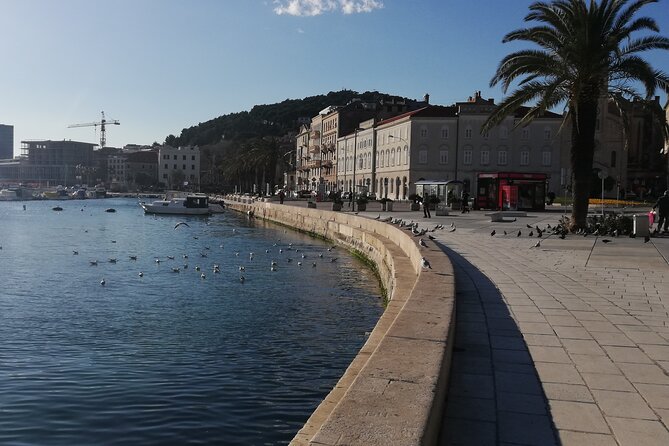
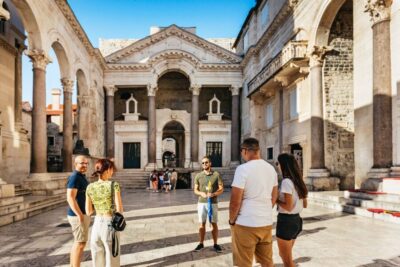
Next comes the Peristyle, the central square of the palace. In Roman times it was a ceremonial focal point connected to the emperor’s public image, including the idea of Diocletian being a living son of Jupiter.
But the reason the Peristyle matters for your modern visit is practical: it was designed to stage events. The Peristyle’s beauty and unusual acoustics made it a fitting theater setting for performance and storytelling. Even today, urban life continues there. So when you stand in the space, you’re not only seeing architecture. You’re experiencing the way the square handles sound and movement.
This stop is where the tour feels most “alive.” You can stand still for a moment, look up and around, and understand why people gathered here. If you’ve ever wondered why some squares feel natural for ceremonies, performances, and crowds, the Peristyle answers that.
- Split: Krka Waterfalls Trip with Boat Cruise and Swimming
★ 4.8 · 10,519 reviews - From Split: Krka Waterfalls, Food & Wine Tasting Tour
★ 5.0 · 9,326 reviews - Blue cave, Mamma Mia and Hvar, 5 islands speedboat tour
★ 5.0 · 7,150 reviews - From Split: Krka Waterfalls, Food & Wine Tasting Tour
★ 4.9 · 6,598 reviews - Split/Trogir: Blue Cave, Mamma Mia, Hvar and 5 Island Tour
★ 4.6 · 6,320 reviews
Stop 3: The Vestibulum and its clever geometry
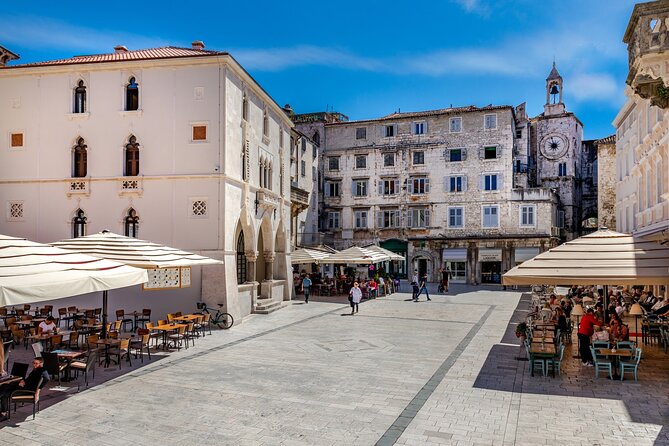
From there you move to the Vestibulum, which sounds plain until you learn its plan. From outside it’s rectangular. Inside, the ground plan becomes circular. That switch is part of what makes the vestibule feel monumental, even centuries later.
This is a great stop for anyone who likes architecture and wants to understand why ancient buildings were designed for specific movement and perception. A vestibule is not just a hallway. It’s a threshold space that prepares you for what’s next, and Diocletian’s palace uses that idea with serious flair.
Time-wise, this is a shorter stop, but it’s the kind you remember. You might even start noticing similar threshold tricks in other places you visit afterward.
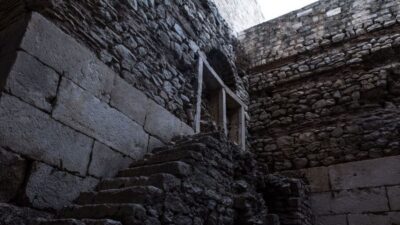
Stop 4: Diocletian’s Cellars, the best-preserved substructures

Then you step into the Diocletian’s Cellars. These palace substructures are among the best preserved complexes of their kind in the world. They also help explain why the historical core of Split earned UNESCO World Heritage status.
Here’s what I’d want you to take from this stop: the “palace” was not only rooms for comfort. It needed support spaces, storage, and structure that made the palace operate as a system. The cellars show the under-workings that make the whole place believable.
If you’re the kind of traveler who usually skips the “basement” areas because they feel like leftovers, don’t do that here. The cellars tend to clarify the bigger story. You start seeing how the palace held power logistically, not just symbolically.
Stop 5: The Golden Gate and the moment Diocletian entered
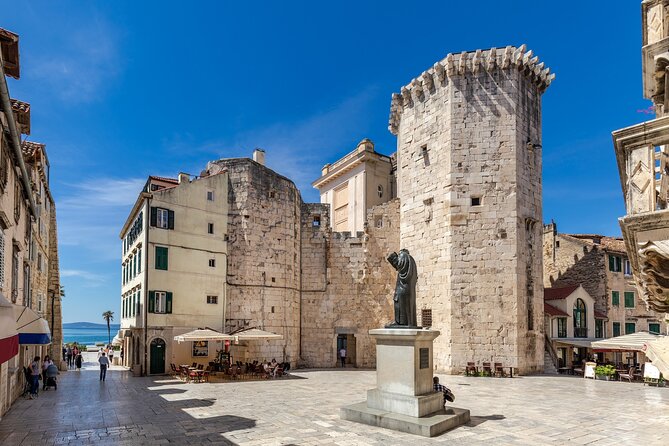
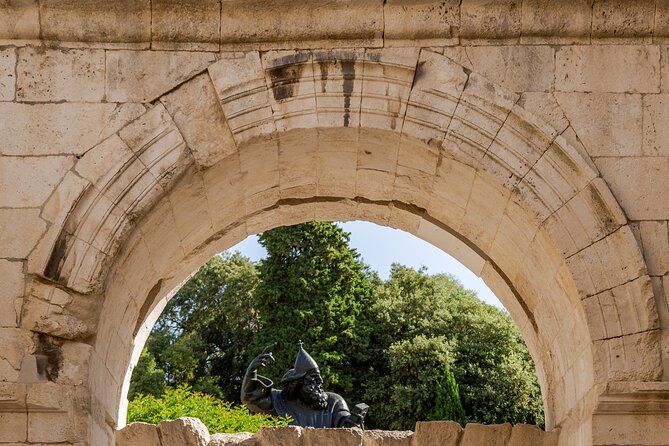
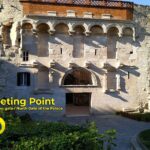
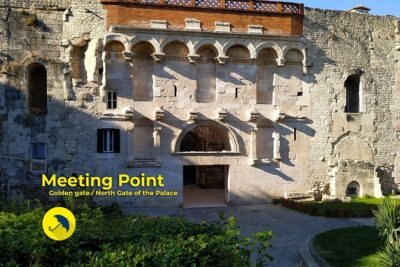
You finish at the Golden Gate (Roman name: Porta septemtrionalis). This is where the tour connects architecture to a specific historical moment. Emperor Diocletian walked through these gates on June 1, 305.
The gate itself was built in a rectangular shape with double doors. Defensive military tactics were part of the design, so even this “grand” entry feels tied to protection. That’s an important twist: a gate can be ceremonial and tactical at the same time.
For your visit, this stop is satisfying because it puts everything you’ve learned into one clear image. You’ve seen the ceremonial square. You’ve learned about thresholds. You’ve looked at the support spaces. Now you understand how someone in power would move through the palace with security in mind.
Guides truly drive the value: what to look for in a good walkthrough
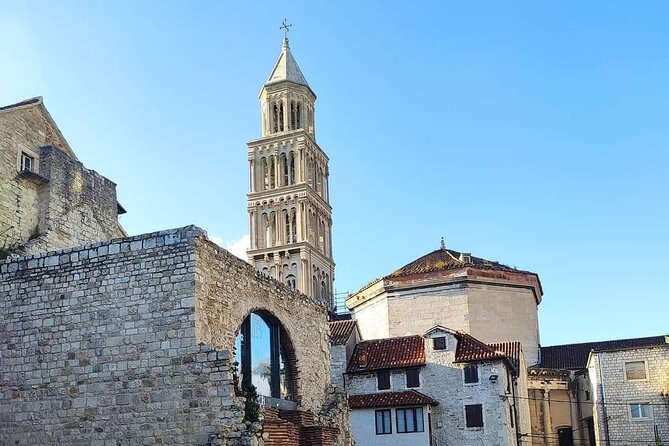
At $60.21 per person for about two hours, you’re paying mainly for the guide and the format that keeps you from wasting time getting lost. When the guide is strong, the price feels like a smart shortcut.
The standout theme from excellent guides here is clarity with personality. Past tours have praised guides for friendly professionalism and a talent for explaining history in a way that sticks. Luka, Sandra, and Jelena have been specifically singled out for their enthusiasm, fast answers to questions, and extra suggestions that go beyond the palace, like where to spend time in town.
That local tip component is what makes a palace tour worth it for me. If all you needed was a self-guided walk, you’d only need a map. But a great guide will point out small things you’d miss, explain why they matter, and suggest how to keep exploring after the tour ends.
The best guides also keep the pace comfortable. Even with a tight route, you should feel oriented, not rushed.
Value check: what’s included, what’s free, and what you may add later
Let’s talk money in plain terms.
• Price: $60.21 per person
• Duration: about 2 hours
• Included: a local guide and a professional guide
• Site access: the main palace areas listed here show free admission for the stops covered
• Not included: tickets for the cathedral
So your value equation looks like this: you pay for expert guidance plus a structured walk through the palace’s most important zones, while the major stop areas are not additional admission fees. That makes it easier to manage your budget during a short visit.
The one gap is the cathedral. If cathedral access matters to you, plan a separate ticket or add-on time. The tour keeps its focus on the palace core, which is good for first-timers, but it does mean you cannot treat it as a full Split old town package.
Practical tips for walking the palace streets
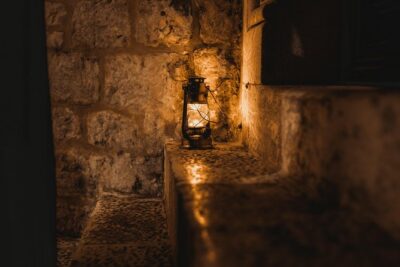
Diocletian’s Palace is walkable, but it is still old-town walking. Expect narrow lanes, uneven surfaces, and tight turns. You’ll want shoes that handle cobbles without drama.
Timing matters too. The tour has several departures across the day, which you should use to your advantage. If you want a calmer feel, consider starting earlier rather than later. One favorite approach in August is getting out before the peak heat and crowd pressure.
Bring a light layer and water, even if you think you will be out only briefly. Two hours disappears fast when you’re stopping for explanations, looking up at details, and trying not to walk in circles.
Also, use the meeting point address and arrive a few minutes early. South Tours Travel Agency is listed at Mrčelina 1, 21000 Split, so you can cross-check the spot rather than guessing from general landmarks.
Who should book this tour, and who might skip it
I think this tour fits you if:
• You want a fast, reliable introduction to the Roman core of Split
• You like guided explanations that help you read the streets
• You’re okay with moderate walking and want a focused route in about two hours
• You value local context, not just stones and dates
You might skip it if:
• You’re only interested in the cathedral and want a purely religious focus
• You dislike walking tours and would rather move at your own pace with a map
• You plan to spend most of your day outside the palace core anyway
For first-time visitors, this is a strong “get your bearings fast” kind of tour. For repeat visitors, it’s still useful if you want a different angle, like how defense, ceremony, sound, and city life fit together.
Should you book Diocletian’s Palace small group tour?
Book it if you want the palace to make sense quickly. For the price, you’re buying structure, context, and an experienced guide to help you understand why the palace is shaped the way it is. The free access to the major palace stops lowers the friction, and the short time keeps you from burning an entire day on one site.
Skip it if you already know you’re going cathedral-only, or if you hate group pacing. Also consider skipping if you want a long, slow wandering route. This tour is built to be efficient and focused.
If you’re deciding between self-guiding and a guide, I’d lean toward this tour. You’ll leave with a mental map of Diocletian’s world, plus practical local insight that helps you enjoy the rest of Split after the tour ends.
FAQ
How long is the Diocletian’s Palace small group tour?
The tour lasts about 2 hours.
Where does the tour start in Split?
The meeting point is South Tours Travel Agency, Mrčelina 1, 21000, Split, Croatia.
Is the tour offered in English?
Yes, the tour is offered in English.
Is a ticket included for Diocletian’s Palace areas on this tour?
The main palace stops listed are marked as admission ticket free (Diocletian’s Palace, Peristyle, Vestibulum, Diocletian’s Cellars, and the Golden Gate). Tickets for the cathedral are not included.
What is included in the price?
The tour includes a local guide and a professional guide.
What physical level is required?
The tour recommends a moderate physical fitness level.
Is free cancellation available?
Yes. You can cancel up to 24 hours in advance for a full refund. If you cancel less than 24 hours before the start time, the amount paid is not refunded.
Inside the Palace Walls



Freshly written up around Split



Split Old Town & Palace Walks, top to bottom.
 ★ 4.9Split: Old Town and Diocletian Palace Walking TourFrom $174,727 reviews
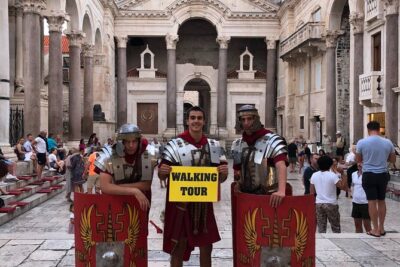 ★ 5.0Walking Tour of Split and Diocletian’s PalaceFrom $482,588 reviews
 ★ 5.0Split & Diocletian’s Palace Walking TourFrom $211,125 reviews
 ★ 5.0Walking Tour of Split with a ‘Magister’ of HistoryFrom $341,122 reviews
 ★ 5.0Split Walking Tour with Professor of HistoryFrom $24926 reviews
 ★ 4.7Split: Diocletian Palace & Old Town Guided Walking TourFrom $17882 reviews
 ★ 4.8Split: Game of Thrones Tour with Diocletian’s Palace CellarFrom $41545 reviews
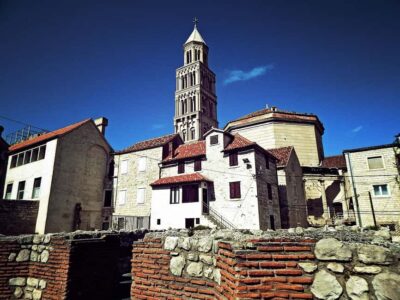 ★ 5.0Diocletian’s Palace and Old Town SMALL GROUP Walking TourFrom $16502 reviews
Browse the lists this tour appears in