

REVIEW · SPLIT OLD TOWN & PALACE WALKS
Split: Diocletian Palace & Old Town Guided Walking Tour
Diocletian’s Palace is history you can walk through. This 50-minute guided tour is a fast way to see Diocletian’s Palace as an everyday lived-in complex, not just ruins on a map, and then connect it to Split Old Town with stories that explain how Roman, medieval, and Venetian-era touches all shaped what you see today. My favorite part is how much ground you cover for the price, but the main catch is you need to keep moving and you will be on uneven cobblestones with some steps.
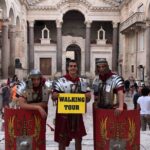
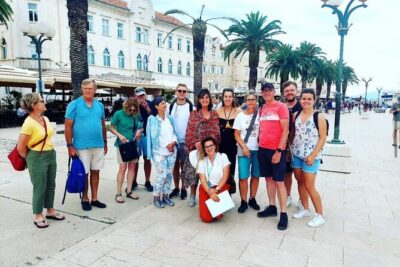
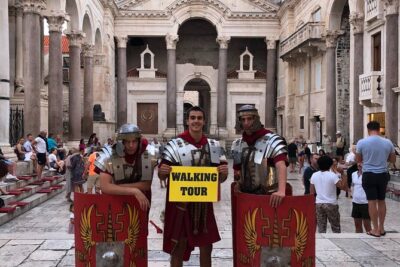
You’ll start at Apodos Travel Agency and look for the red open top bus, with the team in red or white shirts pointing you to your guide. Guides such as Ina, Natasa, Darko, and Tin are repeatedly praised for clear, funny storytelling and for answering questions without rushing you. If you hate compact tours, or you want slow time for photos, this one may feel a bit “too quick” for your style.
In This Review
- Key highlights worth your time
- Getting Your Bearings at Apodos and Split’s Riva Waterfront
- Entering Diocletian’s Palace Through the Bronze, Silver, Golden, and Iron Gates
- Peristyle Courtyard Access and the Feel of an Imperial Complex
- St. Domnius (Sv. Duje) Cathedral and the Bell Tower View
- The Palace Cellars, Private Observatory, and How Lived Space Works
- Fruit Square, Town Hall, and Benedictine Clues in the Streets
- Why Guides Like Ina, Natasa, Darko, and Tin Matter Here
- Is 50 Minutes Enough? How to Make the Most of the Short Loop
- Price and Value: What You Get for Around $17
- Who Should Book This Split Palace and Old Town Walk
- Should You Book This Tour?
Key highlights worth your time

- Roman gates you can walk through (Bronze, Silver, Golden, and Iron Gates) to understand the palace layout
- Peristyle courtyard access plus cellars and the feel of the emperor’s private areas
- St. Domnius (Sv. Duje) and bell tower views to see the city and harbor from above
- Fruit Square, Town Hall, and Benedictine details that show how later eras layered onto Roman walls
- Question-friendly guides who bring the stones to life with humor and context
- Good value at about $17 for a guided intro that would be hard to assemble yourself quickly
Other walks through the palace quarter and the alleys behind it
- Split: Old Town and Diocletian Palace Walking Tour★ 4.9 · 4,727 reviews
- Walking Tour of Split and Diocletian’s Palace★ 5.0 · 2,588 reviews
- Split & Diocletian’s Palace Walking Tour★ 5.0 · 1,125 reviews
- Walking Tour of Split with a ‘Magister’ of History★ 5.0 · 1,122 reviews
Getting Your Bearings at Apodos and Split’s Riva Waterfront
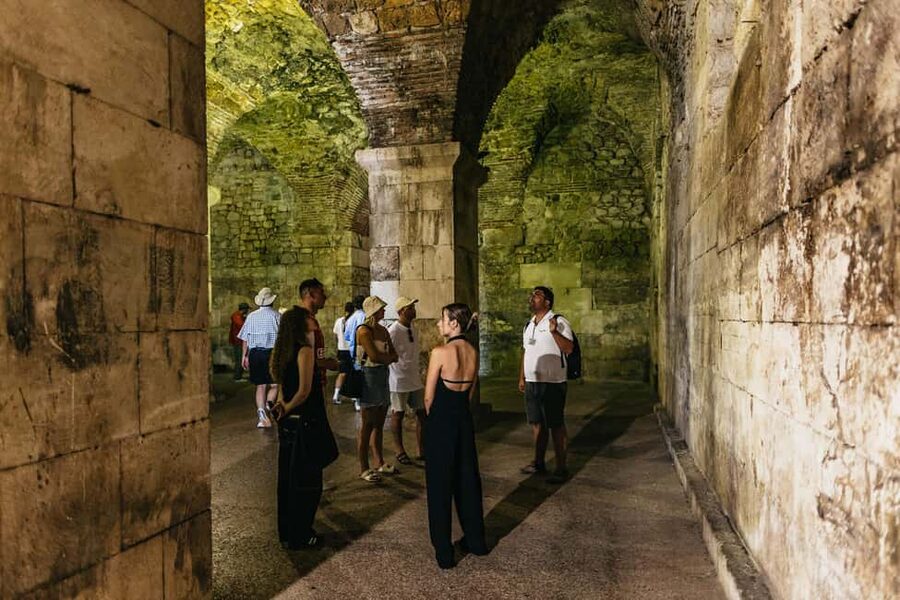
Most people hit Split Old Town from the water side, and the tour starts right where that makes sense: on the Riva promenade, with palm-lined views and café life along the Adriatic. You’re basically being handed the “why this place grew here” story before you step into ancient walls.
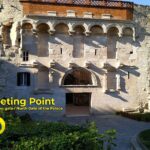
The meeting point is practical and easy to spot if you know what to look for. Go to Apodos Travel Agency, then find the open top red bus nearby and check for the team in red or white shirts. They connect you with the guide, so you aren’t wandering for long.
What I like about this setup is that you get a first impression of modern Split before you see its ancient skeleton. That helps when you’re inside Diocletian’s Palace and you realize the buildings are not frozen in time. They’re integrated into street life.
Bring comfortable shoes and water. This is not a show-up-in-sneakers kind of walk. The route uses uneven cobblestones and includes 15 to 30 steps, so plan on a steady pace. If you’re visiting in windy weather, long sleeves help. On sunny days, a hat and sunglasses are worth it.
Entering Diocletian’s Palace Through the Bronze, Silver, Golden, and Iron Gates
The heart of the tour is the palace itself, built in the 4th century AD for Roman Emperor Diocletian. Today, the palace forms the core of Split’s UNESCO-listed Old Town, and that is the whole trick of this experience. You are not just seeing a museum floor plan. You’re walking a space that became a neighborhood.
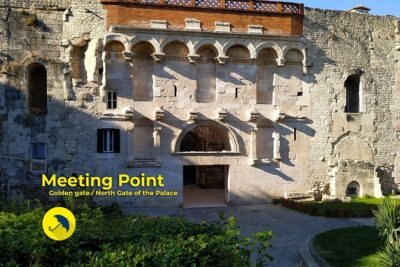
You start with a photo stop and the guided walkthrough of key access points, including the Bronze, Silver, Golden, and Iron Gates. These names sound like they belong in a fantasy book, but the point is real: these gates were the palace’s official entries, designed to control movement into an imperial compound.
As you move through the gates and along palace pathways, listen for the guide’s focus on layout. The best tours here do not treat the palace like scattered highlights. They explain how access, courtyards, and private areas connect, which makes the rest of your exploring feel easier afterward.
A practical note: this is where shoes matter most. Even with a short duration, cobblestones can slow you down if you don’t step carefully. If you’re sensitive to uneven ground, go slower and let the group pace work for you. The guides are used to managing real-life walking conditions.
Peristyle Courtyard Access and the Feel of an Imperial Complex
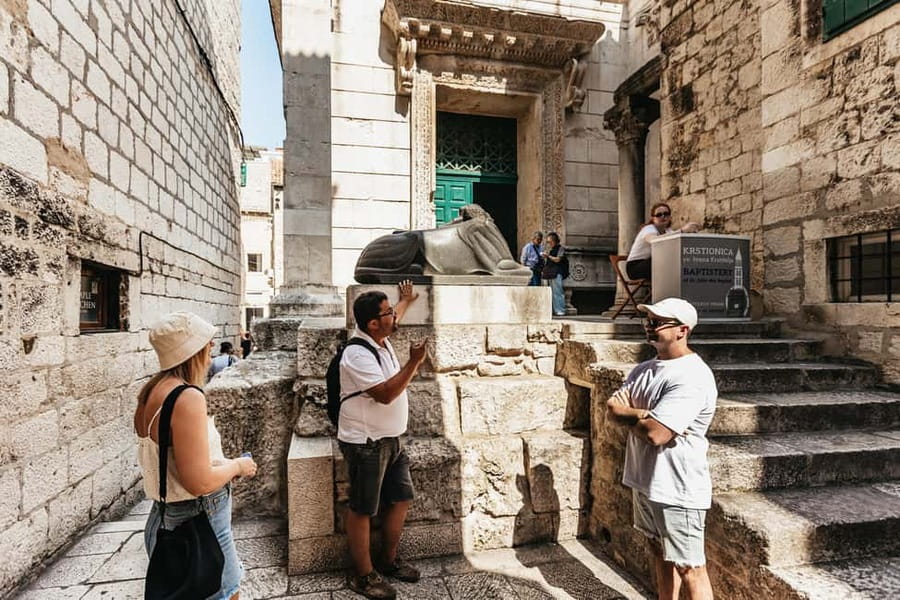
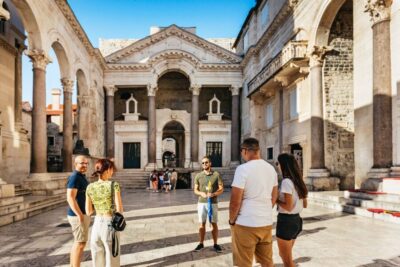
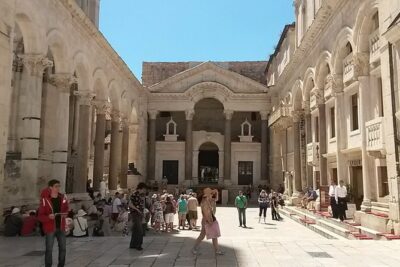
Next you’ll reach the Peristyle courtyard, one of the most important spaces inside the palace. This is where the scale becomes obvious. The Peristyle is built for open-air movement and view lines, and that makes it one of the best places for a guide to explain what daily movement inside the palace likely looked like.
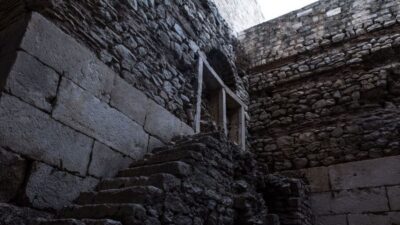
Tour highlights here include access to the Peristyle courtyard and time spent on the cellars and other major internal areas. You’ll also hear about Diocletian’s private chambers. The tour framing matters. Instead of just pointing out old stone, the guide ties together how someone in power needed space for storage, movement, and living functions, and how later residents reused those structures.
I also like that this tour does not only stick to “public face” areas. You get enough time around the emperor’s former private zone to understand that this was not one single temple-like setting. It was an engineered place for living and ruling, with controlled access and serious internal organization.
If you’re the type who loves architecture but gets impatient with long explanations, this is a good match. The storytelling is designed to fit a tight loop without skipping the big landmarks.
St. Domnius (Sv. Duje) Cathedral and the Bell Tower View

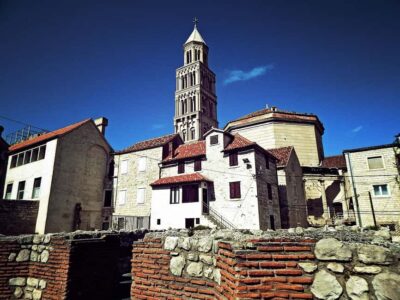
After the palace interior, the route shifts toward one of Split’s most meaningful religious buildings: St. Domnius Cathedral, also known as Sv. Duje. It started as the emperor’s mausoleum, which means you’re looking at a building that began with the highest level of power and remembrance.
This is where the tour gives you a useful “big picture” connection. You see how Roman intentions get repurposed by later eras, then turned into something that still anchors civic life.
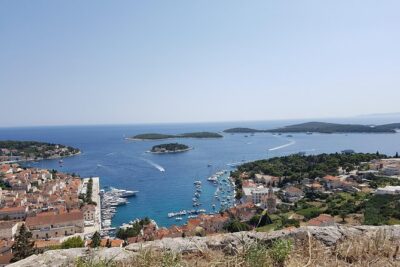
The tour includes a climb of the cathedral bell tower. This climb is the reward. Even if you’re not a huge church person, the view helps you understand how the Old Town sits relative to the harbor. It gives your walking loop context, especially if you plan to wander later.
Consider this climbing segment if you have mobility limits. The tour is wheelchair accessible, but the general information says participants must be able to handle uneven surfaces and some steps. If you’re unsure, it’s smart to ask the provider directly about what route segments are easiest on your day.
More Split covered at walking pace
- Krka Waterfalls tour with Trogir Walking tour and Krka panoramic boat cruise
★ 5.0 · 1,659 reviews - Split Walking Tour with Professor of History
★ 5.0 · 926 reviews - Split: Diocletian Palace & Old Town Guided Walking Tour
★ 4.7 · 882 reviews - From Split: Krka Waterfalls Cruise & Trogir Walking Tour
★ 4.7 · 681 reviews - Split: History and Heritage Walking Tour
★ 4.9 · 650 reviews
The Palace Cellars, Private Observatory, and How Lived Space Works
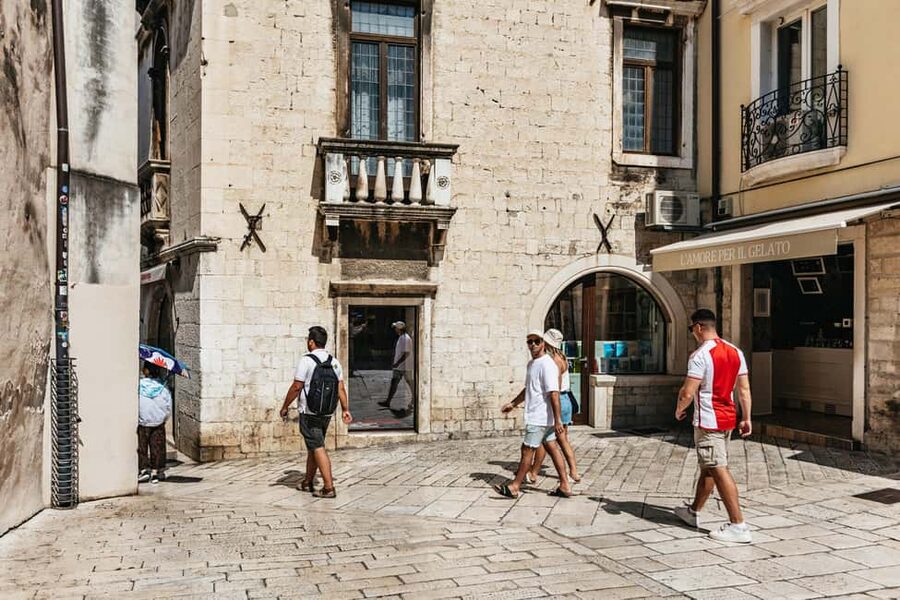
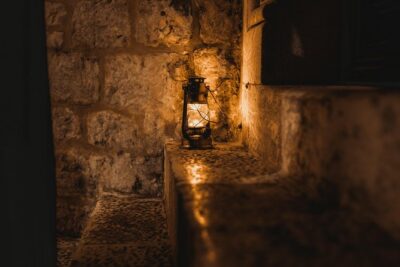
One of the tour’s most interesting inclusions is time for the palace cellars and access to Diocletian’s former private observatory. Those are not random add-ons. They help you understand how the palace worked as a functional environment.
Cellars matter because they remind you that ancient buildings were engineered for storage, temperature control, and logistical needs. The observatory inclusion does something similar, connecting power to specific uses of space. In a well-led tour, these stops are used to explain how the emperor’s world differed from what later residents built into the same walls.
What you’ll learn here tends to be less about dates and more about cause and effect. Why did people build where they did, and why did they reuse spaces when empires changed? When a guide explains this clearly, Diocletian’s Palace stops being a list of ruins and starts behaving like an evolving urban system.
If you’re curious about how Split could grow around Roman infrastructure, this is one of the parts that makes that click.
Fruit Square, Town Hall, and Benedictine Clues in the Streets
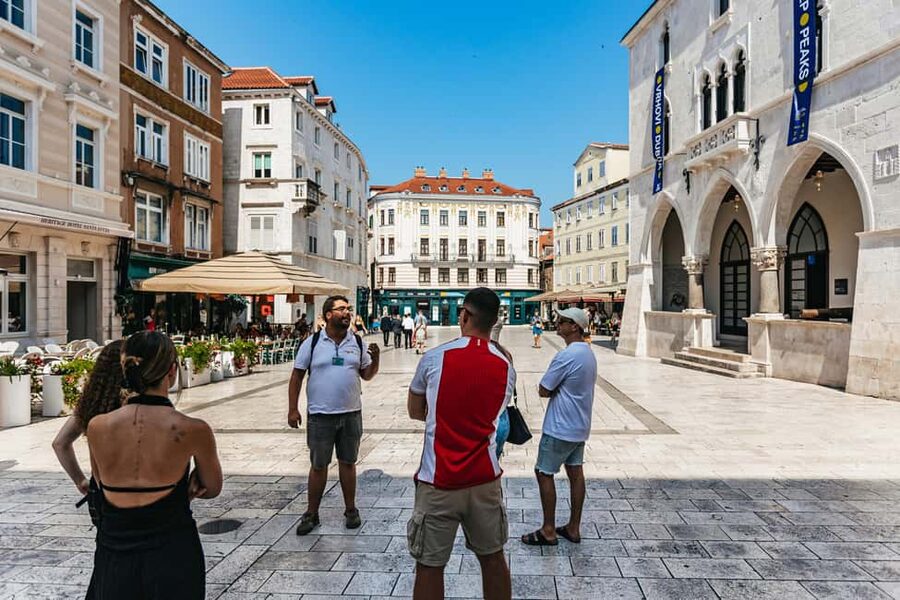
Leaving the deepest palace zones, you get a look at Split Old Town’s layered identity through stops like Fruit Square, the 15th century Town Hall, and areas connected to the Benedictine presence.
Fruit Square is where the tour’s baroque monuments come into view. Even if baroque isn’t your favorite style, this stop is valuable because it shows the “after” story. The Roman core didn’t vanish. It became the base layer for later civic and artistic expression.
The 15th-century Town Hall inclusion adds a more civic rhythm to the walk. Instead of only focusing on imperial power and religious roots, you’re reminded that cities run on administration, public gathering, and long-term community planning.
The Benedictine connection is a quiet but helpful clue. It nudges you toward noticing that Old Town architecture is not only about emperors. It’s also about institutions that shaped daily life for centuries. This tour uses those clues to explain the city’s transformation without drowning you in details.
One thing to watch for: the tour loop is tight. If you want lots of time for side streets, you can use the guide’s notes to pick a few targets after the tour. The point is to give you the map in your head, then let you choose what deserves your extra time.
Why Guides Like Ina, Natasa, Darko, and Tin Matter Here
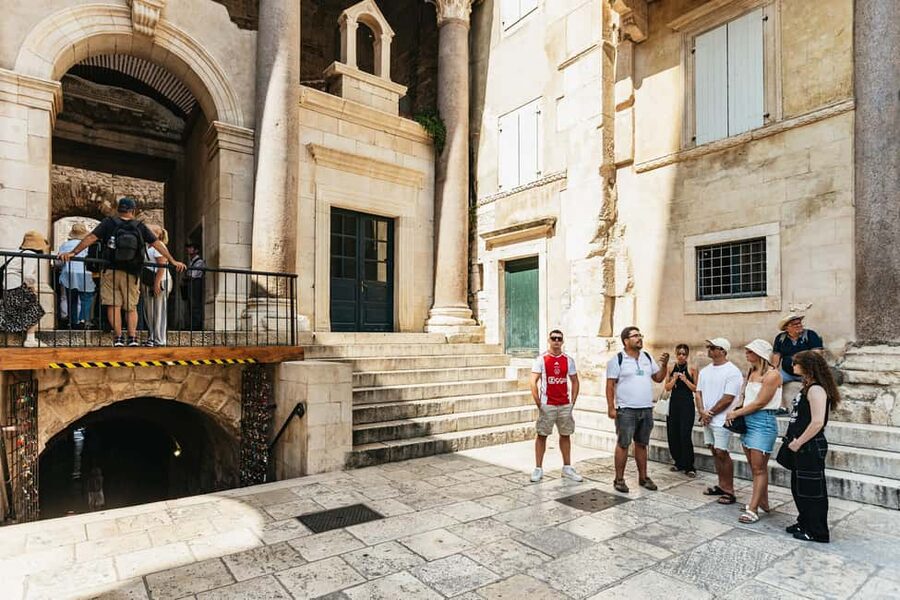
A short palace tour lives or dies by the guide. And across the feedback, the most praised theme is that the guides make the information feel usable. Names that pop up again and again include Ina and Natasa (with others like Darko, Tin, and even Doge showing up in the mix).
Ina is praised for being not just friendly, but also for delivering historical context with clarity and often with a sense of humor. You’ll also hear that some guides have deeper academic skills, including archaeological expertise.
Natasa is repeatedly described as enthusiastic, with a background tied to art history and a careful approach to accuracy. That matters because Split’s layers can be confusing if someone throws facts at you without structure. A guide who connects architecture to the way people used it helps everything stick.
Darko and Tin are praised for the storytelling style too, including patience with questions. That is a real advantage on a tour like this, because Diocletian’s Palace is full of visual puzzles. A good guide will help you interpret what you’re seeing instead of leaving you to guess.
One small practical caution: one piece of feedback suggests a microphone would help. That doesn’t mean it will be a problem every time, but if you know you need audio clarity, arrive slightly closer to the front when possible.
Is 50 Minutes Enough? How to Make the Most of the Short Loop
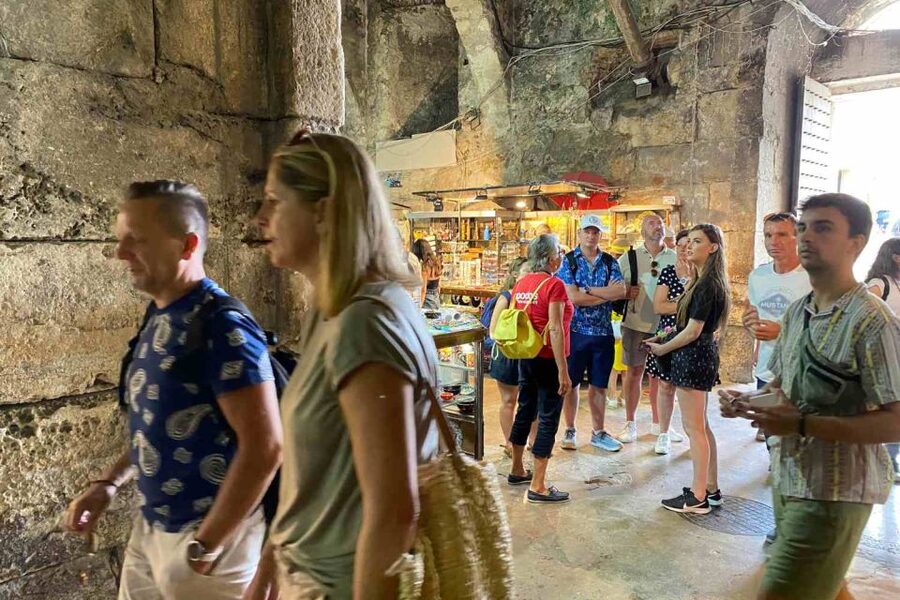
Fifty minutes sounds short, and it is. But that is also the point. This tour is designed as a fast, high-impact introduction so you leave with bearings.
What you get is a starter kit:
- major palace entries through the Bronze, Silver, Golden, and Iron Gates
- the Peristyle courtyard for scale
- St. Domnius Cathedral and the bell tower for context
- civic and institutional cues like Fruit Square and the 15th century Town Hall
- a few “why this worked” stops such as cellars and the private observatory
This structure matters if you only have a limited window in Split. It also helps if you are traveling with someone who gets tired of walking. The tour stays focused on the top zones rather than turning into a long route that becomes exhausting.
The drawback is obvious: you won’t have time to sit and linger. If you want a slow photo session or you love reading inscriptions word for word, you’ll need to plan extra independent time after.
Price and Value: What You Get for Around $17
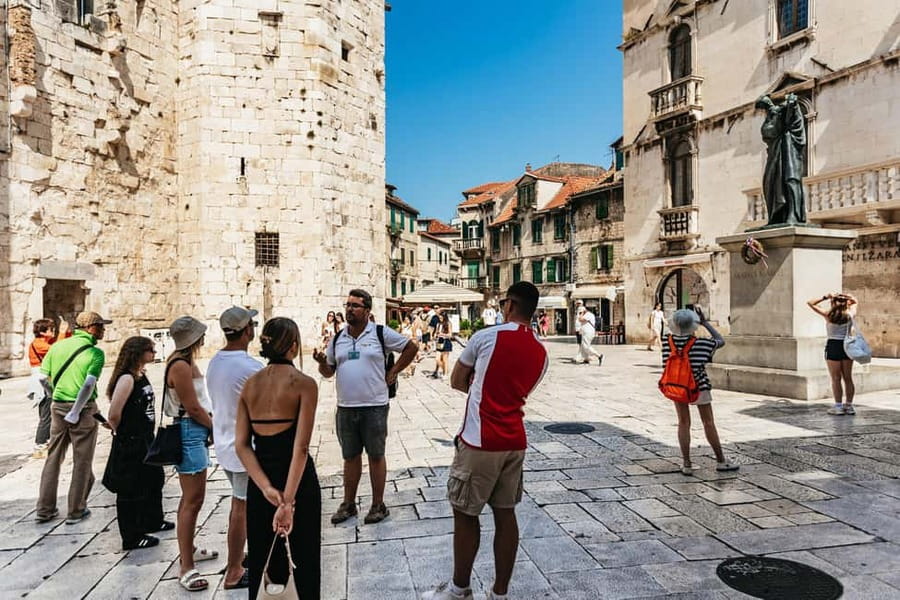
At around $17 per person, the value comes from three things that are not typical for self-guided wandering.
First, you get a live guide to interpret the palace. Diocletian’s Palace looks impressive, but without context it can feel like a maze. A good guide makes the palace structure understandable quickly, which is exactly what a short tour is meant to do.
Second, you get access to key areas, including the Peristyle courtyard and time built around palace interiors like the cellars and emperor-related spaces. A lot of historical walking is just “look from the outside.” This tour prioritizes access.
Third, you get skip-the-ticket-line and a small set of landmark stops that would be hard to assemble into a clean half-hour or hour on your own. That’s where the price turns into convenience value.
So if your goal is an efficient first look at Split’s most important UNESCO site, this pricing is a bargain relative to what you’d otherwise pay for individual guided entries and time.
Who Should Book This Split Palace and Old Town Walk
This tour is a strong fit if:
- you’re visiting Split for a short stay and want to understand where to look inside Old Town
- you like guided storytelling that makes buildings feel human
- you want a focused route with major highlights, not a long day of walking
- you want a plan you can build on after the tour, using the bell tower view and gate layout as your reference points
It may be less ideal if:
- you dislike uneven cobblestones or need very long breaks
- you want long, quiet time at each stop rather than a moving route
- you’re hoping for a super deep, hours-long deep dive into every corner (this one is built to be brief)
On the practical side, the tour is wheelchair accessible, and one account mentions the guide helped with paths that had no or fewer steps for people with strollers and wheelchairs. That’s encouraging, but don’t assume every segment is identical every day. If you have specific mobility needs, ask the provider what route adjustments can be made.
Should You Book This Tour?
Yes, if you want a time-smart way to experience Diocletian’s Palace and get oriented inside Split Old Town. The combination of major palace gates, Peristyle courtyard access, St. Domnius plus a bell tower view, and guide-led context for how Roman foundations became a living medieval city is the kind of itinerary that makes a first visit click fast.
Skip it only if you personally need slow pacing and lots of resting time. Also, don’t forget that this experience includes cobblestones and some steps, so wear shoes you can walk in confidently.
If your plan is to see the most important things without getting lost, this tour is one of the easiest ways to do that.
Walk It: More of Split at Ground Level


Inside the Palace Walls

Freshly written up around Split



Split Old Town & Palace Walks, top to bottom.
 ★ 4.9Split: Old Town and Diocletian Palace Walking TourFrom $174,727 reviews
 ★ 5.0Walking Tour of Split and Diocletian’s PalaceFrom $482,588 reviews
 ★ 5.0Split & Diocletian’s Palace Walking TourFrom $211,125 reviews
 ★ 5.0Walking Tour of Split with a ‘Magister’ of HistoryFrom $341,122 reviews
 ★ 5.0Split Walking Tour with Professor of HistoryFrom $24926 reviews
 ★ 4.8Split: Game of Thrones Tour with Diocletian’s Palace CellarFrom $41545 reviews
 ★ 5.0Diocletian’s Palace and Old Town SMALL GROUP Walking TourFrom $16502 reviews
 ★ 5.0SPLIT-PRIVATE Walking Tour of Diocletian’s Palace & Old TownFrom $240467 reviews
Browse the lists this tour appears in