
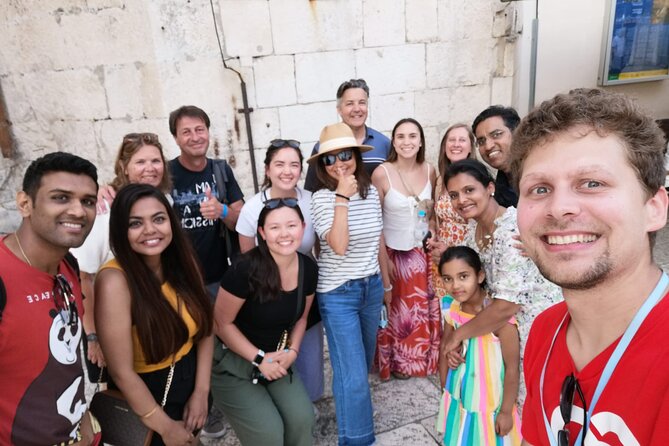
REVIEW · SPLIT OLD TOWN & PALACE WALKS
Split Walking Tour with Professor of History
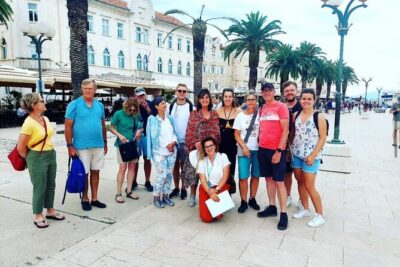
Split can feel like a pile of postcards unless someone gives you the keys. This walk is built around Diocletian’s world, explained by a history professor style guide like Mario, with a small group pace that lets you ask questions. I also like how it ties Roman architecture to everyday Split life, from Riva Harbor coffee culture to the streets people still use today.
My one caution: the route is real city walking, and in practice it can run a bit long if your guide is generous with stories and shade breaks.
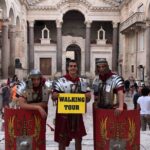
You’ll cover the main hits of the historic center in about 2 hours 20 minutes, in English, starting at the Brass Gate and ending back where you began. It is also a smart pick if you want to see what’s worth paying to enter later, since some of the big-name sites are outside-only on this tour.
In This Review
- Key points that make this Split walking tour worth your time
- Why a history professor walk is the best way into Split
- Starting at the Brass Gate and Riva Harbor, where Split shows its daily rhythm
- Diocletian Palace substructures: the most underrated wow-factor in Split
- Peristyle: the imperial square and why it feels theatrical
- The Vestibule (Rotonda): an imperial corridor that becomes a meeting hall
- Cathedral of Saint Domnius: what you can see now, and what to plan later
- Temple of Jupiter and St. John the Baptist: the power of reuse
- Golden Gate: the emperor’s entrance and the Roman-to-medieval twist
- Grgur Ninski statue and the toe-rubbing legend
- Marmontova Ulica and Prokurative: the city grows beyond the palace
- Fruit’s Square (Trg Brace Radic): market memories and Marko Marulić
- What about the “private upgrade” and small-group feel?
- Timing and walking comfort: plan for real old-town legs
- Price and value: why $24.19 can be a smart spend
- Guides and style: Mario’s humor, Anita’s care, and good English
- Should you book this Split history walk?
Key points that make this Split walking tour worth your time

- Professor-style storytelling that turns Diocletian’s palace ruins into a readable system, not random stones
- Small group size (max 17), so you get attention and time to ask questions
- Outside-only big sights, with clear guidance on what to visit on your own after the walk
- A mix of Roman and later Split, from the Golden Gate to neo-Renaissance squares and fruit market lore
- Frequent guide approach tips, including food and practical pointers when the guide offers them
Other walks through the palace quarter and the alleys behind it
- Split: Old Town and Diocletian Palace Walking Tour★ 4.9 · 4,727 reviews
- Walking Tour of Split and Diocletian’s Palace★ 5.0 · 2,588 reviews
- Split & Diocletian’s Palace Walking Tour★ 5.0 · 1,125 reviews
- Walking Tour of Split with a ‘Magister’ of History★ 5.0 · 1,122 reviews
Why a history professor walk is the best way into Split
Split is one of those places where the centuries overlap so tightly you can stand in one spot and feel like you’re reading multiple chapters at once. The trick is learning how those chapters connect, which is exactly what this tour is designed to do.
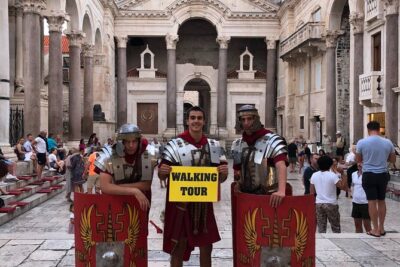
I like that the pace is slow enough for meaning. You are not just looking at highlights. You are getting the who, what, and why behind them, with details that make the buildings feel intentional. Guides often bring energy too. Mario, in particular, is described as both a serious historian and a comedian who mixes trivia and humor without turning it into a joke-fest.
Even if you end up not memorizing every date, you’ll walk away with a mental map. That matters because Split’s old town can be crowded and confusing. A guide can also steer you away from the worst bottlenecks at the moments that matter.
Starting at the Brass Gate and Riva Harbor, where Split shows its daily rhythm
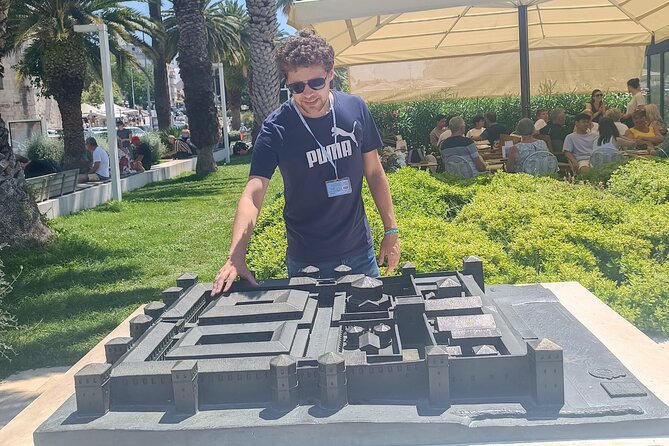
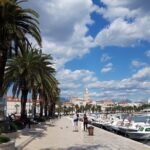
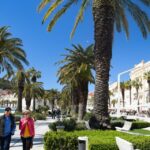
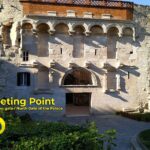
You start near the Brass Gate (Porta Aenea), right on the water. From there, you head to Riva Harbor, the famous promenade where local people spend time drinking coffee, soaking up sun, and doing everyday public-life things.
This opening stop is a good choice. It resets you. Before you get into imperial stone and Roman engineering, you get the feel of the city’s current pulse. When you later look at Diocletian’s palace layout, it helps to remember Split is not an open-air museum. It is a living town.
Practical note: Riva is scenic but it can be sunny. Plan for a hat, sunglasses, and water, even if the tour is otherwise mostly in open-air shade pockets.
Diocletian Palace substructures: the most underrated wow-factor in Split
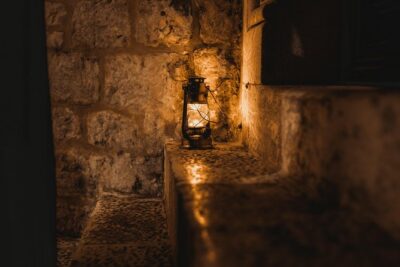
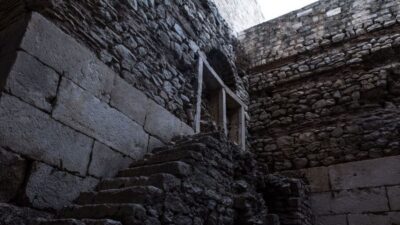
The heart of the tour centers on Diocletian’s Palace, but what you see is not the glamorous postcard courtyard. You start with the substructures, the basement halls beneath the palace complex.
These are among the world’s best-preserved spaces from classical antiquity, and they are one of the reasons Split’s historic center earned UNESCO World Heritage status in 1979. The key thing here is scale. You’re not just seeing a single room. You’re walking through a whole underground system that shows how the palace was built to function, not just to impress.
If you usually skim when you visit ruins, this stop is a morale booster. The storytelling helps your eyes make sense of the space, so it stops being “arches and columns” and becomes a working environment.
Peristyle: the imperial square and why it feels theatrical
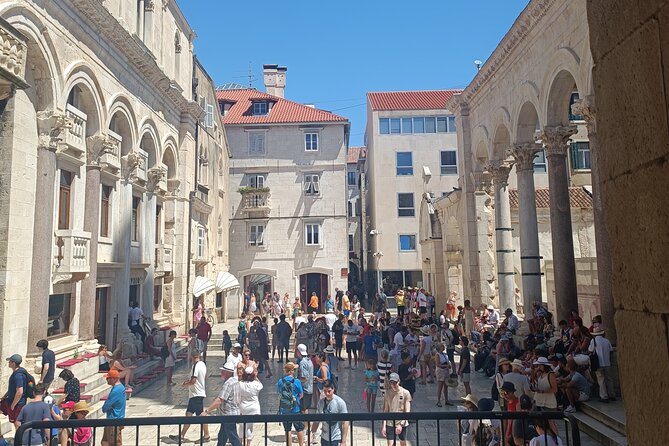
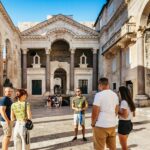
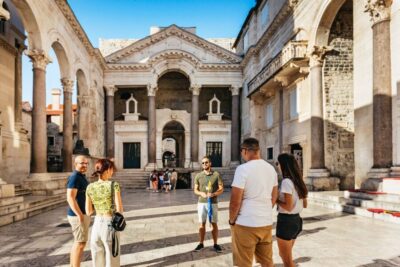
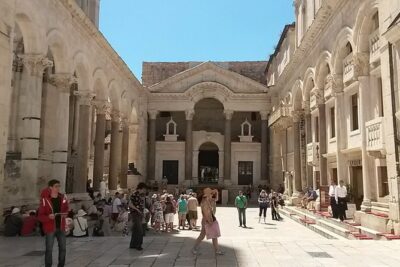
Next comes the Peristyle, the central square of Diocletian’s Palace. This is where your tour shifts from walls and ceilings to power and performance.
The Peristyle was intended as a ceremonial center tied to Diocletian’s claimed divine status. The emperor was portrayed as the living son of Jupiter, and the space was designed for approach and audience behavior, not casual strolling. You’ll hear about the idea that subjects would kneel, kiss the hem of the scarlet cloak, or fall fully prostrate as they approached.
Whether or not you’re into ancient religion, the practical takeaway is how the architecture choreographs people. It’s the difference between seeing a square and understanding why it was built that way.
More Split covered at walking pace
- Krka Waterfalls tour with Trogir Walking tour and Krka panoramic boat cruise
★ 5.0 · 1,659 reviews - Split Walking Tour with Professor of History
★ 5.0 · 926 reviews - Split: Diocletian Palace & Old Town Guided Walking Tour
★ 4.7 · 882 reviews - From Split: Krka Waterfalls Cruise & Trogir Walking Tour
★ 4.7 · 681 reviews - Split: History and Heritage Walking Tour
★ 4.9 · 650 reviews
The Vestibule (Rotonda): an imperial corridor that becomes a meeting hall
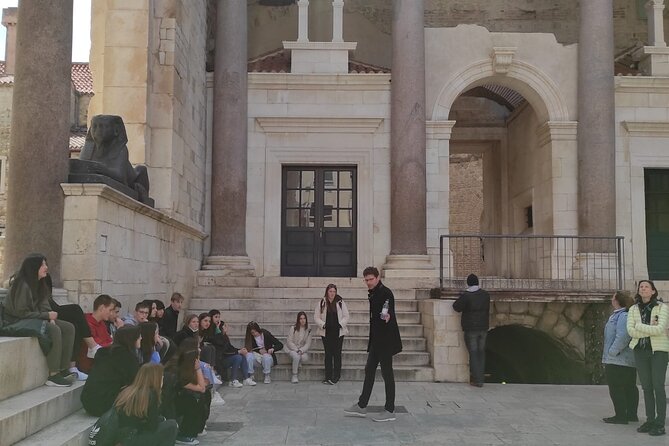
Then you reach the Vestibule, also called the Rotonda, which connects the Peristyle to the imperial apartments. This section is one of those details that makes Split feel like a puzzle with the pieces still in place.
The Rotonda was built by the beginning of the 4th century, forming a circular hall. It was topped with a dome, and the dimensions you’re given are striking: about 17 meters high and roughly 12 meters in diameter. Once, it served as a grand meeting hall for select audiences like ambassadors.
What makes it special for your trip is the way it explains movement. You see how the palace was not one open space, but a sequence. It’s like walking through an architectural script.
Cathedral of Saint Domnius: what you can see now, and what to plan later
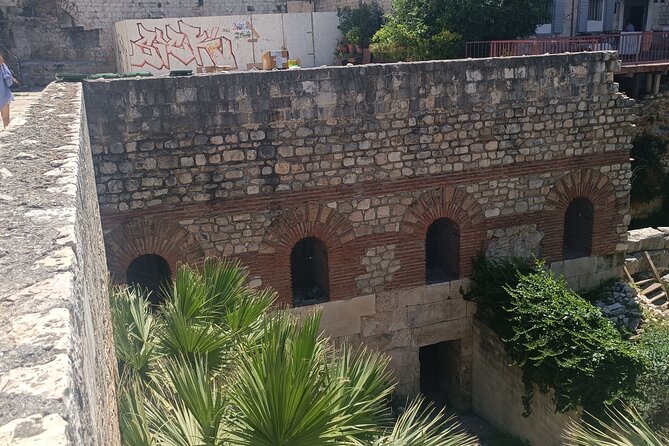
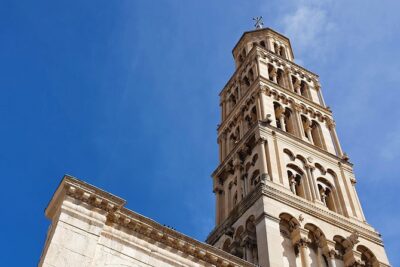
The tour includes a look at the Cathedral of Saint Domnius from the outside only. Even with the entrance not included, you still get the big context: it’s been understood as a Roman temple, mausoleum, and later church depending on how you interpret the layers.
This outside viewing works well if your goal is orientation. You’ll be able to spot features and understand why locals care about the site, so if you decide to go in later, you have a reason beyond curiosity.
If you want to see it fully, you’ll need to pay for entry on your own at a separate time. The guide will point out the details that make it worth your effort.
Temple of Jupiter and St. John the Baptist: the power of reuse
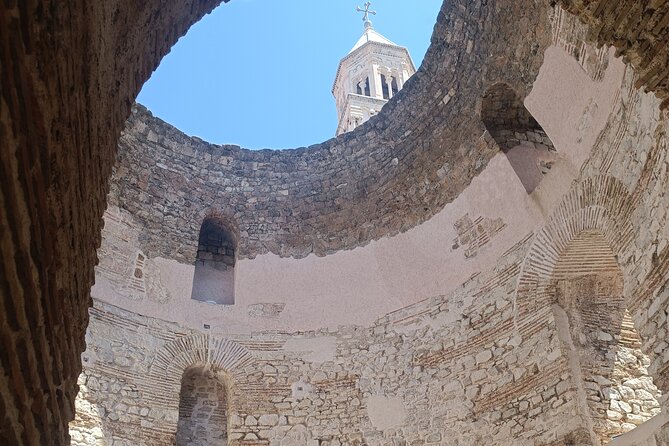
Another important outside-only stop is the Temple of Jupiter. The tour’s framing here is the survival and transformation of sacred space.
In ancient Roman religion, Jupiter was the sky-and-thunder supreme god. Over time, the temple was converted into a baptistery dedicated to St. John the Baptist. That single change tells you a lot about how religions evolve, share space, and reuse what already works.
As you move between the temple and the next area, you also walk through a small street that locals believe is the narrowest street in the world, called Let me pass street. It’s short, but it’s the kind of detail you remember later when you realize Split’s medieval urban fabric is still threading between older structures.
Golden Gate: the emperor’s entrance and the Roman-to-medieval twist
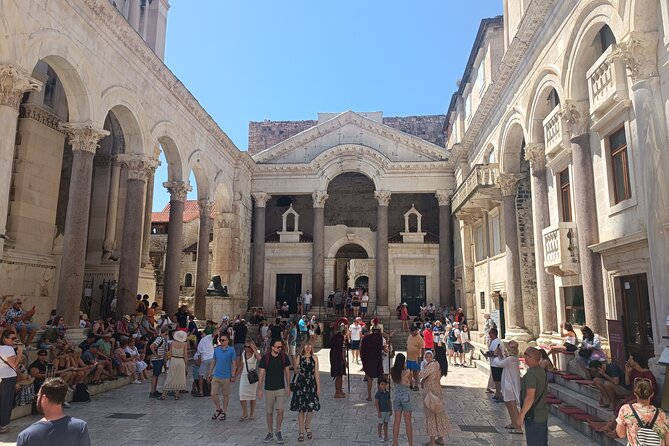
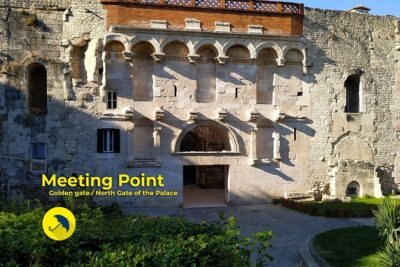
Next you reach the Golden Gate, one of the four principal Roman gates into old town Split. This is the northern gate built as part of Diocletian’s palace, designed as the main entrance through which the emperor entered.
It was elaborately decorated to mark status, but during the Middle Ages it was sealed off and lost columns and statuary. In modern times, it was reopened and repaired, and it now functions as a tourist attraction you can actually enjoy.
Why this stop matters for you: it helps you see the city as a set of transitions. Roman rule gets adapted into medieval life, then into modern preservation, and you can stand in the exact point where those shifts show up in stone.
Grgur Ninski statue and the toe-rubbing legend
After Roman gates and temple layers, you get a more human, playful moment: the Grgur Ninski statue. It is an 8.5-meter tall work by Ivan Meštrović, and the toe gets special attention.
You’ll see the toe worn shiny from rubbing, based on the superstition that it brings good luck. It’s one of those rituals that doesn’t require belief in magic to feel fun. It gives your walk a breath of local charm after heavier architecture.
Marmontova Ulica and Prokurative: the city grows beyond the palace
Then the tour shifts to the streets and squares that reflect later Split.
Marmontova Ulica is named after Napoleon’s marshal Marmont, the person credited with the urbanization of Dalmatian cities. Split locals responded by naming one of their most beautiful streets for him. It’s a reminder that empires leave marks, sometimes in the form of street signs you’ll pass every day.
From there, you reach Prokurative, a large open square known as Republic Square. It’s surrounded on three sides by neo-Renaissance buildings. This stop is about rhythm and viewpoints. You’re meant to notice the way the old town opens up, and how newer architecture sets a stage for social life.
Fruit’s Square (Trg Brace Radic): market memories and Marko Marulić
Your last stop is Fruit’s Square, Trg Brace Radic. The idea here is simple: this is where the town’s daily supply life played out, with fruit sellers once using this space to do business.
The guide also ties the square to important cultural memory, including the statue of Marko Marulić, often described as the father of Croatian literature. You’ll also hear stories that link history to what and where people eat, which is a nice way to end a walking tour. It turns your final minutes into a launchpad for the next part of your trip.
If you like planning meals after sightseeing, you’ll appreciate that the tour’s stories point you toward a more grounded Split experience, not just monuments.
What about the “private upgrade” and small-group feel?
The tour includes an option to upgrade to a private tour. For couples, families, or anyone who wants slower pacing for photos and questions, private often makes sense because you can control how much time you spend at the most meaningful stops.
Even in the standard small-group format, the group size cap at 17 matters. With fewer people, the guide can check in with you and adjust the route. It also means you spend less time waiting for everyone to catch up, and more time hearing the explanation where it actually fits the view.
Timing and walking comfort: plan for real old-town legs
Even though the tour is listed around 2 hours 20 minutes, it can run longer if your guide takes the time to answer questions or pause for better viewpoints and shade. In some cases, guides even add a little extra time because the group stays engaged and nobody wants to rush out.
That means you should treat this as a half-day activity on your feet, especially on warmer days. Wear comfortable shoes with grip. Bring water. If you’re heat sensitive, go early in your day or pair this with a later, slower activity afterward.
Also remember: several stops are outside views. That’s great for keeping the tour moving, but you’ll feel the sun if you’re visiting in peak season.
Price and value: why $24.19 can be a smart spend
The price is $24.19 per person, and it includes all fees and taxes. That’s a fair number for a guided walk that focuses on interpretation, not just location-hopping.
The value really comes from what you get for free and what you learn before paying later. Many stops are admission-free, including the Riva Harbor area and several Diocletian’s palace features like the substructures, Peristyle, and Rotonda areas of focus, plus the Golden Gate and major outdoor stops. Two notable exceptions are the Cathedral of Saint Domnius and the Temple of Jupiter, where you view from the outside during the tour, and entry is not included.
So you’re not paying admission twice for everything. Instead, you’re being taught what’s worth the separate ticket, which usually saves money and helps you pick the right time to enter.
Guides and style: Mario’s humor, Anita’s care, and good English
One reason people rave about this tour is the guide personality. Mario, often mentioned, brings a professor-like approach to history while also using humor and trivia to keep the group locked in. He’s also described as managing the pace well, including keeping the group in shade when possible and moving so you do not freeze in one spot.
Anita is another guide who shows up in feedback, with a warm, thoughtful style and pride in Croatian heritage. Both styles aim for the same outcome: you leave understanding what you saw, not just ticking off sights.
Either way, the tour is offered in English, and the group size keeps it conversational rather than lecture-only.
Should you book this Split history walk?
Book it if you are visiting Split for the first time and want your bearings fast. This is the kind of walk that turns Diocletian’s palace into a story you can actually follow, then carries that story into the later streets, statues, and squares you’ll keep passing during the rest of your trip.
Skip it only if you already know the palace layout and want a self-guided pace with long interior visits right away. Since several major sites are outside-only here, you might prefer a tour that includes more entrances if that is your priority.
If your goal is to understand Split in one afternoon, and then wander smarter afterward, this is an easy yes.
Split, the Longer Story

Walk It: More of Split at Ground Level

Inside the Palace Walls

Freshly written up around Split



Split Old Town & Palace Walks, top to bottom.
 ★ 4.9Split: Old Town and Diocletian Palace Walking TourFrom $174,727 reviews
 ★ 5.0Walking Tour of Split and Diocletian’s PalaceFrom $482,588 reviews
 ★ 5.0Split & Diocletian’s Palace Walking TourFrom $211,125 reviews
 ★ 5.0Walking Tour of Split with a ‘Magister’ of HistoryFrom $341,122 reviews
 ★ 4.7Split: Diocletian Palace & Old Town Guided Walking TourFrom $17882 reviews
 ★ 4.8Split: Game of Thrones Tour with Diocletian’s Palace CellarFrom $41545 reviews
 ★ 5.0Diocletian’s Palace and Old Town SMALL GROUP Walking TourFrom $16502 reviews
 ★ 5.0SPLIT-PRIVATE Walking Tour of Diocletian’s Palace & Old TownFrom $240467 reviews
Browse the lists this tour appears in