

REVIEW · ZADAR OLD TOWN & SEA ORGAN TOURS
Zadar City Tour 120min Walk
A Zadar walk that makes the city click. This 2 to 2.5 hour loop ties together 3000 years of change with today’s sights, like the sea music and sun installation. I especially like that it moves fast enough to feel efficient, yet slow enough for real stories.
I love two things most. First, you start with modern Zadar and then watch the guide connect it to the older streets and power centers, including the Sea Organ and the Cathedral area. Second, the route is packed with “show me why it matters” stops, from St. Donatus to the Land Gate.
One drawback to think about: it is still a mostly uninterrupted walking tour, with no listed toilet breaks, and it is not recommended for people with mobility, heart, respiratory, or recent surgery issues.
In This Review
- Key things I’d bet on
- Zadar in 120 Minutes (Plus), a Route That Feels Like a Timeline
- Greeting to the Sun: Why This Start Is Clever
- Sea Organ on the Promenade, the City’s Soundtrack in Action
- Ulica Perivoj Gospe od zdravlja, a Street That Sets the Tone
- Cathedral of St. Anastasia: The Biggest Photo, Explained Simply
- Roman Forum and the Old-City Reality Check
- Church of St. Donatus: A Landmark with Presence
- Benedictine Monastery of St. Mary, a Quick but Meaningful Interruption
- Široka ulica and the Market Transition, from Monuments to Meal Energy
- Market Zadar: Aperitif, Cheese Tasting, and the Optional Upgrade
- People’s Square to St. Simon, Where Everyone Walks Through
- Rector’s Palace and Five Wells Square: Power, Water, and Old Town Logic
- Land Gate, the Winged Lion, and the Feel of Defense
- Captain’s Tower and Queen Jelena’s Garden, Small Stops with Big Context
- Price and What Makes This $28 Feel Worth It
- Walking Comfort, Timing, and Who This Fits Best
- Languages and the Guide Factor, What to Watch for
- Should You Book This Zadar City Tour?
- FAQ
- Where does the Zadar City Tour start?
- How long is the walking tour?
- What is included in the tour stops?
- Are there tastings or free entrances?
- Do I get pickup from my hotel?
- Is this tour suitable for children or people with mobility issues?
Key things I’d bet on
- Greeting to the Sun and Sea Organ at the start, so you get context before you hit the old stone
- Historical material facts tied to each stop, not just names and dates
- Possible tastings or a free medieval church entrance, depending on the day and season
- A straightforward route through Zadar’s signature squares and gates, ending near the Sea Organ area
- Pickup option in a black Peugeot Traveler with the ZADAR CITY TOUR logo, if you book it
Other Zadar outings we thought were worth a look
- Zadar: Plitvice Lakes Guided Day Tour with Tickets★ 4.9 · 3,148 reviews
- Zadar: Kornati Boat Trip with Lunch and Swim Stops★ 4.5 · 1,498 reviews
- Zadar: Plitvice Lakes with Boat Ride and Zadar Old Town Tour★ 4.9 · 1,368 reviews
- From Zadar: Plitvice Lakes with Boat Ride & Zadar Old town tour★ 5.0 · 1,129 reviews
Zadar in 120 Minutes (Plus), a Route That Feels Like a Timeline
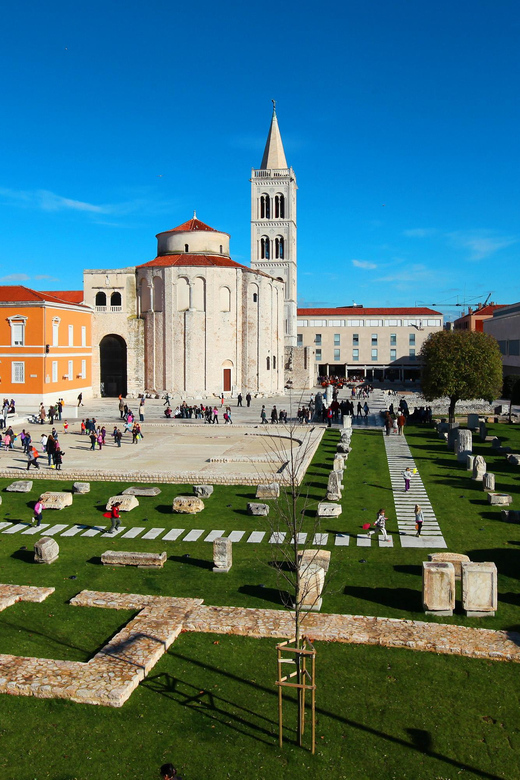
This tour works because it is built like a timeline you can walk. You start with the modern Zadar icons, then you gradually step into older layers: Roman remains, medieval churches, and the walls and gates that shaped how the city defended itself.
You also get a guide who tells you what you are looking at, not just where to look. That matters in Zadar, because the city looks compact from the street, but it is really stacked with different eras. When the guide is strong, like Dorja (a name that shows up with very high praise), the details land fast and you start spotting patterns without trying.
The whole walk runs about 2 hours up to roughly 150 minutes, with short guided moments at each stop. That timing is perfect if you want a first day orientation, or if you like history but you do not want to spend half your vacation in a museum line.
Greeting to the Sun: Why This Start Is Clever
Most city tours start with the oldest thing they can find. This one begins at the Greeting to the Sun installation, and that is smart.
Why? Because it tells you right away that Zadar is not just a “ruins city.” It’s a living place that invested in art, sound, and public space. You get a quick guided introduction, then you move on with a clearer mental map of how the city treats culture as something you experience outdoors.
If you are the type who likes to understand a place’s personality before you start taking photos, this opening helps you relax. After a stop like this, the later churches and Roman Forum feel less like random sightseeing and more like one continuous story.
Sea Organ on the Promenade, the City’s Soundtrack in Action
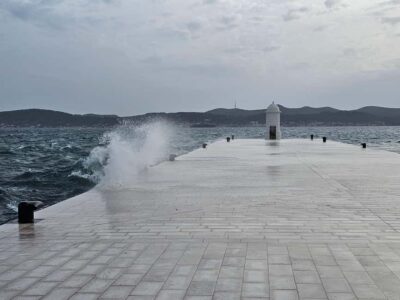
Next up is the Sea Organ, the famous sound installation on the promenade. The guide gives you a short guided look, then you listen.
Even if you do not love experimental art, you’ll probably enjoy the way this spot turns your attention from buildings to atmosphere. You are literally hearing the sea interact with the architecture. It is a gentle bridge from today’s Zadar into the older city mindset: controlling space, shaping experience, and building around the coast.
Practical tip: wear shoes you can stand in comfortably. The promenade is flat, but you do have time on your feet while the guide explains what you are seeing and hearing.
Ulica Perivoj Gospe od zdravlja, a Street That Sets the Tone
You then move along Ulica Perivoj Gospe od zdravlja. This segment is brief, about 10 minutes, but it matters because it gets you into the older pedestrian lanes without jumping instantly from the promenade to the biggest landmarks.
Think of this as the tour’s warm-up. You start noticing the scale of the streets, the way people flow through the center, and where viewpoints open up. If you are hoping to follow along easily, this is the moment when the route starts feeling intuitive.
More Zadar covered at walking pace
- Zadar: Guided Walking Tour
★ 4.8 · 445 reviews - Zadar City Tour 120min Walk
★ 5.0 · 203 reviews - Zadar Walking Tour sponsored by Gligora Cheese and deli.
★ 5.0 · 119 reviews - Zadar: Virtual Reality Guided History Walking Tour
★ 4.4 · 86 reviews - Zadar: Private Walking Tour Through 3,000 Years of History
★ 4.7 · 71 reviews
Cathedral of St. Anastasia: The Biggest Photo, Explained Simply

From there, you stop at the Cathedral of St. Anastasia area. You get a guided look and sightseeing time here, around 10 minutes.
This is one of the stops where the guide’s material facts help you. It’s easy to see a church and move on. It’s harder to understand why this cathedral matters in Zadar’s identity, and that is where the storytelling pulls weight. You also get the feel of the Cathedral area as a central landmark that anchors the Old Town.
One helpful thing: the tour time at each major point is long enough for context, but short enough that you are not stuck watching the same square from the same angle for ages.
Roman Forum and the Old-City Reality Check
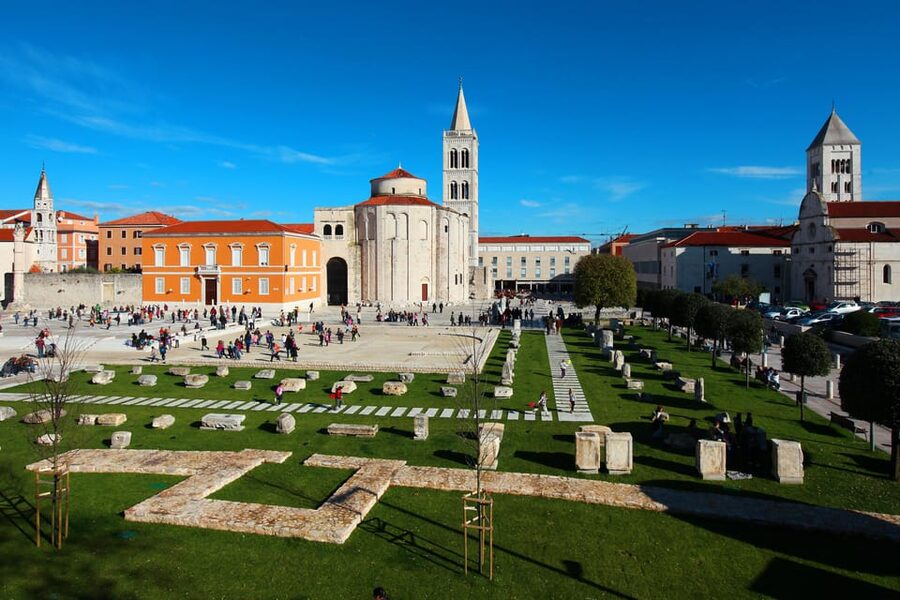
Then comes the Roman Forum. The guided time is short, about 10 minutes, but it’s an important shift in the tour’s tone.
You go from the religious power of the Cathedral world into the earlier civic space. That change helps you understand that Zadar did not only become important through churches. It had a functioning public life long before the medieval period.
If you like archaeology but you do not want to get lost in technicalities, this stop is a good middle ground. You get just enough to understand what you are seeing, without turning it into a long lecture.
Church of St. Donatus: A Landmark with Presence
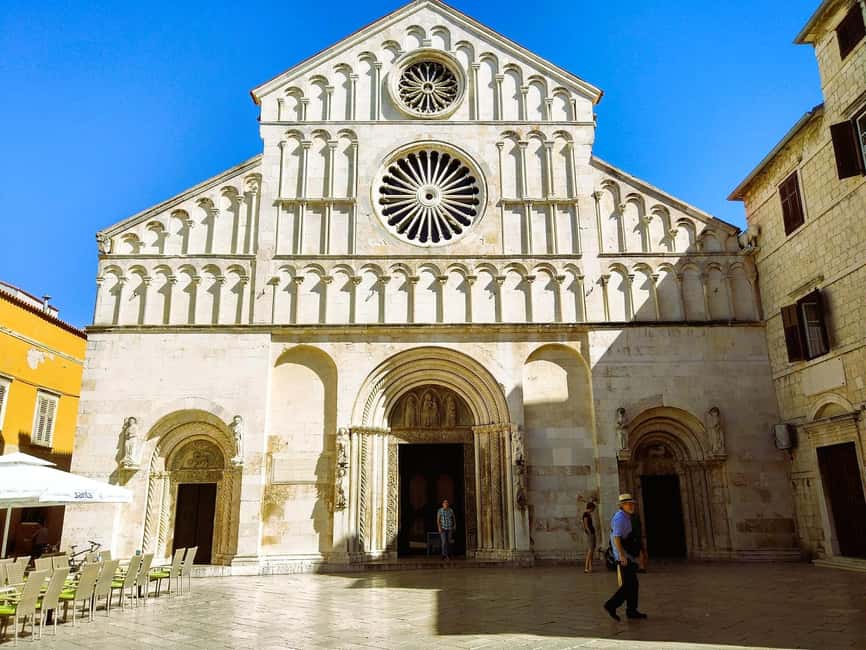
St. Donatus is one of Zadar’s most recognizable silhouettes, and the tour makes sure you actually stop long enough to take it in. You get guided time here, about 10 minutes.
The guide focuses on why this church stands out as a symbol of the city. It’s not just about the building shape. You get a sense of how its presence connects to the eras around it, and why locals and visitors treat it as a visual shorthand for Zadar.
You do not have to be a church expert to enjoy this. If you have ever seen a building and wondered why people care, you’ll probably appreciate how the guide answers that question with clear, grounded explanations.
Benedictine Monastery of St. Mary, a Quick but Meaningful Interruption
Next is the Benedictine Monastery of St. Mary. You get a shorter stop, around 5 minutes, and the tour notes that entrance is not part of what’s included here.
That can be totally fine. Monasteries still work as story points even when you are only looking from the outside, because the guide can link the site to daily life, religious influence, and the way communities organized themselves over time.
If you want more interior access, you might find the medieval church free entrance offer later in the walk more appealing. But as a quick “pause and orient,” this stop fits perfectly into the tour’s pace.
Široka ulica and the Market Transition, from Monuments to Meal Energy
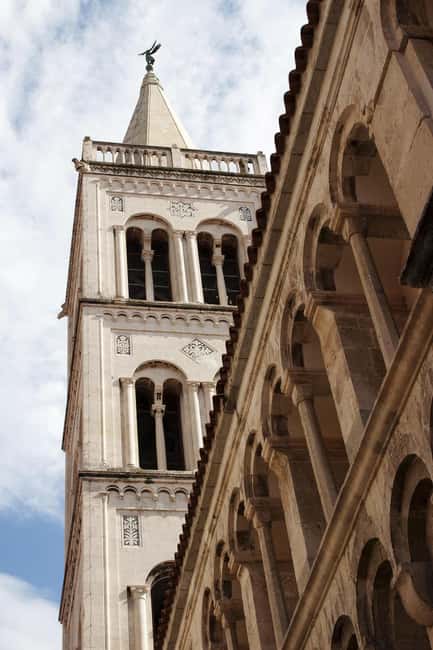
You then pass through Široka ulica and head toward Market Zadar. This part is shorter, with walking time and quick guided moments.
The reason this segment is useful is psychological. After churches and Roman spaces, your brain starts craving normal street life. Shifting toward a market gives you that reset, and it also sets up the best part of the tour for many people: the food and drink stop.
Market Zadar: Aperitif, Cheese Tasting, and the Optional Upgrade
Market Zadar is where the tour adds something practical. You get an aperitif, a guided visit, sightseeing, and time for cheese tasting. This is listed as included, and it is usually the kind of stop that turns a history walk into a day that feels like a mini experience, not just a checklist.
You may also see Maraschino mentioned as part of the free tastings that can be offered almost every day in high season, with limits on national holidays or Sunday afternoons. During low season, the timing is different and tastings are not possible in the afternoon nor on Sundays and national holidays.
So, how do you handle this without disappointment? Expect the market stop to be the anchor, but treat the free extras as a bonus that depends on the day.
If you like food with context, this stop works. The market is not separated from the rest of Zadar. It is inside the route, so you are still walking in the same story world, just with a different kind of information.
People’s Square to St. Simon, Where Everyone Walks Through
People’s Square is one of those places you can think you know already, because it looks like a typical city meeting spot. The guide’s job is to make you notice what’s around it and how it functions in Zadar’s public life.
You also pass near the Church of St. Simon. Entrance is not part of this stop, but you get guided time and passes, about 5 minutes.
This is the part of the tour where you might start clocking how Zadar’s center is organized. Squares connect streets. Churches and palaces create focal points. It all comes together when the guide points out the relationships between landmarks.
Rector’s Palace and Five Wells Square: Power, Water, and Old Town Logic
Rector’s Palace is passed without stopping. Even so, the tour includes it because it helps you understand how authority was visible in the city’s layout.
Then you move to Five Wells Square, where you get guided sightseeing time, around 10 minutes. The “five wells” detail gives you something concrete to hang your understanding on: the practical needs that supported community life in the past.
This is also a great stop for photos, because the square layout helps you see Zadar as a planned space rather than random streets. If you like architecture and city design, you’ll probably enjoy this segment more than you expected.
Land Gate, the Winged Lion, and the Feel of Defense
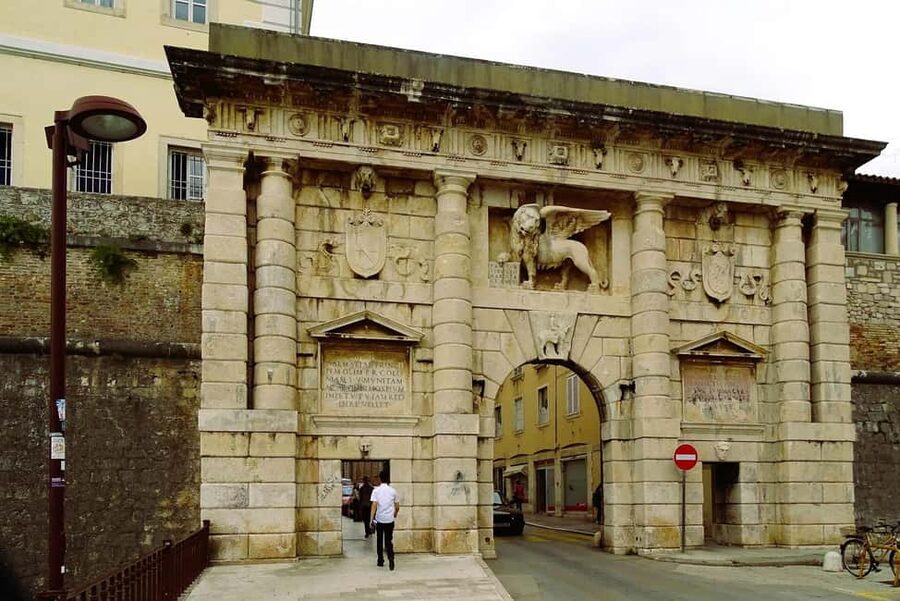
Finally, you reach Land Gate, also called Kopnena vrata. You get guided time here, about 10 minutes.
This is one of the tour’s biggest emotional moments, because gates make a city feel real. They are about movement, control, and protection. The guided portion notes the winged lion symbol, the kind of detail you might miss if you were just wandering.
If you fall for sunset energy, there’s also a useful option mentioned in the flow: you can join the evening tour at the Land Gate if you want to return for that light and atmosphere.
The end point is also set up well. You finish with drop-off options at Land Gate and near the Sea Organ area, so you are not stuck far from the places you might want to revisit later.
Captain’s Tower and Queen Jelena’s Garden, Small Stops with Big Context
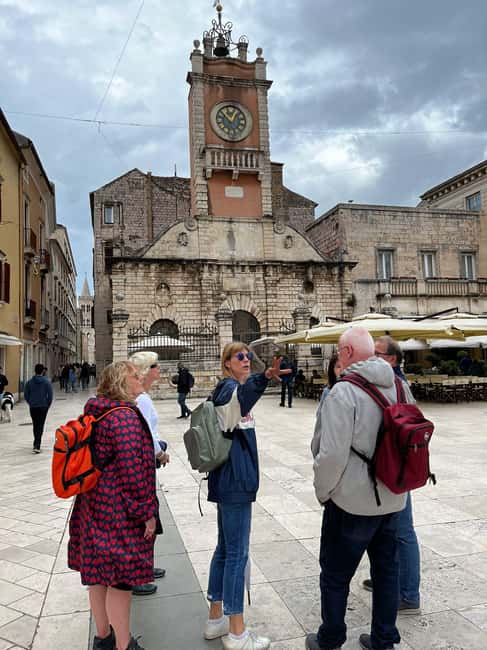
On the way through the old center, the tour includes passes by Captain’s tower and Queen Jelena’s Garden (Botanical). Entrance is not listed for these stops, so expect this as “see it, get the context, move on.”
Still, these are the kinds of details that keep a route from feeling like the same three monuments repeated. Towers and gardens reflect how cities balanced defense, daily life, and public space.
If you love “in-between” sights, these quick passes can be surprisingly satisfying.
Price and What Makes This $28 Feel Worth It
At around $28 per person for a 2 to 2.5 hour guided walk, the value depends on what you care about.
If you want a guided route that links modern Zadar to Roman and medieval anchors, this price makes sense. You are paying for someone to connect dots for you, including the mix of stops like Sea Organ and St. Donatus, plus the organized pacing between squares and gates.
The price also feels more reasonable when the tour includes potential free extras. Depending on the season and day, you might get a free entrance to a medieval church on the way, or tastings like Maraschino and cheese. The market stop with aperitif and cheese tasting is a real “useful memory,” not just a photo op.
If you hate walking, or if you already plan to spend hours reading about every era yourself, you might not get as much value from a guided structure. But for first-time orientation, or for culture lovers who like details explained in plain language, it is a strong deal.
Walking Comfort, Timing, and Who This Fits Best
This tour is designed for people who can handle a steady walking route. It is not listed as suitable for kids under 13, and it is also not recommended for pregnant travelers.
It’s also not a good fit if you have mobility impairments, use wheelchairs, have heart problems, respiratory issues, a cold, or you have had recent surgery. Those are straightforward limitations, and you should take them seriously.
What to bring is simple: comfortable shoes and weather-appropriate clothing.
One more reality check: there are limits on group size, and you are advised to check the weather forecast. Rain is not treated as a free refund reason, so come prepared. You’ll enjoy this more if you pack a light rain layer or umbrella you can carry without slowing everyone down.
Languages and the Guide Factor, What to Watch for
The tour offers live guiding in English, French, Italian, and Croatian. That matters because the quality of the experience depends on the guide’s ability to explain architecture and symbols in a way that stays understandable.
Strong signs include the repeated praise for enthusiastic, informative guides and the “depth of information” focus. The name Dorja is highlighted as especially good at telling the story in a friendly, detailed way.
If you choose this tour, pick the language you feel most comfortable listening to, not the one you can speak. You want your attention on the buildings, not on decoding unfamiliar terms.
Should You Book This Zadar City Tour?
Book it if you want a guided introduction that actually connects the dots between eras. This is best for cultural heritage lovers who like details, enjoy walking through the center, and want the payoff of seeing major landmarks without needing to build your own route.
Skip it if you cannot do sustained walking, need frequent restroom access, or want lots of optional entrances and long museum time. This is a street-level city story, not a slow crawl with ticketed stops at every site.
If you do book, do one thing to get more out of it: plan to stay curious. When you hear about a gate, a square, or a church symbol, look at what surrounds it. Zadar’s real magic is how everything links, and the tour is built to help you notice those connections fast.
FAQ
Where does the Zadar City Tour start?
The meeting point can vary depending on the option you book. The tour itself starts with the Greeting to the Sun installation and then moves to the Sea Organ on the promenade.
How long is the walking tour?
The duration is listed as 2 hours, with a total time range of about 150 minutes.
What is included in the tour stops?
Included are items like the Greeting to the Sun, the Sea Organ, the Cathedral of St. Anastasia, the Roman Forum, and visits that include guided passing by or sightseeing at key landmarks. Entrance is not included for some sites, like Church of St. Donatus and the Benedictine Monastery of St. Mary.
Are there tastings or free entrances?
There can be possible free entrance to a medieval church on the way, or tastings such as Maraschino and/or cheese. Cheese tasting and an aperitif at Market Zadar are included, and the availability of extra tastings can depend on season and day.
Do I get pickup from my hotel?
Pickup is optional. If you choose an option with pickup, you will meet the driver in a black Peugeot Traveler with a ZADAR CITY TOUR logo, and the driver will have your name.
Is this tour suitable for children or people with mobility issues?
It is not suitable for children under 13. It is also not recommended for travelers with mobility impairments, wheelchair users, people with heart problems, respiratory issues, or those with recent surgeries.
City-Scale Tours in Zadar




Walk It: More of Zadar at Ground Level

Zadar, A Few More Outings




Freshly written up around Zadar
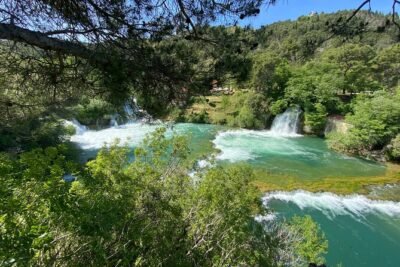
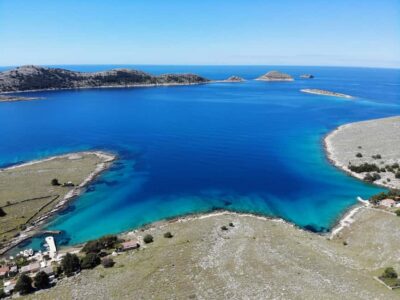
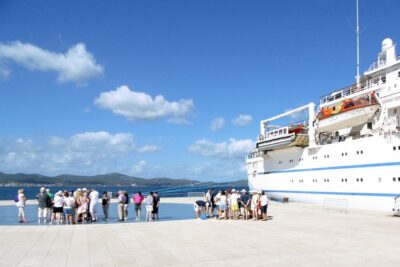
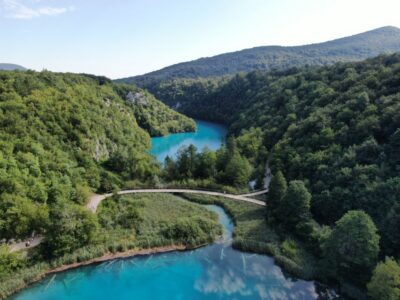
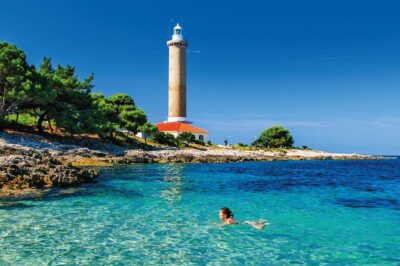
Zadar Old Town & Sea Organ Tours, top to bottom.
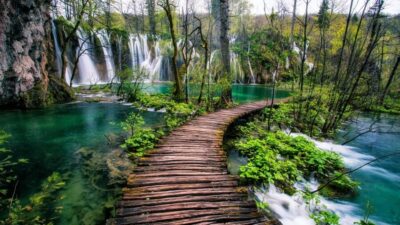 ★ 4.9Zadar: Plitvice Lakes Guided Day Tour with TicketsFrom $883,148 reviews
 ★ 4.8Zrmanja River: Half-Day Guided Kayaking Tour Near ZadarFrom $641,817 reviews
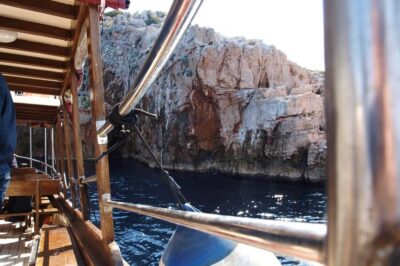 ★ 4.5Zadar: Kornati Boat Trip with Lunch and Swim StopsFrom $641,498 reviews
 ★ 4.9Zadar: Plitvice Lakes with Boat Ride and Zadar Old Town TourFrom $531,368 reviews
 ★ 4.9From Zadar: Island-Hopping Speedboat Tour with DrinksFrom $381,247 reviews
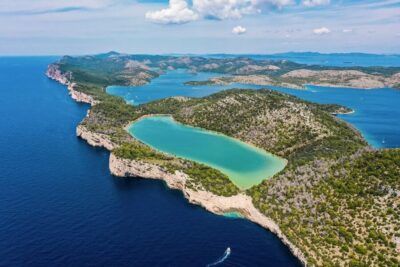 ★ 4.1Zadar: Kornati and Telašćica Full-Day Boat Trip with LunchFrom $511,193 reviews
 ★ 4.7Zadar: Plitvice Lakes Full-Day Guided Tour with a Boat RideFrom $58807 reviews
 ★ 3.8From Zadar: Kornati National Park and Telascica Boat TripFrom $64788 reviews
Browse the lists this tour appears in