
REVIEW · SPLIT OLD TOWN & PALACE WALKS
Chill Private Walking Tour of Diocletian’s Palace
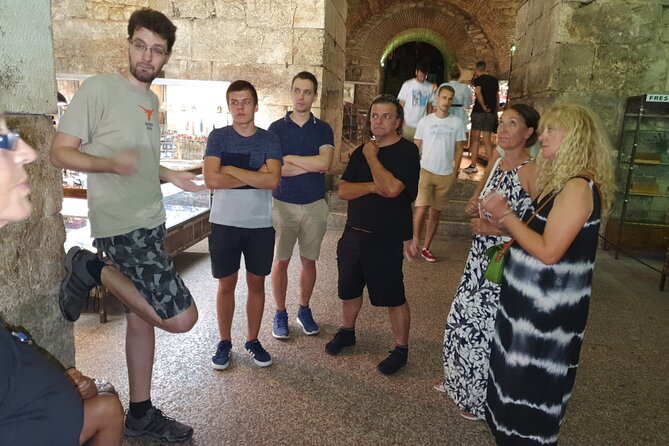
Diocletian’s Palace starts making sense fast. This private walking tour gives you the Roman-to-Christian story in a tight route, and I like that it pairs real stone you can see with 3D reconstructions that explain what changed over time. I also love that the guide is praised for being fun, clear, and flexible, with communication that starts before you meet. A key consideration: some of the best interior moments require optional tickets, which can add time and a bit of planning.
You’ll be moving at a comfortable pace through the palace core, from the Peristyle to the Golden Gate, with stops that help you read the building like a map. If you want the museum parts of the substructures, or go inside the cathedral and the small interior of the Temple of Jupiter, you should expect the tour to stretch closer to the longer end.
This is priced per group (up to 15), so the value can be excellent if you’re traveling with family or a small set of friends. If you’re traveling solo, it may feel like a luxury compared with a lower-cost group tour, but the private format is the point here.
In This Review
- Key highlights you will feel on the walk
- Entering Diocletian’s Palace from the Peristyle, not the guesswork
- The route is built for understanding, from substructures to the streets within
- Inside the story: Saint Domnius and how the Roman tomb became a church
- Temple of Jupiter: the Roman deity site still looks Roman, even after church repurpose
- Triklinij gives you an impression of palace life, not just walls
- Papalićeva ulica, a corridor of details you might miss alone
- Fruit’s Square and the Croatian layer outside the palace walls
- The Golden Gate and the finish near Grgur Ninski
- Pricing and value: $107.84 per group makes sense in the right situation
- Guide style and what you can reasonably expect
- Practical tips so your 90 to 120 minutes feel effortless
- Should you book this private walking tour of Diocletian’s Palace?
- FAQ
- How long is the Chill private walking tour of Diocletian’s Palace?
- Is this tour private, and how many people can be in my group?
- What language is the tour offered in?
- Where does the tour start and where does it end?
- Are the interior visits included?
- What happens if weather is poor?
Key highlights you will feel on the walk
- Peristyle first: You start in the palace’s central heart, then the story expands outward.
- 3D reconstructions on key structures: You get a clearer sense of how the space looked centuries ago.
- Optional interiors that you control: Cathedral and Temple interiors can be added only if you want.
- Layered transformation is the main theme: Roman emperor’s palace becomes a living Christian and Croatian landmark.
- Short, targeted stops: Each location has a purpose, not just sightseeing.
- Good-weather dependent route: The walking is designed for a clear, comfortable visit.
Other walks through the palace quarter and the alleys behind it
- Split: Old Town and Diocletian Palace Walking Tour★ 4.9 · 4,727 reviews
- Walking Tour of Split and Diocletian’s Palace★ 5.0 · 2,588 reviews
- Split & Diocletian’s Palace Walking Tour★ 5.0 · 1,125 reviews
- Walking Tour of Split with a ‘Magister’ of History★ 5.0 · 1,122 reviews
Entering Diocletian’s Palace from the Peristyle, not the guesswork
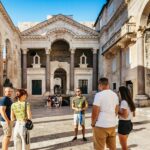
Diocletian’s Palace in Split is one of those places where first impressions can be confusing. You see walls, arches, streets inside a palace, and churches that are clearly not Roman, yet the stone feels ancient. What I like about this tour is that it starts at the Peristyle, the palace’s ceremonial center, so you build the right mental picture before you start wandering.
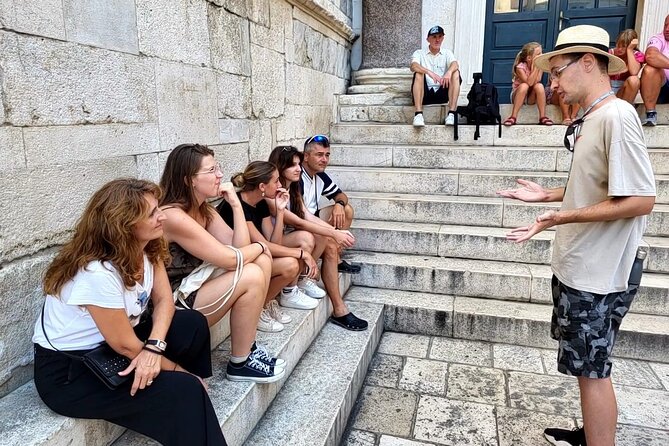
At the Peristyle, the guide sets the stage: who Diocletian was and how this palace came to be. It’s not just a quick trivia stop. This is your foundation point, and it helps you understand why later spaces feel “repurposed” rather than randomly built over.
If you enjoy turning ruins into a story you can follow, you’ll appreciate the way the tour sequence makes the logic visible, from imperial power to later religious and civic uses.
The route is built for understanding, from substructures to the streets within
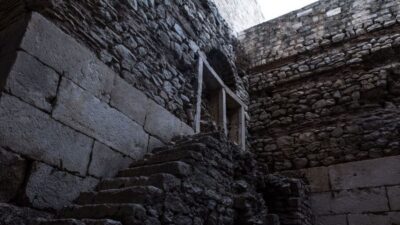
After the Peristyle, you move to the Diocletian Palace substructures. These are the areas where the architecture starts telling you how the whole palace was engineered and supported. The tour goes through the free part, focusing on structure and history, so you still get a solid walkthrough even if you choose not to buy extra tickets.
Here’s the practical part: there is an optional museum portion of the substructures that adds about 20 more minutes if you want to see the rest. That means you control how deep you go. If you’re short on time or just prefer outside views, you can keep it to the free section. If you like detailed archaeology and want the full “read the building” effect, it’s a smart add-on.
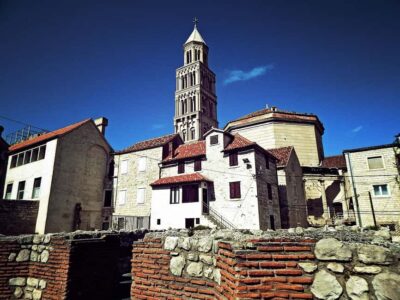
Next comes the Cathedral of Saint Domnius. This stop is one of the best-preserved Roman structures within the palace complex, and that alone is worth your attention. But the tour angle is what makes it click: you learn about the Cathedral as part of Diocletian’s Palace, and then you connect the dots of how a Roman tomb was converted into a Christian cathedral.
If you have a cathedral ticket, the tour can include a visit inside. That extra time is about 10 minutes, and it tends to be the kind of interior visit that helps you understand the layered history without making you hunt for meaning yourself.
Inside the story: Saint Domnius and how the Roman tomb became a church
The Cathedral stop is where many people feel the tour shift from “architecture tour” into “historical transformation.” From outside, you can still appreciate the survival of Roman structure, but the real pay-off is understanding the conversion from tomb space into Christian use.
I like that this tour doesn’t treat the Cathedral as a standalone attraction. It keeps it anchored to the palace story, so you see continuity instead of a random church dropped into ruins. If you’re the type who cares about how religions and cultures reuse existing spaces, this is the moment you’ll remember.
If you decide to go inside, plan your pace accordingly. A short interior visit fits well into the overall flow, and it can make the later stops easier to interpret, since you’ll have already seen one example of transformation in action.
Temple of Jupiter: the Roman deity site still looks Roman, even after church repurpose
Next is the Temple of Jupiter, one of the most preserved Roman structures you’ll see in this palace complex. Like the Cathedral, it also has a church-era repurpose story, and you’ll learn what changed and why.
The tour covers the important information outside by default. If you have a ticket for the small interior, the guide will take you in for about 10 additional minutes.
This is a good decision point. If you like to stand close to Roman stone and study small architectural details, the interior visit is a strong choice. If you prefer to keep your energy for street-level areas later in the tour, stick with the outside portion. Either way, the outside explanation is structured to make the building’s religious shift feel logical.
More Split covered at walking pace
- Krka Waterfalls tour with Trogir Walking tour and Krka panoramic boat cruise
★ 5.0 · 1,659 reviews - Split Walking Tour with Professor of History
★ 5.0 · 926 reviews - Split: Diocletian Palace & Old Town Guided Walking Tour
★ 4.7 · 882 reviews - From Split: Krka Waterfalls Cruise & Trogir Walking Tour
★ 4.7 · 681 reviews - Split: History and Heritage Walking Tour
★ 4.9 · 650 reviews
Triklinij gives you an impression of palace life, not just walls
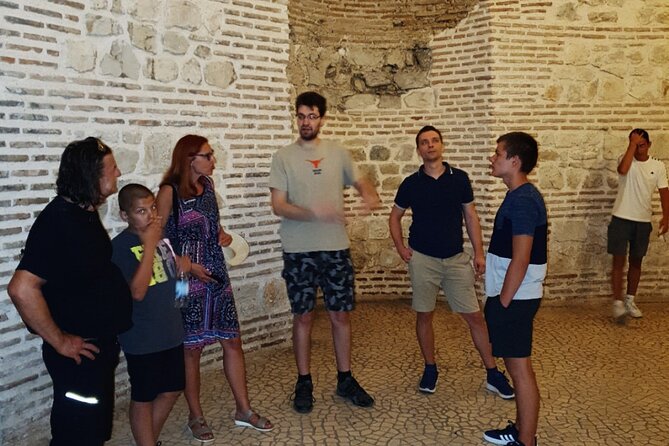
Not every palace stop should just be about impressive stone. You also want a hint of how people lived, ate, and organized daily life. The Triklinij, in the south-eastern corner, helps with that.
A lot of that corner is mostly destroyed, so you are not getting a complete room you can walk around. Instead, the tour uses an accurate partial reconstruction to give you an impression of how Diocletian might have lived there. That makes it a satisfying stop for anyone who hates only seeing “broken bits” with no context.
If you respond well to the guide’s 3D reconstructions, this stop is where that approach really pays off. You’ll have a better feel for scale and use, even if you’re looking at incomplete remains.
Papalićeva ulica, a corridor of details you might miss alone
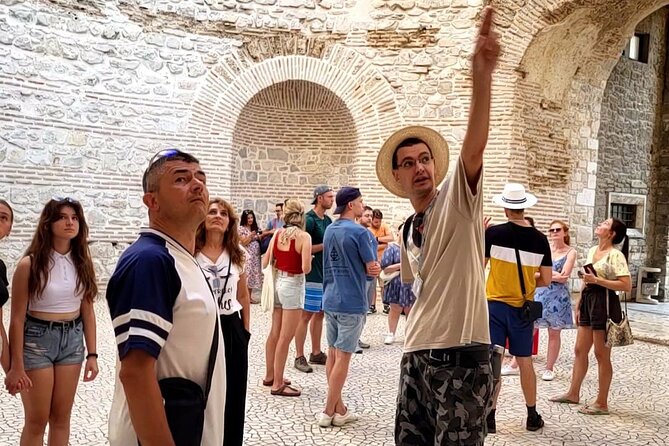
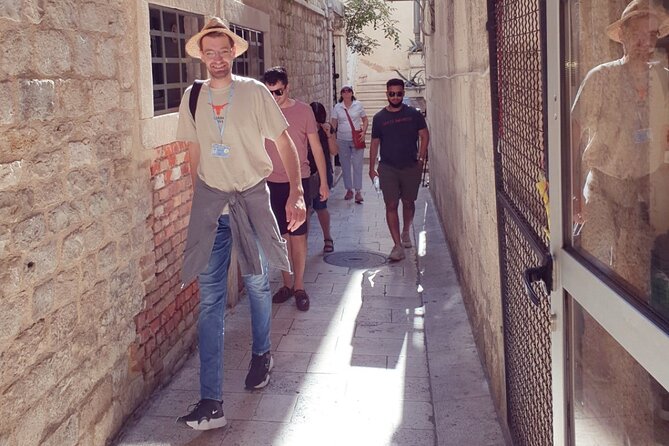
Then you head through Papalićeva ulica, the palace alleyway. On your own, it’s easy to treat these tight lanes as just convenient passage routes inside a historic site. With a guide, you get small facts and connections that help you read the alley in the context of the palace north half.
This stop is about information density without feeling rushed. It’s one of the places where you can start noticing how the palace blends into later city life, because the alley is a lived-in kind of space.
If you like “how the city grew around the ruins” stories, this is a useful bridge between the grand Roman centers and the newer civic layers outside the palace.
Fruit’s Square and the Croatian layer outside the palace walls
At Fruit’s Square (Trg Brace Radic), you step into the space where the palace integrates with newer buildings. This is a turning point in the tour: you shift from Roman engineering inside the palace to a later period of Croatian history.
You also get a practical visual education. Seeing how the palace is built into what’s now part of everyday streets helps you understand why Diocletian’s Palace isn’t treated like a distant museum ruin. It functions like a framework that the rest of the city grew around.
This stop also makes the tour feel broader than “ancient Rome.” You start connecting what’s inside the palace to what came after, which is especially satisfying if you’ve only got a limited time window in Split.
The Golden Gate and the finish near Grgur Ninski
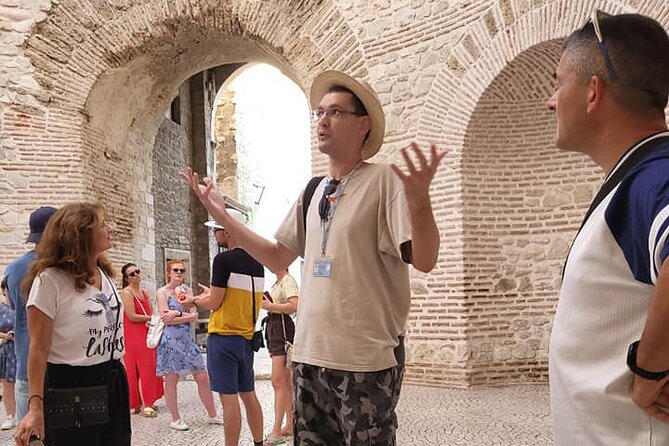
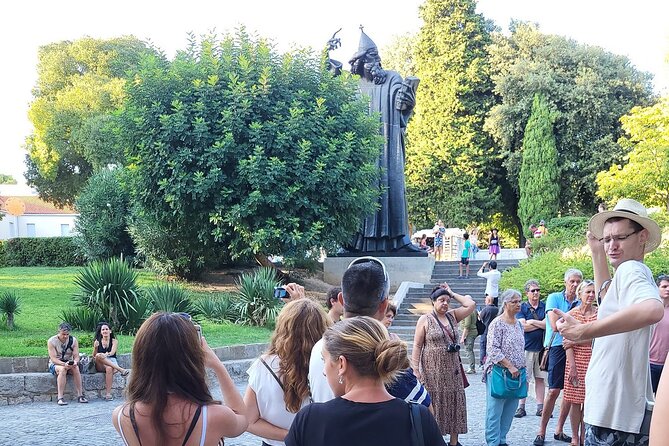
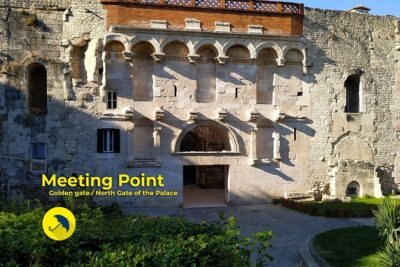
Near the end, you see the Golden Gate, the palace’s northern gate. Gates matter in a place like this because they tell you about fortifications and movement. You’ll learn how the fortifications changed between construction and what you see today.
Finally, the tour ends outside the northern gate, outside the palace complex area, near the bronze statue of Grgur Ninski. It’s a strong closing move because it lets the guide consolidate what you learned about Roman construction and then connect it to Croatian history so far.
If you’re the kind of person who likes to leave with a mental map rather than scattered stops, this finish helps. You can walk away with a story arc you can explain later.
Pricing and value: $107.84 per group makes sense in the right situation
The price is $107.84 per group, up to 15 people, for about 1 hour 30 minutes to 2 hours. That matters because the tour is private. In practice, you’re paying for your group to move together with an experienced guide, without competing with a bigger crowd’s pace.
So when is the value strongest?
- If you’re traveling as a family or small friend group, the per-person cost can drop quickly compared with separate tickets.
- If your group includes people who benefit from a more guided pace, private format helps you keep everyone on the same page.
When might it feel pricey?
- If you’re solo or two people, you are still paying the group price, so it can be more expensive than joining a larger group tour.
I think the best way to think about this is that you’re buying clarity. Diocletian’s Palace is huge, layered, and easy to misunderstand. A good guide helps you see what you would otherwise miss, especially with the 3D reconstructions and the focus on transformation from Roman to Christian uses.
Guide style and what you can reasonably expect
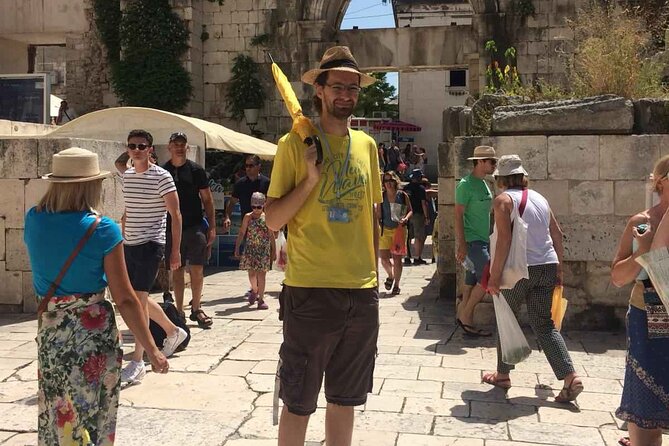
The tour is led by an experienced, passionate guide, and the names that show up in praise include Mili. His English is described as excellent, with humor that keeps the walk light without turning serious history into a joke.
One specific strength you should look for in a guide like this is flexibility. There’s at least one reported moment where a sudden thunderstorm hit right as the tour started, and the guide adjusted the route after waiting for rain to ease and changes were needed. That tells you the tour is mindful of real-world conditions, not just rigid memorized stops.
You’ll also notice that the stops are designed to build one story. That’s why the order matters: Peristyle sets the stage, then substructures and Cathedral add Roman engineering and conversion, then Jupiter and reconstructed life spaces help cement the transformation theme, and the finish ties it together near Grgur Ninski.
Practical tips so your 90 to 120 minutes feel effortless
This tour is described as requiring good weather. Since it’s a walking route through an active historic area, rain and cold can make the pace less comfortable. If weather looks shaky, consider planning for the possibility of a different date or refund options if cancellation is needed due to poor conditions.
Timing also matters if you want optional interiors:
- If you choose the museum part of the substructures, plan about 20 extra minutes.
- If you add the Cathedral interior, plan about 10 extra minutes.
- If you add the Temple of Jupiter interior, plan about 10 extra minutes.
If you want a smooth experience without feeling rushed, my advice is to decide on interiors at booking based on your group’s interests. Roman stone lovers usually enjoy the inside add-ons. People who prefer photos and street-level city integration may prefer to keep it exterior and on-schedule.
Also, wear comfortable walking shoes. The palace streets and alleys are the kind of stone surfaces that can feel uneven. You’re also standing for short explanations at multiple stops, so comfort counts more than you might expect.
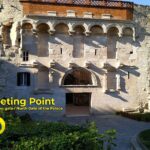
Finally, arrive at the meeting point with a few minutes to spare. The tour begins at the Eastern (Silver) Gate, Poljana kraljice Jelene 5, 21000 Split, and it ends outside the northern gate by the bronze statue of Grgur Ninski. With a route that ends in a different location, punctuality helps you avoid missing the first framing moment.
Should you book this private walking tour of Diocletian’s Palace?
If you want to understand Diocletian’s Palace instead of just seeing it, I’d book this tour. The route starts in the right place, focuses on real transformation from Roman palace to later Christian and Croatian meaning, and uses 3D reconstructions to make the ruins easier to interpret.
Book it especially if:
- you’re traveling with family or friends and want a shared pace,
- you want a guide who can explain architecture and history clearly in a fun way,
- you’re curious about how Roman tombs and temples were repurposed over time,
- you like the idea of optional interior visits, so you can match the tour to your energy level.
Skip it or consider a shorter approach if:
- you dislike paying extra for interiors and prefer only exterior stops,
- your group wants a very casual “walk and take photos” visit with minimal explanation,
- you might struggle with weather, since the tour is described as needing good conditions.
If you’re looking for value, remember the price is per group, up to 15. With the right group size and a willingness to choose the optional interiors thoughtfully, this feels like a smart way to get real understanding from a compact, well-structured walk.
FAQ
How long is the Chill private walking tour of Diocletian’s Palace?
It runs about 1 hour 30 minutes to 2 hours. Optional interior add-ons can extend it, with the museum part of the substructures adding around 20 minutes, and cathedral and Temple of Jupiter interior visits adding about 10 minutes each.
Is this tour private, and how many people can be in my group?
Yes, it is a private tour/activity, and only your group participates. The price is for up to 15 people.
What language is the tour offered in?
The tour is offered in English.
Where does the tour start and where does it end?
It starts at the Eastern (Silver) Gate, Poljana kraljice Jelene 5, Split, and it ends outside the northern gate by the bronze statue of Grgur Ninski at Dioklecijanova 7.
Are the interior visits included?
Some interiors are optional. The main stops are listed as free entry, but the museum part of the substructures, the interior of the Cathedral of Saint Domnius, and the small interior of the Temple of Jupiter require tickets if you want to go in.
What happens if weather is poor?
This experience requires good weather. If it is canceled due to poor weather, you’ll be offered a different date or a full refund.
Walk It: More of Split at Ground Level


Inside the Palace Walls

Freshly written up around Split
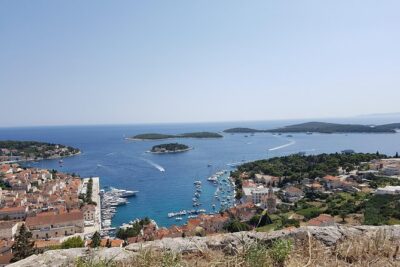



Split Old Town & Palace Walks, top to bottom.
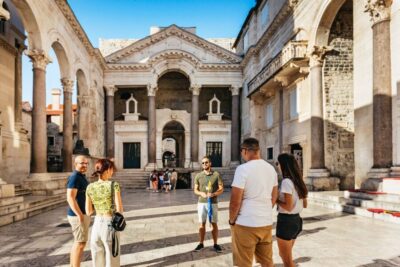 ★ 4.9Split: Old Town and Diocletian Palace Walking TourFrom $174,727 reviews
 ★ 5.0Walking Tour of Split and Diocletian’s PalaceFrom $482,588 reviews
 ★ 5.0Split & Diocletian’s Palace Walking TourFrom $211,125 reviews
 ★ 5.0Walking Tour of Split with a ‘Magister’ of HistoryFrom $341,122 reviews
 ★ 5.0Split Walking Tour with Professor of HistoryFrom $24926 reviews
 ★ 4.7Split: Diocletian Palace & Old Town Guided Walking TourFrom $17882 reviews
 ★ 4.8Split: Game of Thrones Tour with Diocletian’s Palace CellarFrom $41545 reviews
 ★ 5.0Diocletian’s Palace and Old Town SMALL GROUP Walking TourFrom $16502 reviews
Browse the lists this tour appears in