
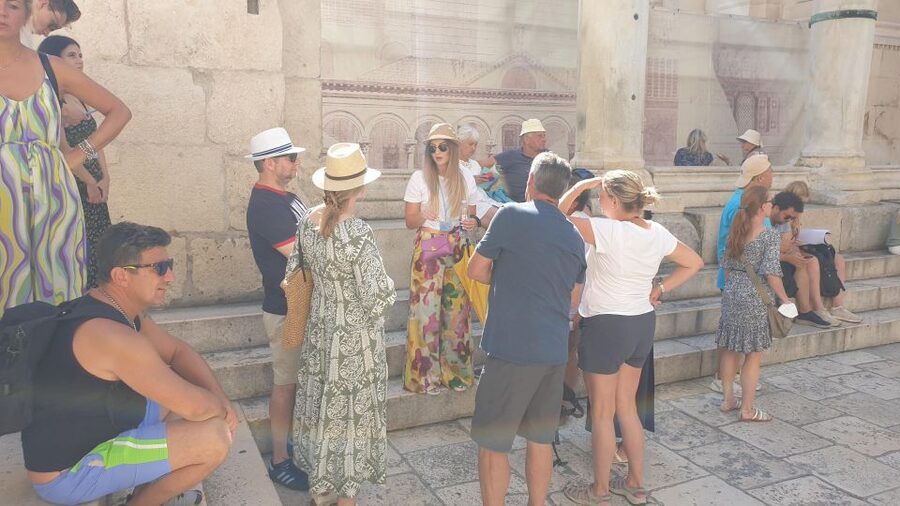
REVIEW · HISTORICAL TOURS
Split: History and Heritage Walking Tour
One palace, 20 centuries, and you walk it. This Split History and Heritage Walking Tour takes you through Diocletian’s UNESCO-protected palace complex, Romanesque churches, medieval fortifications, and Gothic palaces, all in the most walkable pocket of town. You also get Game of Thrones location context as a fun add-on for fans.
I love how the tour turns ruins into a story you can picture, with guides like Antonela, Nikolas, and Doris bringing the timeline to life. I also love the practical value of seeing a layered city in one go, including the reality of a 1700-year-old palace and what still survives today.
The only thing to keep in mind is that even if it’s marketed as a small group, some departures can feel crowded, so you might lose a bit of time waiting for everyone to catch up in busy lanes.
In This Review
- Key Highlights You Should Know
- Peristil Square Start, and Why Diocletian Still Matters
- Inside a UNESCO Roman Palace: 1700 Years in One Walk
- What you’ll notice once the guide points it out
- Romanesque Churches and Medieval Fortifications: More Than Big Names
- The drawback, if you dislike walking
- Gothic Palaces and How Split Kept Evolving
- Game of Thrones Bonus Stops Without Losing the History
- Guides, Pace, and Group Size: What $18 Buys You
- The one caution about the small-group promise
- What to Expect on the Ground: Weather, Clothes, and Practical Comfort
- Languages and Who This Tour Is Best For
- Best fit
- Not ideal
- How to Make the Most of It Once You’re Standing in Old Town
- Should You Book This Split History and Heritage Walking Tour?
- FAQ
- Where do I meet for the tour?
- Is the tour price only for the guide, or are tickets included?
- Does the tour run in bad weather?
- What languages are available?
- Is the tour appropriate for families?
- Is the tour suitable for everyone?
- Can I pay later or cancel if plans change?
Key Highlights You Should Know
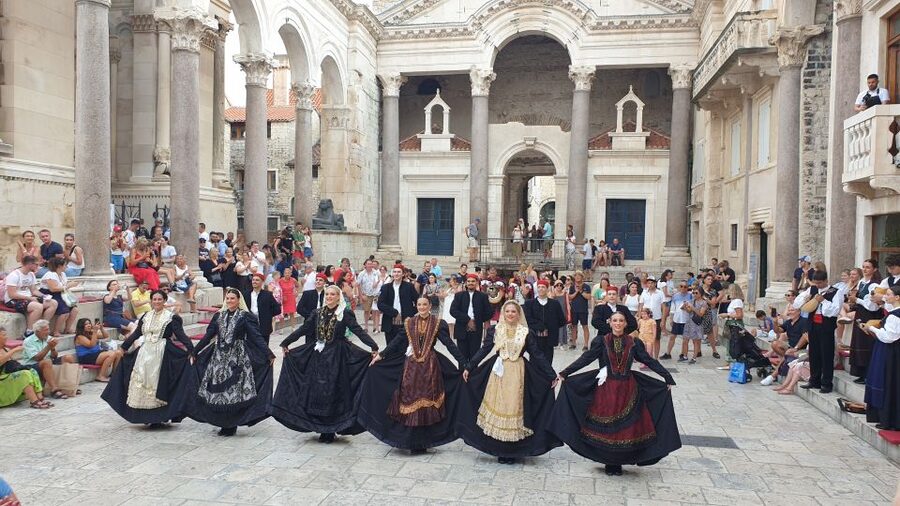
- UNESCO Roman palace core you can walk through, not just view from the outside
- Licensed guides with teaching-style storytelling, including guides named Antonela, Nikolas, and Doris
- Layered architecture in one loop: Roman, Romanesque, medieval, and Gothic
- Big-picture city history from Diocletian’s rise to later Croatian and Venetian influences
- Game of Thrones spot pointers for pop-culture fans who want extra context
- Rain or shine tour reality, with guidance on what to bring like comfortable shoes and a hat
More Split covered at walking pace
- Split: Old Town and Diocletian Palace Walking Tour★ 4.9 · 4,727 reviews
- Walking Tour of Split and Diocletian’s Palace★ 5.0 · 2,588 reviews
- Krka Waterfalls tour with Trogir Walking tour and Krka panoramic boat cruise★ 5.0 · 1,659 reviews
- Split & Diocletian’s Palace Walking Tour★ 5.0 · 1,125 reviews
Peristil Square Start, and Why Diocletian Still Matters
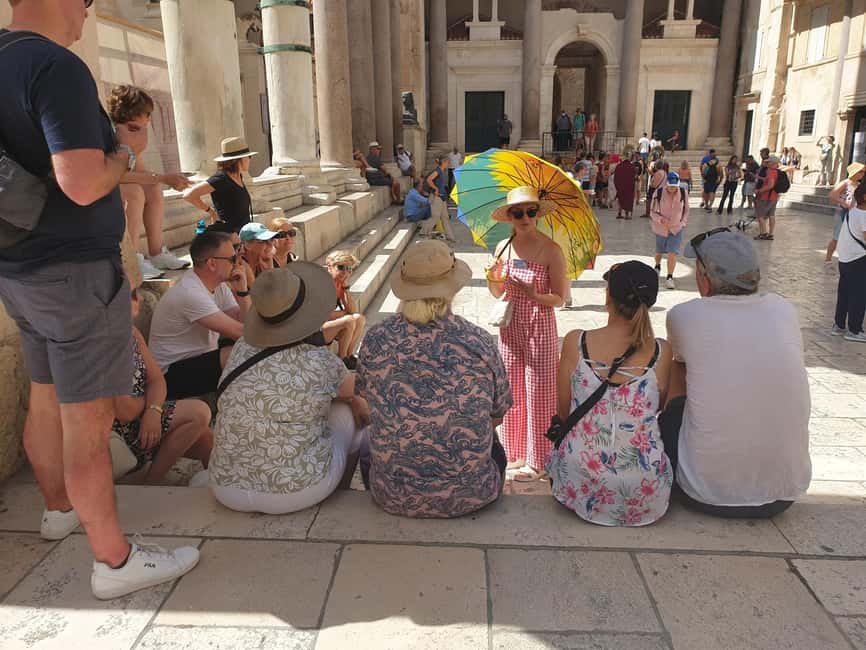
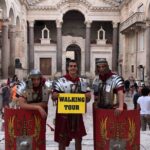
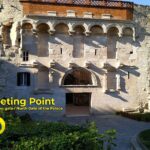
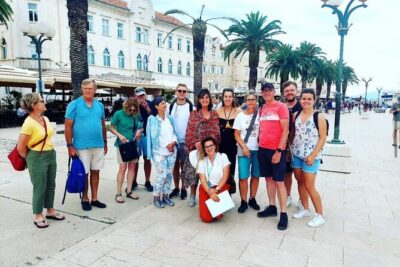
This tour begins at Peristil Square, specifically under the old Roman arch on the north side of the square, next to the Tourist Information Office. Look for a yellow T-shirt or a yellow umbrella, which makes it easier to spot your group before you get swept into the maze of Old Town.
Why start here? Peristil Square sits right in the living heart of Diocletian’s Palace. So from step one, you’re not just walking past history, you’re walking inside the framework that shaped Split’s layout. Even if you’re new to the city, the guide’s job is to help you connect the dots quickly: where you are, what it used to be, and why it mattered.
And yes, this is very much a guided tour. The guides are described as licensed and well educated, and they’re the difference between a lot of pretty stones and a place that starts to make sense.
Inside a UNESCO Roman Palace: 1700 Years in One Walk
The star of the show is Diocletian’s Palace, a UNESCO-protected Roman complex that is about 1700 years old. What I like about this focus is that it’s not vague. You spend time on what the palace was for, how it worked, and what remains you can still recognize today.
In plain terms, you’re seeing how a major political figure turned into a real force in Roman life, and how the palace reflects power, design, and daily function. The tour also stresses the human part of the story, including how Diocletian went from nobody to the most powerful man in the world. That kind of context makes the architecture click, because you start looking at the space as a tool, not just scenery.
You’ll also get help reading the mix of old and new. Split’s palace isn’t a museum set behind glass. It’s part of an active city, meaning Roman structure meets later buildings, modern shops, and everyday foot traffic. The result is a walking lesson in survival: what lasted, what changed, and what you can still trace if you know what to look for.
What you’ll notice once the guide points it out
Roman architecture can look uniform until someone gives you a framework. That’s why the guide’s explanations matter here. You start to see patterns in scale, materials, and layout, and you understand why certain sections feel preserved while others feel more layered.
Romanesque Churches and Medieval Fortifications: More Than Big Names
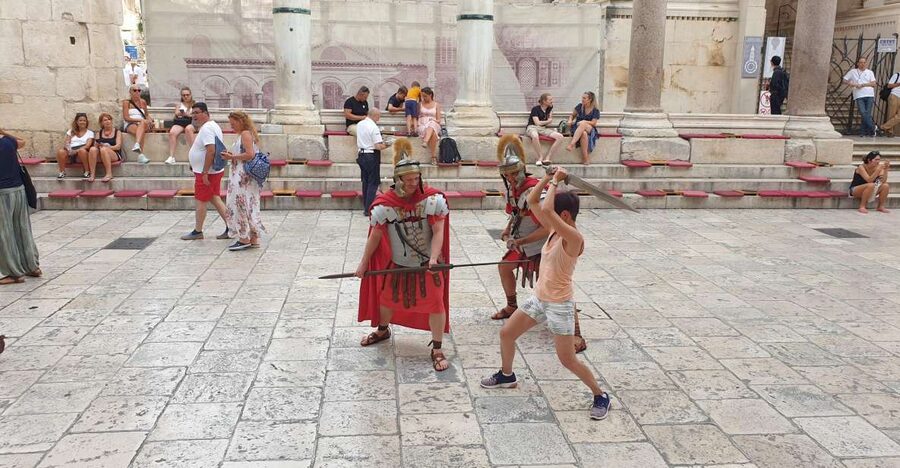
After the palace core, the tour moves through the next layers of time: Romanesque churches and medieval fortifications. This is where you shift from the idea of Roman order to the reality of centuries of change.
Romanesque buildings often feel heavier and more grounded than later styles, and that difference helps you understand how Split’s identity shifted over time. The guide’s job is to connect form to function, not just label style. So you’re not only learning what something is called, you’re learning why it looks the way it does and what that says about the era that built it.
Then you get medieval fortification context. Fortifications are one of those topics that can sound dry until you’re shown how they protect a city, define movement, and shape the way people live around them. The tour frames these structures as practical answers to real pressures, which makes them feel less like background and more like city-making.
Other history-led routes through Split
- Walking Tour of Split with a ‘Magister’ of History
★ 5.0 · 1,122 reviews - Split Walking Tour with Professor of History
★ 5.0 · 926 reviews - Split: History and Heritage Walking Tour
★ 4.9 · 650 reviews - Split History and Gastro Small-Group Tour with Food and Drinks
★ 5.0 · 375 reviews - Split: Local History and Culture 90-Minute Walking Tour
★ 5.0 · 194 reviews
The drawback, if you dislike walking
This section demands attention. If you’re the type who wants only scenic stops and zero explanation, you might find the historical pacing slower. But if you like stories, this is where the guide’s teaching style gets you, especially because the tour is paced to keep the time feeling right rather than rushed.
Gothic Palaces and How Split Kept Evolving
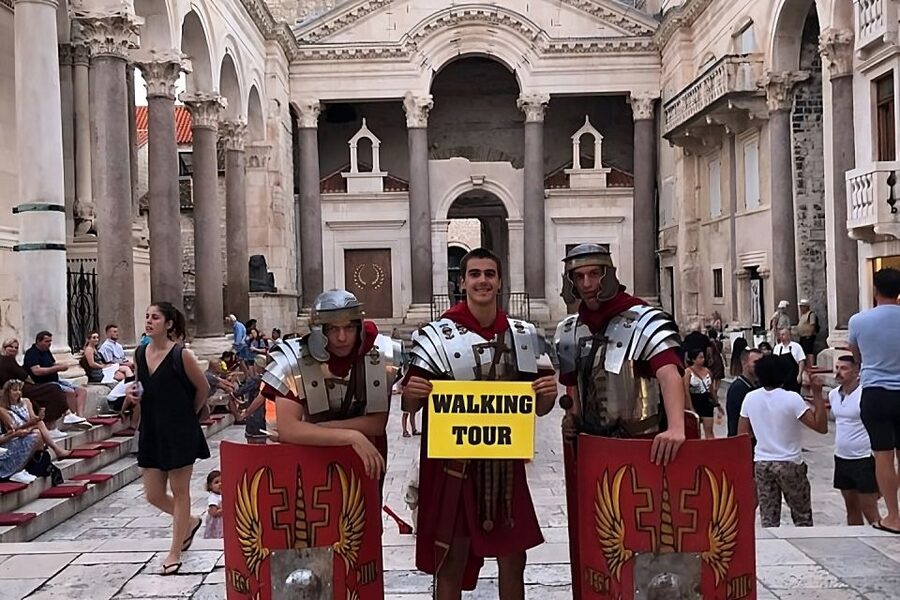
Next comes the Gothic palaces, and this is where Split stops feeling like a single era and starts feeling like a city that kept rewriting itself. Gothic architecture brings more visual drama, and it often signals shifting tastes, wealth, and connections to wider European trends.
I like that the tour doesn’t treat each period like a separate exhibit. Instead, it shows the continuity: Roman foundations, medieval adjustments, then Gothic style flourishes. When you walk through these changes in sequence, it’s easier to understand why Split still feels “Roman” even though it’s clearly not frozen in Roman time.
Some guides also include later influences such as Croats and Venetians, tying architecture and city habits to who came later and what they brought. This matters for your future wanderings, because once you know what those influences look like, you start spotting them even when you’re not on the tour.
Game of Thrones Bonus Stops Without Losing the History
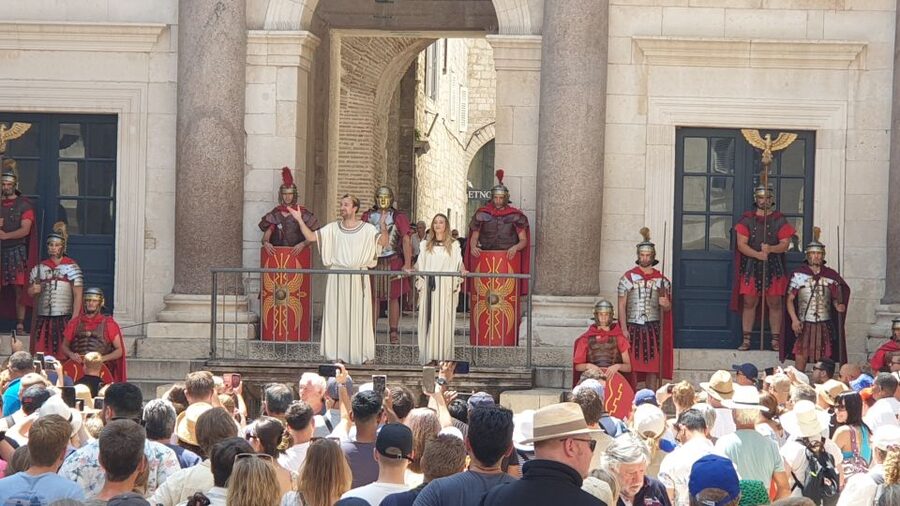
If you’re a Game of Thrones fan, this tour offers bonus location context. The key is that it’s not treated as the main event. Instead, the show references become a shortcut for understanding what you’re seeing and where it sits in the real history.
That balance works. You get the extra fun factor, but you still leave knowing what Diocletian’s palace was and how medieval and later layers shaped what you’re looking at now. So even if you don’t care about the show, you’re not missing the core value.
And if you do care, this is the kind of walk where the guide helps you connect pop culture images to the physical reality on the ground. It’s much more satisfying than taking photos and guessing later.
Guides, Pace, and Group Size: What $18 Buys You
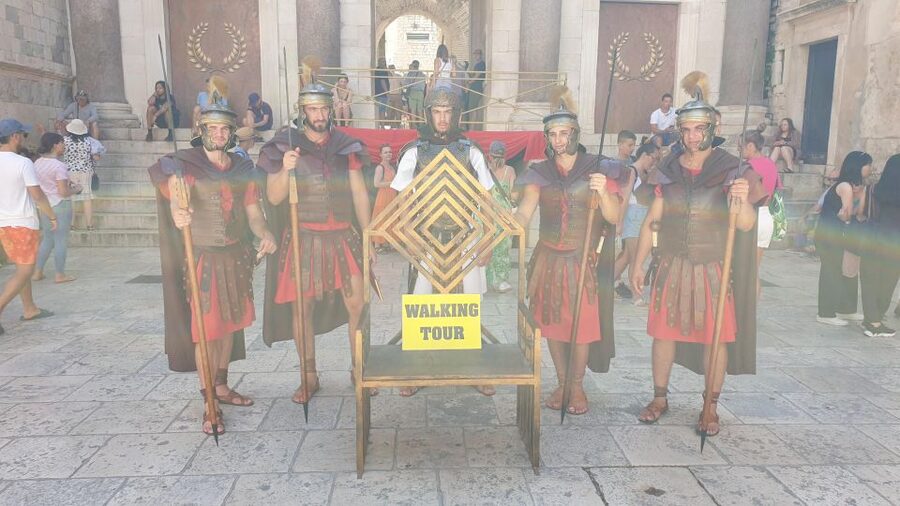
The price is $18 per person, and for Split this is one of those deals that stays fair because you’re paying for a licensed guide and a structured walking route through high-value sights. It’s not a ticket-based day. Admission tickets aren’t included, and food and drinks aren’t included, but the tour itself is built around the main palace complex and historic lanes where you don’t need entrance fees to get a meaningful experience.
The strongest praise across the experience centers on the guide. People highlight that guides are engaging, entertaining, and good at explaining complex history in easy language. Names like Antonela and Nikolas show up often, and Doris gets credit for helpful rain gear during wet conditions. One review even notes the guide had a teacher-like delivery, which is exactly what you want when you’re walking for hours and listening to dates.
The one caution about the small-group promise
A few comments point out that some tours can feel larger than you expect, with crowds slowing movement. If that happens to your group, you might lose time waiting at intersections. It’s not the guide’s fault, but it is a real consideration if you’re sensitive to crowd delays.
What to Expect on the Ground: Weather, Clothes, and Practical Comfort
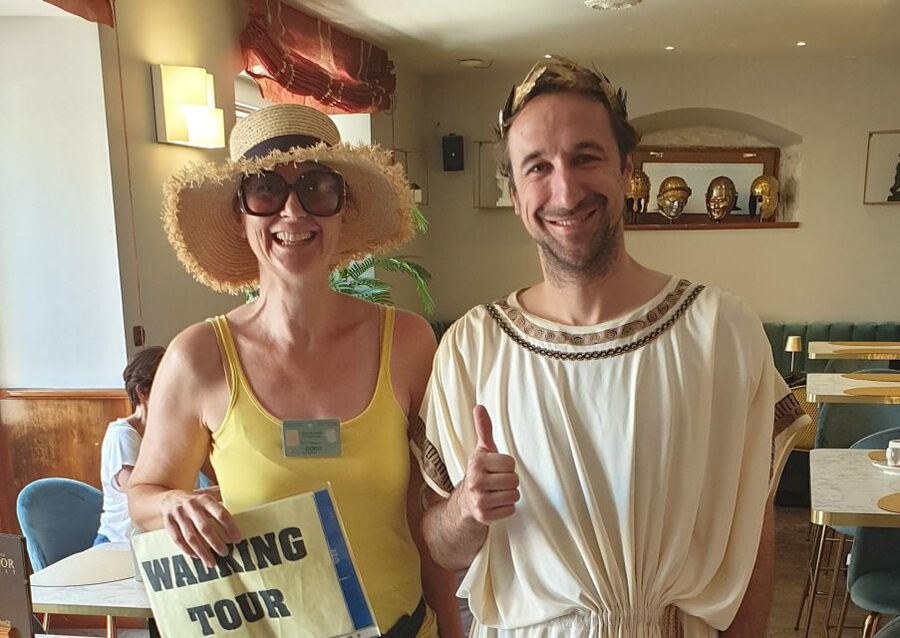
This tour runs no matter the weather, rain included. That means you’ll want to dress like you’re walking a lot on uneven stone. The guidance is simple: comfortable shoes, comfortable clothes, and a hat. If you forget a hat, you’ll pay for it in sun later, because Split light can be intense.
You should also plan for street noise. It’s a walking tour through active areas, so the guide’s explanations can compete with crowds. Also, the tour is not suitable for hearing-impaired people, so consider that carefully.
One more practical note: costumes aren’t allowed. So if you’re doing any themed photos, keep the outfit to normal clothing.
Languages and Who This Tour Is Best For
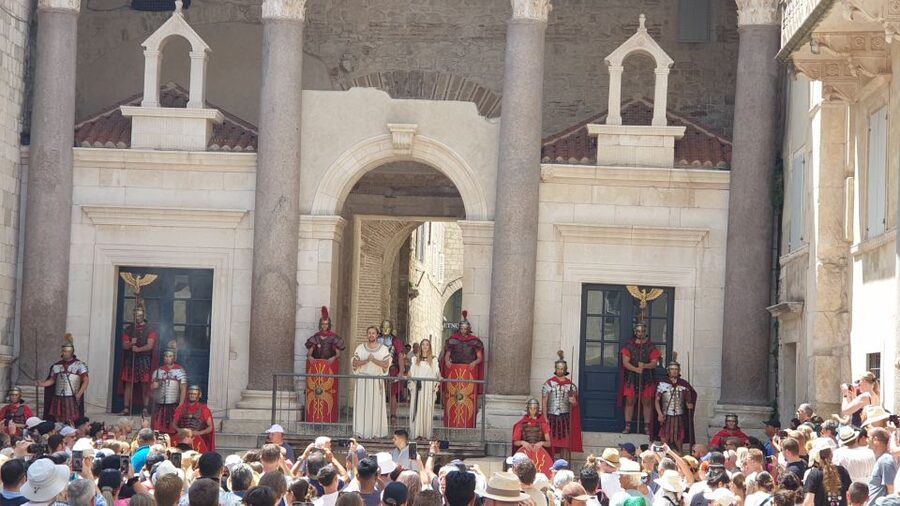
The tour offers multiple languages: Russian, English, German, and French. If language access matters to you, this is a strong point because you can match your comfort level with the guide.
Best fit
This works especially well if:
- You’re visiting Split for the first time and want a fast, accurate map of the Old Town
- You like history when it’s told as a story, not a lecture
- You want Roman roots plus medieval and Gothic layers without planning extra stops
- You’re a Game of Thrones fan who wants real context behind show-location buzz
- You’re traveling with family, because the tour is listed as appropriate for all ages
Not ideal
It’s listed as not suitable for people with high blood pressure. If that affects you, skip it or talk with your doctor before any long walk in heat. And if hearing access is an issue, you may want a different style of experience.
How to Make the Most of It Once You’re Standing in Old Town

Here’s the smart way to treat this tour: use it as your map and your decoder ring. After a good guided walkthrough, you’ll look at the same buildings differently on your own time.
A few moves that help:
- Arrive with your meeting point logic ready, Peristil Square under the Roman arch, next to the Tourist Information Office, and look for yellow
- Wear shoes you trust on stone and cobbles
- Bring water on your own, since food and drinks aren’t part of the package
- Listen for the timeline shifts, Roman to Romanesque to medieval to Gothic, because those transitions are what make Split feel coherent
If you only take one thing away, take this: Diocletian’s palace explains Split’s shape. Everything else makes more sense once you understand that starting point.
Should You Book This Split History and Heritage Walking Tour?
I’d book it if you want a well-paced guided walk through Split’s biggest historic anchor, plus extra context that makes the city easier to explore afterward. For $18, you’re paying for a structured way to see the UNESCO Roman palace area and then connect it to Romanesque, medieval, and Gothic layers, with a fun Game of Thrones bonus for those who want it.
Skip it if crowds will stress you out, or if hearing limitations or high blood pressure are concerns for you. Also, if you hate walking and listening, you might find the guided storytelling style less your thing.
If you’re the kind of traveler who likes turning a place into a story you can carry home, this is a strong value choice in Split, and the consistently high rating backs up the experience.
FAQ
Where do I meet for the tour?
You meet on Peristil Square under the old Roman arch at the north part of Peristyle square next to the Tourist Information Office. Look for a yellow T-shirt or a yellow umbrella.
Is the tour price only for the guide, or are tickets included?
The tour includes a small-group walking tour and a tour guide. Admission tickets aren’t included, and there are no food and drinks included.
Does the tour run in bad weather?
Yes. This tour takes place no matter the weather (rain or sun).
What languages are available?
The tour is available in Russian, English, German, and French.
Is the tour appropriate for families?
Yes. The tour is listed as appropriate for all ages.
Is the tour suitable for everyone?
It is not suitable for people with high blood pressure and not suitable for hearing-impaired people.
Can I pay later or cancel if plans change?
The booking offers reserve & pay later, and you can cancel up to 24 hours in advance for a full refund.
Split, the Longer Story





Walk It: More of Split at Ground Level


Freshly written up around Split




Historical Tours, top to bottom.
 ★ 5.0Dubrovnik Old Town History Walking TourFrom $241,684 reviews
 ★ 5.0Walking Tour of Split with a ‘Magister’ of HistoryFrom $341,122 reviews
 ★ 5.0Split Walking Tour with Professor of HistoryFrom $24926 reviews
 ★ 5.0Game of Thrones & History of Dubrovnik TourFrom $30628 reviews
★ 4.9Dubrovnik: Old Town History Walking TourFrom $20474 reviews
★ 5.0Game of Thrones & History of Dubrovnik TourFrom $30628 reviews
★ 4.9Dubrovnik: Old Town History Walking TourFrom $20474 reviews
 ★ 5.0Split History and Gastro Small-Group Tour with Food and DrinksFrom $139375 reviews
 ★ 5.0SPLIT-PREMIUM Emperor’s Walking Tour for History Lovers + MuseumFrom $30333 reviews
 ★ 5.0Early Bird Dubrovnik History Tour – 7:30 StartFrom $24198 reviews
Browse the lists this tour appears in