

REVIEW · SPLIT OLD TOWN & PALACE WALKS
Experience Split History Walking Tour With Local Historian
Split’s past is built into every stone.
This 2-hour, small-group walk through Diocletian’s Palace turns the UNESCO site into a story you can follow in real time, starting at the Golden Gate. I like that you get a history master’s guide who explains not just what you’re looking at, but how the palace life connects to everyday Split today.
I also like the practical, See-Hear-Feel approach: you pause at key spaces like Peristyle and Riva and then use 3D reconstructions to make the vanished parts click. The main drawback to plan around is simple: this tour is not suited for wheelchair users or people with mobility impairments, since it involves walking through uneven historic streets and palace areas.
In This Review
- Key highlights you should care about
- Starting at Golden Gate, the north entrance that sets the tone
- Diocletian’s Palace, UNESCO living history you can actually follow
- Peristyle and Jupiter’s Temple, where power meets religion
- From the Mausoleum to Saint Domnius, Roman bones under medieval life
- Diocletian’s Cellars and the palace’s hidden infrastructure
- Riva promenade, the Roman-to-medieval connection you can feel
- Fruit Square and People’s Square, the medieval corners with real stories
- Hidden corners, narrow streets, lost sphinx head, and a secret garden story
- 3D reconstruction images and why they help your brain
- Price and logistics, what makes $37 feel fair
- Who this tour suits best in Split (and who should rethink it)
- What to bring and how to plan your day
- Should you book this Split History Walking Tour?
- FAQ
- Where does the tour start?
- How long is the walking tour?
- What is included in the price?
- Which languages are available?
- Is food included?
- Is the tour suitable for wheelchair users?
Key highlights you should care about
- Golden Gate start with the Gregory of Nin backdrop: get context fast before you even enter the palace
- See-Hear-Feel storytelling: history told through space, sound, and visible clues
- Peristyle and Jupiter’s Temple: the palace’s political center, plus the religious angle
- Two medieval squares, Fruit Square and People’s Square: you’ll learn how medieval life kept shaping Split
- Hidden corners in tight spaces: narrow churches and streets, a lost sphinx head story, plus a secret garden stop
- 3D reconstruction visuals: they help you understand buildings that are gone, altered, or buried
Other walks through the palace quarter and the alleys behind it
- Split: Old Town and Diocletian Palace Walking Tour★ 4.9 · 4,727 reviews
- Walking Tour of Split and Diocletian’s Palace★ 5.0 · 2,588 reviews
- Split & Diocletian’s Palace Walking Tour★ 5.0 · 1,125 reviews
- Walking Tour of Split with a ‘Magister’ of History★ 5.0 · 1,122 reviews
Starting at Golden Gate, the north entrance that sets the tone
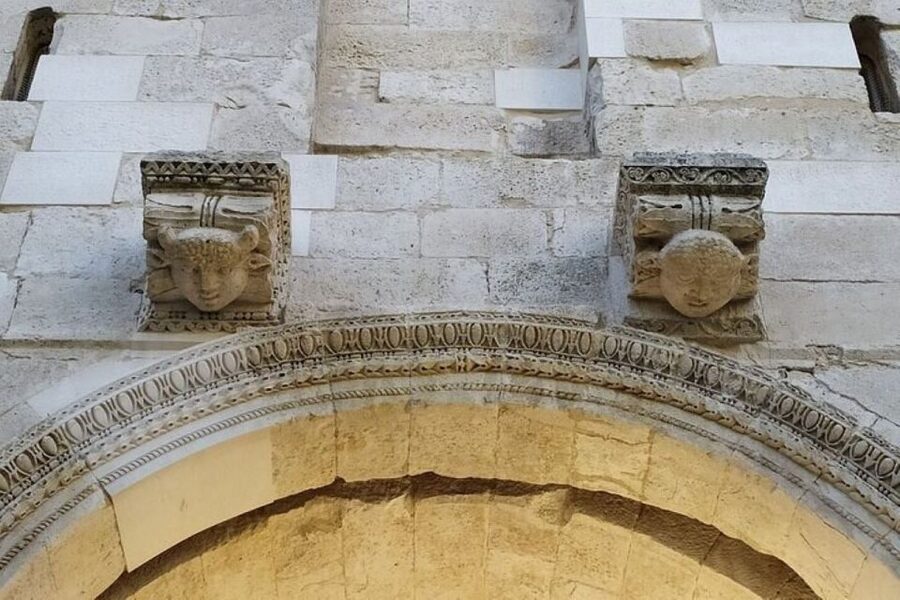
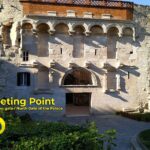
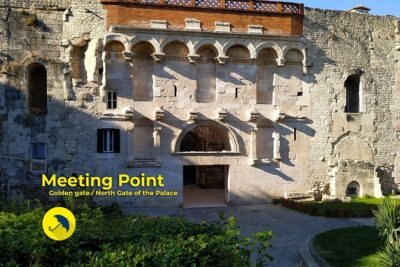
Your tour begins at Golden Gate, the palace’s northern entrance. Look across to the well-known statue of Gregory of Nin and you’ll understand why this meeting point makes sense: you’re using a modern landmark to get oriented before Roman walls swallow you up.
Before anyone runs ahead, your guide sets the basics of Split and Croatia, then explains the gate itself. The Golden Gate wasn’t just a dramatic entrance, it was part of how the palace worked, and the guide helps you connect the name, purpose, and importance to what you’ll see next once you cross inside.
This is also a smart way to start because you get a mental map early. If you try to explore Diocletian’s Palace on your own first, you can end up feeling like you’re wandering a maze with good vibes. Starting with a guide keeps the layout from turning into guesswork.
Diocletian’s Palace, UNESCO living history you can actually follow
Once inside, the palace becomes less like a monument and more like a neighborhood. You’ll move through the spaces that shaped daily routines under Diocletian and later generations, with stories and legends tied to physical locations.
You’ll focus on big anchor points inside the palace grounds, including the Peristyle (main square) and the sacred and civic zones that surround it. The guide’s tone is designed for understanding, not memorization, so you’re hearing what each area meant and why it still matters when you walk past it today.
A key detail here is the guide’s emphasis on continuity. Split did not stop being medieval after the Romans. The city kept adapting the palace, building new uses on top of older structures, and your route is planned to show those overlaps. If you like history that you can read in layers, this approach works.
Peristyle and Jupiter’s Temple, where power meets religion
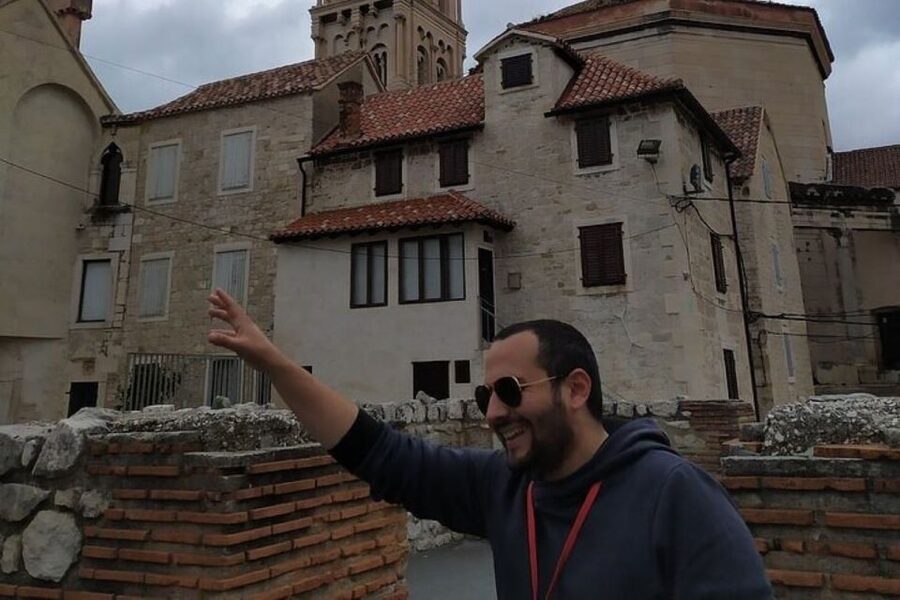
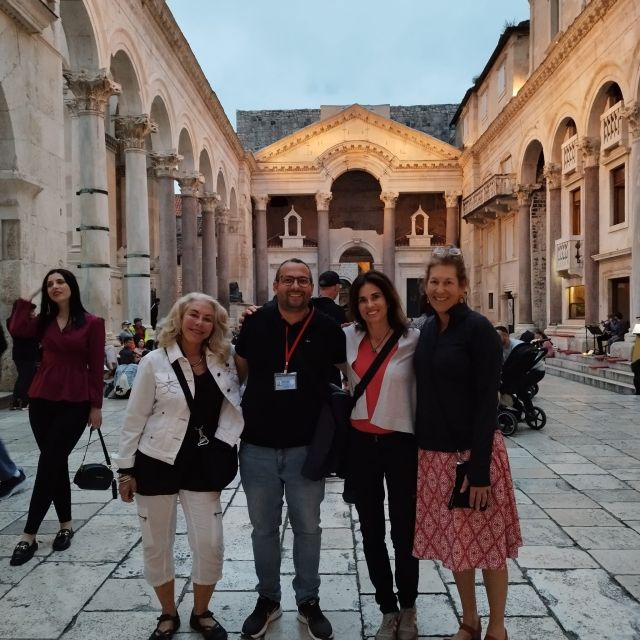
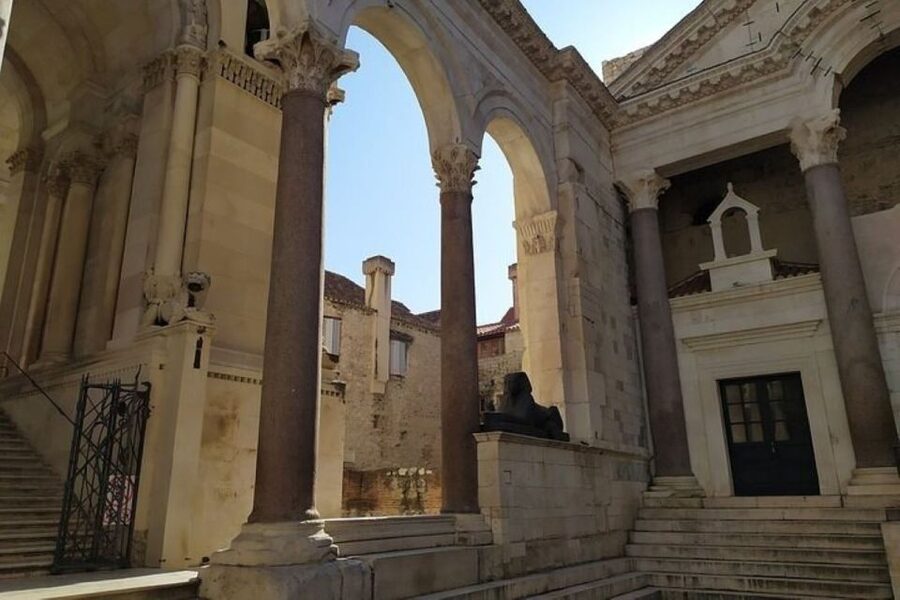
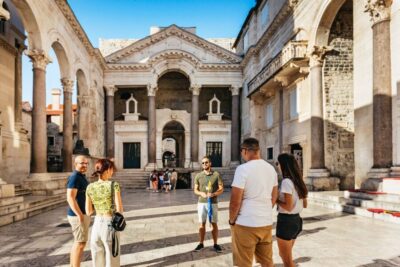
The stop at Peristyle is the moment many people finally feel the scale of what’s going on. This is the palace’s main square, and your guide explains it as a monumental space with a purpose, not just a photogenic plaza.
You’ll also get a feel for the surroundings and how the space connected different parts of palace life. The guide doesn’t just point, they tell you what to look for and how the layout supported authority and ceremony.
Then comes Jupiter’s Temple, which adds a strong religious layer to the story. Even if you’re not a worship-history person, it helps you understand the logic behind how Romans structured important spaces. You’ll come away knowing why this wasn’t simply a military fortress or a private retreat, it was a world with rules, rituals, and hierarchy.
From the Mausoleum to Saint Domnius, Roman bones under medieval life
As you continue through the palace, you’ll visit the area associated with the Cathedral of Saint Domnius and the broader story of the mausoleum-cathedral. This is where you see how later cultures turned an imperial structure into a living religious site.
Your guide frames Emperor Diocletian’s life not only in terms of what he built, but what it meant to people who came after him. It’s one thing to hear the famous names, it’s another to stand in the space and understand how later generations reworked the environment.
You’ll also pass through spaces like the Vestibule and areas connected with palace dining and movement, including mention of palace rooms such as the Triclinium and the central substructures. The guide’s goal is to connect function to location, so the palace stops being a collection of ruins and becomes a map of how bodies moved through daily life.
More Split covered at walking pace
- Krka Waterfalls tour with Trogir Walking tour and Krka panoramic boat cruise
★ 5.0 · 1,659 reviews - Split Walking Tour with Professor of History
★ 5.0 · 926 reviews - Split: Diocletian Palace & Old Town Guided Walking Tour
★ 4.7 · 882 reviews - From Split: Krka Waterfalls Cruise & Trogir Walking Tour
★ 4.7 · 681 reviews - Split: History and Heritage Walking Tour
★ 4.9 · 650 reviews
Diocletian’s Cellars and the palace’s hidden infrastructure
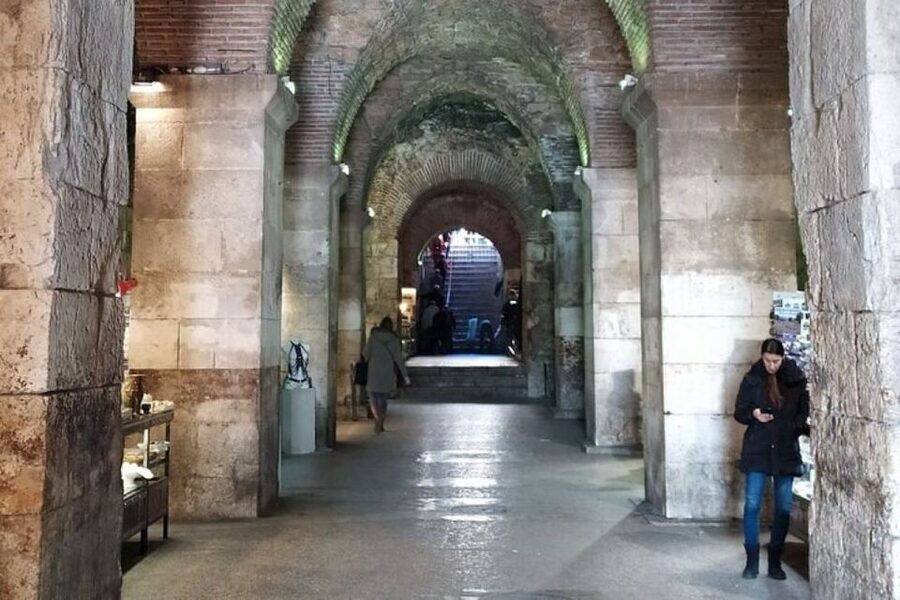
Next, you’ll move into the Diocletian’s Cellars area. This part matters because it shows that palaces run on more than big squares and temples. Substructures helped the palace operate, store, and support the public and private spaces you see above.
If you’ve ever toured an ancient site and felt like you only learned the dramatic highlights, this is your fix. The underground and semi-hidden areas give context for how the palace sustained itself over time, and your guide uses facts and stories to make the layers feel coherent.
This is also where the tour’s See-Hear-Feel method starts to feel less like a slogan. You’re standing where the architecture explains the system, even if you cannot fully picture it the way it once was.
Riva promenade, the Roman-to-medieval connection you can feel
After the palace interior, you step into the Riva promenade, and the tour shifts from imperial spaces to the city’s living shoreline energy. This is a key transition point because it shows how Split kept building outward and around the palace.
Your guide ties the Roman and medieval periods together here, helping you understand why Riva works as a connector in the story of Split. Even if you only have two hours total, this stop keeps the tour from becoming a one-time jump into the past. It makes the city feel like one continuous place with different chapters.
If you want an efficient “what matters most” walk, Riva is the right place to end a segment like this, because it gives you a sense of where the city breathes.
Fruit Square and People’s Square, the medieval corners with real stories
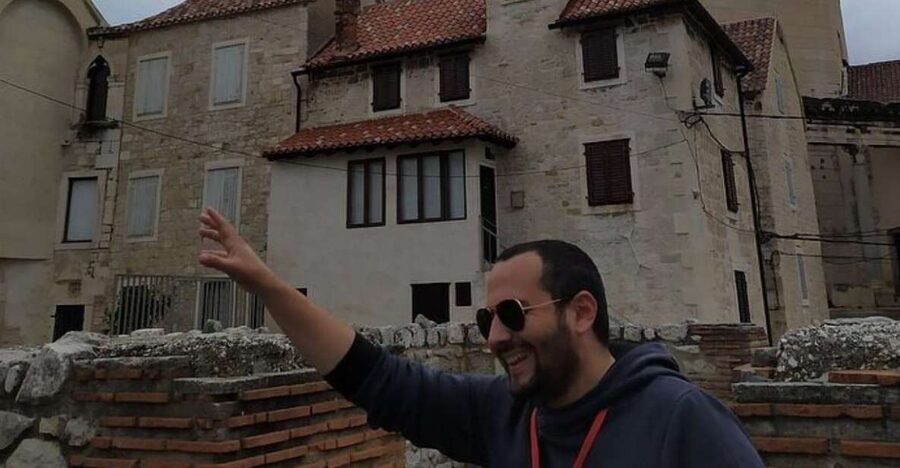
The tour then heads to two medieval squares: Fruit Square and People’s Square. These aren’t just stops for good street scenes. Your guide explains the secrets the squares hold through architecture and centuries of happenings.
Standing in these spaces, you’ll hear how medieval Split kept functioning, adapting, and gathering people in public areas. The result is that the palace story doesn’t stay locked inside Roman walls. It grows into a city rhythm that continued long after Diocletian.
If you like history that feels human, these squares deliver it. Squares are where decisions happened, commerce happened, and community got visible. Learning that through location makes it easier to remember later.
Hidden corners, narrow streets, lost sphinx head, and a secret garden story
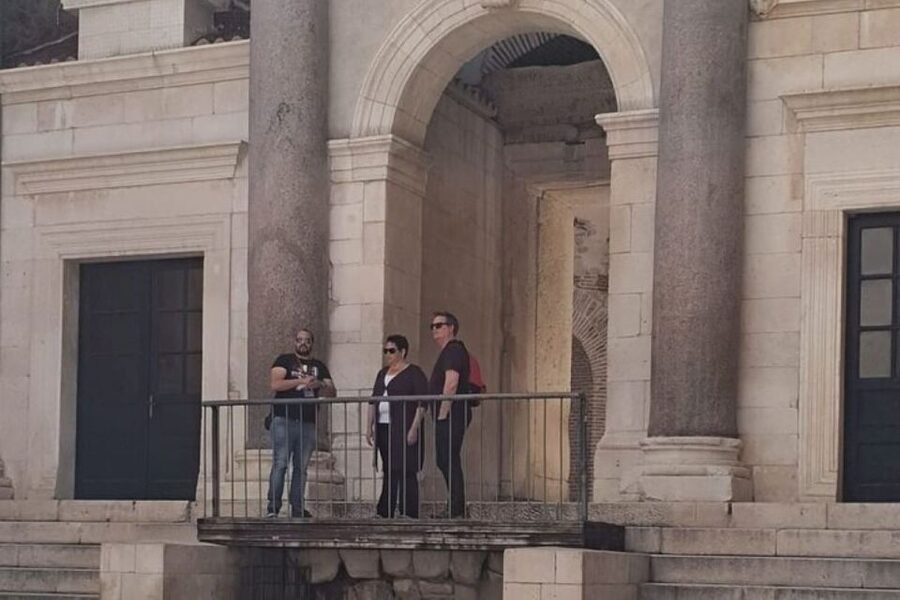
A big part of the appeal is the tour’s attention to small, hard-to-find details. You’ll get a “secret stop” and additional hidden time to look for tight spaces and oddities like the narrowest church and the narrowest street.
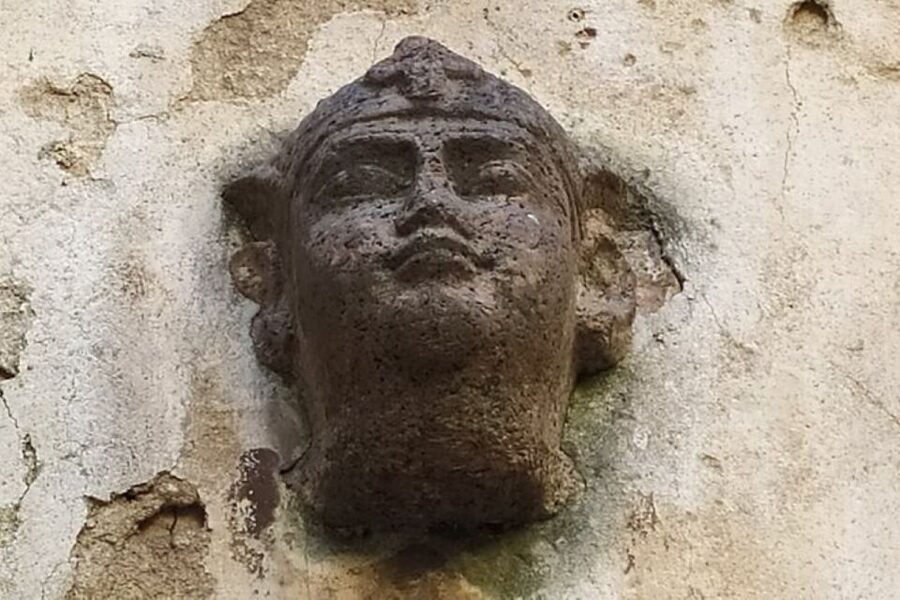
There’s also a story around a lost sphinx head, plus time for a secret garden stop. These moments can sound like fun trivia until your guide connects them to the way Split absorbed older materials, legends, and local memory.
This is the section I’d recommend if you already know the basics and want the city’s texture. The palace is the headline, but these smaller stops give you the feeling of walking with someone who actually knows where to look.
3D reconstruction images and why they help your brain
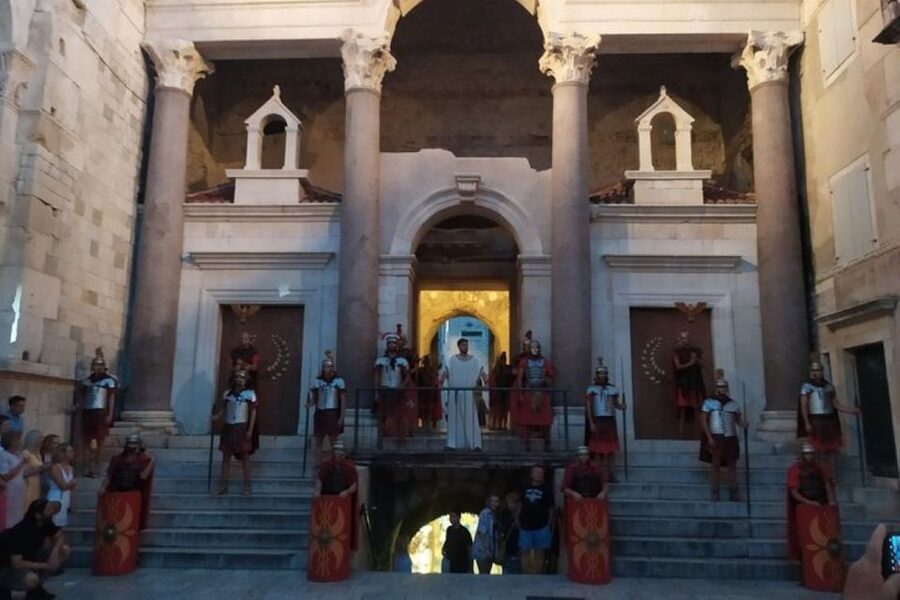
The tour includes 3D reconstruction images & pictures. That matters because parts of Diocletian’s Palace are altered, missing, or hard to visualize when you’re standing on uneven stone.
Your guide uses the visuals to help you form a mental picture of how spaces might have looked or functioned in different eras. In a 2-hour tour, that kind of support keeps the experience from turning into a list of names.
One of the most useful ways to use these reconstructions is to treat them like a preview. When you hear about a space and then see how it could have looked, you start noticing architectural cues you would otherwise skip.
Price and logistics, what makes $37 feel fair
The price is $37 per person for a 2-hour walking tour. For that, you get a local licensed guide with a master’s degree in history, a small maximum group size of 12, and included 3D reconstructions.
There’s also a practical perk: skip the ticket line. Even if you’re not the type who hates crowds, saving time at a major UNESCO site is usually worth it, especially in peak season.
What is not included is also straightforward. Food and drinks are on you, and there’s no hotel pickup or drop-off. For a city-walking experience, that’s normal, but you should still plan to bring water and basic sun protection.
Who this tour suits best in Split (and who should rethink it)
This tour is a great match if you want history tied directly to places, not just a lecture from one spot. It works especially well if you enjoy Roman-era details, then seeing how medieval and modern Split kept building on top of them.
It also fits solo travelers and couples because the group size is kept small. In the past, the tour has run with very small groups, which makes it easier to ask questions and keep the pace comfortable, and that’s exactly the kind of benefit you want on a short 2-hour plan.
The one group I’d warn you about is anyone relying on mobility accommodations. The tour is not suitable for wheelchair users, and it’s not designed for mobility impairments, since it includes walking through palace and historic street areas.
What to bring and how to plan your day
Bring comfortable shoes. The site involves lots of walking in historic areas, and you’ll be spending time moving between palace spaces and squares.
On sunny days, bring water and something for shade like a hat or cap. Even short tours in coastal Croatia can feel warm when you’re in stone and sun for long stretches.
Finally, if you enjoy food recommendations, you can ask your guide. One guide has pointed people toward a good ice cream stop, and the practical advice can help you turn the tour into a better self-guided second half of the day.
Should you book this Split History Walking Tour?
Yes, I’d book it if you want a focused, high-impact way to understand Diocletian’s Palace and how Split evolved around it. The historian-led small-group format, the see-hear-feel method, and the included 3D reconstructions make it easier to convert what you see into real understanding fast.
Skip it only if mobility is a concern for you, or if you prefer purely independent sightseeing with no structured stops. If you’re good on your feet and want the palace story explained in a way you can actually remember, this is strong value for a 2-hour plan.
FAQ
Where does the tour start?
The meeting point is at the Golden Gate, the northern gate of Diocletian’s Palace, opposite the eight meter high statue of Gregory of Nin.
How long is the walking tour?
The tour lasts 2 hours.
What is included in the price?
You get a local professional guide with a master’s degree in history and 3D reconstruction images & pictures. The tour also includes skip the ticket line.
Which languages are available?
The tour is offered in English and Croatian.
Is food included?
No, food and drinks are not included.
Is the tour suitable for wheelchair users?
No. The tour is not suitable for people with mobility impairments or wheelchair users.
Split, the Longer Story




Walk It: More of Split at Ground Level

Inside the Palace Walls
Freshly written up around Split
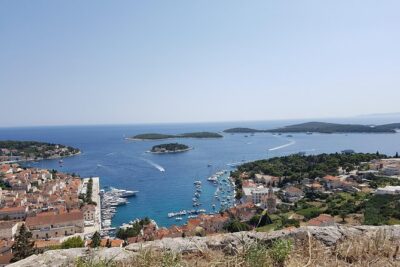


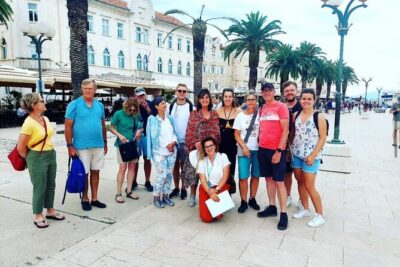

Split Old Town & Palace Walks, top to bottom.
 ★ 4.9Split: Old Town and Diocletian Palace Walking TourFrom $174,727 reviews
 ★ 5.0Walking Tour of Split and Diocletian’s PalaceFrom $482,588 reviews
 ★ 5.0Split & Diocletian’s Palace Walking TourFrom $211,125 reviews
 ★ 5.0Walking Tour of Split with a ‘Magister’ of HistoryFrom $341,122 reviews
 ★ 5.0Split Walking Tour with Professor of HistoryFrom $24926 reviews
 ★ 4.7Split: Diocletian Palace & Old Town Guided Walking TourFrom $17882 reviews
 ★ 4.8Split: Game of Thrones Tour with Diocletian’s Palace CellarFrom $41545 reviews
 ★ 5.0Diocletian’s Palace and Old Town SMALL GROUP Walking TourFrom $16502 reviews
Browse the lists this tour appears in