
REVIEW · DALMATIAN FOOD & KONOBA TASTINGS
Gastro and History Jewels Experience in Split
Food and empire history meet in Split. This 3-hour private walking tour turns the Diocletian palace core into a living story, then feeds you your way through dishes you might skip on your own. You start at the Gregory of Nin Statue and end back where you began, with the guide steering the pace on foot.
What I like most is the pair-up of history details and hands-on tastings that feel practical, not just scenic. You get the Peristyle setting explained, including the moment Diocletian would be seen and the old sphinx that still watches over the square. One thing to consider, especially for picky eaters, is that dietary needs may take extra coordination, and at least one vegan experience went sideways when restaurants were not prepared.
In This Review
- Key highlights worth your attention
- Split on foot: meeting at Gregory of Nin and easing into Diocletian’s world
- Peristyle facts that make the palace make sense (and yes, the sphinx matters)
- The gastro plan: starters, soparnik, and slow-cooked dalmatian pashticada
- Seafood in Split: brodetto, squid ink, and fish-forward flavor
- Wine, pace, and guides who know how to make it work on real streets
- Price and value: what you get for about $180 and 3 hours
- Who this tour is best for (and when to skip it)
- Dietary needs and communication: the one place to be extra careful
- Practical tips for your 11:30 am start in Split
- Should you book Gastro and History Jewels in Split?
Key highlights worth your attention
- Diocletian-era storytelling on foot, centered around Peristyle and the Protyron area
- A focused food route built around Dalmatian classics like soparnik and dalmatian pashticada
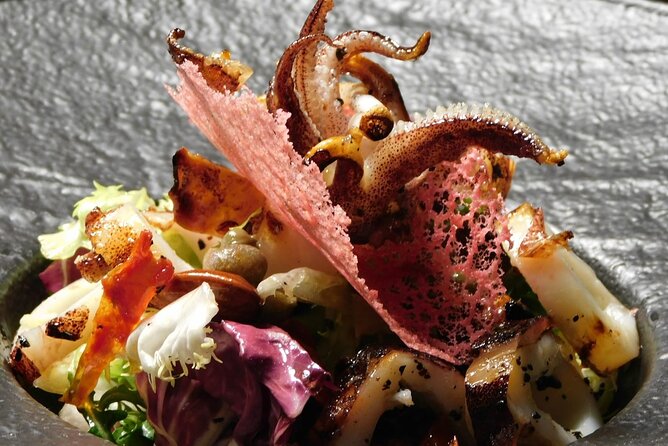
- Seafood options in the mix, with dishes that can include brodetto and squid ink seafood risotto
- Real guide impact, with clear explanations and pacing that can work well for mobility needs
- Private format with a set group size, so you can move at a comfortable speed and ask questions
More konoba tables and food walks nearby
- From Split: Krka Waterfalls, Food & Wine Tasting Tour★ 5.0 · 9,326 reviews
- From Split: Krka Waterfalls, Food & Wine Tasting Tour★ 4.9 · 6,598 reviews
- Split Food Tour: Discover Split One Bite At A Time★ 5.0 · 433 reviews
- Split History and Gastro Small-Group Tour with Food and Drinks★ 5.0 · 375 reviews
Split on foot: meeting at Gregory of Nin and easing into Diocletian’s world
The tour starts at the Gregory of Nin Statue, in Split’s main core (Ul. kralja Tomislava 12). It is a good anchor point because it puts you near public transport, and it is easy to find even if you are mixing this with other things before or after. The start time listed is 11:30 am, and the whole experience runs about 3 hours.
Right away, the format matters. This is a private tour, meaning it is just your group with your guide. That changes the feel of a food tour. You are not getting rushed through tastings while strangers argue over where to stand. You can ask what something is, how it is made, and why it belongs in Dalmatian cooking.
You also are not doing a history lecture in a museum. The guide talks as you walk. That is where the stories stick, because you see what they are describing. In one case, a guide named Lucas was praised specifically for speaking clearly for a hard-of-hearing guest, which is a reminder that your comfort during the walk is part of the value.
Peristyle facts that make the palace make sense (and yes, the sphinx matters)
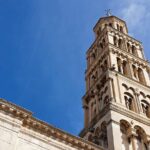
The heart of the history here is Peristyle, the central square of the Palace tied to Emperor Diocletian. This area is not just a pretty open space. It is framed in the old ritual of how power was presented. The story explains that Diocletian was shown under the architrave of the central Protyron part, and subjects would approach by kneeling, kissing the hem of his scarlet cloak, or falling fully to the ground.
Even if you are not a full-on history nerd, this kind of detail helps you read the buildings around you. You stop thinking of the palace as ruins and start seeing it as a stage built for authority and ceremony. It gives you a mental map for what you are looking at while you move.
Then there is the sphinx detail. Peristyle is watched over by a 3,500-year-old, well-preserved sphinx, and the tour frames it as a witness to how Split evolved over time. That is one of those specifics that makes the walking part more than just getting from stop to stop. You look at the square with a different attitude after your guide points it out.
The gastro plan: starters, soparnik, and slow-cooked dalmatian pashticada
Now the fun part. The food is built like a real meal, not a series of tiny bites meant to tease your palate and leave you hungry. The sample menu includes:
Starters:
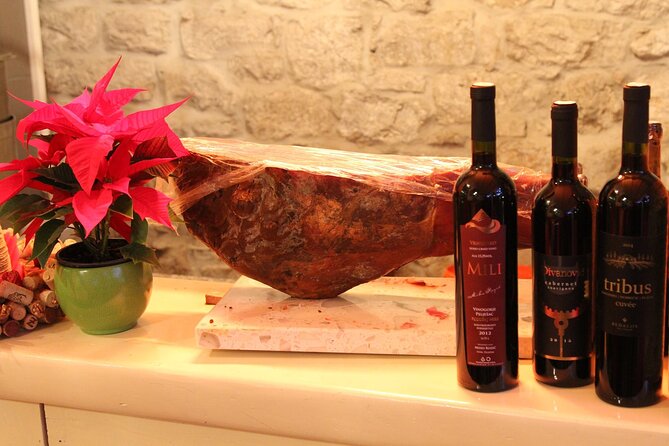
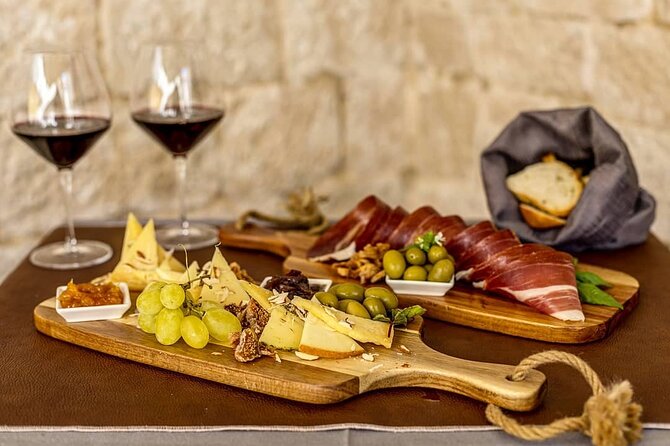
- Dalmatian cheeses and prosciutto, served with bread and wine at one stop
- Seafood (shells, prawns, and similar)
A signature item:
- Soparnik, an authentic Dalmatian pie
Main courses:
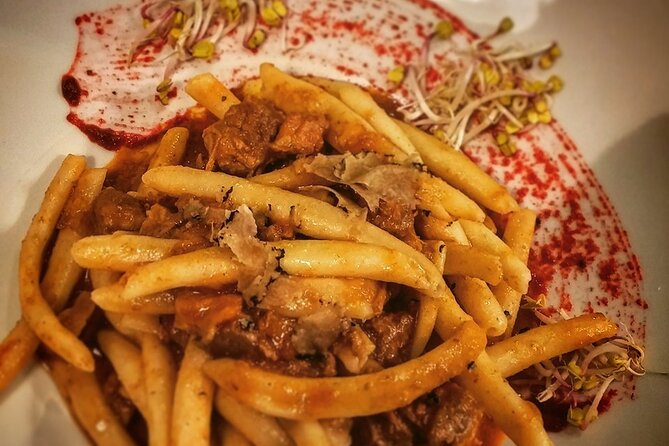
- Gnocchi with dalmatian pashticada (slow-cooked beef)
- Brodetto
Dessert:
- Dalmatian sweets and treats
Soparnik is the kind of dish that you might miss if you only order the most obvious things. It is local, it tastes like home cooking, and it is a great bridge between history and food culture. Pashticada is another one worth paying attention to. Slow-cooked beef usually means time and technique, which is exactly what traditional recipes are built on.
Also, the way the tour is structured matters for your day. You are walking for history, then eating, then walking again. That rhythm keeps the tour from feeling like one long sitting. It also gives you downtime between tastings, so the flavors do not blur together.
Seafood in Split: brodetto, squid ink, and fish-forward flavor
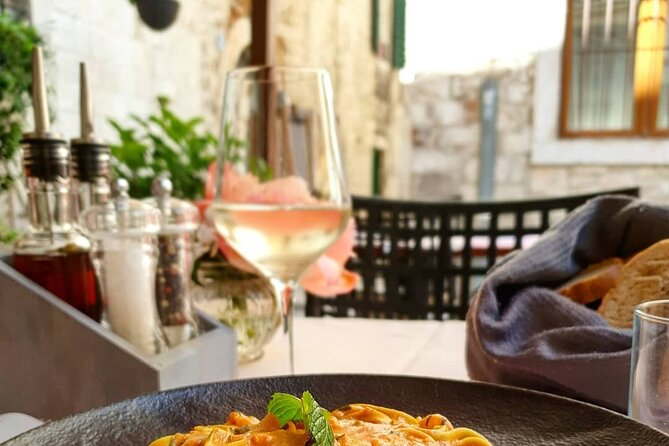
Split is coastal, so seafood is part of the local identity, and this tour leans into it. One of the main dishes listed is brodetto, a fish stew that works like comfort food for people who live near the sea. If you are trying to understand Dalmatian food beyond meat and cheese platters, brodetto is a smart choice.
You might also see seafood dishes that go beyond the standard shrimp or grilled fish. In one highlighted experience, a guest raved about squid ink seafood risotto with octopus, which signals a guide who does not treat seafood as a checkbox. It is about variety, and it is about letting you taste what a place actually cooks.
And since this is a private setup, the guide can often steer the pace so you are not eating too fast. That is a practical detail. Seafood flavors can get lost if you sprint between stops.
A note on balance: the menu is not only seafood. You also have cheese, prosciutto, and pie, plus the beef-focused main. That makes this a better fit if not everyone in your group is sold on fish from the start.
Other history-led routes through Split
- Walking Tour of Split with a ‘Magister’ of History
★ 5.0 · 1,122 reviews - Split Walking Tour with Professor of History
★ 5.0 · 926 reviews - Split: History and Heritage Walking Tour
★ 4.9 · 650 reviews - Split History and Gastro Small-Group Tour with Food and Drinks
★ 5.0 · 375 reviews - Split: Local History and Culture 90-Minute Walking Tour
★ 5.0 · 194 reviews
Wine, pace, and guides who know how to make it work on real streets
Guides are a big part of this experience, and the praise is consistent. People specifically called out that their guides kept the tour interesting while still moving at a pace that felt manageable.
Ivan, for example, was mentioned for doing more than an old city walk. His tour described gastronomic stops with serious food quality, including Adriatic fish and meat platters at Muma’s Food and Wine, plus traditional tuna and monkfish dishes at Skalinada Seafood & Steak. That matters for you because it tells you the tour is not just booking you into random restaurants. It is about putting you in places that deliver the goods.
Another guide, Ivana, was credited with giving history context while also taking guests to strong Croatian food stops. Jelena also got major love for being fun and informative, with a big network advantage. The practical takeaway: a guide who knows local shops and restaurants can improve both food quality and flow.
One more detail that you should care about, especially if you have any mobility constraints, is that pacing and steps can matter. A scooter user described the experience as accessible, with just a couple steps for bathroom access. That does not mean it is perfect for every mobility need, but it does suggest the tour can work if your guide knows how to route you.
Price and value: what you get for about $180 and 3 hours
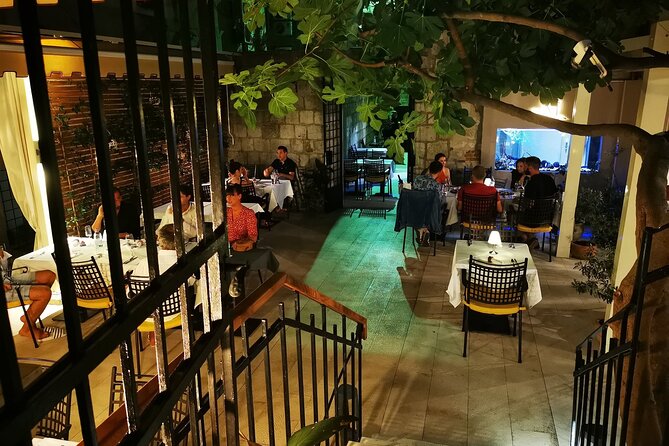
At $180.44 per person for about 3 hours, you are paying for two things at once: guided history and guided eating. For Split, that price can still feel reasonable because you are not just buying food samples. You are buying local context and the ability to sit at several stops without spending your energy researching menus.
The tour is also listed as offered in English and includes a mobile ticket. Group discounts are mentioned too, which is a reminder that private tours can sometimes drop in effective cost if you have a small group traveling together.
One reason this price is easier to justify is the consistency in the experience people describe: lots of food, clear explanations, and stops that focus on local dishes. When a tour hits that combo, you feel like the time and money went into the day, not into logistics.
If you are traveling solo, it is still workable because it is private for your group. Just expect you are paying the premium for that one-on-one style attention.
Who this tour is best for (and when to skip it)
This tour is a good match if you want:
- A walking-based orientation to Split’s Diocletian palace core
- Local dishes like soparnik and pashticada, plus seafood options
- A guide who can explain what you are seeing, not just read out facts
- A meal-like food flow instead of a few token bites
It is also a smart choice if you have a tight schedule. The tour is about 3 hours, and it ends back at the starting point, which makes it easy to plug into a day plan.
You might think twice if:
- Your group has strict dietary rules and you are not willing to do extra confirmation. (More on this next.)
- You hate walking, even though the route is on foot and described as accessible for at least one scooter user. You should still plan for outdoor walking and uneven historic streets.
Dietary needs and communication: the one place to be extra careful
Here is the honest part. The menu includes dairy, meat, and seafood items, and those are not always flexible by default. Your guide may be able to help, but you should not assume every restaurant will be ready on the first try.
Two specific caution flags show up in the experience details you have here:
- One experience included a vegetarian in the group, and a disconnect happened between the guide and restaurants, leading to scramble-level service for the vegetarian guest.
- Another experience went badly for someone who was vegan and gluten-free. The guide did not seem to know the vegan status, and restaurants were not prepared. The guide also left them at one point while searching for something they lost.
That does not mean this happens every time. But it does mean you should treat dietary needs as a must-confirm item, not a hope-and-pray item.
Practical advice:
- Tell your dietary needs clearly at booking, and again close to the start time.
- Ask the guide what will happen at each stop, not just what the tour offers on paper.
- If vegan or gluten-free is non-negotiable, consider contacting the provider directly to confirm preparation, since at least one vegan gluten-free experience was not handled smoothly.
Practical tips for your 11:30 am start in Split
A few small things that can make the tour feel easier.
First, wear shoes you trust. Split’s old town areas look level until you are walking on them for an hour. You do not want to learn that lesson mid-tour.
Second, go in hungry, but not ravenous. This is a tasting menu that can include cheese, prosciutto, seafood dishes, a pie, mains, and dessert. You should expect it to feel like a real meal.
Third, bring a small amount of patience for the walk. Even with a well-planned route, you are moving through historic streets and stopping often for food.
Finally, plan around weather. This experience requires good weather. If conditions are poor, you are offered a different date or a full refund. That is exactly the kind of factor that can make or break a walking food tour.
Also, since confirmation is received at booking and a mobile ticket is used, get your phone charged and your confirmation handy.
Should you book Gastro and History Jewels in Split?
If your idea of a great day is history you can see, then food that tastes local and fills you up, this is a strong bet. The highest praise centers on guide quality, clear storytelling, and the amount of food, plus the fact that this is private, so your pace stays under control. Guides like Ted, Lucas, Ivan, Ivana, and Jelena were specifically praised for making Split feel understandable and delicious.
I would only steer you away if your group includes strict vegan or gluten-free needs and you cannot verify arrangements in advance. The diet-handling risk is real based on the experiences described here. With clear communication, you can still make this tour work, but you should go in informed.
If you want a Split introduction that does not feel like a checklist, book it and show up ready to eat, then ask questions as the palace comes alive around you.
Split, the Longer Story
Konoba Tables Around Split

Freshly written up around Split


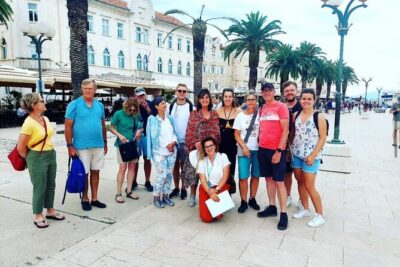

Dalmatian Food & Konoba Tastings, top to bottom.
 ★ 5.0From Split: Krka Waterfalls, Food & Wine Tasting TourFrom $459,326 reviews
★ 4.9From Split: Krka Waterfalls, Food & Wine Tasting TourFrom $446,598 reviews
★ 5.0From Split: Krka Waterfalls, Food & Wine Tasting TourFrom $459,326 reviews
★ 4.9From Split: Krka Waterfalls, Food & Wine Tasting TourFrom $446,598 reviews
 ★ 5.0Split Food Tour: Discover Split One Bite At A TimeFrom $145433 reviews
 ★ 5.0Krka Waterfalls, Food & Wine Tasting, Boat Ride & Zadar Old TownFrom $52420 reviews
 ★ 5.0Dubrovnik Old Town Food Tour: Small-Group ExperienceFrom $169419 reviews
 ★ 5.0Split History and Gastro Small-Group Tour with Food and DrinksFrom $139375 reviews
 ★ 5.0All-inclusive Gastro Blue Cave Tour from SplitFrom $247317 reviews
 ★ 5.0Taste Zagreb Food TourFrom $106256 reviews
Browse the lists this tour appears in