
REVIEW · SPLIT OLD TOWN & PALACE WALKS
History Split Walking Tour in German – Small group
Diocletian’s walls explain Split fast. This German small-group walking tour zooms through the heart of Diocletian’s Palace, connecting the Roman emperor’s rise to the street life you still see around you. I love the small-group format because it makes questions feel normal, not rushed.
My second favorite thing is the way the route builds your understanding step by step. You begin at the Peristyle, then fan out to the Golden Gate, Riva promenade, and Fruit’s Square without wandering for ages, and the guides I encountered on similar tours with Ancient Tours (like Antonella and Josip) are known for strong explanations plus a good sense of humor.
One consideration before you book: the walk is not recommended for travelers who have issues with high steps, and the Split Synagogue stop is a pass-by where the admission is not included.
In This Review
- Key highlights to expect
- A German Diocletian’s Palace walk that helps you think like a local
- Start where the palace makes sense: the Peristyle
- Vestibule stop: emperor-level details with real street energy
- Substructures walkthrough: how the palace worked, not just how it looks
- Golden Gate and Gregory of Nin: where Roman power meets modern identity
- Riva Harbor: a model of the palace plus the story of the promenade
- Fruit’s Square (Trg Brace Radic): Venetian layers and Marko Marulić
- Split Synagogue pass-by: Jewish history in the city’s fabric
- Price, group size, and why the time matters
- Who this tour suits best, and who should think twice
- How to get the most from the 90 minutes
- Should you book this History Split walking tour in German?
- FAQ
- Is this a German-language tour?
- How long is the tour?
- What is the group size limit?
- Is the Split Synagogue included with admission?
- Where does the tour start and where does it end?
- Can I cancel and get a full refund?
Key highlights to expect
- Peristyle first, then everything clicks as you learn how the palace is laid out around one central space
- Vestibule stories that may include traditional Dalmatian singing
- Substructures without the museum detour, so you stay focused on how the palace was built and used
- Golden Gate plus Gregory of Nin for a direct link between Roman power and later Croatian identity
- Riva and Fruit’s Square context, including a bronze palace model and Marko Marulić
Other walks through the palace quarter and the alleys behind it
- Split: Old Town and Diocletian Palace Walking Tour★ 4.9 · 4,727 reviews
- Walking Tour of Split and Diocletian’s Palace★ 5.0 · 2,588 reviews
- Split & Diocletian’s Palace Walking Tour★ 5.0 · 1,125 reviews
- Walking Tour of Split with a ‘Magister’ of History★ 5.0 · 1,122 reviews
A German Diocletian’s Palace walk that helps you think like a local
Split can feel like two cities at once. You have Roman stonework that still shapes the blocks, and then you have later cultures stacked on top, using the palace as a ready-made stage.
That is why this German-language walking tour is such a smart way to start. In about 90 minutes, you get a guided path through the places that matter most inside Diocletian’s Palace and just outside it, so the old streets stop being random.
The pricing is also easier to judge when you think about time. At about $165.08 per person for a 1 hour 30 minutes format, you are paying for someone to compress key history into a walk you can actually finish, instead of trying to guess what you are looking at on your own.
Start where the palace makes sense: the Peristyle
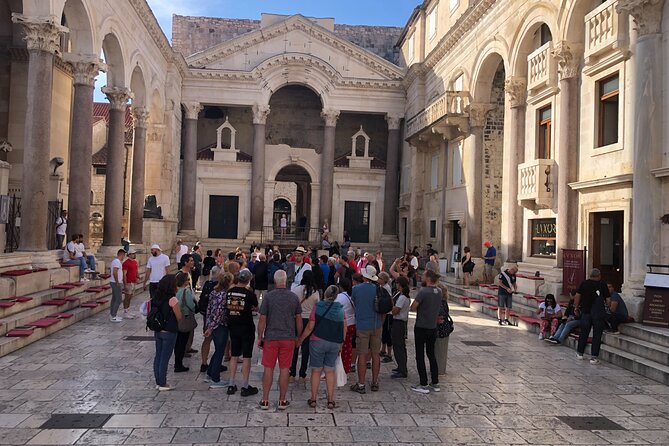
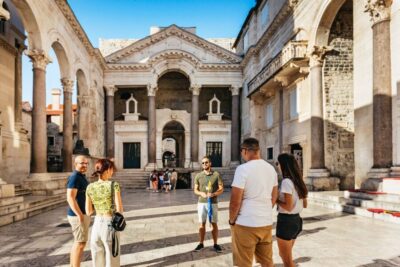
You begin at the Peristyle, the central square inside Diocletian’s Palace. This is not just a pretty courtyard, it is the hub that connects to almost everything else in the palace complex.
What I like here is that the guide starts you with orientation. Once you understand where the Peristyle sits, the rest of the palace stops feeling like a maze, and you start noticing how movement and power were designed into the space.
Plan for around 15 minutes at the Peristyle. This is usually the part of the tour where the guide’s explanation of Diocletian’s rise starts to feel grounded, because you are literally standing in the middle of his world.
Vestibule stop: emperor-level details with real street energy
Next comes the Vestibulum, the vestibule connected to emperor Diocletian. This is a shorter stop, about 5 minutes, but it is the kind of place where small architectural details help the bigger story land.
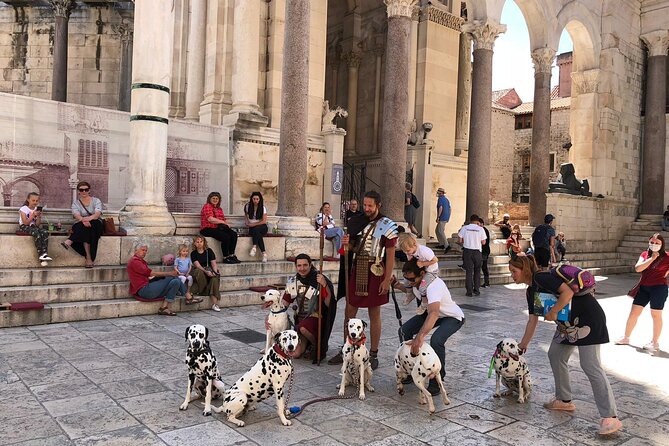
One fun angle is that you might hear traditional Dalmatian singing. It is not guaranteed, but the possibility adds a live, local texture to an otherwise stone-and-syllabus stop.
Even if you only catch a moment, it changes the feel of the tour. Roman history can sound distant until you connect it to the sounds and rhythms of modern Split nearby.
Substructures walkthrough: how the palace worked, not just how it looks
Then you move into the Diocletian Palace substructures. This is where the tour earns its keep.
You go through the underground-like spaces and service areas and learn what they were built for, and how their function shifted over time. This is the part that makes Diocletian’s Palace feel less like a museum idea and more like a machine that once ran daily life.
Expect about 10 minutes here. Importantly, you do not visit the museum part of the substructures on this tour, which means you avoid the time sink. If you want more, you can visit that museum after the walking portion and decide at your own pace.
Practical note: substructures can be cooler and visually darker than the streets. If you like taking photos, consider keeping your phone ready but also leave time for the guide to point things out clearly.
More Split covered at walking pace
- Krka Waterfalls tour with Trogir Walking tour and Krka panoramic boat cruise
★ 5.0 · 1,659 reviews - Split Walking Tour with Professor of History
★ 5.0 · 926 reviews - Split: Diocletian Palace & Old Town Guided Walking Tour
★ 4.7 · 882 reviews - From Split: Krka Waterfalls Cruise & Trogir Walking Tour
★ 4.7 · 681 reviews - Split: History and Heritage Walking Tour
★ 4.9 · 650 reviews
Golden Gate and Gregory of Nin: where Roman power meets modern identity
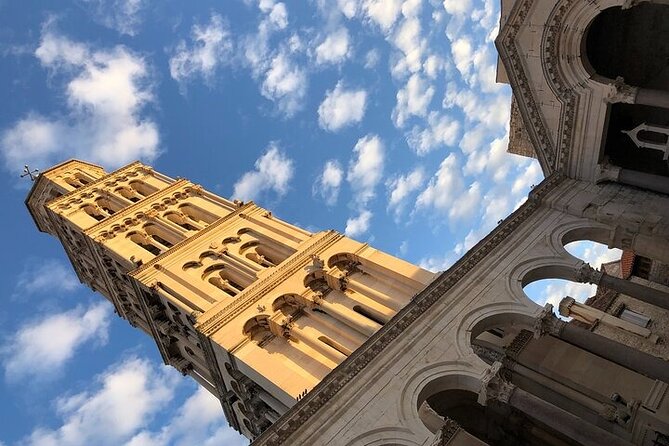
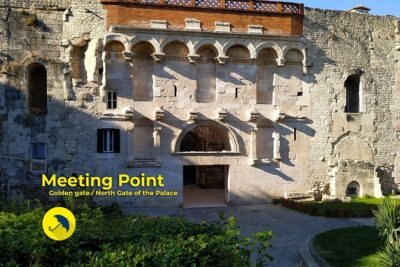
At the Golden Gate, you hit one of the palace’s most recognizable entrances. This stop is about 10 minutes and it is built around more than architecture.
The big focus is learning about the Golden Gate and then connecting the statue of Gregory of Nin to language and local history. Gregory of Nin matters here because he becomes a symbol of cultural identity, not just an art object you pass by.
I really like this kind of stop because it answers the question I always have in old cities: so what changed, and why does it still matter? You get a clear bridge from Roman authority to later Croatian identity without needing a separate museum ticket.
Also, the photo opportunities are real. You are standing at a main entrance, so the scene reads well even if you are not a history nerd.
Riva Harbor: a model of the palace plus the story of the promenade
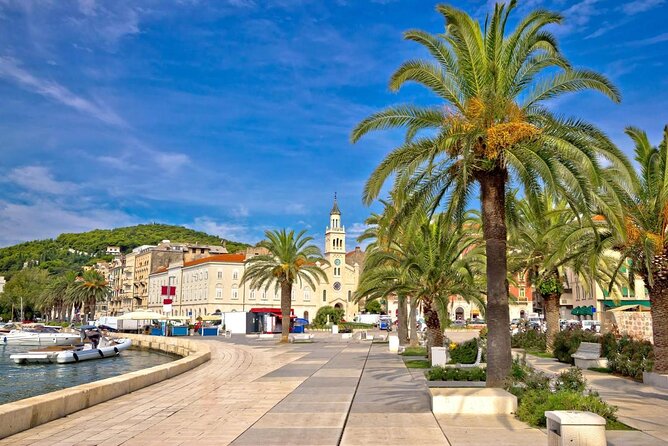
Next is Riva Harbor, about 15 minutes. This is a great change of pace, because it pulls you from tight palace corridors into the open energy of the promenade.
Here you see a bronze model of Diocletian’s Palace. Models like this are useful because they turn “I walked through it” into “I can picture the whole thing.”
Then the guide connects it to the history of the Riva promenade itself. That matters because Split’s waterfront has always been a major public space, and you start to see how the city’s layout and tourism life grew out of earlier foundations.
If you want one actionable takeaway from this stop, it is this: when you go back to the water later, you will understand why the viewpoint feels the way it does, instead of just enjoying it as scenery.
Fruit’s Square (Trg Brace Radic): Venetian layers and Marko Marulić
From the waterfront you head to Fruit’s Square, also called Trg Brace Radic. This stop runs about 10 minutes and it is where the tour expands beyond Roman-only explanations.
You learn about an approximately 15th-century Venetian citadel tied to this area. That Venetian layer helps you understand that Diocletian’s Palace was not left untouched. People reused, adapted, and lived around it.
You also hear about Marko Marulić, described as the father of Croatian literature. This is one of those moments where a city’s “great man” becomes practical for your visit. It gives you a reason to notice later cultural references around Split, not just the Roman stone.
The square also gives you space to reset your legs. After several palace-oriented stops, you get a more open public feel.
Split Synagogue pass-by: Jewish history in the city’s fabric
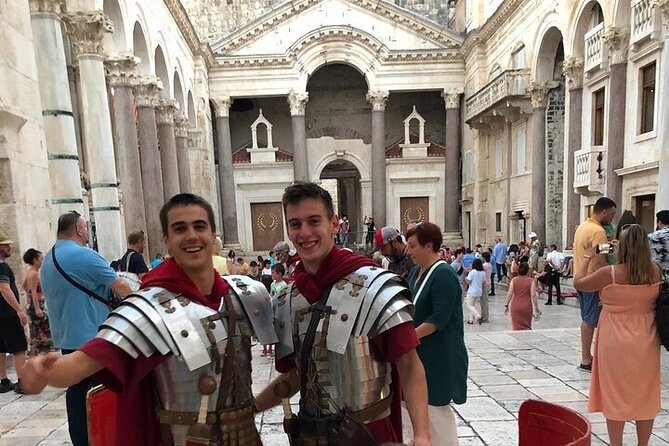
You finish with a pass-by at the Split Synagogue, about 10 minutes. You learn about the history of the Jewish people in the city of Split, and you see the synagogue building from the street.
Two practical details matter. First, the admission ticket is not included for this stop. Second, the tour time here is designed for passing by, not a full interior visit.
If you want to go inside, you will need to plan that separately. For many people, the pass-by still does its job well, because it signals that Split’s story is not only Roman and Venetian.
Price, group size, and why the time matters
Let’s talk value without hand-waving.
You pay $165.08 per person for a small group tour with a maximum of 20 travelers, lasting about 1 hour 30 minutes. That is not the cheapest way to learn about Diocletian’s Palace, but it is also not trying to sell you a full-day itinerary.
For me, the value comes from three things:
- You get expert guidance focused on key highlights, so you do not waste time trying to connect the dots yourself.
- The stops are distributed so you see both palace core spaces and nearby city context, which is where Split’s identity becomes clear.
- The group size supports questions. The guides are known for answering a lot and staying open, including going beyond the basic script when you ask.
Also, the tour includes a mobile ticket and group discounts. If you are traveling with a small circle of friends, that can make the overall cost feel more reasonable.
Who this tour suits best, and who should think twice
This is a strong fit if you want a structured introduction to Split without committing to a long museum-heavy day. The pace makes sense: you are not stuck in one building, and you still cover the major landmarks that shape the way you move through the old town.
It is also a great option if German is your comfort zone. Being guided in German can help you absorb details faster than you would in a second language.
Think twice if you have mobility concerns with uneven stone streets or high steps. The tour explicitly says it is not recommended for travelers who have issues with high steps.
If you are generally comfortable walking and want a high-information start, this is one of the most practical ways to get your bearings fast.
How to get the most from the 90 minutes
Because the tour is short, a few habits make a big difference.
Wear comfortable walking shoes. You are moving through historic stone spaces and old streets, where traction matters more than comfort in modern sidewalks.
Bring a phone for notes, then use the guide’s cues. When your guide points out how one space connects to another, jotting down quick phrases like Peristyle, Golden Gate, or Marko Marulić helps you remember later when you are wandering on your own.
Finally, ask questions at the stops. The guides’ reputation for humor and for staying responsive is not just a perk, it is the mechanism that turns sightseeing into learning.
Should you book this History Split walking tour in German?
I would book it if you are planning a short time in Split and you want the palace to make sense quickly. The small-group format and the focus on the palace core plus key city context (Riva, Fruit’s Square, and the synagogue area) give you an efficient way to understand why Split looks the way it does.
Skip it if you want a long, in-depth museum visit or if you know you need to avoid steps and uneven historic surfaces. In that case, you would likely prefer a different format that better matches your pace.
If you do book, go in with one simple goal: connect the Roman layout to the modern streets. Once you do, Diocletian’s Palace stops being background and becomes a map for the whole city.
FAQ
Is this a German-language tour?
Yes. This is listed as a History Split walking tour in German.
How long is the tour?
The duration is about 1 hour 30 minutes.
What is the group size limit?
The tour has a maximum of 20 travelers.
Is the Split Synagogue included with admission?
No. The tour includes a pass-by, and the synagogue admission ticket is not included.
Where does the tour start and where does it end?
It starts at Peristil ul. 21000, Split, and ends at Diocletian’s Palace in Grad, Split. The tour ends not far from where it started, and the guide can take you back to the Peristyle if you ask.
Can I cancel and get a full refund?
Yes, you can cancel for a full refund up to 24 hours before the experience starts. If you cancel less than 24 hours before start time, the amount paid is not refunded.
Split, the Longer Story
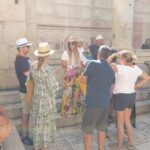

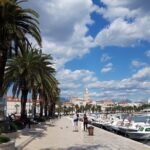
Walk It: More of Split at Ground Level
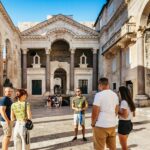
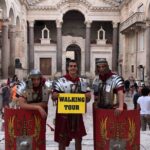

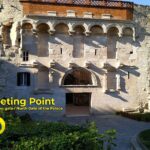
Inside the Palace Walls
Freshly written up around Split
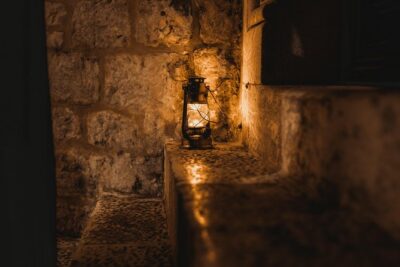
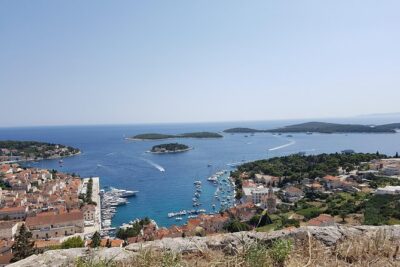


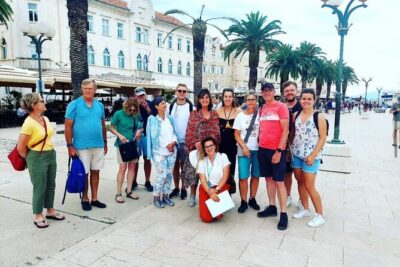

Split Old Town & Palace Walks, top to bottom.
 ★ 4.9Split: Old Town and Diocletian Palace Walking TourFrom $174,727 reviews
 ★ 5.0Walking Tour of Split and Diocletian’s PalaceFrom $482,588 reviews
 ★ 5.0Split & Diocletian’s Palace Walking TourFrom $211,125 reviews
 ★ 5.0Walking Tour of Split with a ‘Magister’ of HistoryFrom $341,122 reviews
 ★ 5.0Split Walking Tour with Professor of HistoryFrom $24926 reviews
 ★ 4.7Split: Diocletian Palace & Old Town Guided Walking TourFrom $17882 reviews
 ★ 4.8Split: Game of Thrones Tour with Diocletian’s Palace CellarFrom $41545 reviews
 ★ 5.0Diocletian’s Palace and Old Town SMALL GROUP Walking TourFrom $16502 reviews
Browse the lists this tour appears in