
REVIEW · SPLIT OLD TOWN & PALACE WALKS
Jewish Heritage & Diocletian’s Palace Private Split Tour
Split has layers you can’t see from the street. This private tour connects Diocletian’s Palace with the Jewish story of the city. It also ends with a walk through classic waterfront and piazzas, not just monuments on a checklist.
Two things I really liked: the synagogue visit with a community member, and the way the guide uses real spaces like the palace substructures to explain how Split grew from Roman times onward. One thing to consider is that you are walking the Old Town, so if you have mobility limits, tell the guide ahead of time so they can adjust the pace and timing.
In This Review
- Key highlights worth booking
- Diocletian’s Palace meets Jewish Split in one clear route
- Meeting point, pickup, and how private touring actually works
- Stop 1: Diocletian Palace substructures, menorahs, and the best context
- Stop 2 and 3: Vestibule and the Peristyle, what to look for
- Stop 4: Grgur Ninski statue and why a Croatian bishop matters
- Stop 5: The Jewish ghetto, synagogue visit, and meeting Albert
- Stop 6 to 10: Narodni Trg, Fruit’s Square, Riva, Prokurative, Marmontova Ulica
- How the guides keep it from becoming a dry lecture
- Price and value: $187.05 for 2.5 hours and real access
- Who should book this tour in Split
- Should you book it or keep it DIY
- FAQ
- How long is the Jewish Heritage and Diocletian’s Palace private tour?
- Is pickup available for cruise ship passengers?
- Where is the meeting point in Split?
- What language is the tour in?
- What’s included in the price?
- Can I cancel for a full refund?
Key highlights worth booking
- Roman basements with Jewish traces: look for menorah carvings tied to the early presence of Jews in Split
- A synagogue visit with a community member: you get context from people who help care for the place
- A timed mix of inside and outside stops: substructures, vestibule, peristyle, then squares and promenades
- Meaningful WWII reminder: a bronze plaque at Narodni Trg marks the 12 June 1942 destruction of synagogue archives and items
- Old Town atmosphere at human speed: you cover Riva and Prokurative without rushing past everything
Other walks through the palace quarter and the alleys behind it
- Split: Old Town and Diocletian Palace Walking Tour★ 4.9 · 4,727 reviews
- Walking Tour of Split and Diocletian’s Palace★ 5.0 · 2,588 reviews
- Split & Diocletian’s Palace Walking Tour★ 5.0 · 1,125 reviews
- Walking Tour of Split with a ‘Magister’ of History★ 5.0 · 1,122 reviews
Diocletian’s Palace meets Jewish Split in one clear route
Split’s biggest “wow” is Diocletian’s Palace, but the best part is learning how history overlaps. In this tour, you don’t treat the palace as a standalone Roman museum. You see it as a shelter and a setting where different communities lived, worked, and left traces.
The Jewish connection is explained in plain terms. Archaeological findings from the nearby Roman city of Salona point to Jewish residents living there alongside Romans sometime between the 2nd and 3rd century AD. Later, when people fled Salona during attacks, they carried their lives into Diocletian’s Palace, including the Jewish community.
I also like that the tour doesn’t freeze the story in the past. The walk continues through central squares where you can see everyday Split, then it circles back to memory, meaning, and how a city keeps telling its story.
Meeting point, pickup, and how private touring actually works
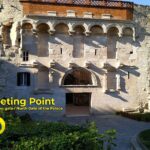
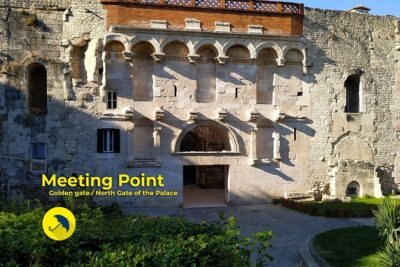
This is a private tour, so it’s just your group, guided by a licensed professional in English. The meeting point is Obala Hrvatskog narodnog preporoda 23, 21000 Split, and the start is near Riva, by the bronze map of the city. Pickup is offered, including for people staying in the Old Town.
If you’re on a cruise ship, you get met at the port. You walk toward the customs gate, then find the guide holding a sign with your name. Start time is on request for private tours, so you’ll want to confirm timing early so you don’t end up sprinting to meet anyone.
Because it’s private, you can ask questions that come up as you look at carvings, tomb markers, or street layouts. In fact, guides here often run it at a steady pace and adjust timing based on the group, including when someone reports ambulation problems. That makes the experience feel less like a script and more like a guided walk with strong structure.
Stop 1: Diocletian Palace substructures, menorahs, and the best context
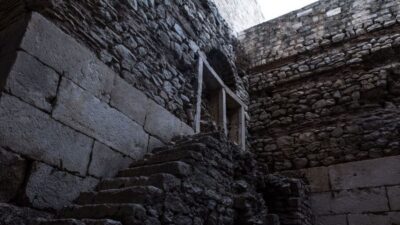
You start in the heart of the Old Town at Diocletian’s Palace, then step into the substructures. This is the portion that sets the whole tone. You’re in spaces that feel like the foundation of the story, not just another photo stop.
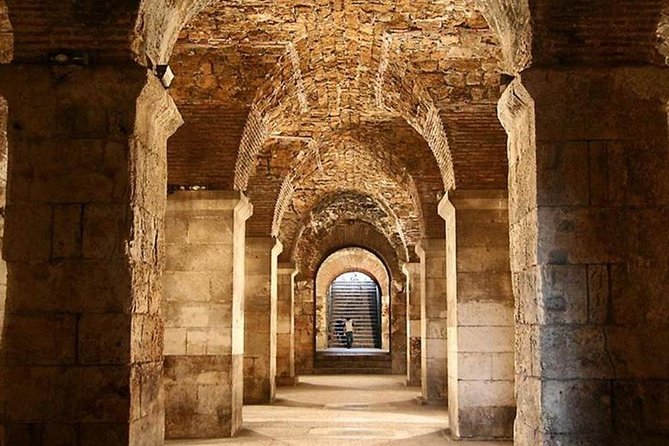
The guide frames the palace with Roman context first, then brings in the Jewish thread. One of the key details is the presence of menorah carvings in the basements, which act as physical evidence that Jews lived in Split since early centuries. You also learn how the Jewish community’s path ties back to Salona and later settlement inside the palace walls.
This stop runs about 45 minutes, and the palace substructures admission fee is included. The value here is practical: with a guide, you’re not guessing what you’re seeing. You get a narrative map for the space, so you notice things you’d probably miss if you wandered on your own.
Stop 2 and 3: Vestibule and the Peristyle, what to look for
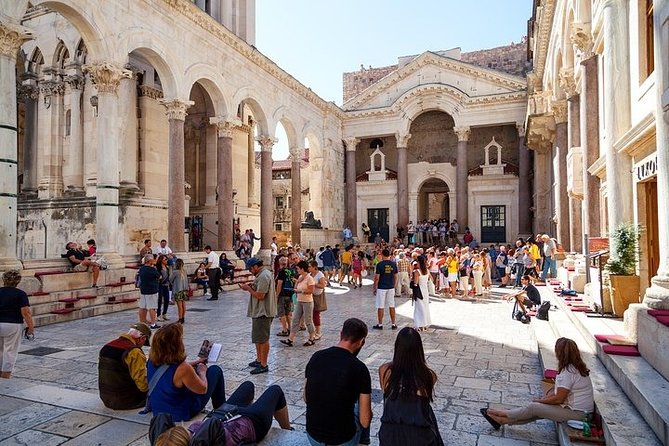
After the substructures, you move into the palace’s interior spaces and open-air highlights.
Stop 2 is the vestibule, described as a former foyer of the palace. It’s shorter, around 10 minutes, but it helps you shift from underground to the way the Romans organized movement and arrivals inside the complex.
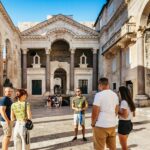
Stop 3 is the peristyle, the main square of the palace. You spend about 10 minutes here, and the payoff is visual and architectural. The guide points out columns brought from different parts of the empire when the palace was built in 305 AD. That detail matters, because it turns “cool columns” into a story about power, reach, and how materials traveled.
If you’re the type who likes quick orientation plus a few strong facts, these two stops work well. If you want more time for photos, you can ask the guide to slow down slightly at the peristyle, since the tour keeps a steady rhythm overall.
Other history-led routes through Split
- Walking Tour of Split with a ‘Magister’ of History
★ 5.0 · 1,122 reviews - Split Walking Tour with Professor of History
★ 5.0 · 926 reviews - Split: History and Heritage Walking Tour
★ 4.9 · 650 reviews - Split History and Gastro Small-Group Tour with Food and Drinks
★ 5.0 · 375 reviews - Split: Local History and Culture 90-Minute Walking Tour
★ 5.0 · 194 reviews
Stop 4: Grgur Ninski statue and why a Croatian bishop matters
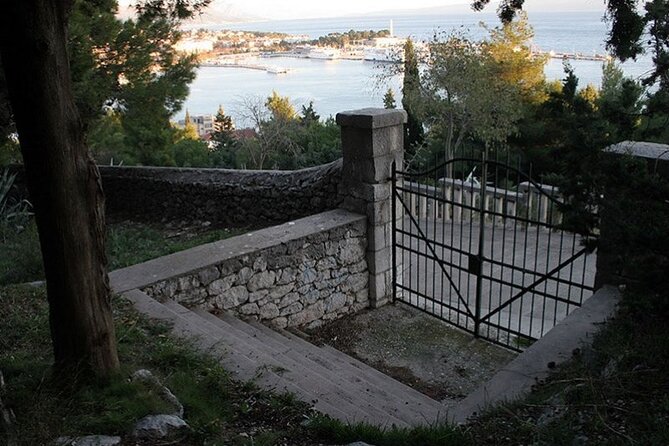
Then you shift from Roman architecture to a different layer of identity. Stop 4 is the statue of Grgur Ninski, with the sculptor named as Ivan Mesštrović.
The guide explains who Grgur Ninski was and why he’s tied to local tradition and religious history in Croatia. It’s a short stop, around 10 minutes, but it’s useful because it prevents the tour from feeling like a one-track lecture. You’re constantly reminded that Split is not only a Roman and Jewish story. It also has a Croatian religious and cultural thread that shapes how people talk about the city today.
A small practical note: if you’re squeezing this tour in around other Old Town visits, this stop helps you “reset” your brain. You go from ancient palace details into a recognizable public monument, then you’re ready again for the Jewish quarter walk.
Stop 5: The Jewish ghetto, synagogue visit, and meeting Albert
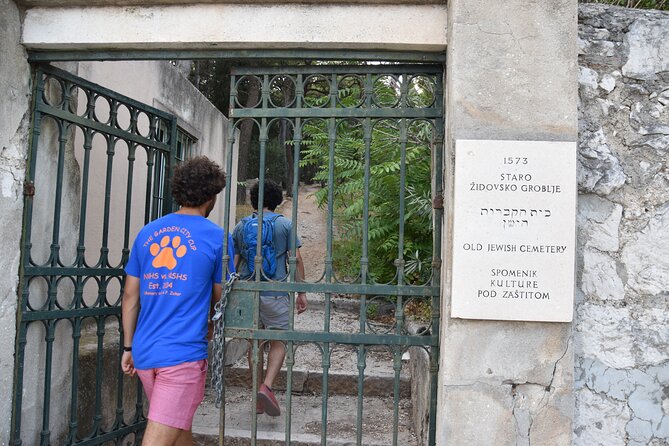
This is the heart of the whole experience. You walk through the Jewish quarter and you’re told about the long presence of Jews in Split. The tour is set up so you don’t just stand outside buildings and read signs. You get guided context before entering.
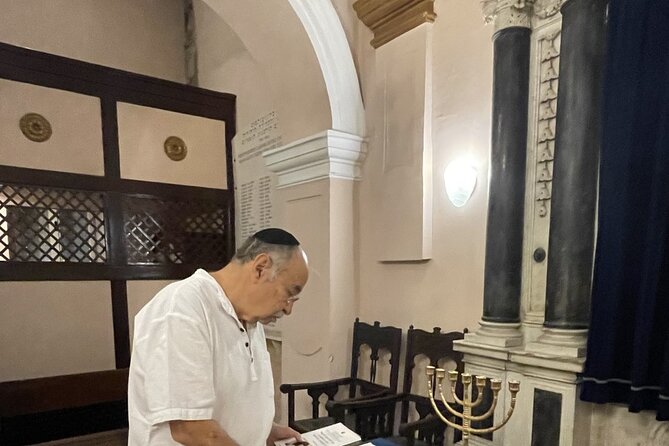
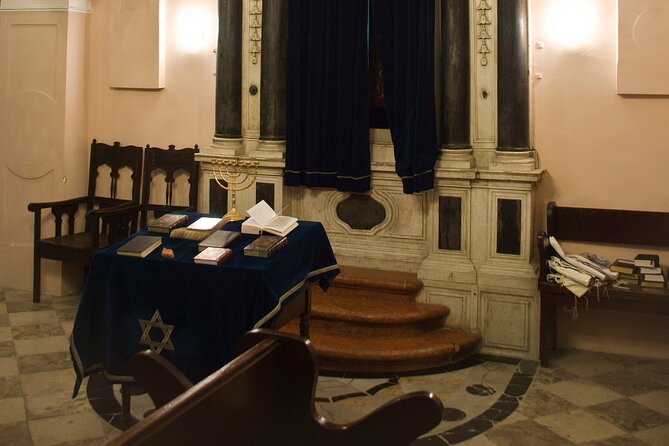
The synagogue visit includes time with a member of the Jewish community, and one name that comes up repeatedly in this tour experience is Albert, a community member who shares stories and helps educate visitors about Jewish life in Split across history. You can expect around 30 minutes inside this part.
This is also where the tour connects meaning to the ongoing life of the community. In one memorable moment, the synagogue experience is described as special because it is still in use and cared for by community members. The guide’s approach is low-key and conversational, not stiff. You’re encouraged to ask questions.
And yes, the tour is described as including the local Jewish cemetery as part of the synagogue-and-community experience. That gives you a fuller sense of continuity, not just one building.
One more reason this stop lands: it’s not only dates and names. It’s people explaining why the place matters now.
Stop 6 to 10: Narodni Trg, Fruit’s Square, Riva, Prokurative, Marmontova Ulica
After the synagogue, the tour turns into a moving look at Split’s central Old Town. You get a mix of memory markers and everyday city life, which is a great balance.
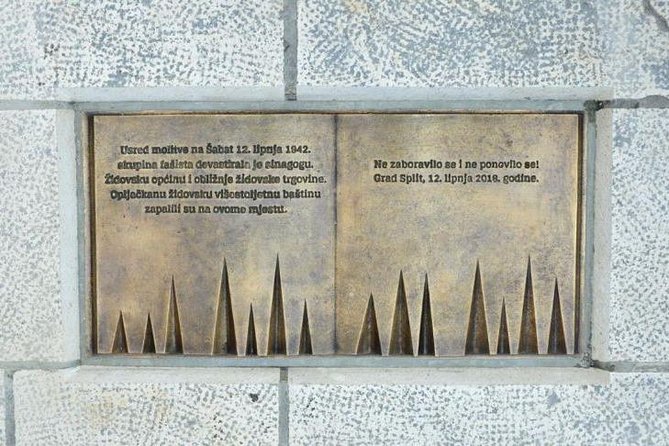
Stop 6 is Narodni Trg. Here you learn about a bronze plaque placed on the square to remember the destruction of precious items and archives from the synagogue on 12 June 1942. This is one of those moments where the city holds onto a hard chapter, and the guide makes sure you understand what that plaque is referencing.
Next, Stop 7 is Fruit’s Square (Trg Brace Radic), just outside Diocletian’s Palace. The guide points out Marko Marulić, described as the father of Croatian literature, and notes the statue in the middle of the square. This is a quick stop, around 5 minutes, but it gives you an anchor in Croatian culture while you’re still in the palace orbit.
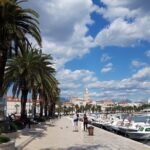
Stop 8 is Riva Harbor, where locals call it their living room. The guide talks about contemporary life here, including why the waterfront is such a magnet for coffee, conversation, and evening hangs.
Stop 9 is Prokurative, also known as Republic Square, and it’s compared to St. Mark’s Square in Venice by way of its arrangement and arches on neo-Renaissance buildings. You get about 10 minutes, plus a note that it’s only open on the south side, giving a good view toward the harbor and Riva.
Stop 10 is Marmontova Ulica, another popular promenade. You get about 10 minutes and the guide points out the fish market nearby. If you want to see where people buy fresh Adriatic fish, the tour can usually accommodate a quick peek.
This final stretch is where the tour becomes more than history. It’s where you learn how Split feels, so you can explore on your own after the tour ends.
How the guides keep it from becoming a dry lecture
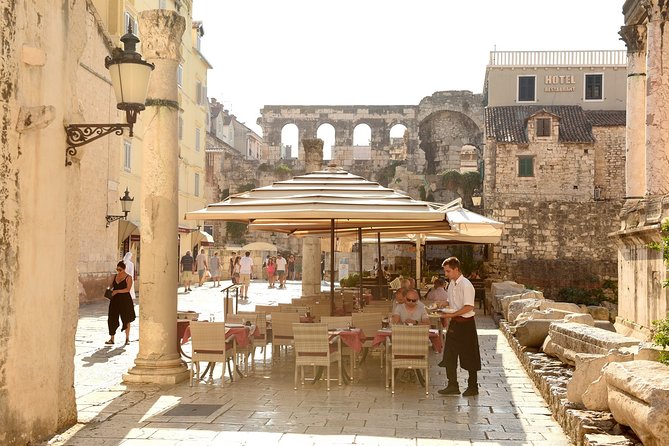
What consistently impressed me is the teaching style. The guides here often bring facts in a way that stays human, with light humor and room for questions.
Jelena Vrancic stands out in the way she runs timing and adapts to individuals. In some cases, she has adjusted the tour for people with ambulation problems and kept the experience comfortable. She also handles bad weather well, using breaks and nearby spots so you keep moving instead of losing half the day to rain.
Other named guides also show up in this experience set, like Emil, who is described as charming and full of knowledge, and Pero, who can coordinate openings for synagogue access when possible. And when you meet Albert inside the synagogue, the stories are framed as lived knowledge, not only academic details.
If you care about hearing the “why” behind what you see, you’ll probably enjoy this approach. If you only want a fast checklist of sights, you might find the extra context slows you down. But the pacing is generally balanced, with short stops mixed with two bigger anchors: the palace substructures and the synagogue.
Price and value: $187.05 for 2.5 hours and real access
At $187.05 per person for roughly 2.5 hours, this tour costs more than a standard group walk. The value is in what’s included and what’s harder to do alone.
You’re paying for:
- A private, licensed English guide
- Visit to the synagogue and Jewish ghetto
- Admission fee for the Diocletian Palace substructures
Other stops are handled as walk-and-look segments without paid entry fees listed for them. If you’ve ever tried to piece together palace tickets, Jewish quarter context, and a synagogue visit without local help, you know why this can be worth it. The guide connects dots that aren’t obvious from the street.
It’s also a good price if you have a small group, since private touring can work out competitively when split among more people. The tour description also notes group discounts, which can lower the per-person cost if your party is booking together.
Bottom line: it’s a fair spend if you want depth and access, not just a route around landmarks.
Who should book this tour in Split
This is a strong match if you:
- Want your Old Town time to include Jewish heritage, not only Roman sights
- Like tours where you can ask questions and get direct answers
- Prefer private pacing over crowded group logistics
- Plan to spend at least half a day in the Old Town and want a structured route
It also works well for multigenerational groups, as long as the walking pace fits everyone. If anyone has mobility limits, tell the guide early so they can adjust the order and timing.
I’d also suggest booking this if it’s your first trip to Split. You get an orientation map through key spaces like the peristyle, Narodni Trg, Riva, and Prokurative, plus you learn the city’s layers in a way that makes later wandering more meaningful.
Should you book it or keep it DIY
Book this tour if you want context that clicks. A big part of the appeal is that you don’t just see Diocletian’s Palace, you also see the Jewish story threaded through the city’s physical spaces, including the menorah carvings in the substructures and the synagogue visit with a community member.
Skip it and go DIY if you’re traveling with people who hate walking or if you only want quick exterior photo stops. This tour includes several short segments, but it is still a walk through central Old Town areas.
If your priority is understanding Split as a place with overlapping histories, this private format is one of the best ways to do it without wasting time guessing.
FAQ
How long is the Jewish Heritage and Diocletian’s Palace private tour?
It’s about 2 hours 30 minutes.
Is pickup available for cruise ship passengers?
Yes. All cruise ship guests are met at the port. After you get off the ship, walk toward the customs gate and look for the guide with your name printed on a piece of paper.
Where is the meeting point in Split?
The tour starts at Obala Hrvatskog narodnog preporoda 23, 21000 Split, near the main waterfront called Riva, by the bronze map of the city. The tour ends back at the same meeting point.
What language is the tour in?
The tour is offered in English.
What’s included in the price?
The price includes a private guided tour with a licensed guide, a visit to the synagogue and Jewish ghetto, and the fee for the Diocletian’s Palace substructures. Meals and beverages are not included.
Can I cancel for a full refund?
Yes, you can cancel for a full refund if you cancel at least 24 hours before the experience’s start time. Free cancellation is available up to 24 hours in advance.
Split, the Longer Story

Inside the Palace Walls
Freshly written up around Split
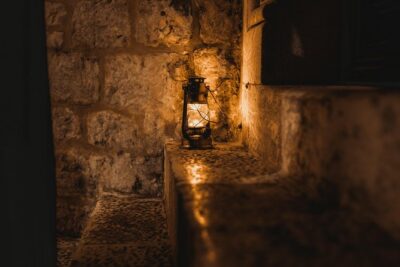
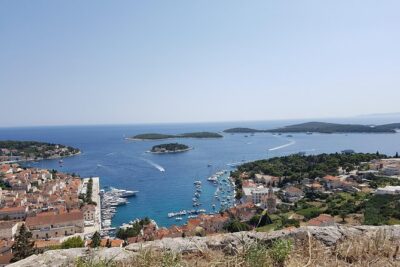


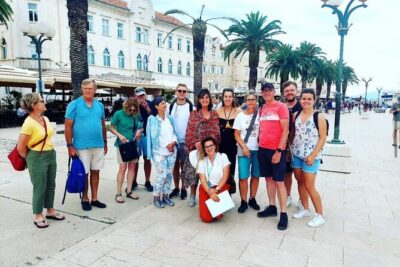

Split Old Town & Palace Walks, top to bottom.
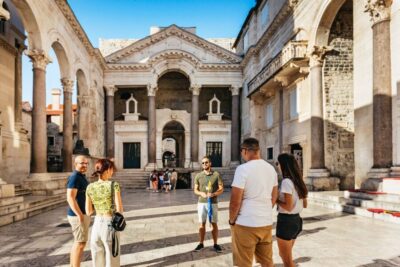 ★ 4.9Split: Old Town and Diocletian Palace Walking TourFrom $174,727 reviews
 ★ 5.0Walking Tour of Split and Diocletian’s PalaceFrom $482,588 reviews
 ★ 5.0Split & Diocletian’s Palace Walking TourFrom $211,125 reviews
 ★ 5.0Walking Tour of Split with a ‘Magister’ of HistoryFrom $341,122 reviews
 ★ 5.0Split Walking Tour with Professor of HistoryFrom $24926 reviews
 ★ 4.7Split: Diocletian Palace & Old Town Guided Walking TourFrom $17882 reviews
 ★ 4.8Split: Game of Thrones Tour with Diocletian’s Palace CellarFrom $41545 reviews
 ★ 5.0Diocletian’s Palace and Old Town SMALL GROUP Walking TourFrom $16502 reviews
Browse the lists this tour appears in