
REVIEW · HISTORICAL TOURS
Private History and Trivia Walking Tour by a Local Guide
Diocletian’s Palace history moves fast. This private walking tour in Split is a sharp, time-smart way to see the big landmarks and learn how the city layer-cakes over centuries. You’ll walk with a local guide and get the kind of behind-the-scenes explanations that make photos feel like more than snapshots.
Two things I really like: the private guide format (your group only, max 15) and the stop-by-stop pacing that keeps the story going without dragging. I also love that Ivan-style guiding seems built for real questions, with friendly humor and deeper answers when you want them.
One possible drawback: it’s a whistle-stop walking route. If you want to linger, do long museum time, or you do not enjoy standing and walking for about 1 hour 45 minutes, you might feel a bit rushed.
In This Review
- Key points to know before you go
- Getting your bearings fast in Split’s old core
- Starting at Riva Harbor, where the palace walls make sense
- Entering Diocletian’s Palace substructures through Bronze Gate
- Peristyle Square, the Cathedral of Saint Domnius, and the layers of religion
- Fruit Square, Pusti me Proć, Marko Marulić, and the city’s human scale
- Narodni trg and Zeljezna Vrata: squares and iron gates
- Papalic Palace and the City Museum of Split for Game of Thrones fans
- Golden Gate, Grgur Ninski, St Arnir bell tower, and the city’s spotlight views
- What $53.95 buys you: private guiding, fast value, and local context
- Who this tour fits best (and who might want a different plan)
- Should you book this private history and trivia walk in Split?
Key points to know before you go
- Private tour, max 15 people: You get a real guide flow, not a herd.
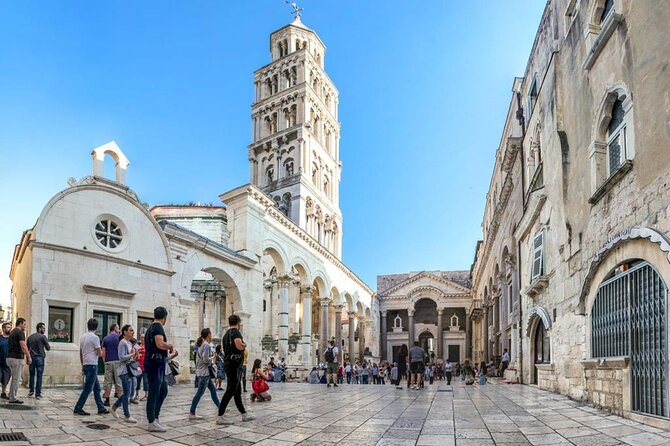
- Diocletian’s Palace from multiple angles: Riva Harbor views, substructures, Peristyle Square, and key gates.
- Religious history tied to the same stones: Mausoleum to cathedral, Temple of Jupiter to baptistery.
- Local trivia stops that sharpen the city: Marko Marulić, narrow street Pusti me Proć, and city squares.
- Great for orientation: A short tour that helps you plan what to do next.
More Split covered at walking pace
- Split: Old Town and Diocletian Palace Walking Tour★ 4.9 · 4,727 reviews
- Walking Tour of Split and Diocletian’s Palace★ 5.0 · 2,588 reviews
- Krka Waterfalls tour with Trogir Walking tour and Krka panoramic boat cruise★ 5.0 · 1,659 reviews
- Split & Diocletian’s Palace Walking Tour★ 5.0 · 1,125 reviews
Getting your bearings fast in Split’s old core
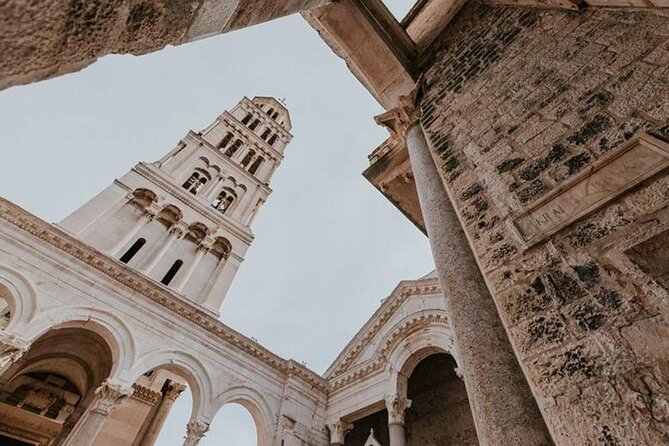
Split can feel like a maze at first, which is exactly why this kind of private history and trivia walk is useful. You start at the promenade at Obala Hrvatskog narodnog preporoda 22, where the coastline and the palace walls give you instant context. Before you even step into the palace, you get a clear visual of where things sit, including the southern wall of Diocletian’s Palace and the harbour area.
I like how the tour is built for momentum. You’re not stuck watching your guide talk from one spot. Instead, you’re moving through the city and learning as the scenery changes. That helps the history click, because you can see how the palace relates to the streets, squares, and gates around it.
Also, the guide language options are practical. You can book with a local licensed guide speaking English, French, German, Spanish, or Italian. In real life, that matters because it lets you ask follow-up questions and get answers you actually understand.
A final value point: the tour is priced at $53.95 per person and runs about 1 hour 45 minutes. For a city with so many competing priorities, that time window is a sweet spot if you want big highlights without burning a half day.
Starting at Riva Harbor, where the palace walls make sense
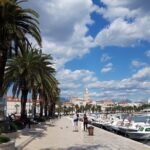
Your tour begins on the promenade at Riva Harbor. This is not a random warm-up stop. It’s the moment where Diocletian’s Palace stops being an abstract name and turns into something you can read in space.
From here, you can spot the southern wall of the palace, plus views toward the harbour and the eastern and western promenade/coast. That matters later, because when you enter the palace complex, you’ll understand why some passages feel tucked in and why the perimeter shapes the streets.
This start also helps with pacing. You’re only walking a little at first, so if you’ve just arrived or you’re adjusting to the heat and crowds, you ease into the experience.
If you like practical travel planning, this is also a smart time to ask your guide what to do next in Split. One of the strongest parts of this tour style is that it’s not just facts. It’s city tips and local customs, the kind of guidance that helps you travel smarter after the tour ends.
Entering Diocletian’s Palace substructures through Bronze Gate
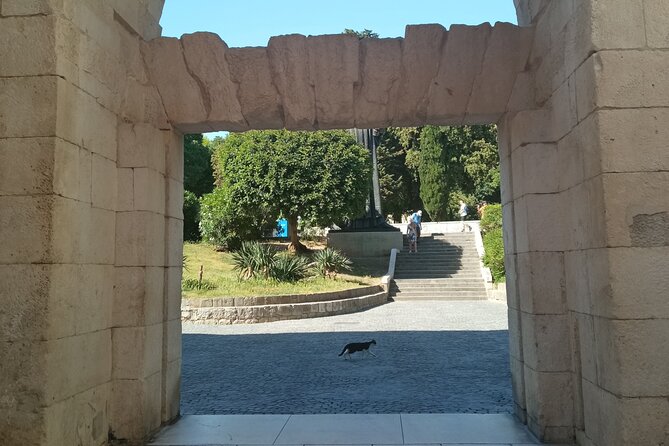
Next comes one of the coolest contrasts in Split: the palace above you, and the substructures below. You enter through the southern entrance of the palace, the Bronze Gate, and then step into the palace substructures.
This portion is great for two reasons. First, it’s a different viewpoint from the classic postcard palace courtyard. Second, it connects the stones to their functions through time. You’ll hear what the substructures were for, and how their role changed as centuries rolled by.
I also like that this part is structured for storytelling. You are walking through a place, but the guide is explaining why it was designed that way. That turns a dramatic setting into something understandable, even if you are not a hardcore history buff.
One consideration: because this is a walking tour focused on highlights, you won’t treat the substructures like a slow guided museum visit. If you want detailed deep reading at every wall, you’ll likely want to do a second independent stop later. The upside is you get orientation and momentum here.
Peristyle Square, the Cathedral of Saint Domnius, and the layers of religion
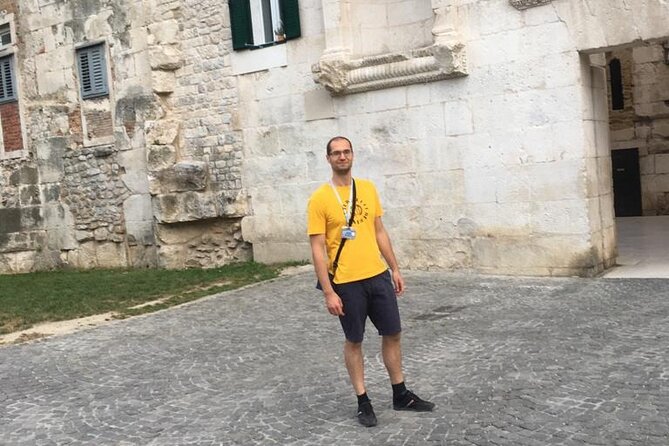
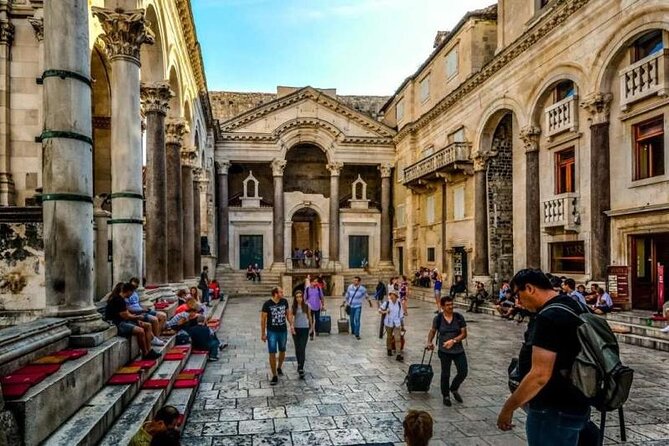
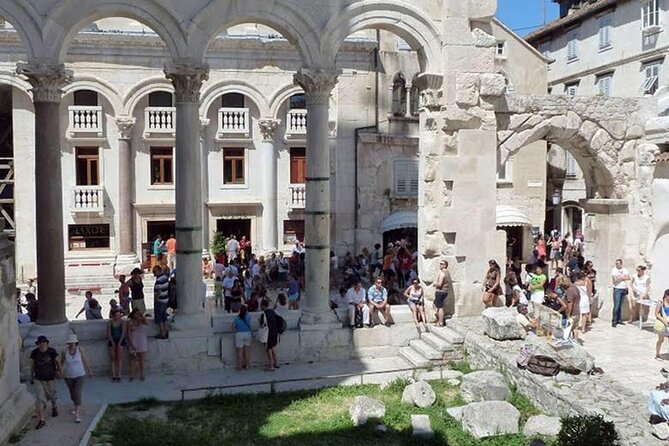
The Peristyle Square is the palace’s central ancient square, and it’s where the tour’s “big picture” history really lands. You stop at the famous central space and get the cultural and historical background for how this palace site worked.
Then you move to the Cathedral of Saint Domnius. This is one of those Split highlights where the building itself becomes the lesson. The guide explains the emperor Diocletian mausoleum connection, and how it was turned into a cathedral over time. You also learn about construction style, including what’s distinctive about the cathedral and the adjacent bell tower.
What I find genuinely useful is how the guide keeps tying the physical changes to the bigger story. It’s not just, “This building is old.” It’s “This building changed hands, changed purpose, and still carries the earlier structure.”
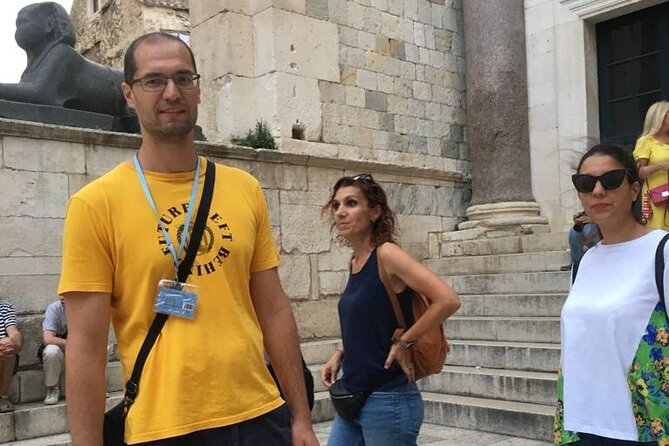
You’ll also head to the Temple of Jupiter. Here the explanation shifts to religion spreading within the palace walls. You’ll hear how the temple was turned into a baptistery, and you’ll notice the Sphinx in front as a striking reminder of what was there before. If you like seeing how cultures overlap in the same space, this stop is a satisfying payoff.
Other history-led routes through Split
- Walking Tour of Split with a ‘Magister’ of History
★ 5.0 · 1,122 reviews - Split Walking Tour with Professor of History
★ 5.0 · 926 reviews - Split: History and Heritage Walking Tour
★ 4.9 · 650 reviews - Split History and Gastro Small-Group Tour with Food and Drinks
★ 5.0 · 375 reviews - SPLIT-PREMIUM Emperor’s Walking Tour for History Lovers + Museum
★ 5.0 · 333 reviews
Fruit Square, Pusti me Proć, Marko Marulić, and the city’s human scale
After the palace core, the tour changes texture. You head toward Fruit’s Square, also called Trg Brace Radic. Along the way, you pass through the narrowest street in Split, the famous Pusti me Proć.
That narrow street stop works for two reasons. One, it slows the pace just enough for you to feel the city’s scale. Two, it gives you a physical contrast to the large monumental palace spaces you just saw.
In Fruit’s Square, the guide talks about the town of Split and its development over time. Even when the details are fast, the message is clear: this place did not grow in one clean era. It shifted, adapted, and layered over itself.
Then the tour walks past the statue of Marko Marulić, father of Croatian literature. It’s a quick cultural anchor that helps you balance the palace story with something local and living.
Right behind the statue, you’ll also see the palace of the Milesi Family from the 17th century. These small “glance and learn” moments are part of why walking is better than bus touring here. You can’t appreciate these tight urban relationships from a vehicle.
Narodni trg and Zeljezna Vrata: squares and iron gates
Next is Narodni trg, the main square in Split. Your guide covers the historical development of this square and explains how it became the town’s main square as the town expanded. This is where you start to understand Split not just as a palace, but as a growing city around it.
As you move through the square, you pass multiple palaces belonging to noble families. You’ll see references to a recently renovated palace that used to belong to one of the noble families of Split, plus the old City Hall. You’ll also spot a palace linked to a noble family from Korčula on one end of the square.
Then it’s eastward to Zeljezna Vrata, the iron gate of the palace. This stop is short, but it’s packed with meaning. The guide talks about the gate’s rich history and the different activities that took place there. You’ll also see the oldest portion of what the site represents, though the exact phrasing is brief.
Again, the walking matters. These gates are not just background structures. They’re thresholds. When you learn their story while standing in front of them, the palace becomes a living boundary that shaped movement and life.
Along the way you’ll also pass palaces tied to wealthy families, including Cindro in the 17th century and Augubio in the 15th century. These details can feel like quick names, but if you pay attention to the dates, you start to see how Split’s power and wealth shifted over time.
Papalic Palace and the City Museum of Split for Game of Thrones fans
At the City Museum of Split, located in Papalic Palace, you get a brief stop with a big pop-culture hook. The guide notes that there’s an interesting albeit bloody scene in front of the palace for Game of Thrones fans.
This is the kind of stop I appreciate because it gives two audiences what they want. If you care about history, you’re still in the right part of the city for understanding local power and architecture. If you care about modern storytelling, you get a fun connection that helps you remember where you are.
The museum stop itself is not long. It’s about adding a useful landmark into your mental map, not about turning the tour into a full museum day.
If you want more after, this is a good moment to ask the guide what else is worth your time based on your interests. That kind of tailored advice is exactly what people seem to love about this tour style, especially with guides who answer questions in depth and with humor.
Golden Gate, Grgur Ninski, St Arnir bell tower, and the city’s spotlight views
You finish the palace perimeter highlights with the Golden Gate, described as the northern and most decorated entrance into Diocletian’s Palace. This is a strong visual stop. You can look at the workmanship and feel how Roman engineering language shows up in details.
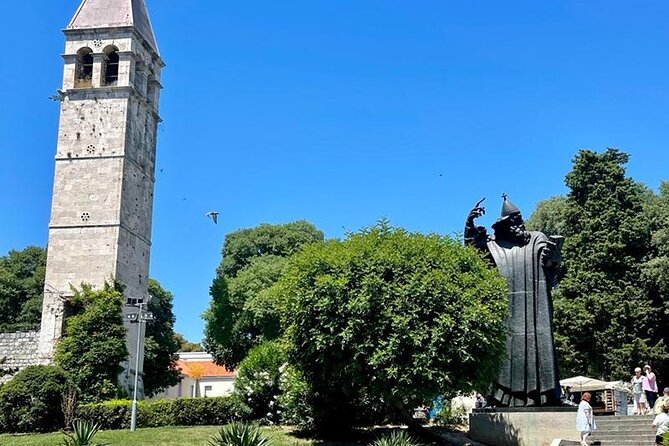
Opposite the Northern Gate is the Grgur Ninski Statue, a work by sculptor Ivan Meštrović. The guide explains why Bishop Grgur of Nin represents such an important figure. Even with a short stop, it gives you a cultural anchor that doesn’t rely on architecture alone.
Then you move to the Bell Tower of St. Arnir. Next to the statue, you see the bell tower, the chapel of Saint Arnir, and remnants of an early Christian church. The guide adds a few words connecting what you see to the broader story of Christianity and the changing built environment.
Finally, you end up on Marmontova Ulica. This is a practical finish because it gives you a viewpoint. From the top of Marmontova Street, you overlook the Croatian National Theater and the Monastery and Church of Our Lady of Health. The tour wraps with historical context tied to a short-lived chapter, keeping the ending interesting rather than purely scenic.
If you are trying to plan your remaining time in Split, this final view stop is a nice reset. You can look down at the city from above, then decide what to explore next.
What $53.95 buys you: private guiding, fast value, and local context
Let’s talk value in plain terms. At $53.95 per person, you are paying for one guided experience that compresses a lot of major landmarks into about 1 hour 45 minutes. For time-tight travelers, that can be a smart trade. You’re not paying for a full day of sightseeing. You’re paying for orientation plus interpretation.
You also get a private tour setup. It’s listed as a private activity, with only your group participating. The group size cap is 15 persons, which is helpful because it keeps the tour from turning into a queue line. That cap is also part of why the guide can answer questions without constantly repeating themselves.
Another value detail: the itinerary’s stops are marked with admission ticket free for each segment. That suggests you are not hit with surprise entrance fees at every turn. (Still, if you later add optional activities, you may pay separately for those.)
You’ll also get a mobile ticket and the option for group discounts. If you are traveling with friends or family and want the same route, this format makes budgeting easier.
Finally, the tour gets booked ahead. On average it’s reserved about 91 days in advance, so if you travel in peak season, booking early is a smart move. This is the kind of tour that sells out once people realize how well it works as a first-day orientation.
Who this tour fits best (and who might want a different plan)
This is a strong match if you:
- Want to see the most important Split highlights without spending hours in transit
- Like history that connects buildings to real-life changes
- Enjoy asking questions and getting answers with personality
- Need a fast way to learn local tips and customs
It can also be good for families. One of the comments you’ll likely relate to is that the tour worked well even with kids around elementary age. The guide’s humor and willingness to answer questions appears to help keep attention. Still, it’s still a walking tour with multiple stops, so consider your child’s tolerance for steady walking.
I’d think twice if you:
- Want long stays inside museums or churches
- Are very sensitive to standing and walking for about 1 hour 45 minutes
- Are only available on days outside Monday to Friday during the listed time window
Should you book this private history and trivia walk in Split?
Yes, if you want a guided way to understand Diocletian’s Palace and the surrounding old-town story without wasting time figuring things out alone. I’d book it as a first-day plan, or anytime you have a limited window and still want depth behind the landmarks.
Two reasons to feel confident: the guide approach seems consistently warm and question-friendly, and the route hits major palace and city nodes in a way that walking makes meaningful. If you like your sightseeing to come with context, and you appreciate a lively guide like Ivan who answers questions in depth, this is a very solid use of your time in Split.
Split, the Longer Story



Walk It: More of Split at Ground Level

Freshly written up around Split

Historical Tours, top to bottom.
 ★ 5.0Dubrovnik Old Town History Walking TourFrom $241,684 reviews
 ★ 5.0Walking Tour of Split with a ‘Magister’ of HistoryFrom $341,122 reviews
 ★ 5.0Split Walking Tour with Professor of HistoryFrom $24926 reviews
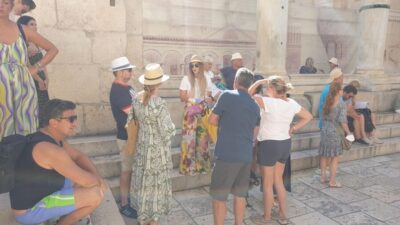 ★ 4.9Split: History and Heritage Walking TourFrom $18650 reviews
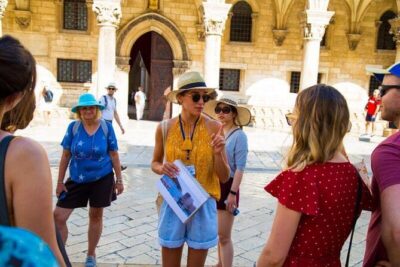 ★ 5.0Game of Thrones & History of Dubrovnik TourFrom $30628 reviews
★ 4.9Dubrovnik: Old Town History Walking TourFrom $20474 reviews
★ 5.0Game of Thrones & History of Dubrovnik TourFrom $30628 reviews
★ 4.9Dubrovnik: Old Town History Walking TourFrom $20474 reviews
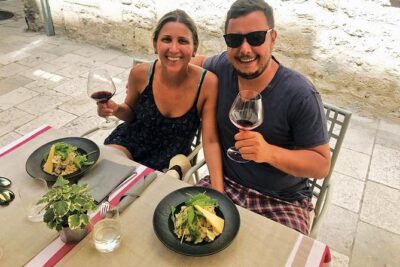 ★ 5.0Split History and Gastro Small-Group Tour with Food and DrinksFrom $139375 reviews
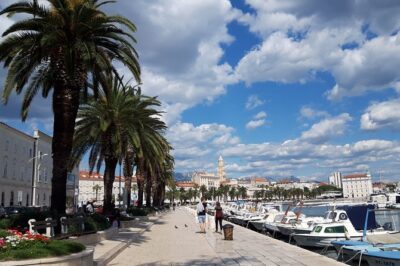 ★ 5.0SPLIT-PREMIUM Emperor’s Walking Tour for History Lovers + MuseumFrom $30333 reviews
Browse the lists this tour appears in