
REVIEW · SPLIT OLD TOWN & PALACE WALKS
Private History Split Walking Tour in Italian – Small group
Diocletian built a palace that became a city. This private Italian walk in Split turns Diocletian’s Palace into something you can actually picture, from the palace heart to the harbor views.
I love that the route keeps you oriented, with the Peristyle working like your living map, and each stop explaining what you are looking at. The small group pace and mobile ticket setup also help everything feel smooth and unhurried.
One possible drawback: the palace streets include steps and uneven ground, so high steps can be an issue. And because it is about 90 minutes, you are not getting the full museum portion unless you add it after.
In This Review
- Key highlights to look for
- Why Diocletian’s Palace makes such a good walking tour
- Timing, meeting point, and how the route stays practical
- Stop 1, Peristyle of Diocletian’s Palace: your orientation square
- Stop 2, the Vestibulum: emperor drama and possible Dalmatian singing
- Stop 3, Diocletian Palace substructures: the palace’s working life
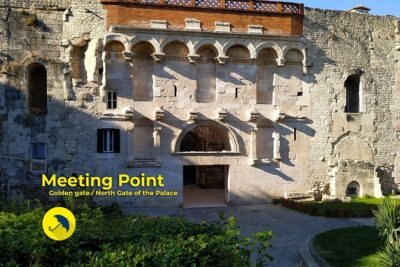
- Stop 4, Golden Gate: Gregory of Nin and language history
- Stop 5, Riva Harbor: bronze model plus why the waterfront matters
- Stop 6, Fruit’s Square (Trg Brace Radic): Venetian walls and Marko Marulić
- Stop 7, Split Synagogue: a pass-by with historical context
- The guide factor: why this tour keeps getting praised
- Is $69.39 worth it for a 90-minute walk?
- Who this tour suits best
- Should you book this Italian Split Palace tour?
- FAQ
- How long is the Private History Split Walking Tour in Italian?
- Where does the tour start and end?
- Is this a private tour?
- Do I need tickets for the stops?
- What language is the tour in?
- What should I know about timing and operating hours?
Key highlights to look for
- Peristyle as your orientation hub: the central square that connects to nearly everything in the palace complex
- Vestibulum stop with atmosphere: you may even catch traditional Dalmatian singing
- Substructures without the museum pressure: you see the functional underworld, then you can add the museum later
- Golden Gate plus Gregory of Nin: the art, the entrance history, and the language connection in one stop
- Riva Harbor’s bronze model: a visual shortcut to how the palace sat in relation to the waterfront
- Fruit’s Square and Marko Marulić: Venetian-era setting plus a major name in Croatian literature
Other walks through the palace quarter and the alleys behind it
- Split: Old Town and Diocletian Palace Walking Tour★ 4.9 · 4,727 reviews
- Walking Tour of Split and Diocletian’s Palace★ 5.0 · 2,588 reviews
- Split & Diocletian’s Palace Walking Tour★ 5.0 · 1,125 reviews
- Walking Tour of Split with a ‘Magister’ of History★ 5.0 · 1,122 reviews
Why Diocletian’s Palace makes such a good walking tour
Split is one of those rare places where the past is not behind ropes. It is under your feet, built into streets, courtyards, and everyday life. Diocletian’s Palace is the star, but the tour does something smart: it does not treat the palace like a dead monument. It shows how a ruler went from obscurity to near-legendary power, then how the city grew around his walls.
I like that this style of tour makes the scale feel manageable. In 90 minutes, you cover the main “anchors” and understand the logic behind them. You also get a clear sense of how Split’s later layers, like Venetian influence and Jewish heritage, fit into the same urban footprint.
And if you are learning Italian while you travel, this is one of those practical moments where language and landmarks move together. You are not stuck reading alone, trying to match signs to stories.
Timing, meeting point, and how the route stays practical
The tour runs about 1 hour 30 minutes, and it circles back to the starting spot. That matters, because in Split’s center you can lose time fast if you are wandering without a plan.
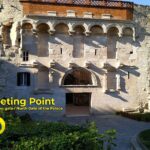
You start at Peristil ulica / Peristil ul., 21000 Split. The activity operates daily during the broad window listed (9:00 AM to 8:00 PM), so you can usually slot it into a first-day or pre-dinner time. Confirmation comes within 48 hours, subject to availability, which is useful if your dates are firm but plans are still shifting.
You will also use a mobile ticket, which is convenient in a city where you want to spend your phone time on photos, not lines. The tour is described as private, with only your group participating, but it is also described as a small-group walk, so expect a more personal pace than a big group shuffle.
One more practical note: it is near public transportation. If you are staying a bit outside the core, that can save your energy.
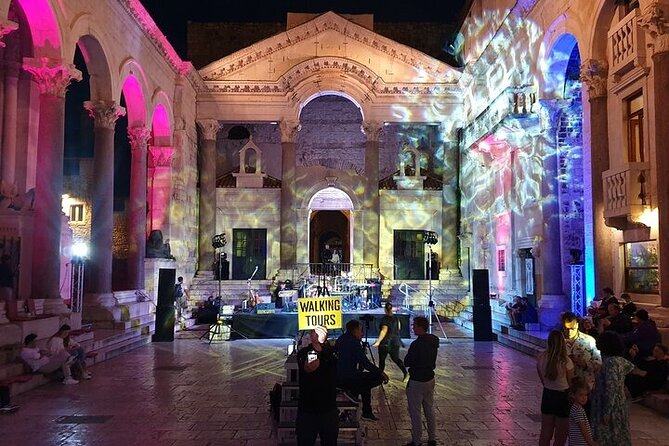
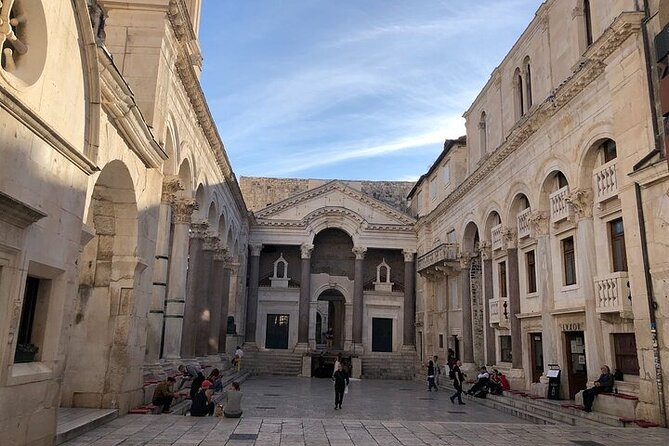
Stop 1, Peristyle of Diocletian’s Palace: your orientation square
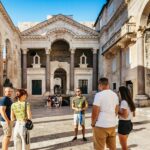
The Peristyle is the palace’s central square, the place you can use to orient yourself for almost every other location. That is why it is a great first stop. You see the key geometry early, then the rest of the walk makes more sense.
What I like here is the way the guide connects physical space to story. You are not just admiring columns and arches. You are getting the sense of how Diocletian designed power: a palace that looks controlled, symmetrical, and intentional, even when centuries of change have reshaped daily life around it.
The tour keeps this stop fairly short, around 15 minutes. That is enough time to learn what the Peristyle is, where it fits in the palace layout, and why it matters without turning your walk into a lecture marathon. Admission for this stop is listed as free, so you can focus on learning rather than hunting for entry logistics.
Stop 2, the Vestibulum: emperor drama and possible Dalmatian singing
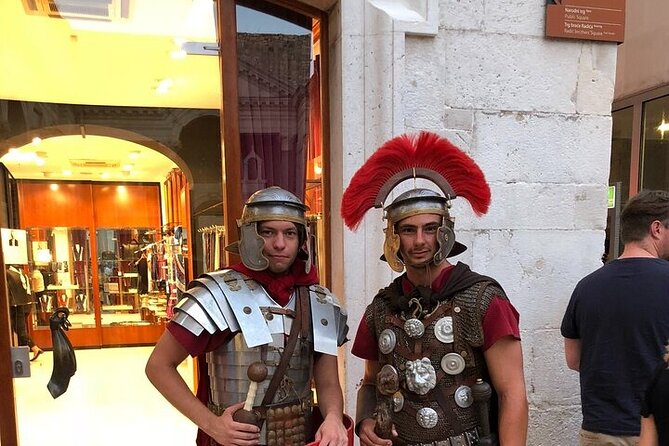
Next up is the Vestibulum, the space tied to Emperor Diocletian. This is where the tour leans into atmosphere. The point is to show you what kind of transition you were looking at, how the palace controlled movement, and how imperial presence was staged.
The description also says you might hear traditional Dalmatian singing. That is the kind of small moment that can make a “Roman palace” stop feel local, not museum-like. Even if you do not get singing on your exact day, the guide still frames the vestibule as a historical threshold, not just an empty corridor.
This stop is around 5 minutes, and admission is free. Short stops like this can be a real win on a walk, because you keep your attention and you do not lose the thread of the route.
More Split covered at walking pace
- Krka Waterfalls tour with Trogir Walking tour and Krka panoramic boat cruise
★ 5.0 · 1,659 reviews - Split Walking Tour with Professor of History
★ 5.0 · 926 reviews - Split: Diocletian Palace & Old Town Guided Walking Tour
★ 4.7 · 882 reviews - From Split: Krka Waterfalls Cruise & Trogir Walking Tour
★ 4.7 · 681 reviews - Split: History and Heritage Walking Tour
★ 4.9 · 650 reviews
Stop 3, Diocletian Palace substructures: the palace’s working life
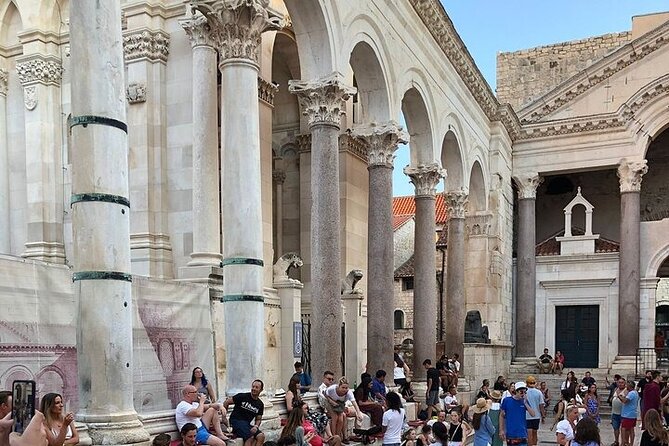
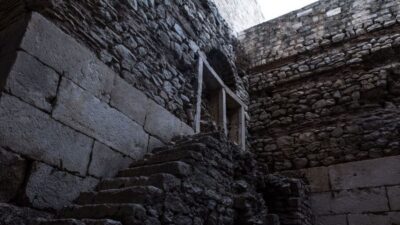
Most palace visitors see the public face. This stop helps you understand the hidden support system. The tour takes you through the substructures and explains the history of their construction and how they functioned over time.
You do not visit the museum part of the substructures during the tour. That is a subtle but smart choice. It keeps the walk moving and keeps you focused on what the space was doing, not only on artifacts behind glass. If you want more depth after, you can visit the museum portion later on your own time.
This is also one of the best places to get your bearings about how the palace still works as a city. Substructures are a reminder that “palace” did not mean decoration only. It meant infrastructure.
Admission here is listed as free for the tour experience stops, and this segment is about 10 minutes.
Stop 4, Golden Gate: Gregory of Nin and language history
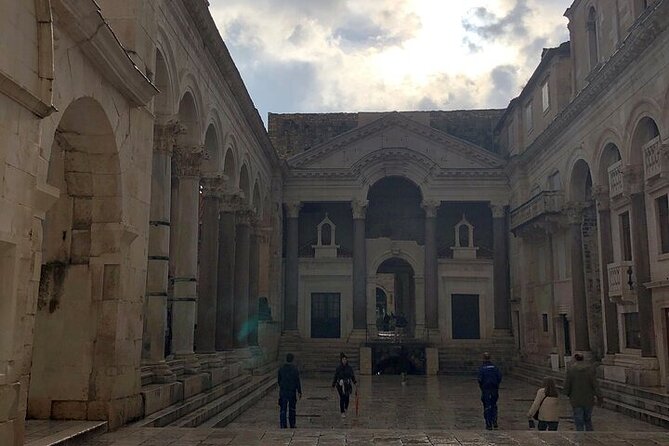
The Golden Gate is the palace’s main entrance, and it is a big moment visually. But the tour goes beyond the architecture. You also see the statue of Gregory of Nin, and you learn why he matters for Split’s history and language.
This stop is about identity as much as it is about Roman power. Gregory of Nin is tied to cultural memory, so the guide uses the statue as a bridge between the palace era and later Croatian heritage. If you enjoy the way people and places carry meaning through time, this is the kind of stop that clicks.
It also helps you understand why tourists remember the gateway area. It is where scale and symbolism meet: an entrance built for authority, plus later history anchored in a specific figure.
This segment is about 10 minutes, with admission listed as free.
Stop 5, Riva Harbor: bronze model plus why the waterfront matters
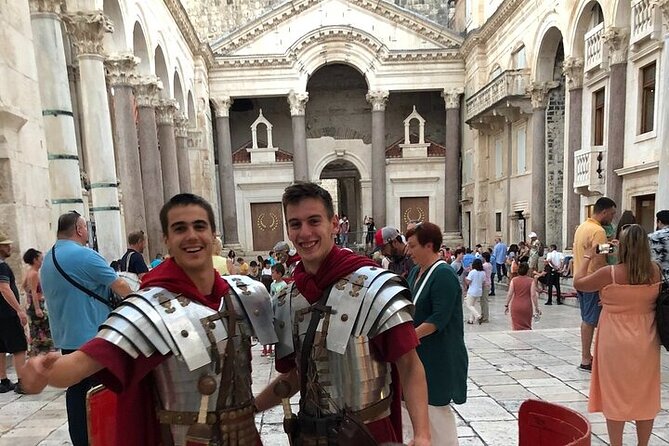
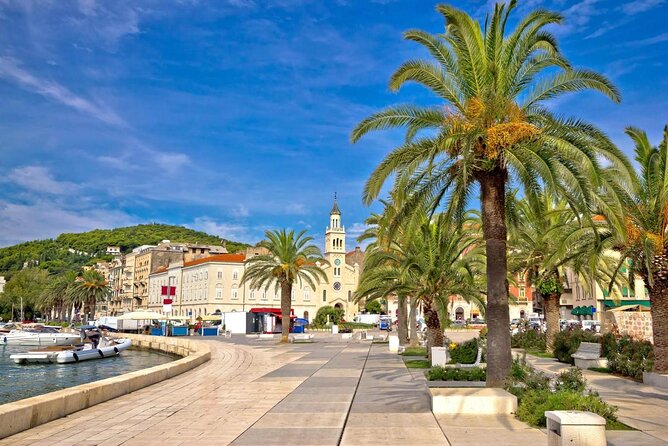
Then you shift from the palace interior to the Riva Harbor area. The tour includes a stop where you can see a bronze model of Diocletian’s Palace. That little “what you are seeing vs where it sits” visual can save you hours of guesswork later while you explore on your own.
From there, you learn about the history of Split’s Riva promenade. In practical terms, this turns a scenic waterfront into something you can interpret. Instead of just thinking, pretty view, you understand how the city’s relationship to the sea evolved and why the promenade became central.
This stop is about 15 minutes, admission is listed as free, and it is a helpful reset in the tour. After the tight palace layout, the harbor area gives you breathing room, plus more space for photos and casual questions.
Stop 6, Fruit’s Square (Trg Brace Radic): Venetian walls and Marko Marulić
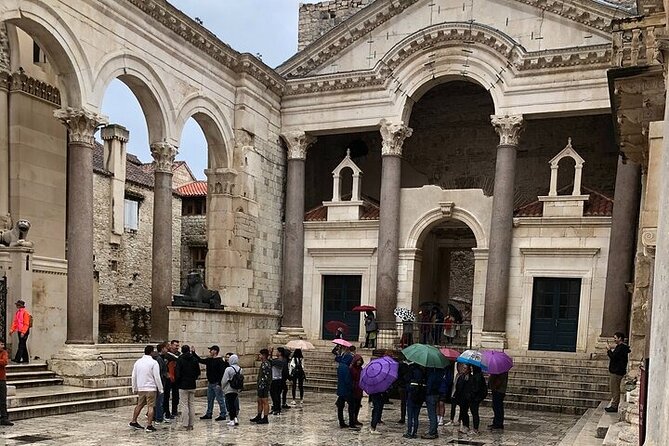
Fruit’s Square, also called Trg Brace Radic, brings the walk into Split’s later layers. This is where the tour adds cultural depth by connecting a physical place to literature and civic identity.
You learn about a 15th-century Venetian citadel tied to the square. That matters because it shows the city did not stop evolving once the palace era ended. It kept rebuilding itself, and the “center” of the city moved and transformed.
The tour also highlights Marko Marulić, described as the father of Croatian literature. That is a strong cultural anchor. If you want to understand Split beyond Roman ruins, this stop helps you connect local pride to real historical figures.
This segment runs about 10 minutes, with admission listed as free.
Stop 7, Split Synagogue: a pass-by with historical context
The last stop is the Split Synagogue area. The tour description says you pass by the synagogue and learn about the history of the Jewish people in Split.
Admission here is listed as not included, which tells you something important for planning. This stop is meant as an overview stop, not a full visit. If your priority is an interior synagogue visit, you will likely want to plan separate time and check entry details when you are in town.
This segment is about 10 minutes. In a short tour, that can still be valuable if the guide gives you a solid framework for understanding why this building exists in the city’s story.
The guide factor: why this tour keeps getting praised
Across the guide names mentioned, one theme shows up again and again: guides are prepared and the storytelling feels organized. Names that come up include Maria, Doris, and Mia Anica. Multiple comments specifically call out strong Italian and a teaching style that keeps it interesting.
That matters because Diocletian’s Palace can be visually confusing. You might stand in front of stone arches and think, cool, but what am I looking at? A good guide turns the chaos into a map of cause and effect, explaining how Diocletian rose to power and what the palace was meant to do.
I also like that some guides are described as friendly and engaging, with “stories and secrets” that make the places feel lived-in rather than academic. Even if you are not hunting trivia, those little connections help you remember what you saw once you step back out into Split.
And since the tour is private for your group, you can ask questions without feeling like you are speaking into a crowd. If you care about one detail more than others, you are more likely to get a tailored explanation.
Is $69.39 worth it for a 90-minute walk?
At $69.39 per person, this is not the cheapest way to see Diocletian’s Palace. But it can be good value when you consider what you get for the price.
First, the time is tight and focused. You are not spending your day zigzagging across town hoping you picked the right route. In about 90 minutes, you cover the key palace anchors plus a few essential city highlights like the Riva promenade and Fruit’s Square.
Second, admission is listed as free for most stops. That reduces the “extra fees surprise” feeling. The one notable exception is the Split Synagogue, where admission is not included, so you have a clear expectation about what is and is not covered.
Third, the tour includes a mobile ticket and a professional guide setup. In places like Split, where the old streets can be confusing and the palace layout is dense, a guide can be worth real money. You are paying to save time and to avoid guesswork.
If you are the type who loves self-guided exploration, you might be tempted to skip a guided walk. But if you want the palace to make sense quickly, this price can feel fair.
Who this tour suits best
This is a great fit if you:
- Want an Italian-language explanation of Diocletian’s Palace and major city landmarks
- Prefer a focused walk over hours of wandering
- Like history that explains how power and people shaped the city layout
- Enjoy culture stops, like Marko Marulić and the synagogue area, not only Roman architecture
It is less ideal if:
- High steps are a problem for you, since this area includes steps and uneven stone streets
- You want long, museum-style time at every stop, because this is intentionally a short, highlight-driven route
- You expect every stop to include entry. The synagogue is a pass-by, and the substructures museum portion is not visited during the tour
Should you book this Italian Split Palace tour?
Book it if you want your first visit to Split to click fast. The route is efficient, the stops are carefully chosen, and the guide quality seems to be the real strength. If Diocletian’s Palace feels like a maze to you, this tour is the kind of “get your bearings fast” experience that helps the rest of your trip make sense.
Hold off if you are mainly after deep museum time, or if steps and uneven surfaces are a major concern. Also consider booking separately if synagogue interior access is a must for you, since that admission is not included here.
If you want a smart cultural introduction in about 90 minutes, this one is an easy yes.
FAQ
How long is the Private History Split Walking Tour in Italian?
It’s approximately 1 hour 30 minutes.
Where does the tour start and end?
It starts at Peristil ulica, Peristil ul., 21000 Split, Croatia, and ends back at the meeting point.
Is this a private tour?
Yes. It’s listed as a private tour or activity, and only your group will participate.
Do I need tickets for the stops?
Admission is listed as free for several key palace and city stops. The Split Synagogue admission is not included.
What language is the tour in?
The tour is described as a Split walking tour in Italian.
What should I know about timing and operating hours?
The activity is shown as operating daily from 9:00 AM to 8:00 PM within the listed date range. Confirmation is received within 48 hours of booking, subject to availability.
Split, the Longer Story

Walk It: More of Split at Ground Level

Inside the Palace Walls
Freshly written up around Split
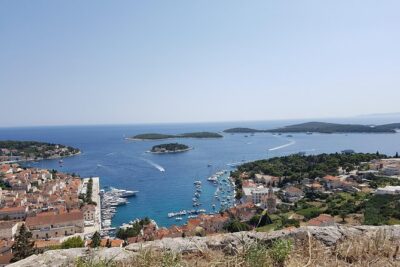


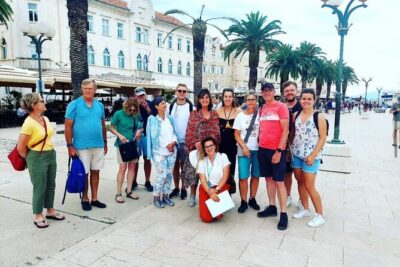

Split Old Town & Palace Walks, top to bottom.
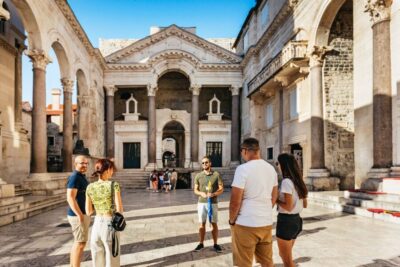 ★ 4.9Split: Old Town and Diocletian Palace Walking TourFrom $174,727 reviews
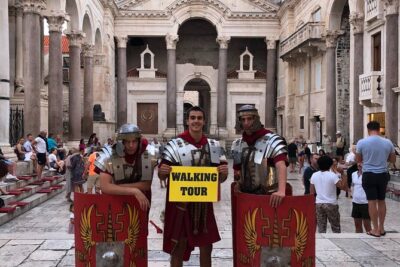 ★ 5.0Walking Tour of Split and Diocletian’s PalaceFrom $482,588 reviews
 ★ 5.0Split & Diocletian’s Palace Walking TourFrom $211,125 reviews
 ★ 5.0Walking Tour of Split with a ‘Magister’ of HistoryFrom $341,122 reviews
 ★ 5.0Split Walking Tour with Professor of HistoryFrom $24926 reviews
 ★ 4.7Split: Diocletian Palace & Old Town Guided Walking TourFrom $17882 reviews
 ★ 4.8Split: Game of Thrones Tour with Diocletian’s Palace CellarFrom $41545 reviews
 ★ 5.0Diocletian’s Palace and Old Town SMALL GROUP Walking TourFrom $16502 reviews
Browse the lists this tour appears in