
REVIEW · SPLIT OLD TOWN & PALACE WALKS
Split Walking Tour with History Professor
Split has a habit of turning history into stories. This walking tour pairs you with Mario, a history professor type, so you move through Roman to modern Split with real context, not memorized facts. I especially love how the pace keeps your brain busy (substructures, Peristyle, then straight into the medieval and modern core). I also like the lively delivery, with humor and questions that keep the group awake. One drawback to plan for: it is not for wheelchair users, and two key sites (the Cathedral of Saint Domnius and the Temple of Jupiter) are listed as admission excluded, so you may want a bit of cash or card ready.
You start at the harbor area with a model of the historical core, then the route tightens into the palace heart and spills out toward later eras. The tour is priced at $23 per person for about two hours, which feels fair when you consider how much ground you cover and how much you get from a guide who can explain what you are actually seeing.
You will finish with a new way of looking at Split. You will also leave knowing why the city looks the way it does, from Roman foundations to outside influences like Venice, the Ottomans, and Napoleon, plus plenty of Game of Thrones locations along the way.
In This Review
- Key highlights worth your time
- Why this Split walking tour works so well
- Starting at Riva Harbor and the Brass Gate: get your bearings first
- Diocletian’s Palace substructures, Peristyle, and Vestibule
- Cathedral of Saint Domnius: a stop that adds meaning
- Temple of Jupiter: one more Roman anchor before you leave the palace world
- Golden Gate to Grgur Ninski statue: Roman power becomes public symbolism
- Marmontova Ulica, Prokurative, and Fruit’s Square: the city after the palace
- Game of Thrones locations, legends, and local life, explained in plain language
- Timing, comfort, and what to expect in the real world
- Price and value: what $23 actually buys you
- Who this tour is best for, and who should consider alternatives
- Should you book this Split walking tour?
- FAQ
- How long is the Split Walking Tour with History Professor?
- What does the tour cost?
- Where do I meet the guide?
- What language is the tour in?
- Is entry included for the Cathedral of Saint Domnius and Temple of Jupiter?
- What stops are included during the tour?
- Is the tour suitable for everyone?
- What should I bring?
Key highlights worth your time
- A history professor style approach that makes the city’s layers easy to follow
- Small private groups for more back-and-forth and better attention
- Diocletian’s Palace focus, but with the medieval and modern center built in
- Game of Thrones locations connected to real streets and landmarks
- A stop-by-stop route that keeps you walking and learning for about two hours
- Excellent start-to-finish flow, from Riva Harbor bearings to Fruit’s Square
Other walks through the palace quarter and the alleys behind it
- Split: Old Town and Diocletian Palace Walking Tour★ 4.9 · 4,727 reviews
- Walking Tour of Split and Diocletian’s Palace★ 5.0 · 2,588 reviews
- Split & Diocletian’s Palace Walking Tour★ 5.0 · 1,125 reviews
- Walking Tour of Split with a ‘Magister’ of History★ 5.0 · 1,122 reviews
Why this Split walking tour works so well
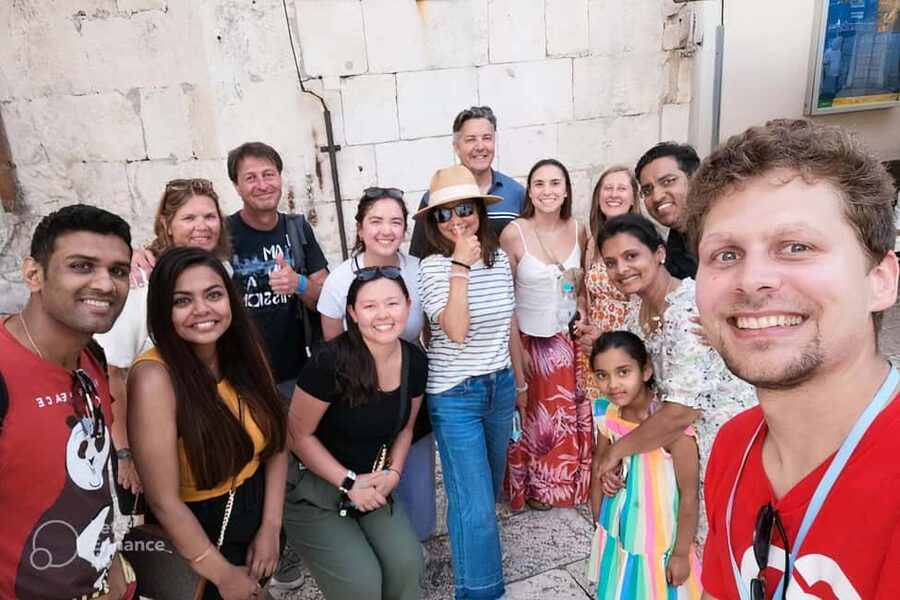
This is not a slow “look at the pretty buildings” walk. The strength is that Mario explains the logic behind what you are seeing. You start in the Roman core, but you are not stuck in one era. Instead, the story keeps moving, so you see palace, medieval city, and modern Split as one connected place.
I love that the tone feels friendly and human. Mario’s delivery is built around engagement, with questions that pull you into the explanation. That matters because Diocletian’s Palace can feel like a maze if you are just wandering. With a guide asking you to think and respond, it clicks faster.
The tour also lands in the sweet spot for value. For a flat $23, you are getting a live English guide, a tightly organized route, and time at the major landmarks rather than quick photo stops. You also get local life perspective and legends mixed into the facts, so the city stays vivid instead of becoming a checklist.
Starting at Riva Harbor and the Brass Gate: get your bearings first
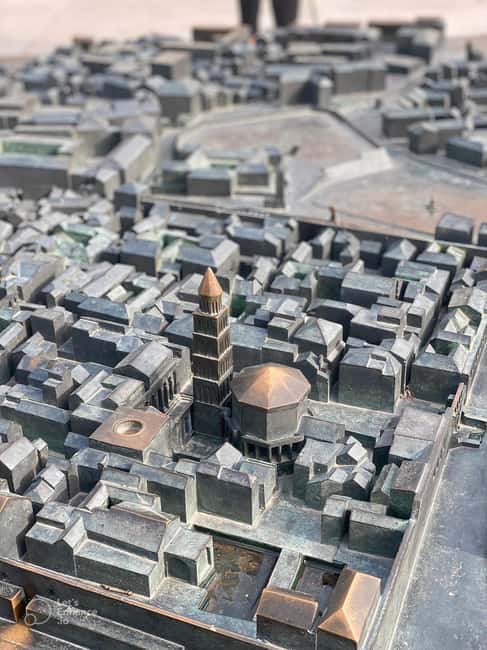
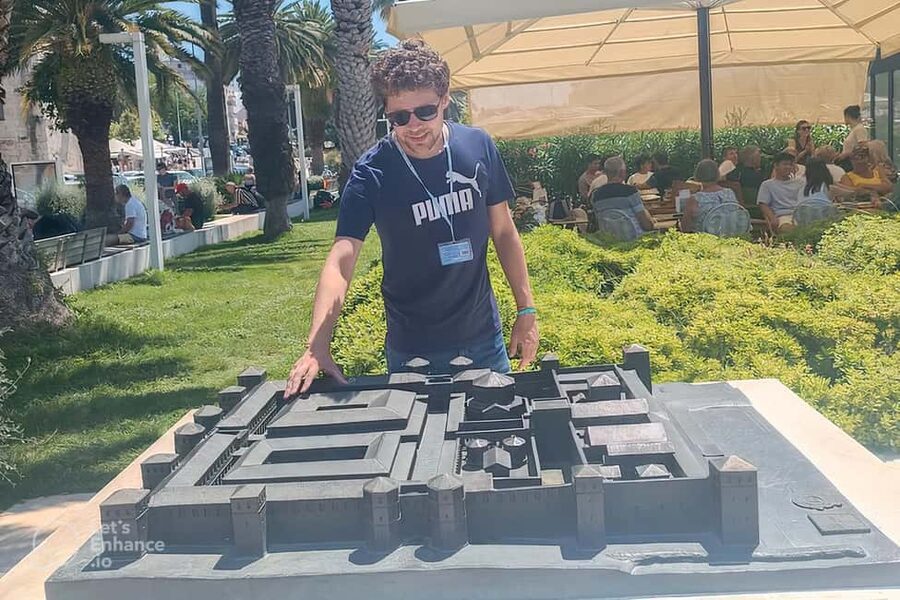
Your first stop is at a model of the historical core of Split, starting near Riva Harbor. This short introduction is not fluff. It sets the mental map, so later when you move into Diocletian’s Palace and the medieval center, you understand where you are in relation to the whole city.
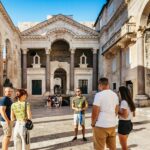
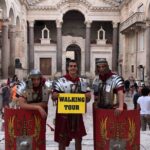
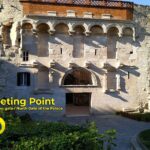
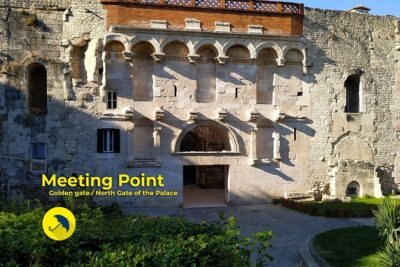
Next, the meeting point is noted as the Brass Gate of Diocletian’s Palace, which is useful because you can orient yourself before you meet your guide. Once you are on the route, expect the group to move at a steady walking pace. It is long enough to feel like a real outing, short enough that you are not exhausted before you see the best parts.
If you have never been to Split, this opening helps a lot. Even if you have, it still helps you catch details you might otherwise miss, like how the palace connects to later streets and plazas instead of sitting alone as a museum piece.
Diocletian’s Palace substructures, Peristyle, and Vestibule
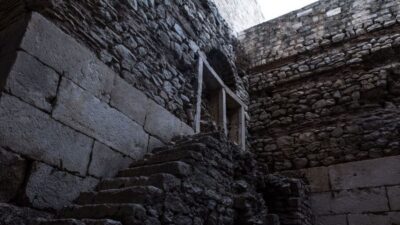
The tour then leans into the reason Split is famous in the first place: Diocletian’s Palace. You start with the substructures, which is one of those places where seeing it in person beats reading about it. The substructures give you a sense of the building’s scale and the way space was designed to support the palace above.
From there, you move into the Peristyle. This is the kind of place where you can feel the geometry. Even without getting lost in architectural jargon, you can understand why it became the “center” for later life in and around the palace. Mario’s explanations help you connect the dots between Roman planning and what you experience walking through today.
Then comes the Vestibule. This stop is shorter, but it works as a bridge. You are moving from palace structure to the wider city story, and Mario uses the handoff well. The timing is tight on purpose: about 5 minutes for the substructures, then around 10 minutes each for the Peristyle and Vestibule. That is enough time to look closely and still keep the storyline moving.
One small practical note: these palace areas can mean uneven footing and lots of standing. Bring comfortable clothes and shoes, because you will be on your feet through most of the tour.
Cathedral of Saint Domnius: a stop that adds meaning
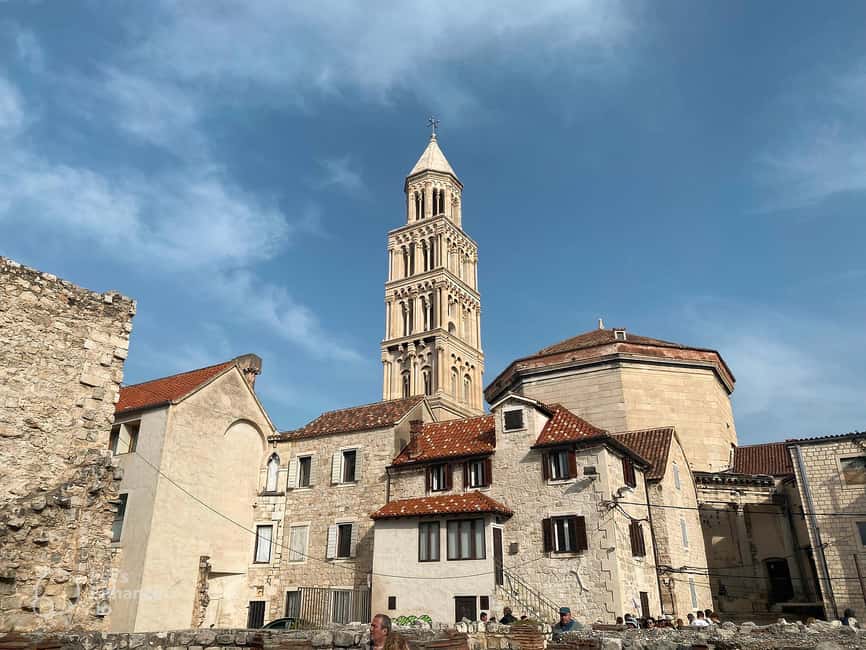
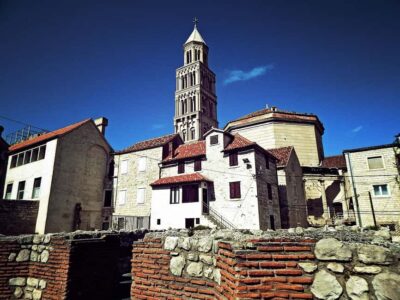
After the palace core, you head to the Cathedral of Saint Domnius. The walk keeps changing the feeling of the city, and this stop adds a key layer: religion and civic identity growing alongside older structures.
This stop is allotted about 20 minutes. The important detail is that admission is excluded, so you might want to plan for an extra cost if you go inside during that window. If you are the type who likes to fully explore inside churches, it is worth factoring that into your schedule so you do not feel rushed.
Even if you do not enter, the cathedral stop still matters because it anchors the city’s medieval and later importance. With the guide’s context, you can read the landmark instead of just photographing it.
More Split covered at walking pace
- Krka Waterfalls tour with Trogir Walking tour and Krka panoramic boat cruise
★ 5.0 · 1,659 reviews - Split Walking Tour with Professor of History
★ 5.0 · 926 reviews - Split: Diocletian Palace & Old Town Guided Walking Tour
★ 4.7 · 882 reviews - From Split: Krka Waterfalls Cruise & Trogir Walking Tour
★ 4.7 · 681 reviews - Split: History and Heritage Walking Tour
★ 4.9 · 650 reviews
Temple of Jupiter: one more Roman anchor before you leave the palace world
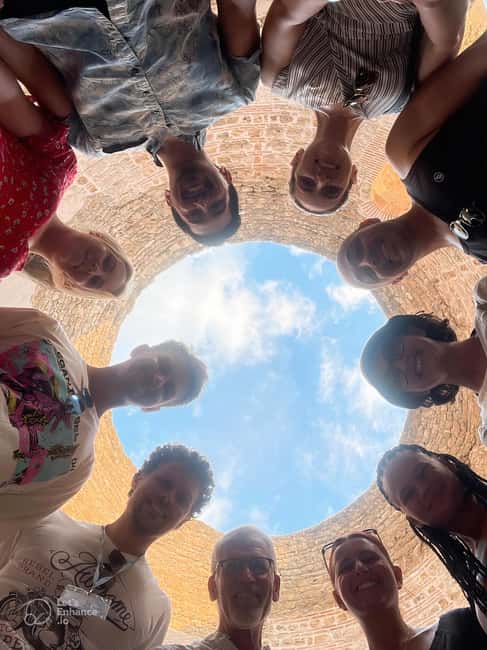
Next is the Temple of Jupiter, again with about 10 minutes on the schedule. Like the cathedral, admission is excluded, so treat it as a “plan ahead” stop if you want to go in.
This is the moment where the tour’s structure starts to shine. You have already seen the palace as a system through the substructures and Peristyle. Now the Temple of Jupiter gives you another Roman anchor before you shift toward later landmarks outside the palace complex.
If you like understanding how one part of Split relates to another, this is a good point to slow down mentally. Mario’s professor style approach helps you place what you are looking at within the larger timeline of the city, including outside influences that arrived later and shaped what the streets became.
Golden Gate to Grgur Ninski statue: Roman power becomes public symbolism
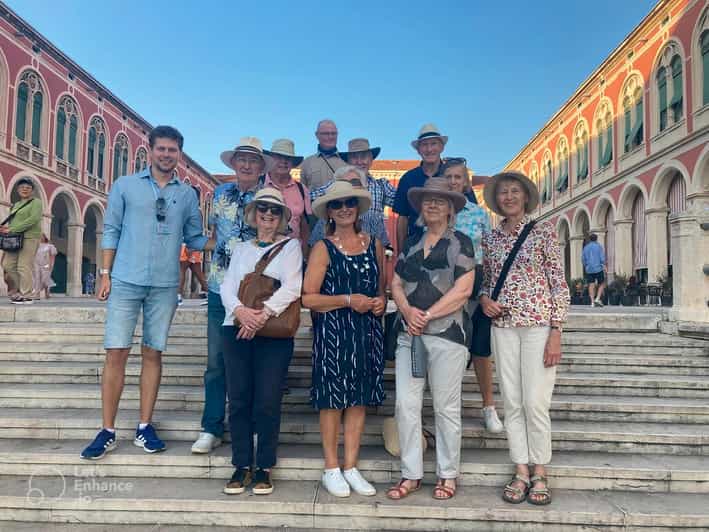
Then you reach the Golden Gate, with about 10 minutes. This is one of those places where a name alone does not fully communicate why it matters. The value of the guided time is that Mario connects it to what the gate represents in the palace layout and what it signals as you move from Roman fortification to the life of the city.
After that comes the Grgur Ninski statue, another about 10 minutes. This stop changes the mood from ancient architecture to a more human, public symbol. Mario ties the statue and surrounding context into the larger story of how Split’s identity is built in layers.
If you are a Game of Thrones fan, this is also the stage where the tour’s pop culture connections begin to feel less random. You will hear about locations tied to the series, but you will also understand them as real parts of the city, not staged scenes.
Marmontova Ulica, Prokurative, and Fruit’s Square: the city after the palace
Now you move fully into central Split. You spend time on Marmontova Ulica, then on the Prokurative, then at Fruit’s Square (Trg Brace Radic). Each gets around 10 to 15 minutes depending on the stop, with the square as the longer final segment at about 15 minutes.
This is where you feel the city’s later influences. The tour explicitly frames Split through outside forces like Venice, the Ottomans, and Napoleon, and you can see why once you are walking the streets and looking at the civic spaces. The guide helps you connect those influences to how the city developed, instead of treating it as a trivia list.
Fruit’s Square is a great landing point for the end of a tour like this. By the time you reach it, you have enough context to recognize why plazas and public squares matter. You can also continue on afterward easily, because you are in the center rather than tucked back near the palace walls.
Game of Thrones locations, legends, and local life, explained in plain language
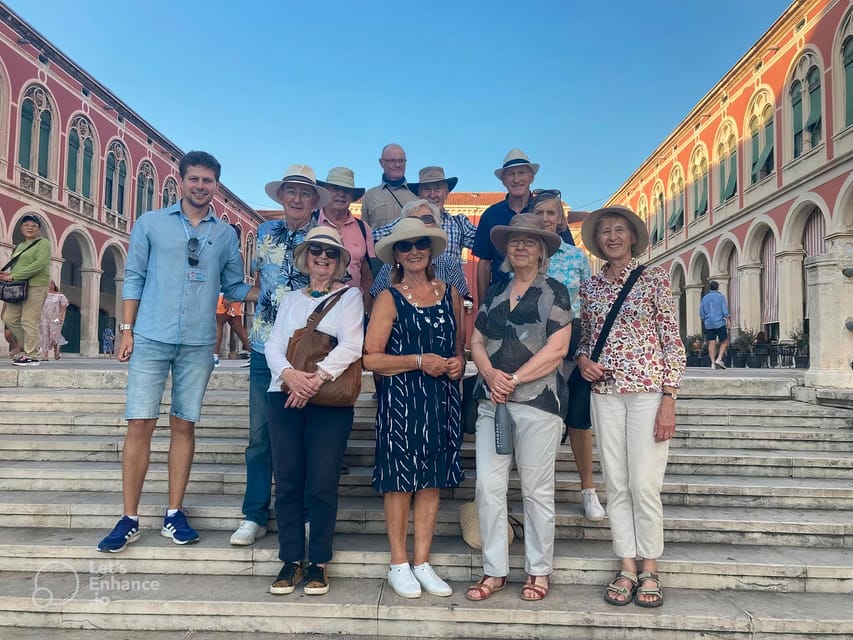
One of the most praised parts of this tour is how it stays entertaining without turning the history into a performance. Mario brings humor and keeps you involved, which makes the Game of Thrones references feel integrated rather than forced.
You also get legends and local life insights mixed into the walk. This is not just about what happened. It is about how people talk about the place and how the city’s stories survive through everyday conversation. That is why the tour tends to stick with you after the walk ends.
If you are trying to decide between a strictly historical tour and one that includes pop culture, this one does both. It gives you Roman structure, medieval and modern development, and the Game of Thrones tie-ins. The key is that the references are used to help you remember landmarks, not replace understanding.
Timing, comfort, and what to expect in the real world
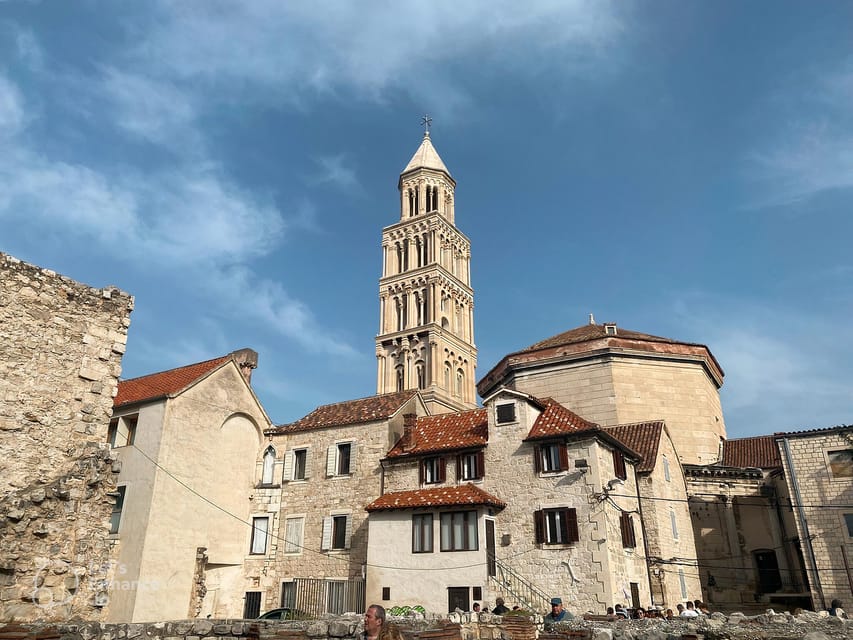
The tour runs about two hours, with the highlights noting a feel closer to 2 hours and 15 minutes. That is a good length for a first day in Split, because you still have time after to wander on your own while your new map is fresh.
Bring comfortable shoes and comfortable clothes. You will be walking through historic areas and moving between several key stops, including the palace interior areas and the central city streets. This is not a sit-and-snack tour.
Also, it is suitable for all ages, but it is not suitable for wheelchair users. If you have mobility limits, you might want to think carefully about how long you can stand and navigate uneven historic ground.
Price and value: what $23 actually buys you
At $23 per person for about two hours, you are paying for three things that are hard to replicate alone: a clear storyline, smart pacing, and someone who can point out what matters in each stop.
If you try to self-tour Diocletian’s Palace, you can see a lot. But it is easy to leave feeling like you photographed lots of walls without understanding the city’s layers. Here, you are guided through Roman foundations, then medieval and modern Split, with the route designed so you learn while you walk.
Included stops cover the major landmarks through the day’s arc: start at the Riva Harbor model area, then substructures, Peristyle, Vestibule, Cathedral of Saint Domnius, Temple of Jupiter, Golden Gate, Grgur Ninski statue, Marmontova Ulica, Prokurative, and Fruit’s Square.
One cost consideration: admission is excluded for the Cathedral of Saint Domnius and the Temple of Jupiter. So your total trip cost depends on whether you want to enter. Still, the guide portion and route are solid value, especially given the small private group format.
Who this tour is best for, and who should consider alternatives
This tour is a great fit if you want to understand Split quickly, especially if it is your first time in Dalmatia. It is also excellent for people who love history but do not want a lecture. Mario’s professor style delivery keeps it structured, and the humor and interaction keep it human.
It is also ideal if you are a Game of Thrones fan who wants the references connected to real places. Instead of hunting locations on your own and missing the surrounding context, you get a guided path that explains what you are seeing.
I would consider skipping it if you want a very leisurely sightseeing experience where you stop and sit often. This is paced and stop-based. You can still enjoy it, but it is built for walking and learning, not for long breaks.
Should you book this Split walking tour?
If your priority is to see Diocletian’s Palace and then understand how Split grew into medieval and modern city life, I think you should book it. The strongest reason is the guide, Mario, who brings historical context in an engaging way, with humor and questions that keep you mentally involved.
It also works well because the route is practical. You do not waste the first part of your day figuring out where everything fits. You get the bearings at Riva Harbor, then you walk the palace sequence, then you finish in the central squares where it is easy to keep exploring afterward.
Just plan for the fact that the Cathedral of Saint Domnius and the Temple of Jupiter list admission as excluded. If you want to go inside both, budget for that and arrive with a bit of patience for the short time slots.
FAQ
How long is the Split Walking Tour with History Professor?
The tour is listed as 2 hours, and the highlights mention about 2 hours and 15 minutes.
What does the tour cost?
It is $23 per person.
Where do I meet the guide?
The guide waits next to the Brass Gate of Diocletian’s Palace.
What language is the tour in?
The tour is in English with a live guide.
Is entry included for the Cathedral of Saint Domnius and Temple of Jupiter?
Admission is excluded for both the Cathedral of Saint Domnius and the Temple of Jupiter.
What stops are included during the tour?
The tour includes the Riva Harbor historical core model start, Diocletian Palace substructures, the Peristyle, the Vestibule, the Cathedral of Saint Domnius, the Temple of Jupiter, the Golden Gate, Grgur Ninski statue, Marmontova Ulica, Prokurative, and Fruit’s Square (Trg Brace Radic).
Is the tour suitable for everyone?
It is appropriate for all ages, but it is not suitable for wheelchair users.
What should I bring?
Wear comfortable shoes and comfortable clothes.
Split, the Longer Story



Walk It: More of Split at Ground Level

Inside the Palace Walls
Freshly written up around Split
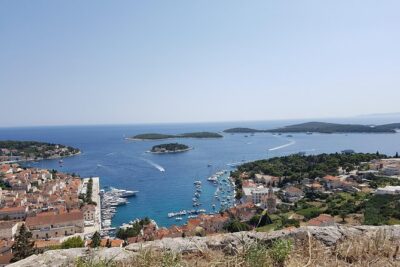


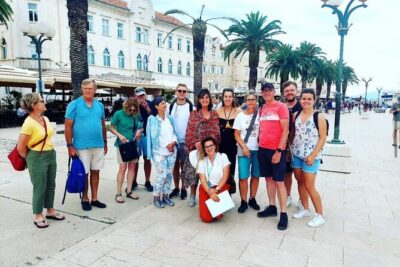

Split Old Town & Palace Walks, top to bottom.
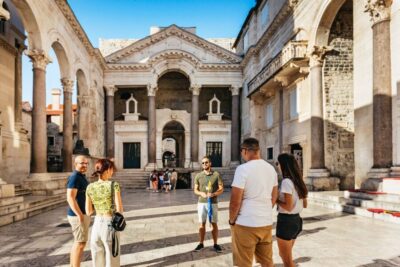 ★ 4.9Split: Old Town and Diocletian Palace Walking TourFrom $174,727 reviews
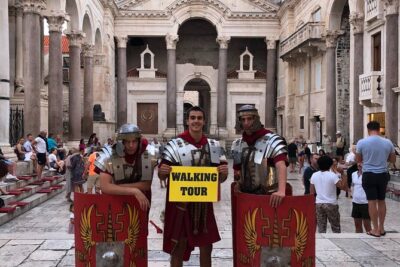 ★ 5.0Walking Tour of Split and Diocletian’s PalaceFrom $482,588 reviews
 ★ 5.0Split & Diocletian’s Palace Walking TourFrom $211,125 reviews
 ★ 5.0Walking Tour of Split with a ‘Magister’ of HistoryFrom $341,122 reviews
 ★ 5.0Split Walking Tour with Professor of HistoryFrom $24926 reviews
 ★ 4.7Split: Diocletian Palace & Old Town Guided Walking TourFrom $17882 reviews
 ★ 4.8Split: Game of Thrones Tour with Diocletian’s Palace CellarFrom $41545 reviews
 ★ 5.0Diocletian’s Palace and Old Town SMALL GROUP Walking TourFrom $16502 reviews
Browse the lists this tour appears in