
REVIEW · SPLIT OLD TOWN & PALACE WALKS
Walking tour of Split with an Art Historian
A narrow street can tell you more than a museum map. This small-group Split walk uses art history and palace architecture to help you read Diocletian’s world as you stroll.
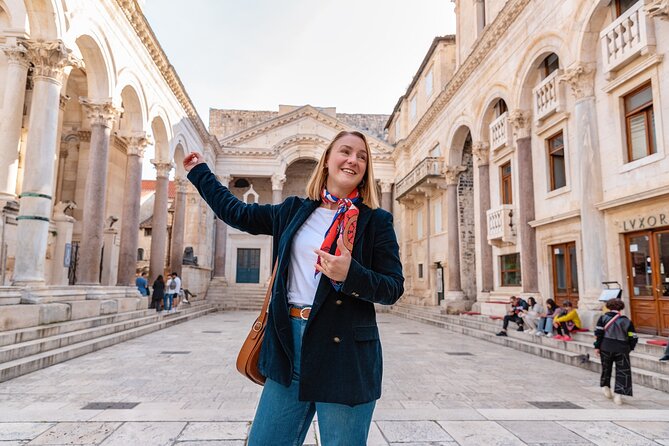
I like how the tour is timed to keep the story moving, not stuck in one spot. I also love that Josipa’s explanations connect the Roman layout to what you see today, including the spots locals actually use for photos and stories.
One thing to keep in mind: there are steps and some uneven ground, so if walking is tough for you, plan carefully.
In This Review
- Key things I’d circle before you go
- Start in Strossmayer Park, then let water explain Split
- Diocletian’s Palace towers: Tower 2 and the “why Split is different” lesson
- Gregory of Nin: toe luck, Croatian sculpture, and a statue you will remember
- The Golden Gate and Cardo: when Roman streets start to make sense
- Dioklecijanova and the hidden garden feeling
- The Iron Gate: the platinum gate story that makes the gates feel human
- Peristyle and Saint Domnius: the Roman mausoleum that became a cathedral
- Let Me Pass Street: almost too small, and still famous
- Vestibulum of Diocletian’s Palace: photos, acoustics, and a quick culture bonus
- Palace substructures to Riva: a mood shift and a smart “not everything” choice
- Riva Harbor ending: orientation you can use the same day
- Price, pace, and the value of small-group art history
- Should you book Josipa’s Split art historian walk?
- FAQ
- How long is the Walking tour of Split with an Art Historian?
- What does the tour cost and is it in English?
- Does the tour include paid sites like the cathedral or Diocletian’s substructures?
- How many people are in the group?
- Will the tour run in bad weather?
- Is the walk mostly flat, and are there steps?
- Who is the guide and can I bring a pet or service animal?
Key things I’d circle before you go
- Strossmayer Park water story sets the tone right from Đardin, the local name for Strossmayer Park
- Seven-meter Gregory of Nin stops the walk for folklore, plus a famous toe-rub tradition
- Golden Gate to Cardo Maximus turns Diocletian’s Palace layout into something you can picture immediately
- Peristyle and Saint Domnius from the outside keeps the visit ticket-free, with clear context for what you are seeing
- Let Me Pass Street is short, skinny, and backed by a surprising 18th-century reference
- Riva ending + model of Old Town helps you orient for the rest of your Split days
Other walks through the palace quarter and the alleys behind it
- Split: Old Town and Diocletian Palace Walking Tour★ 4.9 · 4,727 reviews
- Walking Tour of Split and Diocletian’s Palace★ 5.0 · 2,588 reviews
- Split & Diocletian’s Palace Walking Tour★ 5.0 · 1,125 reviews
- Walking Tour of Split with a ‘Magister’ of History★ 5.0 · 1,122 reviews
Start in Strossmayer Park, then let water explain Split
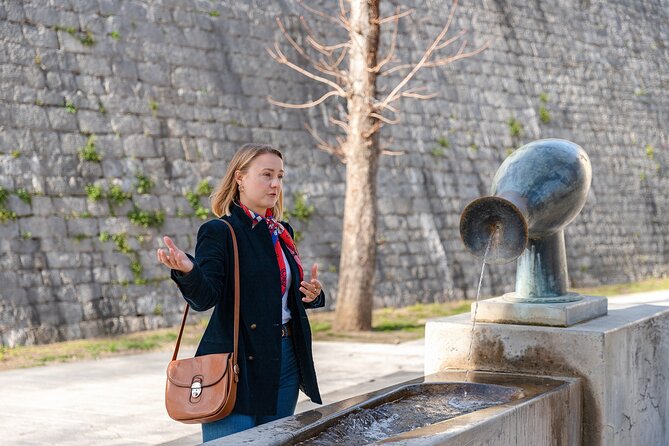
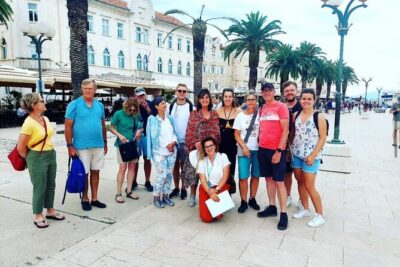
Your tour begins in Strossmayer Park, right by the central fountain, in the middle of Đardin, the name locals use. That first stop matters. Instead of jumping straight to Roman stone, Josipa starts with water, and how it brought life to the palace for more than 17 centuries. It’s a smart way to get your head in the right century fast.
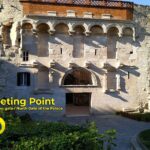
This opening also gives you an easy reset for the rest of the walk. You get a clear mental link between the peninsula, the palace, and the daily needs of a huge complex. And since the group meets near Ul. kralja Tomislava, it’s simple to find on foot or by public transport.
Diocletian’s Palace towers: Tower 2 and the “why Split is different” lesson
The next stretch keeps it real. You’ll start with Tower 2 of Diocletian’s palace. It’s not glamorous, and that’s the point. Josipa uses this quieter corner to explain what makes Split unusual compared to other Roman remnants. You’ll get a sense of how the palace was built as a system, not just a pretty backdrop.
Then you move on quickly, because the best part of this walk is momentum. The tour doesn’t drag. Each stop has a job: help you understand what you’re looking at, then move you to the next piece of the puzzle.
Gregory of Nin: toe luck, Croatian sculpture, and a statue you will remember
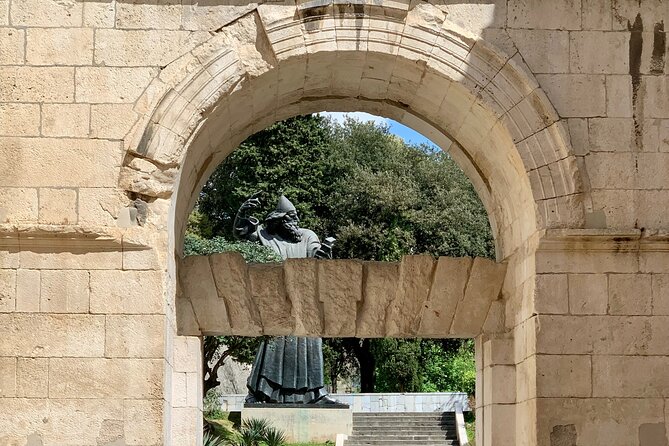
Before you enter the palace area through one of the gates, you stop at the Grgur Ninski statue, a bronze figure about 7 meters tall. This is the Gregory of Nin monument by Croatian sculptor Ivan Mestrovic. Josipa’s framing is practical. You learn why this statue became embedded in local popular culture, not just why it’s tall or old.
And yes, you’ll get the classic advice about rubbing Gregor’s toe for good luck. It’s a tiny action, but it helps you understand how history in Split is lived, not locked behind glass.
The Golden Gate and Cardo: when Roman streets start to make sense
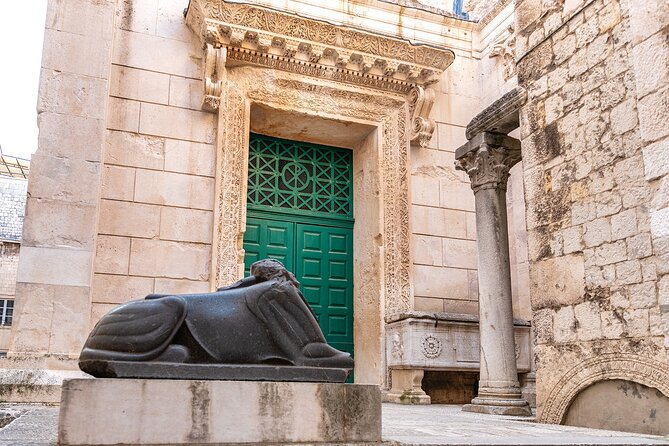
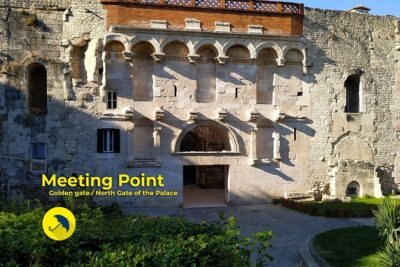
The Golden Gate is one of the northern entrances to Diocletian’s Palace, and it’s also one of the key entry points from the time of the emperor. Josipa walks you through the “intriguing details” here, and then you do something that many first-time visitors never manage: you walk the palace’s main north-south street line.
That street is the Cardo, and the walk along it is where the tour starts to feel like a map you can physically trace. You stop at just enough points to orient your brain. Then you keep going, until the Peristyle starts coming into view.
More Split covered at walking pace
- Krka Waterfalls tour with Trogir Walking tour and Krka panoramic boat cruise
★ 5.0 · 1,659 reviews - Split Walking Tour with Professor of History
★ 5.0 · 926 reviews - Split: Diocletian Palace & Old Town Guided Walking Tour
★ 4.7 · 882 reviews - From Split: Krka Waterfalls Cruise & Trogir Walking Tour
★ 4.7 · 681 reviews - Split: History and Heritage Walking Tour
★ 4.9 · 650 reviews
Dioklecijanova and the hidden garden feeling
After the gate, the tour crosses Dioklecijanova, tied to the ancient Cardo Maximus, the main Roman roadway through the palace. You aren’t just looking at walls. You’re moving through the same kind of structure Diocletian’s planners used to connect spaces.
Then comes the short stop for a hidden garden inside the palace. The tour doesn’t spend forever here, but it’s a valuable contrast. Diocletian’s Palace can feel like stone and geometry until you catch those small pockets of calm. Josipa uses that shift to remind you that the palace isn’t frozen in time. People have been adapting it for centuries.
The Iron Gate: the platinum gate story that makes the gates feel human
From the north-western corner, you reach the Iron Gate. Josipa gives you the story of why it was considered the city’s platinum gate through history. The point is not to memorize a single fact. It’s to understand why different entrances mattered, who used them, and what symbolism and value looked like in different eras.
This is one of those stops that changes how you view the rest of the palace. After the Iron Gate story, the gates stop looking like random Roman details. They start reading like decisions, made for movement, control, and status.
Peristyle and Saint Domnius: the Roman mausoleum that became a cathedral
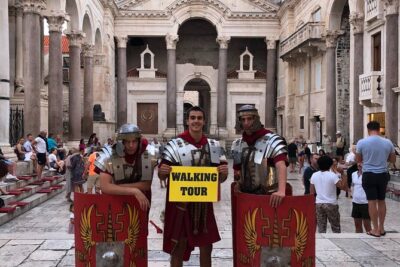
Approaching the Peristyle is the big visual moment. As you stroll along the Decumanus, the scale of the palace clicks into place. Josipa explains the origins and history of the Peristyle, and she’s good at keeping it clear even when the story spans Roman and later Christian use.
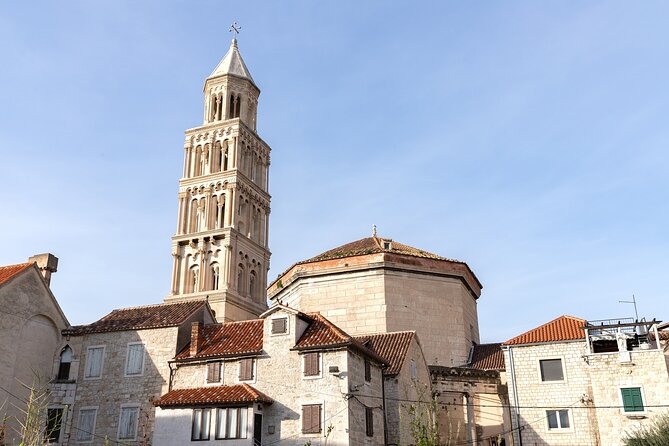
On the Peristyle, you also see the Cathedral of Saint Domnius. Here’s a key practical detail: the tour does not include entering the cathedral, and it does not include any paid sites or museums. You get the essentials from where you stand, plus enough context to know what you’re looking at, since it originally served as a mausoleum for the Roman emperor and then became a Christian cathedral.
If you want an indoor cathedral visit later, plan for that as a separate stop. This tour is built to keep you moving and ticket-free.
Let Me Pass Street: almost too small, and still famous
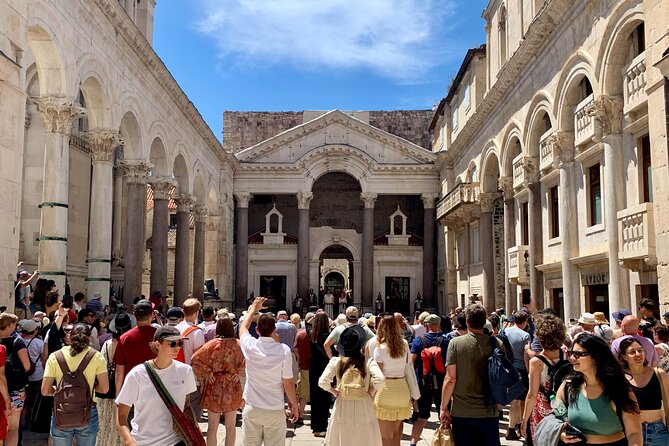
Then you get a very Split kind of surprise: Let Me Pass (Pusti me da prodjem) Street. It’s less than 10 meters long and only about 57 centimeters wide. Josipa frames it as more than a quirky fact. The street has a place in the memories of Split residents, so it became honored with a public monument elsewhere in town.
Even better, this is where the walk’s storytelling gets extra fun. The stop is tied to an 18th-century moment when Scottish architect Robert Adam listed this as one of the most beautiful European monuments. That kind of name-drop changes your perception immediately. You stop thinking of it as a joke narrow alley and start treating it like a famous detail of the city’s character.
Vestibulum of Diocletian’s Palace: photos, acoustics, and a quick culture bonus
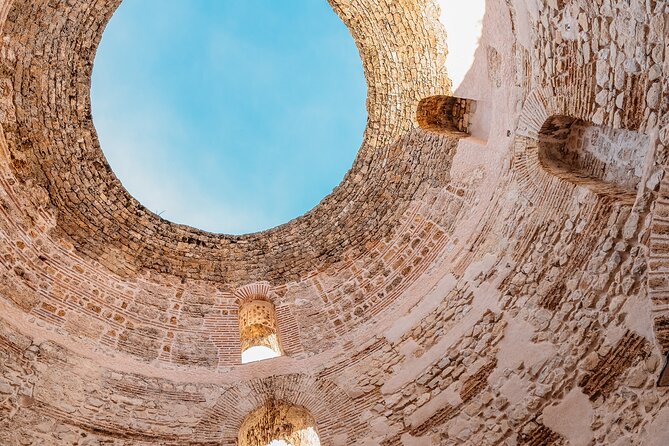
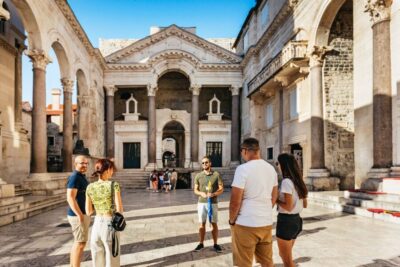
Next is the Vestibulum of Diocletian’s Palace. This is one of the most popular open-air photo spots for a reason: the setting is dramatic, and the architecture gives you natural lines for pictures.
Josipa adds a culture note here too. Because of the acoustics in this space, klapa singing is often performed. You might catch that kind of sound on your own later in Split, but even hearing about why the acoustics work helps you appreciate the space beyond the camera angle.
Palace substructures to Riva: a mood shift and a smart “not everything” choice
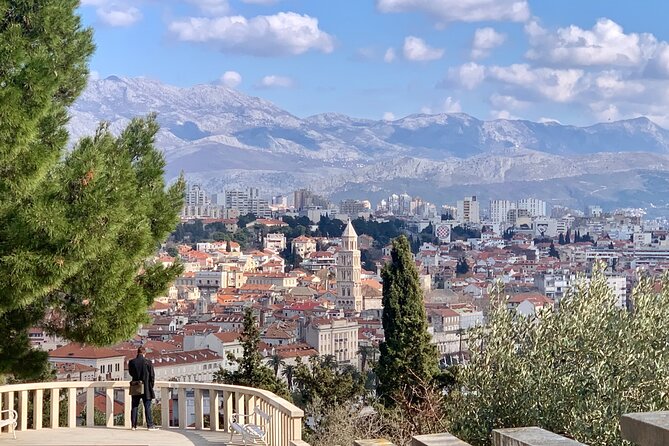
From the palace core, the tour uses a locals-style shortcut through the Diocletian Palace substructures, heading toward the Riva waterfront. This is a great way to understand how Split’s “wow” moments aren’t always in the brightest, main-square places.
You’ll notice the shift in atmosphere as you go from the Peristyle area to the quieter, darker substructures. One caution, though: the tour does not explore the substructures in their entirety, due to additional admission fees and time limits. Josipa keeps the experience focused, but if you want to go deeper, she can help you arrange a separate guided visit.
This is also where time management matters. In a 1 hour 40 minutes to 2 hour format, doing everything would mean seeing less of everything. This tour chooses depth of understanding in the major stops, then gives you a doorway to an optional follow-up.
Riva Harbor ending: orientation you can use the same day
The finale is Riva Harbor, a key meeting place that functions as a street, promenade, and square all at once. You take a leisurely stroll along part of it to reach the Fruit Square area.
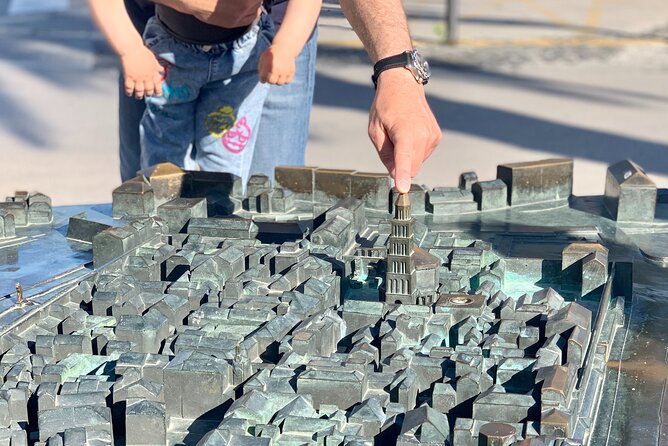
Then you finish with Maketa Grada Splita, the model of Split’s Old Town layout and topography. This stop is underrated. Once you see the city’s shape as a whole, you stop wandering like a random visitor and start planning like someone who gets it.
The tour concludes at a bronze model of Old Town on the waterfront, and Josipa uses that moment to recap and share her best tips for what to explore next.
Price, pace, and the value of small-group art history
The price is $30.23 per person for about 1 hour 40 minutes to 2 hours. That sounds simple until you compare it to what you actually get here: you get an art historian guided walk through the main reasoning behind Diocletian’s Palace, without paying to enter the paid attractions included on your own later.
A big part of the value is the small group size, with a maximum of 10 travelers. The experience also supports group discounts, and tickets are handled through a mobile ticket. Since the tour is offered in English, you don’t have to hunt for translation help while you’re trying to decode street layouts and gate names.
Pacing is another value point. In the way Josipa leads, you’re not just dragged from stop to stop. The walk leaves room for questions, and the structure is tight enough that you don’t end up feeling lost between major sights. Most walking is flat, but there are unavoidable steps and some uneven spots, so the walking style is best for people who can handle short climbs and rougher pavement for a couple of hours.
Also, you should know the tour runs rain or shine. If weather turns, the stop plan still works. Just come prepared with sun protection and a water bottle for hot weather.
Should you book Josipa’s Split art historian walk?
I think you should book this tour if you want a fast, readable introduction to Split’s most famous complex and you like understanding the “why” behind what you see. This is especially good for first-timers who feel overwhelmed by Diocletian’s Palace size. The route gives you named gates, key streets, and a logical path from the Peristyle outward to Riva.
It’s also a good choice if you love practical history. Josipa’s style connects Roman layout, medieval reuse, and today’s city habits, like why certain spots matter for photos or local tradition, including the Gregory of Nin toe-rub and the klapa acoustics in the Vestibulum.
Skip it only if you want an entry-heavy tour where you go inside multiple paid sites. This one explicitly does not include museums or paid sites, including not entering the cathedral and not doing the full substructures circuit.
FAQ
How long is the Walking tour of Split with an Art Historian?
It runs about 1 hour 40 minutes to 2 hours (approx.).
What does the tour cost and is it in English?
The price is $30.23 per person, and the tour is offered in English.
Does the tour include paid sites like the cathedral or Diocletian’s substructures?
No. The tour does not enter any museums or paid sites. You’ll see the Cathedral of Saint Domnius without entering, and the substructures are not explored in their entirety.
How many people are in the group?
The group size is limited, with a maximum of 10 travelers.
Will the tour run in bad weather?
Yes. The tour takes place rain or shine.
Is the walk mostly flat, and are there steps?
Most of the walk is flat, but the tour includes several unavoidable steps and some uneven areas in certain locations. Consider your comfort and safety if walking is difficult for you.
Who is the guide and can I bring a pet or service animal?
The guide is Josipa. Service animals are allowed, and pets are welcome if you contact before booking to discuss details so everyone is comfortable.
Walk It: More of Split at Ground Level

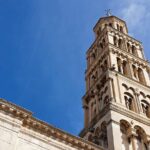
Inside the Palace Walls
Freshly written up around Split
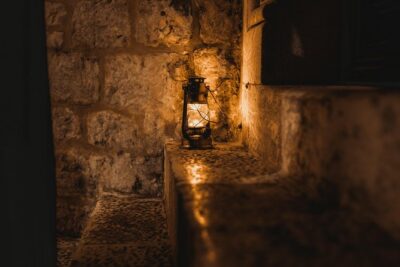
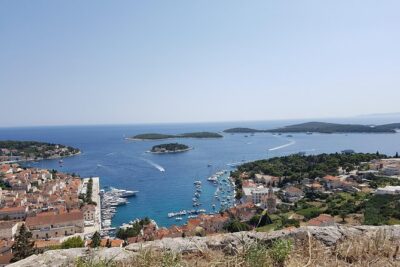



Split Old Town & Palace Walks, top to bottom.
 ★ 4.9Split: Old Town and Diocletian Palace Walking TourFrom $174,727 reviews
 ★ 5.0Walking Tour of Split and Diocletian’s PalaceFrom $482,588 reviews
 ★ 5.0Split & Diocletian’s Palace Walking TourFrom $211,125 reviews
 ★ 5.0Walking Tour of Split with a ‘Magister’ of HistoryFrom $341,122 reviews
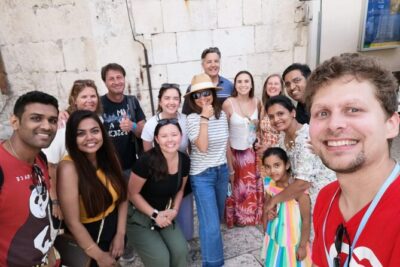 ★ 5.0Split Walking Tour with Professor of HistoryFrom $24926 reviews
 ★ 4.7Split: Diocletian Palace & Old Town Guided Walking TourFrom $17882 reviews
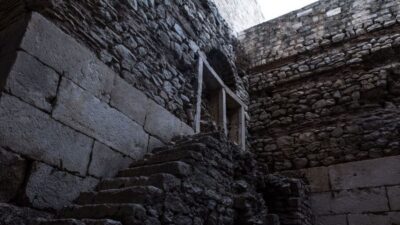 ★ 4.8Split: Game of Thrones Tour with Diocletian’s Palace CellarFrom $41545 reviews
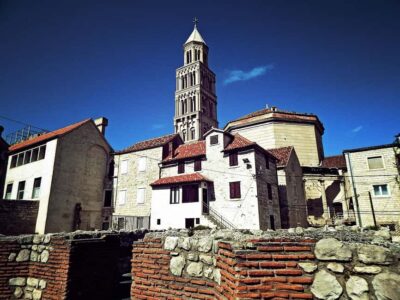 ★ 5.0Diocletian’s Palace and Old Town SMALL GROUP Walking TourFrom $16502 reviews
Browse the lists this tour appears in