
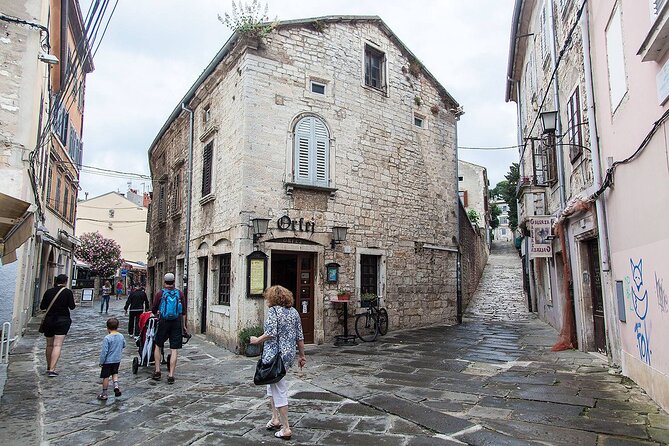
REVIEW · PULA ARENA & ROMAN ISTRIA TOURS
Pula Essentials Walking Tour
Pula tells its story in stone and sunlight. In this 90-minute English guided walk, you start at Tito’s Park, see the 2000-year-old Arena from the outside, and enjoy certified guide context that makes the sights click fast.
I also like how the tour connects Roman, Venetian, and Austrian influences, then carries you forward through medieval, Italian, Yugoslav, and modern Croatian chapters. The one catch: the Amphitheater is only viewed from outside, so plan on separate tickets if you want to go in.
Key things to know before you go
- Tito’s Park start: find the cast city model with a tiny fountain across from the big Anchor
- Pula Arena, exterior only: great scale and photos, not an inside visit
- Roman anchors plus later eras: Twin Gate, Gate of Hercules, Forum, and Temple of Augustus
- Evening payoff: the route finishes with a walk by the Riva at sunset
- Real-life local tips: food, drink, nightlife, and what to do next
In This Review
- Entering Pula by foot in 90 minutes
- Finding the meeting point at the top of Tito’s Park
- The Arena at Pula, seen from the outside (and why that still works)
- Twin Gate and Gate of Hercules, where the city feels like a timeline
- Giardini stop, then the Arch of the Sergii
- The Forum and Temple of Augustus, the center of the Roman mindset
- Riva at sunset, your payoff moment for a relaxed afternoon stroll
- Pula Cathedral and the feel of later chapters
- What $34 gets you, and how to judge the value
- Pacing, group size, and what to expect from the guide
- Where you end up, and how to keep exploring after
- Who this tour is best for, and who should consider alternatives
- Should you book the Pula Essentials Walking Tour?
- FAQ
- Is this tour 90 minutes long?
- Where does the tour start?
- What language is the guide?
- Are entrance tickets included for the sights?
- Is the tour wheelchair accessible?
- Where does the tour end?
- What if only one person books?
- What are the cancellation and payment options?
Entering Pula by foot in 90 minutes
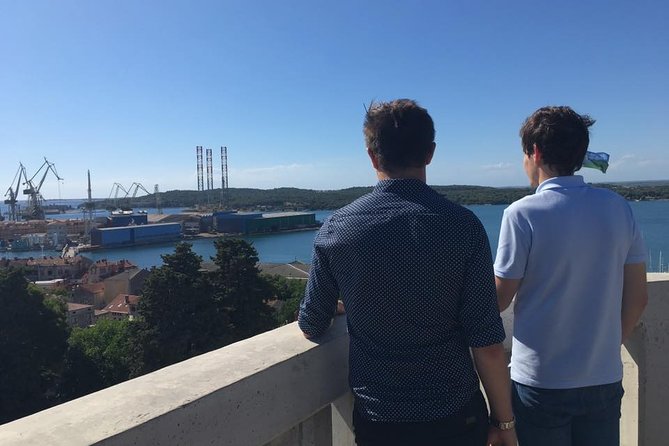
This is the kind of walk that helps you get your bearings fast. You cover the center at an easy afternoon pace, without the pressure to memorize dates or race between monuments.
You also get one major advantage that self-guided wandering rarely gives: a guide who can stitch the city together. That matters in Pula, where Roman stone sits right next to later layers of Venetian, Austrian, and other eras.
Other Roman-Istria stops we have covered
- Medulin -Kamenjak 5h boat trip with lunch & drinks on Sandra Boat★ 5.0 · 1,621 reviews
- Full-Day Boat Tour of the Medulin Archipelago from Medulin★ 5.0 · 1,389 reviews
- Pula: Kayaking,Snorkeling, Cliff jumping Tour with Wetsuit★ 4.8 · 861 reviews
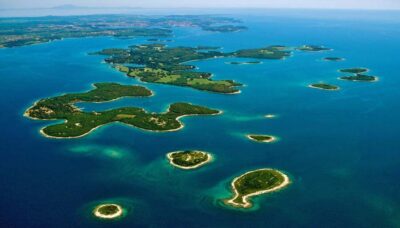
- Pula: National Park Brijuni Island Visit & Dolphin Cruise★ 4.5 · 788 reviews
Finding the meeting point at the top of Tito’s Park
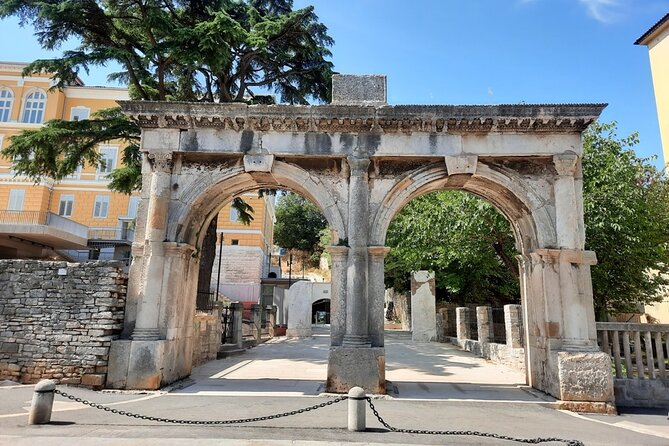
Plan to meet right at the top of Tito’s Park. The meeting point is at the top of the park, across the street from the big Anchor, and you’re looking for a cast model of the city with a tiny fountain.
Bring comfortable shoes, because this is a real walking tour. You will be moving between several key landmarks, plus a few short transfers on foot.
The Arena at Pula, seen from the outside (and why that still works)
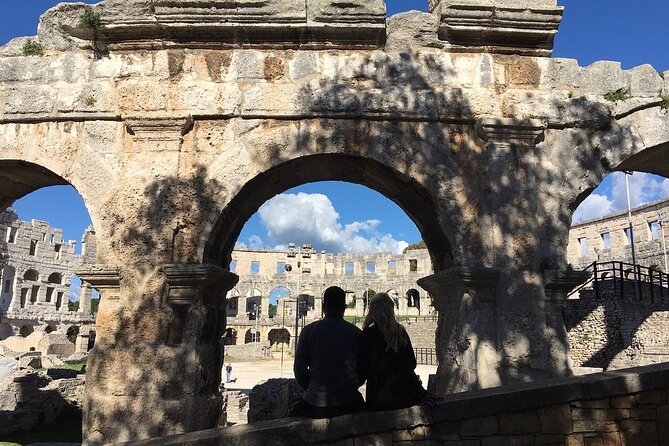
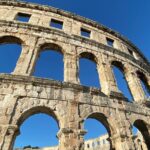
The tour’s big Roman moment is the Pula Amphitheater, also called the Pula Arena. You’ll see it from outside, which is honest and important: entrance tickets are not included.
That exterior viewpoint is still useful. You get the full sense of scale, and the guide can explain why this structure matters before you even step into the old town core.
If your dream includes sitting inside the Arena, treat this as an orientation stop. Then you can decide later if you want to pay for the interior experience on a separate ticket.
Twin Gate and Gate of Hercules, where the city feels like a timeline
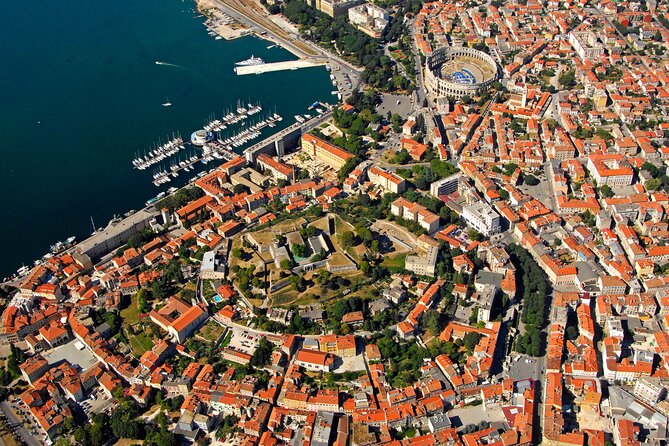
After the Arena, the route continues through key entrances and passage points. The Twin Gate and the Gate of Hercules are perfect examples of how Pula’s old defenses and entrances shape how you move through town.
These stops are short, but that’s the point. You get quick context without turning the walk into a lecture, and you can look, photo, and keep going.
The value here is not just seeing the structures. It’s understanding how the guide connects Roman-era design with later changes, so the streets start to feel intentional instead of random.
Giardini stop, then the Arch of the Sergii
Next you move toward the Giardini area, with a short walk that keeps the rhythm. Even when a stop is brief, it helps break up the density of monuments so your brain can reset.
Then you hit the Arch of the Sergii. This is one of those stops where a guide can make the details understandable, even if you only see it for a short window.
From there, the route continues onto Ulica Sergijevaca, a street walk that’s more than a connector. It helps you feel the city as a place people actually use, not just a museum hallway.
More Pula covered at walking pace
- Pula: Historic Walking Tour with Local Guide & City Views
★ 4.8 · 143 reviews - Pula walking tour
★ 5.0 · 96 reviews - Pula: Historic Sites Guided Walking Tour
★ 4.8 · 78 reviews - Pula Essentials Walking Tour
★ 4.8 · 64 reviews - Pula Essentials Walking Tour
★ 5.0 · 62 reviews
The Forum and Temple of Augustus, the center of the Roman mindset
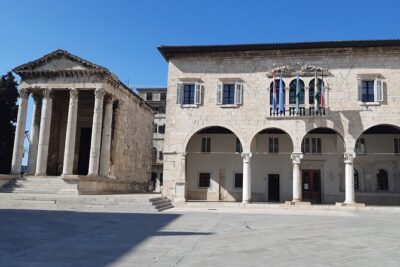
The Forum stop is one of the clearest anchors in the whole route. When you pause here, you can better imagine how public life worked in the Roman world that helped shape Pula’s layout.
Close by is the Temple of Augustus, Pula. The tour gives you a short stop here, so it’s more about placing the monument in context than spending an hour reading every surface.
One practical benefit: if you plan to explore more on your own afterward, these are the locations you will recognize immediately. The guide’s pacing makes the center easy to navigate later.
Riva at sunset, your payoff moment for a relaxed afternoon stroll
The final stretch turns lighter and more scenic. You end with a walk toward the Riva, with time positioned for sunset.
This is where the tour shifts from history mode to “okay, now live a little” mode. The guide also offers tips on where to eat, drink, and spend your free time, so you can turn the last part of your day into something specific.
If you like photos, this is the moment to slow down. Even a short pause here can make the whole walk feel like money well spent.
Pula Cathedral and the feel of later chapters
Before you finish at the Riva area, you pass by Pula Cathedral. The stop is on the shorter side, but it still matters because it signals how the city’s identity kept evolving after the Roman era.
In a tour like this, those shorter moments are not filler. They’re like chapter markers, reminding you that Pula did not stop changing after antiquity.
You’ll also come away with a better sense of the modern city rhythm, which helps if you want to extend your evening beyond the old center.
What $34 gets you, and how to judge the value
At $34 per person for a 90-minute public walking tour, the big question is what you actually receive for that price.
Here’s the value equation that matters:
- You get a certified tour guide leading the route.
- You get an organized way to connect Roman, Venetian, Austrian, and later historical threads.
- You get practical tips for dining out, nightlife, and what else to do locally.
The trade-off is also clear. Entrance tickets are not included, and the Amphitheater is only seen from outside. If you want to go inside the Arena or pay for other ticketed sights, you’ll need to budget extra separately.
Still, I think this price feels fair if your goal is orientation and context. A good guided start can save you time later, especially in a compact historic center where it’s easy to miss the bigger connections.
Pacing, group size, and what to expect from the guide
This is a relaxed afternoon stroll. The stops are timed, but the overall vibe is not rushed.
A major plus from past participants is how guides handle questions and explain things in a way that makes the city feel understandable. Guides such as Stefano and Ana have been highlighted for their friendly, clear style and for answering questions well.
You’ll likely get more than just the monuments listed on the route. The guide is also there to help you plan the rest of your day, including local recommendations for food and evening plans.
Where you end up, and how to keep exploring after
The tour includes two drop-off locations: Tito’s Park and the Forum. That’s useful because it gives you options depending on where you want to wander next.
If you want to keep walking in the historic center, dropping near the Forum makes sense. If you prefer a calmer walk back toward your base, Tito’s Park can work well too.
It’s a smart setup for turning a guided hour and a half into independent exploring right after.
Who this tour is best for, and who should consider alternatives
This walk is a strong fit if you want:
- A first-time orientation to Pula
- A guided focus on Roman landmarks plus later-era context
- Easy, straightforward logistics and an English-only tour
It’s also listed as wheelchair accessible, and private group options are available. If you want a smaller, more custom experience, that private format can be a good path.
One more consideration: because key sights like the Amphitheater are outside only, this may not satisfy you if your top priority is ticketed interior visits. If that’s you, pair this tour with a plan to visit any ticketed sites afterward.
Should you book the Pula Essentials Walking Tour?
Yes, if you want a fast, guided way to understand why Pula looks the way it does today. For many people, the biggest payoff is leaving with a mental map, plus practical suggestions for how to spend the evening.
Book it especially if you’re the type who likes asking questions and getting answers on the spot. With a certified English guide and a route anchored by major Roman landmarks like the Arena, Twin Gate, Forum, and Temple of Augustus, you’re set up to explore with confidence afterward.
FAQ
Is this tour 90 minutes long?
Yes. The duration is 90 minutes.
Where does the tour start?
It starts at the top of Tito’s Park. The meeting point is across the street from the big Anchor, at a cast model of the city with a tiny fountain.
What language is the guide?
The tour is offered only in English.
Are entrance tickets included for the sights?
No. Entrance tickets are not included. The Pula Amphitheater is only seen from outside.
Is the tour wheelchair accessible?
Yes, the tour is listed as wheelchair accessible.
Where does the tour end?
There are two drop-off locations: Tito’s Park and the Forum.
What if only one person books?
The tour has a minimum of two participants. If you are an individual booking and you are the only booked participant, you will be refunded if it remains the only booking one hour before the tour commences.
What are the cancellation and payment options?
You can cancel up to 24 hours in advance for a full refund, and you can reserve and pay later (book your spot and pay nothing today).
Walk It: More of Pula at Ground Level

Roman Istria, Continued




Freshly written up around Pula


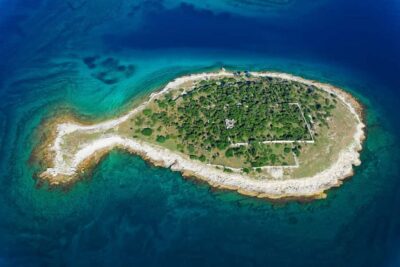
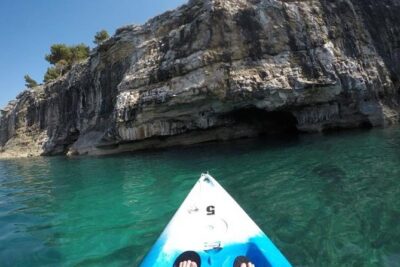
Pula Arena & Roman Istria Tours, top to bottom.
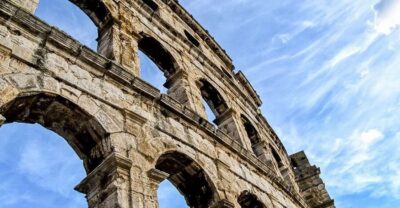 ★ 4.3Pula: Arena Entrance TicketFrom $112,590 reviews
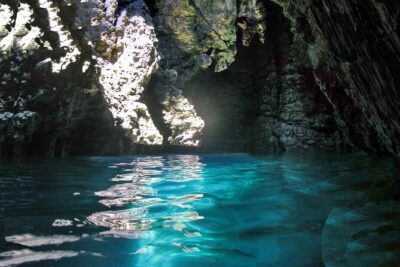 ★ 5.0Medulin -Kamenjak 5h boat trip with lunch & drinks on Sandra BoatFrom $541,621 reviews
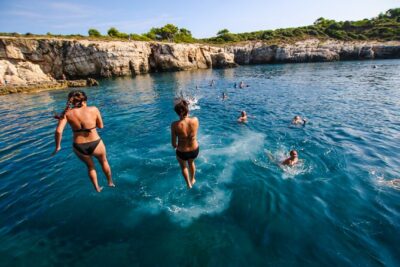 ★ 5.0Full-Day Boat Tour of the Medulin Archipelago from MedulinFrom $541,389 reviews
 ★ 5.03hours all inclusive Sunset&Dolphin Tour from Medulin on SandraFrom $541,130 reviews
 ★ 4.8Pula: Kayaking,Snorkeling, Cliff jumping Tour with WetsuitFrom $57861 reviews
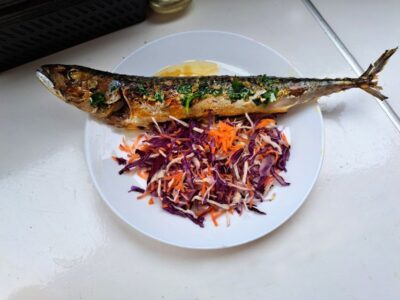 ★ 4.5Pula: National Park Brijuni Island Visit & Dolphin CruiseFrom $76788 reviews
 ★ 4.5Pula: Brijuni Sunset Dolphin Cruise with Dinner & DrinksFrom $62764 reviews
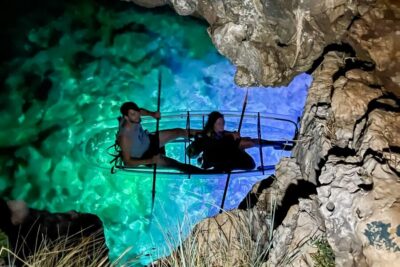 ★ 4.9Pula: Night-Time Sea Kayaking Tour in Transparent KayakFrom $69628 reviews
Browse the lists this tour appears in