
REVIEW · PULA ARENA & ROMAN ISTRIA TOURS
Pula Private 2-Hour Guided Walking Tour
Roman Pula, smart and fast.
This private 2-hour guided walking tour in Pula is a flexible loop around the old town, built for seeing the big sights without getting lost in the weeds. You get a licensed local guide who can explain the layers of the city, so Roman to Venetian stops actually make sense instead of feeling like random stone.
I especially like the optional Amphitheatre de Pula entry handled smoothly, and I like that you can end up with practical local guidance on what to eat and where to taste Istrian flavors after. In the real world, the guide names that really helped people, including Sinisa, also stood out for quick ticket handling and clear English.
One thing to consider: you may add cost if you want inside the Arena, and you should expect a moderate walk with some hills. Plan for heat and bring good shoes, because this is a true walking tour, not a sit-down history class with doors everywhere.
In This Review
- Key highlights you’ll care about
- Getting Oriented at Pula Arena and Finishing at the Twin Gates
- Amphitheatre Entry Option and Why Your Tickets Matter
- Harbor Views from the Venetian Fortress
- Cathedral Courtyard to Augustus Temple and the Roman-Medieval Mix
- Dirce Mosaic and Arco dei Sergi: Small Stops, Big Stories
- City Gates Circuit: Hercules Gate to the Twin Gates
- Gradska Trznica Market Building from 1903 and the Fish Market If Open
- Price, Group Size, and Value for a Local Guide
- Walking Pace, Heat Prep, and Local Tips from Sinisa
- Book It or Skip It: Who This 2-Hour Tour Fits
- FAQ
- How long is the Pula private walking tour?
- Is this tour private?
- Where do we meet and where does the tour end?
- Do I need to pay to enter the Amphitheatre de Pula?
- Are any other sites included for free?
- What language is the tour offered in?
- What physical fitness level is recommended?
- Is it possible to cancel for a refund?
- Does the tour use mobile tickets?
Key highlights you’ll care about
- Private and flexible so you can emphasize the sights you care about most within the 2-hour plan.
- Amphitheatre de Pula tickets without the hassle, with the guide able to purchase entry tickets at the entrance.
- A focused old-town circuit that hits major Roman and later landmarks in one go.
- Many stops are free, including the cathedral visit (if open), the Dirce floor mosaic, and the Roman gates.
- Market time at Gradska Trznica (1903), with a fish-market look if it is open.
- Careful pacing for hills, plus helpful local food and olive oil suggestions for after the walk.
Other Roman-Istria stops we have covered
- Medulin -Kamenjak 5h boat trip with lunch & drinks on Sandra Boat★ 5.0 · 1,621 reviews
- Full-Day Boat Tour of the Medulin Archipelago from Medulin★ 5.0 · 1,389 reviews
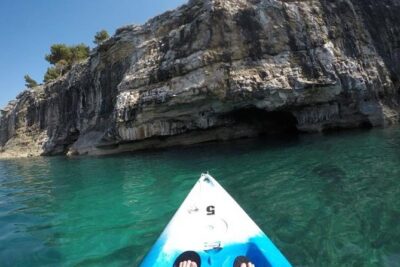
- Pula: Kayaking,Snorkeling, Cliff jumping Tour with Wetsuit★ 4.8 · 861 reviews
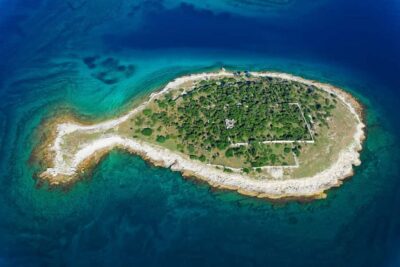
- Pula: National Park Brijuni Island Visit & Dolphin Cruise★ 4.5 · 788 reviews
Getting Oriented at Pula Arena and Finishing at the Twin Gates
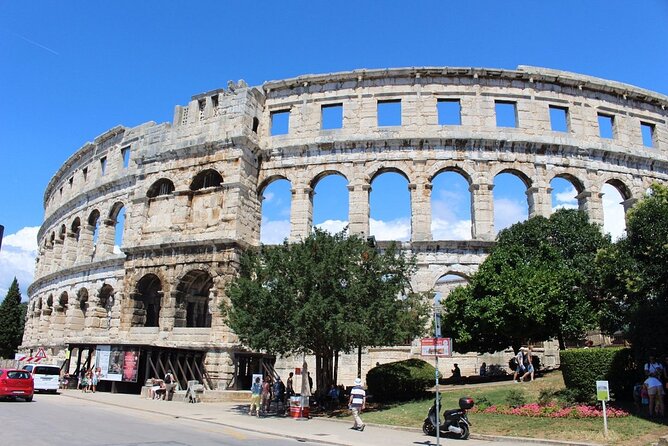
The tour starts at Pula Arena (Flavijevska ul.) and ends at the Twin Gate area (Carrarina ul. 8). That routing is more than a convenience. Starting at the Arena gives you a big, visual anchor right away, and finishing near the gates helps you feel like you actually traced the city, instead of bouncing around on buses.
It’s designed as a private experience for your group only, priced per group up to 15 people. In practice, that matters because you can ask for small adjustments on the fly. Maybe you want more time near the Roman monuments, or maybe you want the viewpoint bits without speeding through.
The tour runs around midday, with opening hours listed as Monday through Sunday from 12:00 PM to 2:00 PM. If you’re traveling in summer, that timing can mean heat. Bring water and plan for shade stops whenever possible, because the pace is active and the streets can be sun-baked.
Also, you get a mobile ticket, which is handy when you’re juggling phone maps and already-on-the-move plans.
Amphitheatre Entry Option and Why Your Tickets Matter
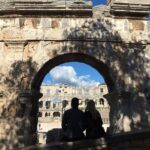
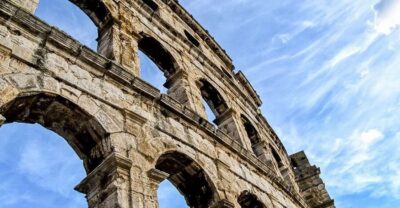
The main set piece is Amphitheatre de Pula, a Roman arena dating to the 1st century AD. You’ll spend about 30 minutes here, and it’s the one stop where you can choose how deep you want to go.
- If you want to enter, the Amphitheatre admission is €10.00 per person, and the guide can buy the entry tickets at the entrance without you waiting in line.
- If you prefer to stay outside, the guide explains key points from the arena exterior.
That ticket-handling detail is the real value. Rome’s ticket lines are their own attraction, and even in smaller towns like Pula, skipping unnecessary waiting keeps your short time from evaporating. Inside the arena, you get a clearer sense of how Romans staged spectacle, while the outside explanation still gives you the “why it looks like this” context.
Practical tip: decide early. If you’re going inside, factor in time for entry and leaving, because the rest of the route is tight but well-paced.
Harbor Views from the Venetian Fortress
After the arena, the tour walks you toward the Venetian Fortress, a 17th-century structure. This is a shorter, about 15-minute stop with views over Pula harbor.
What I like about this part of the plan is the break in “ruins intensity.” You’ve just seen Roman stone at ground level. Now you get a perspective view that helps you understand how the city faced the sea and why fortifications mattered later on.
It’s also a good photo moment. Roman sites are all about crowds, angles, and inscriptions. Fortress viewpoints are about geography: where the harbor sits, how the old town bends, and how the town fits into the coastline.
Admission isn’t included here because you’re mainly seeing it from outside, with the guide explaining the significance and what you’re looking at from the vantage point.
Cathedral Courtyard to Augustus Temple and the Roman-Medieval Mix
Next comes Pula Cathedral, tied to the 5th century AD. You’ll walk to it, go around it, and get an explanation about why it matters to the city. The plan says 10 minutes, and entry inside depends on whether the cathedral is open. If it is open, you go inside, and the cathedral admission is free.
Even if you only view the cathedral exterior, it helps you map Pula’s shift from Roman civic spaces to later religious importance. It also gives your eyes a change of pace from all the gates and arena stone.
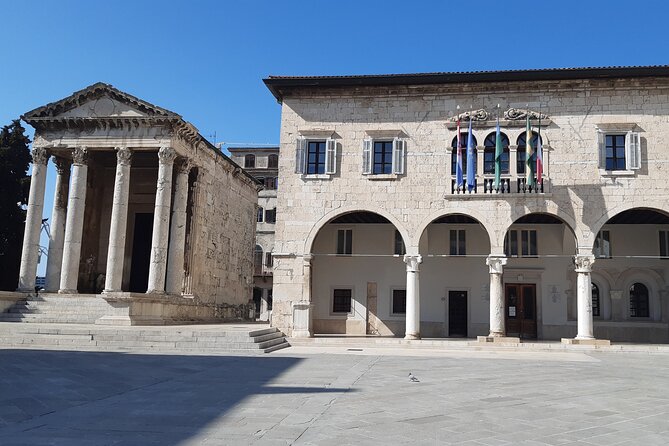
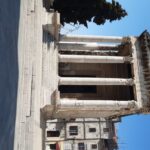
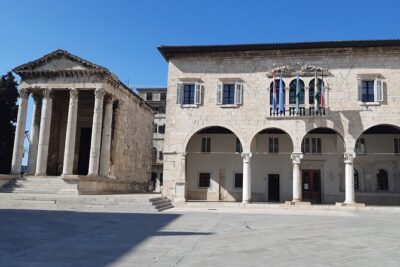
From there, you head to Tempio di Augusto, connected to the Roman forum and the Augustus temple, also from the 1st century AD. The route includes additional nearby context, including the city hall built in 1396. This portion runs about 15 minutes, and again, admission isn’t included, since you’re walking around and learning the story as you go.
This is the part where the tour does something useful: it shows how the city layers its meanings. You’re not just seeing one era. You’re seeing how later builders reused, framed, and reinterpreted what came before.
If you like your history in a human scale, this stop works well. The guide’s job here is to connect what you see to what it was for, so it doesn’t read like a list of dates.
More Pula covered at walking pace
- Pula: Historic Walking Tour with Local Guide & City Views
★ 4.8 · 143 reviews - Pula walking tour
★ 5.0 · 96 reviews - Pula: Historic Sites Guided Walking Tour
★ 4.8 · 78 reviews - Pula Essentials Walking Tour
★ 4.8 · 64 reviews - Pula Essentials Walking Tour
★ 5.0 · 62 reviews
Dirce Mosaic and Arco dei Sergi: Small Stops, Big Stories
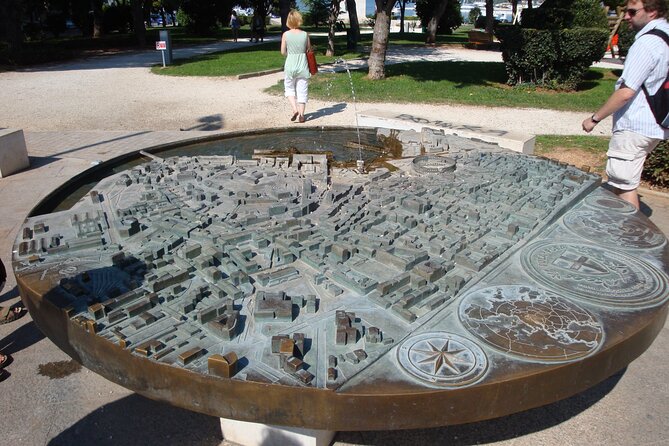
Two short stops deliver high payoff: the Floor mosaic The Punishment of Dirce and Arco dei Sergi.
First, the mosaic. The plan targets a 2nd-century AD floor mosaic called Punishment of Dirce. It’s about 10 minutes, and admission is free. What makes this worth your time is that it’s not a massive monument where you feel like a spectator from far away. A mosaic rewards attention. Up close, it turns the Romans from distant empire into everyday artistic storytelling.
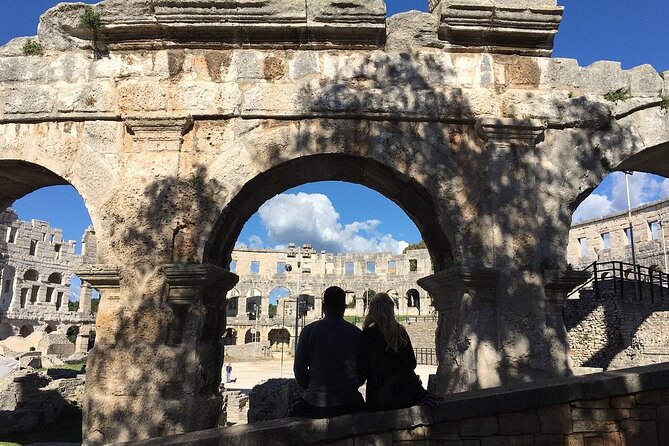
Then there’s Arco dei Sergi, a Roman city gate from the 1st century BC. You spend around 10 minutes here, with free admission. You’ll walk under and around it and get explanations of the decorations and inscriptions.
I like pairing these two because they show different “message systems” in stone. The mosaic is art and narrative at foot level. The arch is public symbolism at street level. Together they help you read Pula the way a local might, not like a postcard checklist.
A small consideration: these are quick stops. If you’re the type who wants slow, lingering photo sessions and lots of questions, tell the guide. A private tour can flex within the 2-hour window.
City Gates Circuit: Hercules Gate to the Twin Gates
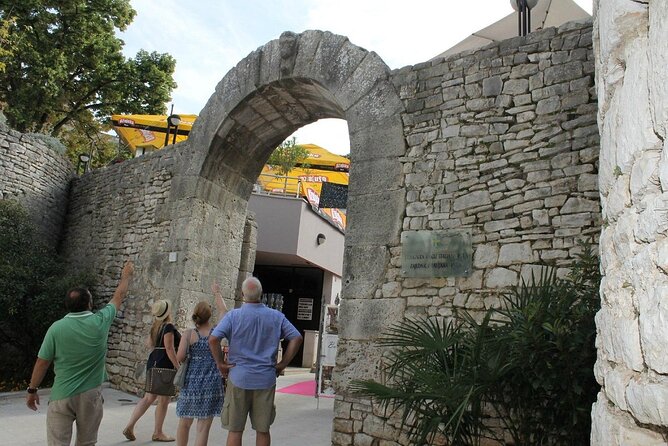
Gates make Pula feel like a city map you can walk. The tour includes multiple surviving Roman gates, and it’s structured to keep the route logical.
You’ll first see the Gate of Hercules (1st century BC), with about 5 minutes for walking and explanation. Admission is free. Then you move to The Twin Gates of Pula, also Roman, from the 2nd century AD, again about 5 minutes with free admission.
Both gate stops focus on the details: how the entrance shaped movement, how the city controlled access, and what the guide notices in the carvings and context. If you care about urban planning and how ancient cities worked, these gates are one of the most satisfying parts of the walk because you can literally trace the idea of an entry and exit system.
Photo tip: gates are great at slightly different angles. If the light is harsh, step a few meters to one side rather than squinting straight on.
Also remember: even though each gate stop is short, they add up. This is why footwear and pace matter. The tour moves with purpose, but the guide should keep it comfortable, especially on the hills.
Gradska Trznica Market Building from 1903 and the Fish Market If Open
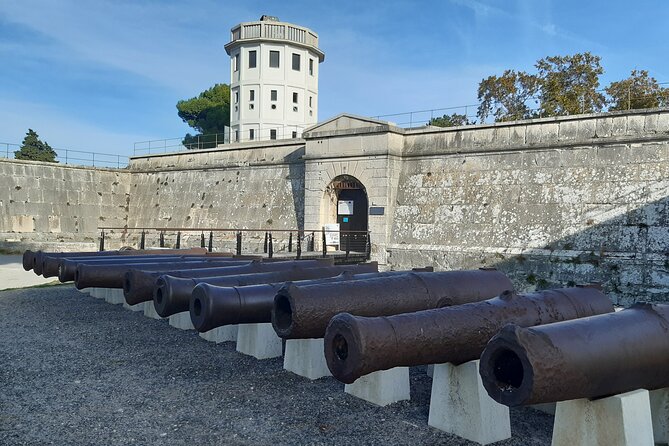
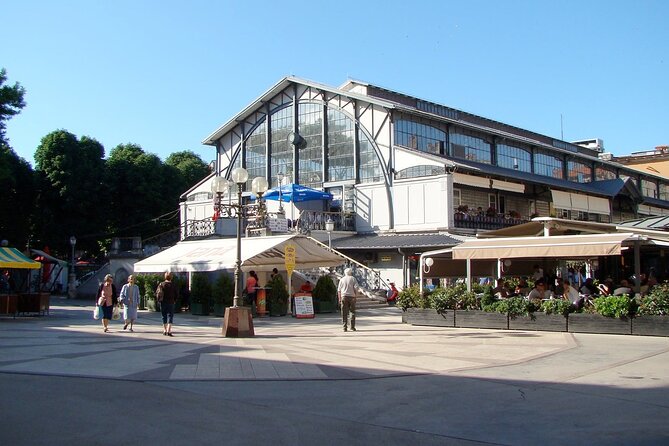
One of the more local-feeling parts of the route is Gradska Trznica Pula, the market building from 1903. You’ll spend about 15 minutes walking around and through the market space, and admission is free.
The tour also checks whether the fish market is open. If it is, you get a look at a working market rhythm rather than a staged souvenir street. This is where Pula starts to feel like a living place instead of a set of monuments.
If you want to keep the tour practical, this is the segment to ask your guide what to try next. Based on what guides like Sinisa have shared with groups, the best follow-up advice tends to be about straightforward Istrian choices: what olive oil is worth buying, and what local food to look for when you’re hungry afterward.
Even if you just browse for 10 minutes, markets give you context. You learn what residents value now, which makes all the older structures around town feel less like museum props.
Price, Group Size, and Value for a Local Guide
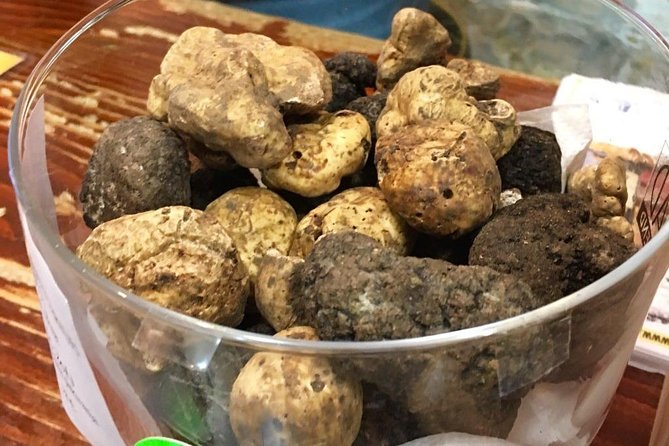
The price is $145.50 per group, for up to 15 people, and the tour lasts about 2 hours. Your licensed guide is included, and the tour is offered in English. You also get a mobile ticket.
Here’s how I’d think about value. This is not priced per person. So if you’re traveling as a small group, the cost per person drops fast as headcount rises. If you’re a solo traveler or a couple, you’ll pay more per person, but you still gain time savings and local context that you would otherwise have to piece together on your own.
Then add one potential extra cost: if you choose to enter Amphitheatre de Pula, it’s €10.00 per person. Most other listed stops are free, including the cathedral (if open), the Dirce mosaic, Arco dei Sergi, and the gates. That mix helps you control spending without losing the main experiences.
Also consider this practical advantage: a private guide can steer you away from unnecessary waiting and crowded detours. With limited time, that matters more than it sounds.
On timing, tours are commonly booked about 46 days in advance on average. If you’re traveling during peak season, book ahead so you have a better shot at the exact start time.
Walking Pace, Heat Prep, and Local Tips from Sinisa
This is a walking tour with moderate fitness expectations. One review note highlighted a “couple of miles” and careful pacing on hills. That matches the structure: you’re moving between Roman monuments, medieval layers, and city gates without big transport breaks.
Heat is the other real factor. The schedule is midday, and the old town has lots of sun-exposed stretches. A smart move is to wear breathable layers, bring water, and let the guide know if you want extra shade breaks. The guides running this route are used to keeping the pace human.
The standout quality is the guide’s approach. People praised Sinisa for being funny, professional, and speaking excellent English. The theme across feedback is clear: you get more than facts. You get explanations that help you connect the dots, plus practical advice after you leave the monuments.
One more subtle advantage: because the tour is private and flexible, you’re not forced into a fixed script. If you want the story behind a gate inscription or you want a different angle on the harbor, you can ask. That small control is a big deal in a short 2-hour plan.
Book It or Skip It: Who This 2-Hour Tour Fits
Book this tour if you want a smart overview of Pula and you’re short on time. In a couple of hours, you hit the Arena, the cathedral area, the Augustus forum zone, the Dirce mosaic, multiple Roman gates, and the market building. That’s a lot of ground for one walking loop.
You should also book if you value a local guide who can do two things at once: interpret the sights and help you plan what to do next, like food and olive oil recommendations.
Skip or reconsider if you want long museum-style pacing, because this is a fast, walking-focused circuit. Also reconsider if you have mobility limits, because the route includes hills and takes you through outdoor streets for much of the time.
If you do book, decide ahead of time whether you want Amphitheatre entry. If you’re paying the €10 per person, you’ll want to make the most of it by going inside rather than only doing the exterior explanation.
FAQ
How long is the Pula private walking tour?
It lasts about 2 hours.
Is this tour private?
Yes. It is a private tour, meaning only your group participates.
Where do we meet and where does the tour end?
You start at Pula Arena (Flavijevska ul.) and end at the Twin Gate (Carrarina ul. 8).
Do I need to pay to enter the Amphitheatre de Pula?
Yes. Amphitheatre entry is not included, and the fee is €10.00 per person if you choose to go inside.
Are any other sites included for free?
Yes. The Pula Cathedral is free (and you go inside only if it is open), and admission is free for the Floor mosaic The Punishment of Dirce, Arco dei Sergi, and the Roman gates included on the route.
What language is the tour offered in?
The tour is offered in English.
What physical fitness level is recommended?
The tour is listed as suitable for travelers with moderate physical fitness.
Is it possible to cancel for a refund?
Yes. You can cancel for a full refund up to 24 hours before the experience starts, with free cancellation allowed up to that cutoff.
Does the tour use mobile tickets?
Yes. The tour includes a mobile ticket.
Walk It: More of Pula at Ground Level

Roman Istria, Continued




Freshly written up around Pula



Pula Arena & Roman Istria Tours, top to bottom.
 ★ 4.3Pula: Arena Entrance TicketFrom $112,590 reviews
 ★ 5.0Medulin -Kamenjak 5h boat trip with lunch & drinks on Sandra BoatFrom $541,621 reviews
 ★ 5.0Full-Day Boat Tour of the Medulin Archipelago from MedulinFrom $541,389 reviews
 ★ 5.03hours all inclusive Sunset&Dolphin Tour from Medulin on SandraFrom $541,130 reviews
 ★ 4.8Pula: Kayaking,Snorkeling, Cliff jumping Tour with WetsuitFrom $57861 reviews
 ★ 4.5Pula: National Park Brijuni Island Visit & Dolphin CruiseFrom $76788 reviews
 ★ 4.5Pula: Brijuni Sunset Dolphin Cruise with Dinner & DrinksFrom $62764 reviews
 ★ 4.9Pula: Night-Time Sea Kayaking Tour in Transparent KayakFrom $69628 reviews
Browse the lists this tour appears in