
REVIEW · PULA ARENA & ROMAN ISTRIA TOURS
Pula Sightseeing Walking Tour
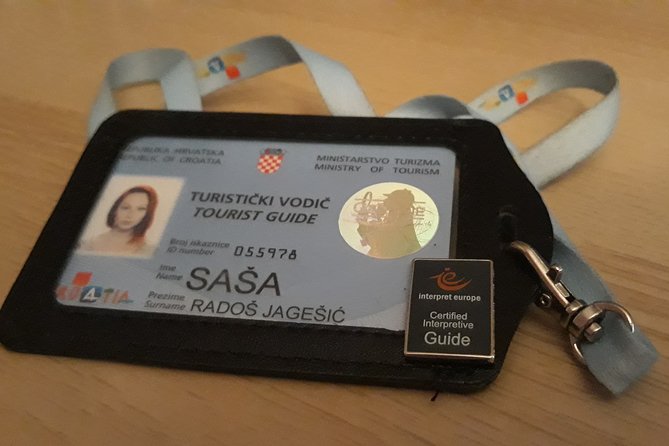
Pula feels bigger once you hear the stories. This walking tour turns well-known Roman spots into living scenes, guided by Saša Radost and her focus on the people who shaped the town. I especially liked how the route hits major landmarks like the Amphitheatre while still making time for quieter details, like a mosaic uncovered during WWII. One thing to watch: two major sites have entrance fees not included, so you may want a few extra euros ready.
You’ll do it at an easy pace, in a group capped at 20, for about 1 hour 30 minutes to 2 hours 30 minutes. You start at Flavijevska ul. 2 and finish on Forum, with a mobile ticket and plenty of time for questions, practical get-around tips, and smart suggestions for what to see next in Istria.
In This Review
- Key things I’d bet on
- A guide named Saša who makes Pula feel personal
- Price and what you actually get for $34.91
- Route overview: from Flavijevska ul. to Forum
- Amphitheatre de Pula: the landmark that anchors the whole walk
- Tito’s Park and the town-center model: getting your bearings fast
- Gate of Hercules and the Roman city gates you can actually touch
- Arco dei Sergi: a triumphal arch on a famous street
- The floor mosaic called The Punishment of Dirce: the quieter stop that sticks
- Tempio di Augusto and the Forum finish: where the eras meet
- Kaštel: the optional climb for fortress views and the museum payoff
- What to do before and after the walk
- Who should book this Pula walking tour
- Should you book it or pass?
- FAQ
- What is the duration of the Pula sightseeing walking tour?
- How much does the tour cost?
- Where do I meet and where does the tour end?
- Is the amphitheatre entrance fee included?
- Is the Temple of August entrance fee included?
- Are there any stops with free admission?
- Is the tour large?
- What if the weather is bad?
- Can I cancel for a full refund?
Key things I’d bet on
- Story-first guiding with Saša’s people-centered angle, which helps even non-history fans stay engaged
- Roman sights within easy walking distance, from city gates to the arena area
- A mix of big landmarks and quieter finds, including a WWII-discovered floor mosaic
- Optional Kaštel climb for fortress views plus access to the Historic and Maritime museum
- Small group size (max 20), which keeps the pace relaxed and the Q&A real
Other Roman-Istria stops we have covered
- Medulin -Kamenjak 5h boat trip with lunch & drinks on Sandra Boat★ 5.0 · 1,621 reviews
- Full-Day Boat Tour of the Medulin Archipelago from Medulin★ 5.0 · 1,389 reviews
- 3hours all inclusive Sunset&Dolphin Tour from Medulin on Sandra★ 5.0 · 1,130 reviews
- Pula: Kayaking,Snorkeling, Cliff jumping Tour with Wetsuit★ 4.8 · 861 reviews
A guide named Saša who makes Pula feel personal
The best part of this tour is not the list of monuments. It’s the way Saša connects them to individuals and everyday life in different eras. You’ll move through Pula’s layers, starting with the idea that this is a city with deep roots, then stepping into Roman influence, and later seeing how other powers left their marks too. The tone is conversational and upbeat, and she uses that local rhythm of speech that makes you want to keep walking and asking one more question.
In the reviews, a recurring theme is how Saša makes history feel interesting, even for people who do not usually seek out museum lectures. That makes sense for your trip, because Pula is the kind of place where you can get good photos and still miss the meaning. Here, you get both: the visuals plus the story behind them.
One more practical win: the guide doesn’t just talk. She also shares tips and tricks for getting around, plus what to prioritize if you want museums or restaurants after the walk.
Price and what you actually get for $34.91
At $34.91 per person, this is priced like a solid local guided experience, not a budget “see-everything” rush. You’re paying mainly for the licensed guide time and the way someone turns scattered monuments into a coherent walk.
What’s included:
- a licensed tour guide
- the walking route and guiding through the main sights
- a mobile ticket
What’s not included:
- entrance fees at two specific sites: Amphitheatre 10 EUR and Temple of August 2 EUR
So the real value depends on your plan for those paid stops. If you want the inside experience at the amphitheatre, you should budget the 10 EUR and bring that mindset in from the start. If you are happy seeing the amphitheatre from outside, you still get the context and the photo-worthy views without paying that extra entrance.
Also worth noting: this tour is typically booked well ahead, with an average lead time of 107 days. That’s usually a sign the guide’s schedules fill up, especially in season.
Route overview: from Flavijevska ul. to Forum
This tour is built for an easy downtown loop, with a clear start and finish. You meet on Flavijevska ul. 2, then work your way through the Roman and medieval core, ending at Forum near the Temple of August.
Because you’re ending near Forum, it also helps with next steps. After you wrap up, you are close to where the city concentrates more sights, cafés, and evening wandering. In other words, you’re not forced into a long transit just because the walking tour is over.
Timing is a range, about 1.5 to 2.5 hours. That spread usually comes down to whether you choose the optional add-ons and how many questions you ask. With a group capped at 20, it stays controlled, not chaotic.
Amphitheatre de Pula: the landmark that anchors the whole walk
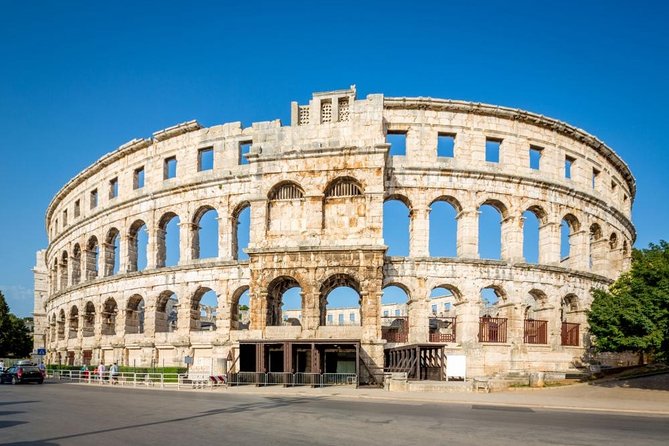
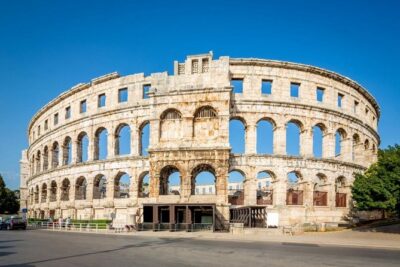
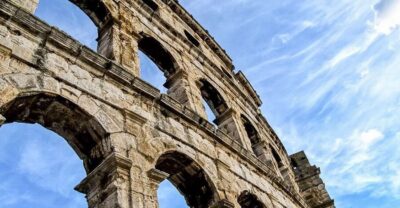
The walk starts with Pula’s most recognizable Roman icon, the Amphitheatre de Pula. Even if you’ve seen photos, the scale hits differently in person, and the guide uses it as a starting point to move you into the Roman era mindset.
You get two ways the story can go: depending on what fits the group’s preference, you may hear the narrative from outside only, or go inside for the fuller feel. The key practical point is that admission is 10 EUR and is not included, so decide early if you want that inside perspective.
A small drawback to consider: if the group chooses to go inside, it adds time and costs. If you are on a tight budget or you simply want more photo time outdoors, it still works well without paying in.
More Pula covered at walking pace
- Pula: Historic Walking Tour with Local Guide & City Views
★ 4.8 · 143 reviews - Pula walking tour
★ 5.0 · 96 reviews - Pula: Historic Sites Guided Walking Tour
★ 4.8 · 78 reviews - Pula Essentials Walking Tour
★ 4.8 · 64 reviews - Pula Essentials Walking Tour
★ 5.0 · 62 reviews
Tito’s Park and the town-center model: getting your bearings fast
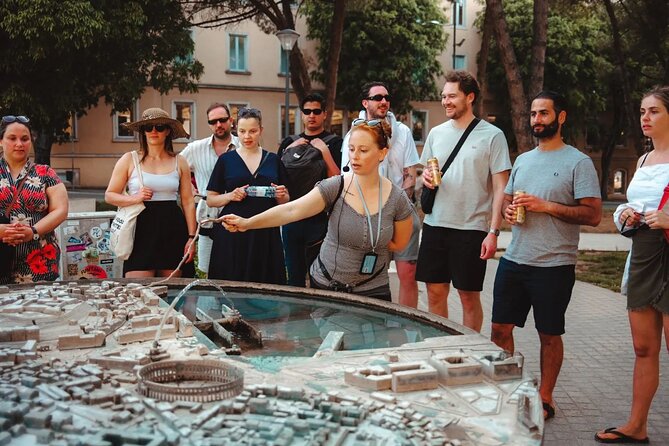
After the amphitheatre, you head toward Tito’s Park, where you’ll find a small model of the Pula town center. This stop is short, but it’s useful. That model helps you understand the city layout, so later sights make more sense. Instead of treating gates, arches, and mosaics like random highlights, you start seeing how the town fit together.
There’s also a WWII connection here, tied to fighters who opposed fascism. It’s not the type of historical detail you can always pick up just by reading a plaque at street level.
This is a great stop if you feel like Pula’s streets are a bit of a maze. It gives you a mental map, and it makes the rest of the walk smoother.
Gate of Hercules and the Roman city gates you can actually touch
The Gate of Hercules is one of the oldest town gates of Pula, and the tour treats it like more than just a postcard. You’ll get context for why gates mattered in Roman life, how they functioned, and what it means that so much still survives.
Later, you’ll also see the Twin Gates, described as the first and youngest of three Roman town gates still standing today. That comparison helps, because you start to think in terms of timelines and how Pula expanded and changed, instead of only admiring stonework.
Two practical things here:
- This section is where good walking shoes help, because you’ll be stopping and looking while moving through the center streets.
- Gates are often at the mercy of crowds and street traffic, so the timing and pace matter.
Arco dei Sergi: a triumphal arch on a famous street
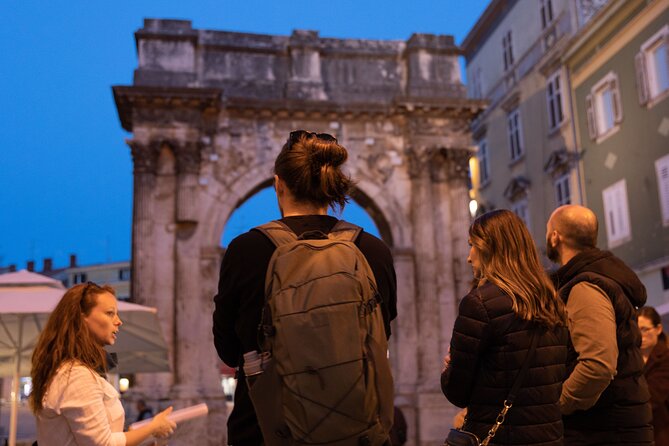
The Arco dei Sergi is a triumphal arc linked to the well-known Sergi family, and it remains in place on one end of Pula’s most famous streets. This is one of those stops where the guide’s storytelling turns “old arch” into something specific.
You’ll learn how triumphal arches fit Roman propaganda and public life, and why the Sergi family connection is worth knowing. Even if you don’t care about Roman politics, the arch is a strong visual marker, and it helps you pace the walk.
The floor mosaic called The Punishment of Dirce: the quieter stop that sticks
Not every great moment here is loud and big. The floor mosaic, The Punishment of Dirce, is a lesser-seen highlight you might otherwise miss. The tour points out that this mosaic was found during WWII, and it helps locate a once wealthy Roman palace.
This is valuable for your understanding because it shows how archaeology turns up living floors, not just statues and columns. And it teaches you to look differently at street-level history. In Pula, the city doesn’t just display the past. It reveals it in fragments.
A small consideration: since this stop focuses on a specific site, you’ll want to keep your expectations realistic. It’s not a huge museum hall stop, it’s more of a focused moment. That said, it’s exactly the kind of detail that makes a tour memorable later when you’re back in your hotel and sorting photos.
Tempio di Augusto and the Forum finish: where the eras meet
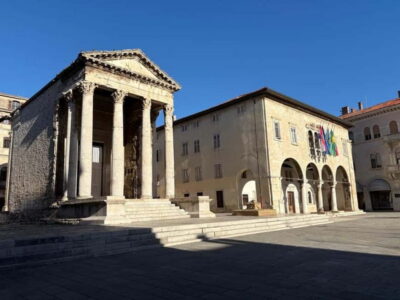
The tour ends near the Tempio di Augusto, a temple dedicated to Roma and Emperor Augustus. It sits right next to a medieval Venetian city hall on Forum, so you get a nice “layers” feeling at the finish.
Like the amphitheatre, the temple has an entrance fee of 2 EUR that isn’t included. If you like to see interiors, budget for it. If not, you can still enjoy the setting and the explanation of how the Roman world shaped this space.
Why this ending matters: finishing on Forum puts you at the heart of pedestrian life. It’s easier to continue on your own after the guided part without feeling like you’ve been dropped far from everything.
Kaštel: the optional climb for fortress views and the museum payoff
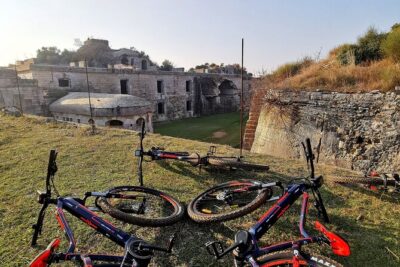
One choice you’ll get on the walk is Kaštel, the medieval fortress area. The climb is optional, and it’s described as a bit of work, about 15 minutes. If you’re up for it, it pays off.
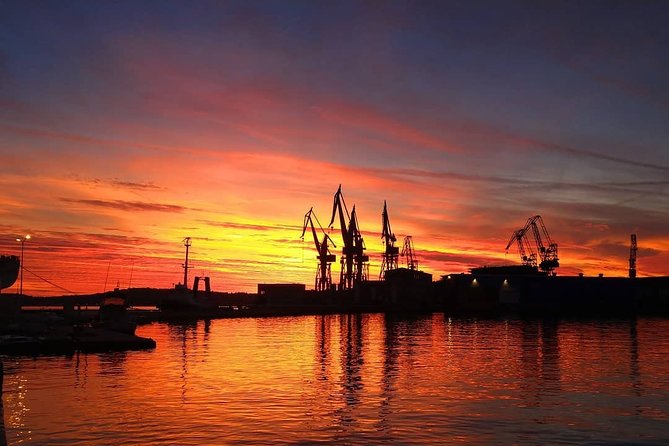
Here’s the practical reason I like offering this choice: not everyone wants the same effort level. If you skip it, you still get the core Roman sights and the Forum ending. If you go up, you get views over the amphitheatre area and toward the shipyard side of town.
Also, the fortress today holds the Historic and Maritime museum. Entrance isn’t included, but having the option on the same day can be a smart move. If you are already curious about local maritime life or the broader story of Istrian seafaring, this is a natural follow-up.
What to do before and after the walk
Because this tour is story-led, it’s worth planning to keep your mind open right after. You’ll get context for what you’re seeing, and that helps a lot if you then spend time wandering on your own.
Before you go:
- Wear shoes you can stand in for a couple of hours.
- Bring water, especially if it’s warm. (This is a city-core walk, but there is still sun.)
- Decide your budget for entrance fees at the amphitheatre and the Temple of August.
After you go:
- Use the guide’s suggestions to pick one museum or one food stop for your next block of time. The tour is designed to help you do that, not just to “show monuments and leave.”
Who should book this Pula walking tour
I think this is a great choice if:
- you want a guided walk that actually explains what you’re looking at, not just points
- you like history told through people, not dry dates
- you appreciate small details like mosaics and gates, not only the biggest landmark
- you’d rather have a relaxed group pace than a fast stamp-collecting tour
It’s also a good fit if you are returning to Pula after time away, because the tour gives you a fresh angle on familiar streets. And if your history tolerance is low, the way Saša frames the stories helps, based on the consistent feedback about her style.
Should you book it or pass?
Book it if you want an easy, local-feeling walk that turns Pula into a place you understand, not just a place you photograph. The guide factor matters here. Saša’s people-centered approach is the engine of the experience, and it shows in how consistently the tour is praised for making history enjoyable.
Consider your priorities before booking if:
- you are trying to keep total costs very tight, because amphitheatre (10 EUR) and Temple of August (2 EUR) can add up
- you do not want optional climbs, since the Kaštel side is a choice and will affect your time and effort
If you like walking, asking questions, and picking up practical city context, this is one of the smarter uses of a few hours in Pula.
FAQ
What is the duration of the Pula sightseeing walking tour?
It lasts about 1 hour 30 minutes to 2 hours 30 minutes.
How much does the tour cost?
The price is $34.91 per person.
Where do I meet and where does the tour end?
You meet at Flavijevska ul. 2, 52100, Pula, Croatia, and you end at Forum, 52100, Pula, Croatia.
Is the amphitheatre entrance fee included?
No. Amphitheatre admission is not included and costs 10 EUR.
Is the Temple of August entrance fee included?
No. Admission to the Temple of August is not included and costs 2 EUR.
Are there any stops with free admission?
Yes. Several stops are listed as free, including Tito’s Park model, the Gate of Hercules, Arco dei Sergi, the floor mosaic, and the Twin Gates.
Is the tour large?
No. The group maximum is 20 travelers.
What if the weather is bad?
The experience requires good weather. If it’s canceled due to poor weather, you will be offered a different date or a full refund.
Can I cancel for a full refund?
Yes. Free cancellation is available up to 24 hours in advance for a full refund, as long as you cancel at least 24 hours before the experience’s start time.
Walk It: More of Pula at Ground Level

Roman Istria, Continued




Freshly written up around Pula
Pula Arena & Roman Istria Tours, top to bottom.
 ★ 4.3Pula: Arena Entrance TicketFrom $112,590 reviews
 ★ 5.0Medulin -Kamenjak 5h boat trip with lunch & drinks on Sandra BoatFrom $541,621 reviews
 ★ 5.0Full-Day Boat Tour of the Medulin Archipelago from MedulinFrom $541,389 reviews
 ★ 5.03hours all inclusive Sunset&Dolphin Tour from Medulin on SandraFrom $541,130 reviews
 ★ 4.8Pula: Kayaking,Snorkeling, Cliff jumping Tour with WetsuitFrom $57861 reviews
 ★ 4.5Pula: National Park Brijuni Island Visit & Dolphin CruiseFrom $76788 reviews
 ★ 4.5Pula: Brijuni Sunset Dolphin Cruise with Dinner & DrinksFrom $62764 reviews
 ★ 4.9Pula: Night-Time Sea Kayaking Tour in Transparent KayakFrom $69628 reviews
Browse the lists this tour appears in